The silence at the dinner table was the first clue. My husband, who usually peppers every meal with questions about his day, just kept lifting his spoon. The second clue came from my five-year-old, who asked for “more orange stuff” — a vegetable soup, mind you, not mac and cheese. I had made this pot on a whim, trying to use up the last of the farmer’s market haul before it went soft. I didn’t expect it to become the thing everyone asked for the next day.
This cozy one-pot fall harvest vegetable soup started as a fridge-clearing experiment. I had a butternut squash rolling around, a few sad carrots, and some kale that was starting to look a little dramatic. I figured I’d throw it all in a pot with some broth and hope for the best. Honestly, I was just trying to avoid another trip to the grocery store. What came out of that pot was something I didn’t plan for — a bowl of soup that felt like a hug.
There’s something about a soup that cooks in one pot. No extra mess, no complicated steps, just chopping and simmering. The smell that fills your kitchen is almost unfair — it makes you hungry before you’ve even sat down. I’ve made this recipe at least a dozen times since that first pot, tweaking the herbs and swapping vegetables based on what looks good. It never fails.
This is the kind of soup that makes you believe you can actually cook. It’s forgiving, flexible, and deeply satisfying. I’m sharing it because I think everyone deserves a recipe that feels this good to make and even better to eat.
Why You’ll Love This Recipe
I’ve tested this soup more times than I can count, and I can tell you with confidence — it works every single time. Here’s why this cozy one-pot fall harvest vegetable soup stands out:
- Quick & Easy: From start to finish, this soup comes together in about 45 minutes. Most of that time is hands-off simmering, so you can chop some bread or just breathe.
- Simple Ingredients: You don’t need a specialty grocery store for this one. Everything is available at a regular supermarket, and you might already have most of it.
- Perfect for Meal Prep: This soup tastes even better the next day. Make a big batch on Sunday and have lunches ready for the week.
- Crowd-Pleaser: I’ve served this to picky kids, vegetarian friends, and meat-loving uncles. Everyone goes back for seconds. It’s proof that vegetables don’t need to be hidden to be loved.
- Unbelievably Delicious: The secret is in the layering. Sautéing the aromatics first, letting the squash caramelize a bit, and finishing with a splash of apple cider vinegar — it creates a depth of flavor that tastes like it simmered all day.
What makes this recipe different is the balance. It’s not too heavy, not too light. It’s hearty enough for a main course but refined enough for company. Plus, it’s naturally gluten-free and can easily be made vegan. This isn’t just another vegetable soup — it’s the one you’ll actually crave.
What Ingredients You Will Need
This recipe uses simple, wholesome ingredients that work together to create a rich, savory broth. Most of these are fall staples, but you can adapt based on what you have on hand.
For the Soup Base
- 2 tablespoons olive oil (use a good quality one for better flavor)
- 1 large yellow onion, diced (about 1 ½ cups)
- 3 cloves garlic, minced
- 2 large carrots, peeled and diced (about 1 cup)
- 2 celery stalks, diced (about ¾ cup)
- 1 medium butternut squash, peeled, seeded, and cubed (about 3 cups) — I recommend getting a pre-peeled one from the store if you’re short on time
- 1 medium sweet potato, peeled and cubed (about 1 ½ cups)
- 1 teaspoon dried thyme
- 1 teaspoon dried rosemary
- ½ teaspoon smoked paprika (adds a subtle warmth)
- ½ teaspoon ground turmeric (for color and anti-inflammatory benefits)
- Salt and black pepper to taste
For the Liquid
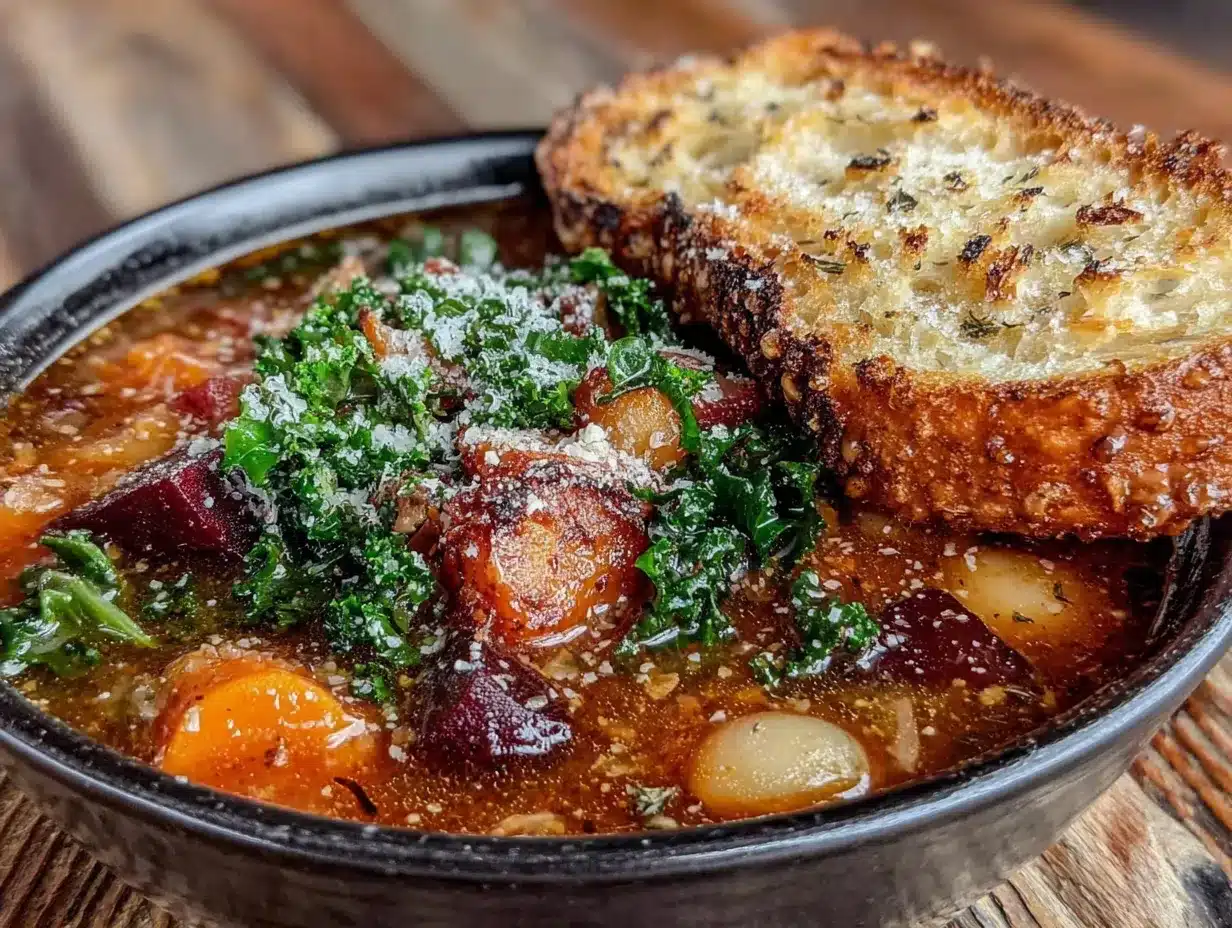
- 4 cups vegetable broth (low-sodium preferred so you can control the salt)
- 1 can (14.5 oz) fire-roasted diced tomatoes (undrained — they add a smoky depth)
- 1 cup water (or more broth if you prefer a thinner soup)
For the Greens & Finish
- 2 cups chopped kale or Swiss chard (sturdy greens hold up best)
- 1 tablespoon apple cider vinegar (brightens everything up)
- Optional: ½ cup canned coconut milk or heavy cream (for a creamier version)
- Fresh parsley or thyme for garnish
You can swap the butternut squash for pumpkin or acorn squash. If you don’t have sweet potato, a regular potato works fine too. For the greens, spinach can be used in a pinch, but add it at the very end since it wilts quickly.
Equipment Needed
You don’t need fancy tools for this one. Here’s what I use:
- Large Dutch oven or heavy-bottomed pot (5-6 quarts) — I use my trusty Le Creuset, but any sturdy pot works. A stockpot is fine too.
- Sharp chef’s knife — A dull knife makes chopping squash a nightmare. Trust me on this one.
- Cutting board
- Wooden spoon or silicone spatula
- Measuring cups and spoons
- Vegetable peeler
- Ladle
If you don’t have a Dutch oven, use a large soup pot. The key is a pot that distributes heat evenly so nothing burns on the bottom. A good knife is worth the investment — I learned that after spending twenty minutes trying to cube a squash with a dull blade. Not fun.
Preparation Method
Let’s get cooking. This cozy one-pot fall harvest vegetable soup comes together in a single pot, which means less cleanup and more time to enjoy that amazing smell filling your kitchen.
- Prep your vegetables first. Peel and dice the onion, carrots, celery, butternut squash, and sweet potato. Mince the garlic. Having everything ready before you start makes the process smooth and stress-free. This takes about 10-15 minutes.
- Heat the olive oil in your large pot over medium heat. Once it shimmers (about 1 minute), add the diced onion. Cook for 4-5 minutes until it turns translucent and starts to brown slightly at the edges. Stir occasionally so it doesn’t burn.
- Add the garlic, carrots, and celery. Stir everything together and cook for another 3 minutes. The kitchen should start smelling amazing at this point — that’s the aromatics doing their job.
- Toss in the butternut squash and sweet potato. Sprinkle with the dried thyme, rosemary, smoked paprika, turmeric, and a generous pinch of salt and pepper. Stir well to coat the vegetables in the spices. Let them cook for 5 minutes, stirring occasionally. You want the edges to get a tiny bit of color — that caramelization adds so much flavor.
- Pour in the vegetable broth and diced tomatoes (with their juices). Add the water and stir to combine. Scrape the bottom of the pot with your wooden spoon to release any browned bits — that’s pure flavor.
- Bring the soup to a boil, then reduce the heat to low. Cover the pot and let it simmer for 20-25 minutes, or until the squash and sweet potato are fork-tender. You should be able to easily pierce them with a fork.
- Add the chopped kale and stir it in. Let it cook for 3-4 minutes until wilted. Kale is sturdy, so it needs a few minutes to soften.
- Finish with the apple cider vinegar. Stir it in and taste. This is the moment of truth — adjust salt and pepper as needed. The vinegar brightens everything and balances the sweetness of the squash.
- Optional: Make it creamy. If you want a richer soup, stir in ½ cup of coconut milk or heavy cream at the end. Let it heat through for 2 minutes before serving.
- Ladle into bowls and garnish with fresh parsley or a sprig of thyme. Serve hot with crusty bread or a side salad.
Pro tip: If you prefer a smoother soup, use an immersion blender to blend half the soup right in the pot. This gives you a creamy base with some chunky bits for texture. I do this sometimes when I want a cozier, more rustic feel.
Cooking Tips & Techniques
I’ve made this soup enough times to know where things can go wrong. Here’s what I’ve learned the hard way:
Don’t rush the sauté. Taking the time to properly cook the onions and spices before adding liquid builds a flavor foundation that can’t be replicated. I once tried to speed this up and ended up with a soup that tasted flat. Never again.
Cut your vegetables evenly. This is the single most important tip. If your squash is in big chunks and your carrots are tiny, some pieces will be mushy while others are still hard. Aim for ½-inch cubes for everything. Your future self will thank you.
Season in layers. Add salt at the beginning with the aromatics, a little more with the broth, and adjust at the end. This builds complexity. Under-seasoned soup is the most common mistake I see — don’t be shy with the salt.
Watch your heat. Keep the soup at a gentle simmer, not a rolling boil. Boiling can make the vegetables fall apart and turn the broth cloudy. A low, steady bubble is what you want.
Let it rest. Soup always tastes better after sitting for 15-20 minutes. The flavors meld together in a way that’s hard to explain. If you can, make this soup a day ahead — it’s even better the next day.
Use the right pot. A heavy-bottomed pot distributes heat evenly and prevents burning. Thin pots can cause hot spots that scorch the bottom. If you only have a thin pot, stir more frequently and keep the heat lower.
I once forgot to add the apple cider vinegar and wondered why the soup tasted flat. That little splash of acid makes a huge difference. Don’t skip it.
Variations & Adaptations
This cozy one-pot fall harvest vegetable soup is endlessly adaptable. Here are some ways to make it your own:
- Make it creamy: As mentioned, stir in coconut milk or heavy cream at the end. For a vegan version, use full-fat coconut milk — it adds a lovely richness without being overpowering.
- Add protein: Toss in a can of drained chickpeas or white beans (like cannellini or Great Northern) along with the broth. They add heartiness and make the soup a complete meal. For meat lovers, shredded rotisserie chicken works beautifully too.
- Swap the vegetables: Use pumpkin instead of butternut squash, or add parsnips, turnips, or even cauliflower. In winter, I sometimes use frozen butternut squash cubes to save time. No judgment here.
- Make it spicy: Add a pinch of red pepper flakes or a diced jalapeño with the garlic. The heat pairs wonderfully with the sweet squash.
- Go grain-free: This soup is naturally gluten-free. Serve it with a side of quinoa or cauliflower rice for extra bulk without gluten.
- Herb swaps: If you have fresh herbs, use them. A few sprigs of fresh thyme and rosemary added during simmering (and removed before serving) take this soup to another level.
I once made a version with leftover roasted chicken and a splash of lemon juice instead of vinegar. It was completely different but just as delicious. That’s the beauty of this recipe — it’s a template, not a prison.
Serving & Storage Suggestions
This soup is best served hot, straight from the pot. Ladle it into deep bowls and top with fresh herbs, a drizzle of olive oil, or a sprinkle of red pepper flakes for color. It pairs beautifully with a slice of crusty sourdough or a simple grilled cheese sandwich. For a complete fall meal, serve it alongside a fresh salad with a tangy vinaigrette — the acidity cuts through the richness of the soup.
For storage, let the soup cool completely before transferring to airtight containers. It keeps in the refrigerator for up to 5 days. The flavors actually deepen over time, so don’t be surprised if day two tastes even better than day one.
To freeze, portion the soup into freezer-safe bags or containers. Leave a little room at the top for expansion. It freezes well for up to 3 months. Thaw overnight in the refrigerator before reheating.
Reheat gently on the stovetop over medium-low heat, adding a splash of broth or water if it’s too thick. You can also microwave individual portions in 30-second bursts, stirring in between. If you added coconut milk or cream, the texture might separate slightly after freezing — just whisk it back together as it reheats.
One thing I love about this soup is how it transforms. The first day, it’s bright and fresh. By day three, it’s deeply savory and almost stew-like. It’s like getting two different meals from one pot.
Nutritional Information & Benefits
This soup is packed with nutrients. Here’s an approximate breakdown per serving (based on 6 servings, without coconut milk or cream):
- Calories: 180
- Fat: 5g
- Carbohydrates: 32g
- Fiber: 8g
- Protein: 4g
- Sodium: 480mg (varies based on broth)
Butternut squash is rich in vitamin A and vitamin C, both of which support immune health — perfect for fall and winter. Sweet potatoes add fiber and potassium. Kale is a powerhouse of vitamin K and antioxidants. The turmeric and smoked paprika provide anti-inflammatory benefits, while the olive oil offers healthy fats.
This soup is naturally gluten-free, dairy-free (unless you add cream), and vegan. It’s also low in calories and high in fiber, making it a great option for weight management. The only potential allergen is the olive oil, which is generally well-tolerated. If you’re watching sodium, use low-sodium broth and go easy on the added salt.
I personally love that I can eat a big bowl of this soup and feel full without feeling heavy. It’s comfort food that actually makes you feel good.
Conclusion
This cozy one-pot fall harvest vegetable soup is the kind of recipe that becomes a staple. It’s simple enough for a Tuesday night, impressive enough for company, and forgiving enough for beginners. The best part? It makes your whole house smell like autumn.
I hope you make this soup and make it your own. Swap in whatever vegetables you have, adjust the spices to your taste, and don’t be afraid to experiment. That’s the joy of cooking — making something that’s uniquely yours. If you try it, I’d love to hear how it turned out. Leave a comment below or tag me in your photos. And if you’re looking for more cozy fall recipes, check out this creamy Tuscan chicken or these one-pan honey garlic chicken and vegetables for more easy weeknight wins.
Happy cooking, friends. Here’s to warm bowls and full hearts.
Frequently Asked Questions
Can I use frozen vegetables for this soup?
Absolutely. Frozen butternut squash, carrots, and even kale work great. Just add them directly to the pot without thawing. You might need to add 5-10 minutes to the simmering time since frozen vegetables release more water.
How can I make this soup more filling?
Add a can of drained chickpeas or white beans along with the broth. You can also stir in cooked quinoa, brown rice, or small pasta like ditalini. For a heartier version, add shredded rotisserie chicken or cooked Italian sausage.
Can I make this in a slow cooker or Instant Pot?
Yes! For a slow cooker, sauté the aromatics on the stovetop first, then transfer everything (except the kale and vinegar) to the slow cooker. Cook on low for 6-8 hours or high for 3-4 hours. Add the kale and vinegar 30 minutes before serving. For an Instant Pot, use the sauté function for the aromatics, then pressure cook on high for 8 minutes with a quick release. Stir in the kale and vinegar after.
Why did my soup turn out bland?
Most likely, it needs more salt or acid. Add salt in small increments and taste as you go. If it still feels flat, add another splash of apple cider vinegar or a squeeze of lemon juice. Sometimes a little extra smoked paprika or a pinch of red pepper flakes can wake up the flavors too.
Can I skip the kale?
Of course. If you don’t have kale, use spinach, Swiss chard, or even frozen peas. Spinach wilts in about 1 minute, so add it at the very end. For a heartier green, collard greens work well but need a longer simmer — add them with the broth.
Pin This Recipe!
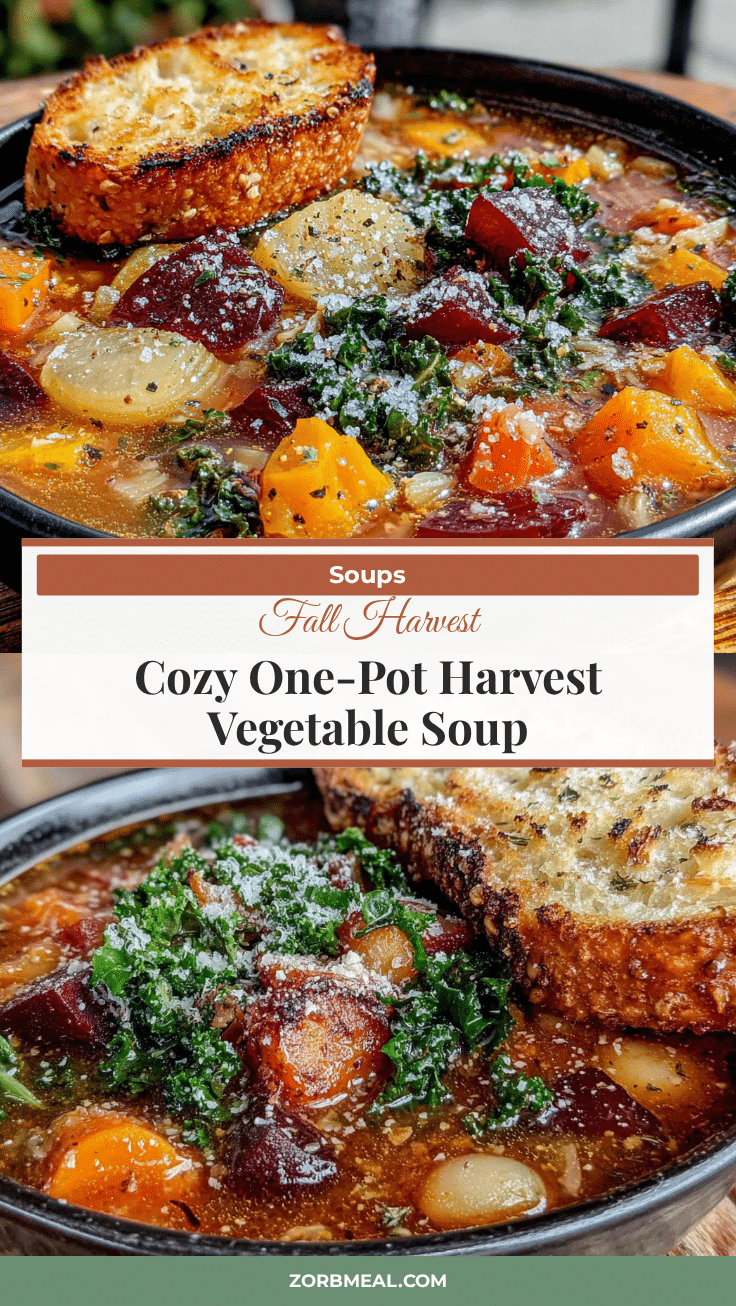
Cozy One-Pot Fall Harvest Vegetable Soup (Easy + Best Recipe)

This cozy one-pot fall harvest vegetable soup is a forgiving, flexible, and deeply satisfying recipe that comes together in about 45 minutes. It’s hearty enough for a main course but refined enough for company, and it’s naturally gluten-free and easily made vegan.
- Prep Time: 15 minutes
- Cook Time: 30 minutes
- Total Time: 45 minutes
- Yield: 6 servings 1x
- Category: Soup
- Cuisine: American
Ingredients
- 2 tablespoons olive oil
- 1 large yellow onion, diced (about 1 ½ cups)
- 3 cloves garlic, minced
- 2 large carrots, peeled and diced (about 1 cup)
- 2 celery stalks, diced (about ¾ cup)
- 1 medium butternut squash, peeled, seeded, and cubed (about 3 cups)
- 1 medium sweet potato, peeled and cubed (about 1 ½ cups)
- 1 teaspoon dried thyme
- 1 teaspoon dried rosemary
- ½ teaspoon smoked paprika
- ½ teaspoon ground turmeric
- Salt and black pepper to taste
- 4 cups vegetable broth (low-sodium preferred)
- 1 can (14.5 oz) fire-roasted diced tomatoes (undrained)
- 1 cup water (or more broth)
- 2 cups chopped kale or Swiss chard
- 1 tablespoon apple cider vinegar
- Optional: ½ cup canned coconut milk or heavy cream
- Fresh parsley or thyme for garnish
Instructions
- Prep your vegetables first. Peel and dice the onion, carrots, celery, butternut squash, and sweet potato. Mince the garlic. Having everything ready before you start makes the process smooth and stress-free. This takes about 10-15 minutes.
- Heat the olive oil in your large pot over medium heat. Once it shimmers (about 1 minute), add the diced onion. Cook for 4-5 minutes until it turns translucent and starts to brown slightly at the edges. Stir occasionally so it doesn’t burn.
- Add the garlic, carrots, and celery. Stir everything together and cook for another 3 minutes. The kitchen should start smelling amazing at this point — that’s the aromatics doing their job.
- Toss in the butternut squash and sweet potato. Sprinkle with the dried thyme, rosemary, smoked paprika, turmeric, and a generous pinch of salt and pepper. Stir well to coat the vegetables in the spices. Let them cook for 5 minutes, stirring occasionally. You want the edges to get a tiny bit of color — that caramelization adds so much flavor.
- Pour in the vegetable broth and diced tomatoes (with their juices). Add the water and stir to combine. Scrape the bottom of the pot with your wooden spoon to release any browned bits — that’s pure flavor.
- Bring the soup to a boil, then reduce the heat to low. Cover the pot and let it simmer for 20-25 minutes, or until the squash and sweet potato are fork-tender. You should be able to easily pierce them with a fork.
- Add the chopped kale and stir it in. Let it cook for 3-4 minutes until wilted. Kale is sturdy, so it needs a few minutes to soften.
- Finish with the apple cider vinegar. Stir it in and taste. This is the moment of truth — adjust salt and pepper as needed. The vinegar brightens everything and balances the sweetness of the squash.
- Optional: Make it creamy. If you want a richer soup, stir in ½ cup of coconut milk or heavy cream at the end. Let it heat through for 2 minutes before serving.
- Ladle into bowls and garnish with fresh parsley or a sprig of thyme. Serve hot with crusty bread or a side salad.
Notes
Don’t rush the sauté. Taking the time to properly cook the onions and spices before adding liquid builds a flavor foundation that can’t be replicated. Cut your vegetables evenly (½-inch cubes) for consistent cooking. Season in layers — add salt at the beginning, a little more with the broth, and adjust at the end. Keep the soup at a gentle simmer, not a rolling boil. Let the soup rest for 15-20 minutes before serving for best flavor. The soup tastes even better the next day. For a smoother soup, use an immersion blender to blend half the soup right in the pot.
Nutrition
- Serving Size: 1 bowl (about 1 ½ cu
- Calories: 180
- Sugar: 10
- Sodium: 480
- Fat: 5
- Saturated Fat: 1
- Carbohydrates: 32
- Fiber: 8
- Protein: 4
Keywords: fall harvest vegetable soup, one-pot soup, butternut squash soup, vegetable soup, cozy soup, fall soup, healthy soup, vegan soup, gluten-free soup