Three-time-in-a-week and the crust still wasn’t quite right—except, honestly, yesterday evening, that thin, smoky sear finally hit the perfect note. I’ve been obsessing over this perfect reverse-seared ribeye steaks on charcoal grill method, testing it every Friday for a month, tweaking the timing, the charcoal placement, the internal temp, and even the seasoning mix. Each time, the sizzle and that rich beef aroma pulled me back. It’s like the grill and I were in this endless dance, figuring out how to get that tender, juicy interior with a crust that crackles just right under your teeth.
There’s this moment, about halfway through the sear phase, when the smoke curls around the meat and the fat starts to caramelize, and you can almost hear the steak whispering, “This is it.” I always thought reverse searing was just a fancy trick, but after burning through half a dozen steaks (and a few questionable dinners), the process clicked. The slow, patient heat from the charcoal first, followed by that intense sear over the flames, gives the ribeye a depth of flavor that just plain grilling can’t touch.
What kept me coming back wasn’t just the flavor—it was the way the meat’s texture transformed, juicy but firm, with those crispy edges that make you hold the steak up and admire it like a trophy. I realized this isn’t just a recipe. It’s a ritual. One I want to share because if you’ve ever struggled with dry or overcooked steaks on the grill, this method makes a world of difference. Plus, it pairs beautifully with simple sides or dishes like the Caprese stuffed chicken breast I love making for a full meal.
So, here’s the thing: this recipe sticks because it rewards patience, pays homage to smoky flavors, and hands you a steak that actually tastes like you dreamed it would. No shortcuts, just the perfect reverse-seared ribeye steaks on charcoal grill that invite you to savor every bite.
Why You’ll Love This Recipe
- Quick & Easy: After the initial slow cook, the sear takes just minutes—perfect for when you want a stress-free steak night.
- Simple Ingredients: No complicated marinades or weird spices; just ribeye, salt, pepper, and a little patience.
- Perfect for Weekend Grilling: Whether it’s a laid-back Friday or a backyard BBQ, this recipe suits the vibe.
- Crowd-Pleaser: Everyone from steak novices to seasoned grillers has given this method a thumbs-up.
- Unbelievably Delicious: The reverse-sear technique means tender, juicy meat with a savory, smoky crust that’s just the right kind of crusty.
What makes this recipe stand out? It’s the reversed order of cooking that lets you control the doneness with surgical precision. Instead of risking a burned exterior and raw inside, you gently coax the steak to the perfect temperature, then slam it with high heat for flavor. Plus, the charcoal grill adds that unmistakable smoky undertone you just can’t get with gas. This isn’t just another grilled steak—it’s the best ribeye you’ll make at home.
Honestly, after trying this method, I stopped hunting for other “best ribeye” recipes. It’s the kind that makes you close your eyes and nod slowly after the first bite, savoring that balance between char and melt-in-your-mouth beef. It’s comfort food with a little swagger, ideal for impressing guests or indulging yourself without fuss.
What Ingredients You Will Need
This recipe uses simple, quality ingredients to bring out the natural richness of ribeye without overcomplicating the process. Most are pantry staples, and a few are best sourced fresh to maximize flavor.
- Ribeye steaks: About 1.5 to 2 inches thick, 12-16 oz (340-450 g) each. Look for well-marbled cuts for juiciness. I prefer USDA Choice or Prime grade if available.
- Coarse kosher salt: For seasoning and drawing out moisture for a better crust.
- Freshly ground black pepper: Adds that classic peppery bite.
- Neutral oil with a high smoke point: Like grapeseed or avocado oil, to lightly coat the steak before searing.
- Optional garlic powder or smoked paprika: For subtle flavor depth if you want to mix things up.
- Charcoal briquettes or lump charcoal: Lump charcoal burns hotter and cleaner but burns faster; briquettes offer steady heat for longer.
Pro tip: If you want to experiment with a smoky edge, toss in a few wood chunks like hickory or oak on your charcoal. It subtly infuses the ribeye without overpowering.
Equipment Needed
- Charcoal grill: A standard kettle grill works perfectly for this reverse sear method.
- Instant-read meat thermometer: Essential for checking internal temps precisely so you never overcook.
- Long-handled tongs: To handle the steak safely over hot coals.
- Charcoal chimney starter: Makes lighting charcoal easier without lighter fluid flavors.
- Aluminum foil: Useful for resting steaks after searing.
I’ve tried this with different grills but found that a simple kettle grill gives the best control for indirect and direct heat zones. If you don’t have a chimney starter, just be ready with natural fire starters or pre-lit charcoal to avoid flare-ups. And honestly, a good meat thermometer changed my game—before that, I was guessing and ending up with inconsistent results.
Preparation Method
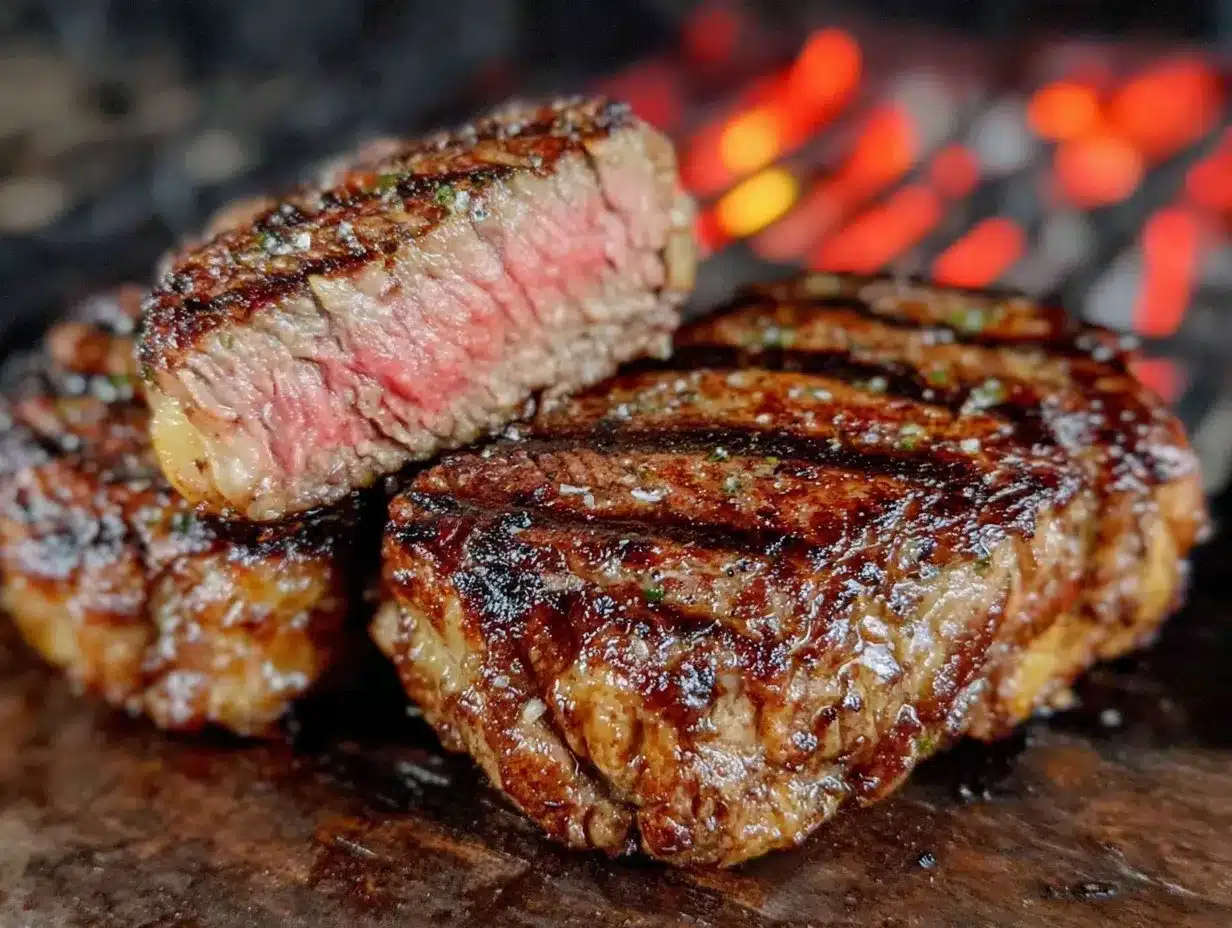
- Prepare the charcoal grill: Light your charcoal using a chimney starter and wait until the coals are ashed over and glowing red (about 20-30 minutes). Arrange the coals for indirect heat on one side of the grill, leaving the other side empty for direct searing.
- Season the ribeye: Pat the steaks dry with paper towels. Generously season both sides with coarse kosher salt and freshly ground black pepper. Let them rest at room temperature for about 30 minutes before cooking. This helps the meat cook evenly.
- Slow cook the steaks: Place the ribeye on the cooler side of the grill (indirect heat). Close the lid and let the steaks cook slowly until they reach an internal temperature about 10-15°F (5-8°C) below your desired final doneness (for medium-rare, aim for 115-120°F / 46-49°C). This usually takes about 20-30 minutes depending on thickness. Use your instant-read thermometer to check.
- Prep for searing: Once the steaks hit the target temp, remove them and brush lightly with a high smoke point oil. This prevents sticking and encourages a better crust.
- Sear the steaks: Move the coals to create a direct high-heat zone. Place the steaks directly over the hot coals and sear for about 1-2 minutes per side until a deep brown crust forms. You’re looking for that satisfying crackle and a rich, smoky aroma. Flip only once to develop an even crust.
- Rest the steaks: Transfer the steaks to a clean plate and tent loosely with aluminum foil. Rest for 5-10 minutes to allow juices to redistribute. This makes every bite tender and juicy.
- Serve and enjoy: Slice against the grain, and savor the contrast of the smoky crust and buttery interior. This pairs beautifully with simple sides or the Greek chicken souvlaki bowls I often make alongside for a balanced meal.
Keep a close eye during searing—charcoal can flare up, and the crust can go from perfect to burnt fast. If flare-ups happen, move the steak to a cooler spot briefly and then back to the heat.
Cooking Tips & Techniques
Reverse searing ribeye on a charcoal grill isn’t rocket science, but a few tricks from my trial-and-error phase make all the difference.
- Patience is key: Don’t rush the slow cook; it’s what sets the stage for tender, even doneness.
- Temperature control: Use your grill vents to manage airflow and keep the indirect heat steady around 225-275°F (107-135°C).
- Thermometer love: Always use an instant-read thermometer to avoid guessing. I’ve learned the hard way that relying on time alone leads to uneven results.
- Oil right before searing: Oiling too early can cause flare-ups. A quick brush right before hitting the hot coals keeps the crust crisp and beautiful.
- Flip once during sear: Constant flipping disrupts crust formation. Let the steak develop a deep sear on one side before flipping.
- Rest your meat: It’s not just a tradition—it really locks in those juices, so don’t skip it.
One time, I got impatient and seared before the ribeye reached the target temp—ended up with a crusty outside and raw inside that no one wanted to eat. Lesson learned: slow and steady wins the steak.
Variations & Adaptations
This reverse-seared ribeye recipe is flexible enough for lots of tweaks and dietary tweaks.
- Flavor twists: Add a compound butter with garlic and herbs (try the garlic scape compound butter) to melt on top just before serving for a fresh take.
- Seasoning variations: Swap black pepper with cracked pink peppercorns or smoked paprika for a smoky, slightly spicy crust.
- Cooking method: If you don’t have charcoal, you can adapt this reverse-sear technique with a cast-iron pan for searing after oven slow-cooking, though you’ll miss that charcoal smoke.
- Dietary swaps: For a lower-fat option, choose leaner cuts like strip steak, but expect less marbling and juiciness.
Personally, I once tried adding a coffee rub before the slow cook phase—an experiment that added an unexpected earthy bitterness, which wasn’t for everyone but showed how adaptable this method is.
Serving & Storage Suggestions
Serve your perfect reverse-seared ribeye steaks hot off the grill, sliced against the grain. They’re fantastic alongside grilled veggies, a crisp salad, or even creamy garlic mashed potatoes. I’ve found they pair really well with a chilled glass of bold red wine or a cold craft beer to balance the smoky richness.
If you have leftovers (rare, but it happens), wrap tightly in foil and refrigerate within two hours. They’ll keep well up to 3 days but lose some of their fresh texture. Reheat gently in a low oven (about 250°F / 120°C) wrapped in foil to avoid drying out, or briefly in a hot cast iron pan just to warm through.
Flavors actually deepen a bit overnight, so if you can bear the wait, sliced cold ribeye on sandwiches or salads is a real treat. For a quick meal, try pairing slices with the lemon garlic shrimp pasta for a surf-and-turf twist.
Nutritional Information & Benefits
A 12-ounce ribeye steak typically contains around 800-900 calories, with about 60 grams of protein and 60 grams of fat, including beneficial monounsaturated fats. Ribeye is rich in iron, zinc, and B vitamins, which support energy and immune function. Cooking with charcoal adds no calories but infuses the meat with antioxidants from the smoke.
This recipe is naturally gluten-free and low in carbs, making it suitable for keto and paleo diets. Just be mindful of portion sizes if you’re watching fat intake. For those with heart concerns, trimming some fat or choosing leaner cuts might be better, but honestly, treat yourself—this is a steak worth savoring.
Conclusion
The perfect reverse-seared ribeye steaks on charcoal grill recipe isn’t just about technique—it’s about patience, the joy of fire and smoke, and that moment when everything comes together in a juicy, flavorful bite. You can customize seasoning or sides to suit your tastes, but the core method remains a reliable way to impress yourself and your guests.
I keep coming back to this recipe because it makes steak night feel special, every single time. If you try it, I’d love to hear how your steaks turned out or what twists you added. Cooking is a journey, after all, and this reverse sear technique is one delicious stop along the way.
Ready to fire up the grill? Let’s get those ribeyes sizzling.
FAQs About Perfect Reverse-Seared Ribeye Steaks on Charcoal Grill
What thickness of ribeye is best for reverse searing?
Steaks about 1.5 to 2 inches (3.8 to 5 cm) thick work best. Thinner cuts cook too quickly and don’t develop the same juicy texture.
How do I know when the steak is ready for searing?
Use an instant-read thermometer and remove the steak from indirect heat when it’s about 10-15°F (5-8°C) below your desired final temperature.
Can I use gas grill instead of charcoal?
You can, but you’ll miss the smoky flavor charcoal imparts. The reverse sear method still works well with gas grills if you create indirect and direct heat zones.
Should I salt the steak in advance or just before cooking?
Season generously at least 30 minutes before cooking to allow the salt to penetrate and improve crust formation.
How long should the steak rest after searing?
Rest the steak for 5-10 minutes loosely tented with foil to let juices redistribute for maximum tenderness.
Pin This Recipe!
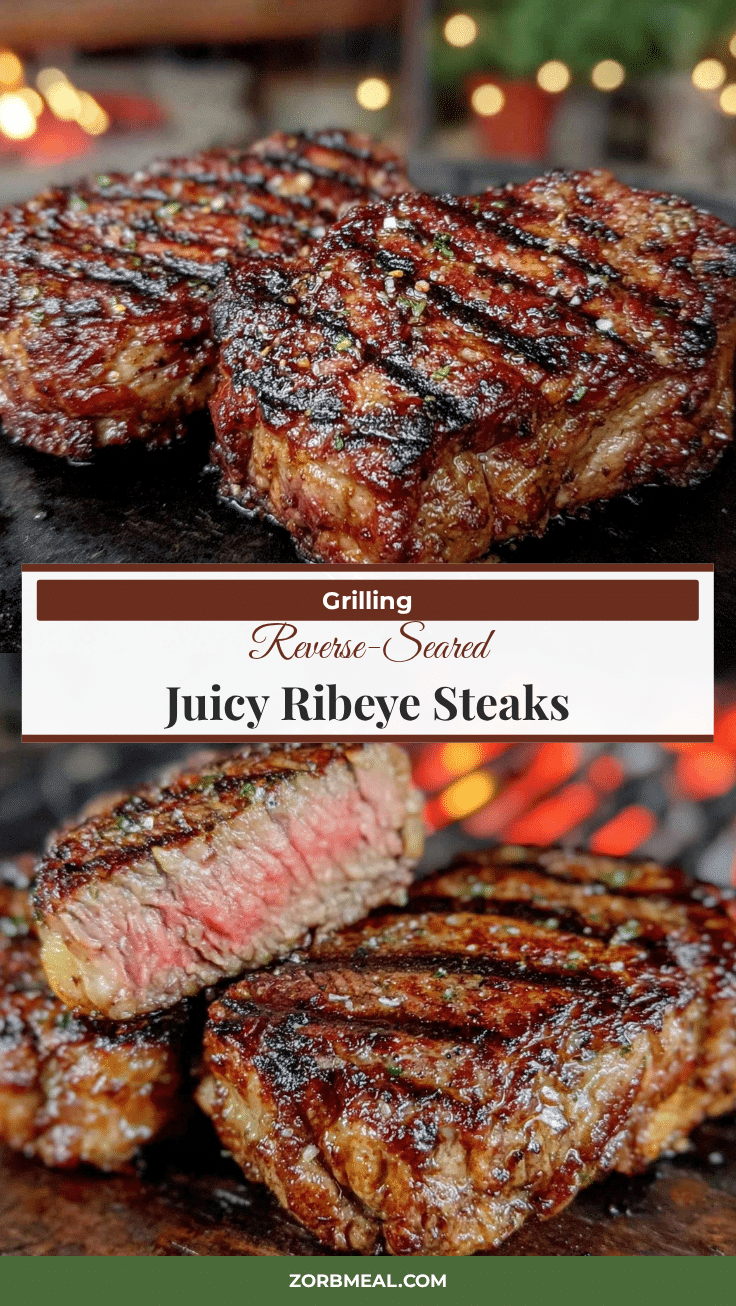
Perfect Reverse-Seared Ribeye Steaks on Charcoal Grill
A methodical reverse-sear technique for ribeye steaks on a charcoal grill that delivers a tender, juicy interior with a smoky, crispy crust.
- Prep Time: 35 minutes
- Cook Time: 30 minutes
- Total Time: 65 minutes
- Yield: 2 servings
- Category: Main Course
- Cuisine: American
Ingredients
- Ribeye steaks, 1.5 to 2 inches thick, 12-16 oz each
- Coarse kosher salt
- Freshly ground black pepper
- Neutral oil with a high smoke point (e.g., grapeseed or avocado oil)
- Optional: garlic powder or smoked paprika
- Charcoal briquettes or lump charcoal
- Optional: wood chunks like hickory or oak for smoky flavor
Instructions
- Light your charcoal using a chimney starter and wait until the coals are ashed over and glowing red (about 20-30 minutes). Arrange the coals for indirect heat on one side of the grill, leaving the other side empty for direct searing.
- Pat the steaks dry with paper towels. Generously season both sides with coarse kosher salt and freshly ground black pepper. Let them rest at room temperature for about 30 minutes before cooking.
- Place the ribeye on the cooler side of the grill (indirect heat). Close the lid and cook slowly until the steaks reach an internal temperature about 10-15°F below your desired final doneness (for medium-rare, aim for 115-120°F). This usually takes about 20-30 minutes depending on thickness. Use an instant-read thermometer to check.
- Remove the steaks and brush lightly with a high smoke point oil to prevent sticking and encourage a better crust.
- Move the coals to create a direct high-heat zone. Place the steaks directly over the hot coals and sear for about 1-2 minutes per side until a deep brown crust forms. Flip only once.
- Transfer the steaks to a clean plate and tent loosely with aluminum foil. Rest for 5-10 minutes to allow juices to redistribute.
- Slice against the grain and serve.
Notes
Patience is key; do not rush the slow cook phase. Use an instant-read thermometer for precise temperature control. Oil the steak just before searing to avoid flare-ups. Flip only once during searing. Rest the steak after searing to lock in juices. For smoky flavor, add wood chunks like hickory or oak to the charcoal.
Nutrition
- Serving Size: One 12-16 oz ribeye
- Calories: 850
- Sodium: 400
- Fat: 60
- Saturated Fat: 25
- Protein: 60
Keywords: reverse sear, ribeye steak, charcoal grill, grilled steak, smoky steak, steak recipe, backyard BBQ