The Friendsgiving potluck was in six hours and I was staring down a sad, defrosting 6-pound turkey breast in my sink. Everyone else had signed up for elaborate sides—my friend Jen was bringing a mac and cheese with three kinds of cheese and a breadcrumb crust that she’d been perfecting for weeks. Another friend was hauling a slow-cooker full of braised short ribs. I had a turkey breast, a stick of butter, and a half-dead bunch of parsley from the back of my fridge. Honestly, I almost texted the group chat to say I’d just bring paper plates.
But here’s the thing about cooking under pressure—sometimes it’s the only way you actually figure out what works. I grabbed that butter, chopped up every herb I could find (thyme that was still alive, rosemary that was a little woody, and that sad parsley), and just started mashing it all together. I wasn’t trying to win anything. I was just trying not to show up empty-handed. The power went out for ten minutes while the turkey was in the oven, which was a whole other panic, but let me tell you—when that bird came out, golden and smelling like a Thanksgiving dream, even I was surprised.
That little turkey for two ended up being the star of the table. People actually asked for the recipe. I mean, the short ribs were good, but there’s something about a perfectly roasted turkey that just hits different. Maybe you’ve been there—stuck with a small gathering and no idea how to scale down a holiday classic without losing the magic. This herb butter roasted turkey for two is the answer. It’s the recipe that saved my Friendsgiving, and honestly, it’s become my go-to for any cozy, small-scale celebration.
Why You’ll Love This Recipe
This isn’t just another turkey recipe. It’s the one that makes you look like you spent all day in the kitchen when really, the herb butter does all the heavy lifting. Here’s why it works so well for a small gathering:
- Perfectly Sized for Two: No more wrestling with a 20-pound bird or eating turkey sandwiches for two weeks straight. This recipe uses a turkey breast or a small whole turkey, so you get just enough for a cozy meal with maybe a little leftover for lunch the next day.
- Incredibly Moist and Flavorful: The herb butter seeps under the skin and into the meat, keeping every bite juicy and packed with savory, aromatic flavor. You won’t need a single drop of gravy (though it’s great if you want it).
- Simple, Affordable Ingredients: Butter, fresh herbs, garlic, salt, and pepper—that’s basically it. No fancy grocery trips or expensive spice blends required. You might already have everything you need.
- Less Stress, More Enjoyment: This recipe is designed for a relaxed cooking experience. The prep is quick, the oven does the rest, and you have plenty of time to enjoy your company or put your feet up.
- Crowd-Pleasing Comfort: Even picky eaters can’t resist a well-roasted turkey. It’s familiar, it’s comforting, and it feels special without being fussy.
What makes this recipe different from all the others? It’s the technique. Instead of just rubbing butter on the outside, you gently loosen the skin and spread that herby goodness directly onto the meat. This isn’t just another version of roast turkey—it’s the best version for two people who want a memorable meal without the holiday chaos. It’s comfort food reimagined for a smaller table, faster to make, but with the same soul-soothing satisfaction that makes Thanksgiving dinner so special.
What Ingredients You Will Need
This recipe relies on simple, high-quality ingredients to deliver a restaurant-worthy result. The herb butter is the star, so fresh herbs really do make a difference here.
- For the Turkey:
- 1 (5-6 pound) bone-in, skin-on turkey breast (or a small whole turkey, about 8-10 pounds) – This is the perfect size for two people with some leftovers. Ask your butcher to help you find a smaller bird.
- 1 teaspoon kosher salt (plus more for seasoning the cavity)
- 1/2 teaspoon black pepper (freshly ground is best)
- For the Herb Butter:
- 1/2 cup (1 stick) unsalted butter, softened to room temperature (I prefer Kerrygold for its rich flavor)
- 2 tablespoons fresh parsley, finely chopped (flat-leaf or Italian parsley has the best flavor)
- 1 tablespoon fresh rosemary, finely chopped (strip the leaves from the woody stem first)
- 1 tablespoon fresh thyme leaves (strip them from the stems, they’re tiny but pack a punch)
- 2 cloves garlic, minced (use a microplane for a paste-like consistency that blends perfectly into the butter)
- 1 teaspoon lemon zest (from about half a lemon – adds brightness that cuts through the richness)
- 1/2 teaspoon kosher salt
- 1/4 teaspoon black pepper
- For the Aromatics (Optional but Recommended):
- 1 lemon, halved
- 1 small onion, quartered
- 2-3 sprigs fresh rosemary and thyme
- 3-4 cloves garlic, smashed
Ingredient Tips & Substitutions: If you don’t have fresh herbs, you can use dried, but use about one-third of the amount since dried herbs are more concentrated. For a dairy-free version, substitute the butter with a high-quality vegan butter or olive oil. I’ve tried it with a good olive oil, and while the flavor is different, it’s still delicious and the meat stays moist. Look for a turkey breast that’s uniform in thickness for even cooking. If your turkey breast is frozen, thaw it in the refrigerator for 24-48 hours before cooking.
Equipment Needed
You don’t need a lot of fancy gear for this recipe. Here’s what you’ll need to pull it off:
- Roasting Pan: A small roasting pan or a 9×13-inch baking dish works perfectly. You want something with sides to catch the juices.
- Instant-Read Thermometer: This is non-negotiable for perfectly cooked turkey. A $15 digital thermometer from any kitchen store will save you from dry, overcooked meat.
- Chef’s Knife and Cutting Board: For chopping herbs and prepping the turkey.
- Small Bowl: For mixing the herb butter.
- Kitchen Twine: Optional, but helpful for trussing the turkey breast for a more even shape.
- Basting Brush or Spoon: For basting the turkey with the pan juices.
- Aluminum Foil: For tenting the turkey if it browns too quickly or while it rests.
If you don’t have a roasting pan, a rimmed baking sheet lined with foil and a wire rack works great. I’ve used that setup more times than I can count, and it actually helps the heat circulate better for crisper skin. Just make sure to put a little water in the pan to prevent the drippings from burning.
Preparation Method
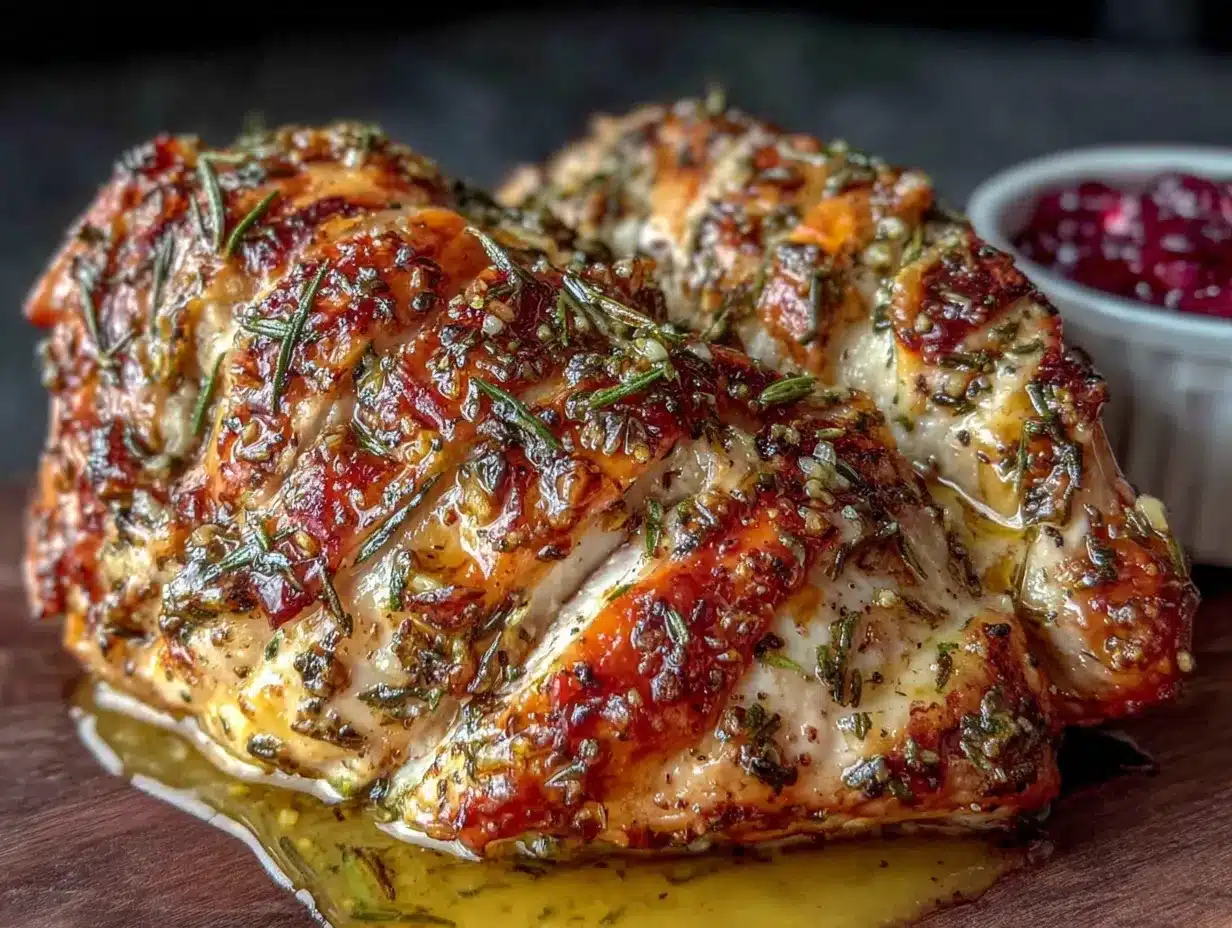
Let’s get cooking. This method is straightforward, but I’ll walk you through every step so you feel confident.
- Prep the Turkey: Take your turkey breast out of the refrigerator about 30 minutes before you start cooking. This helps it cook more evenly. Pat it completely dry with paper towels—this is crucial for crispy skin. Place it in your roasting pan or on a wire rack set over a baking sheet. Season the cavity (if there is one) and the underside of the breast with a little salt and pepper.
- Make the Herb Butter: In a small bowl, combine the softened butter, chopped parsley, rosemary, thyme, minced garlic, lemon zest, 1/2 teaspoon salt, and 1/4 teaspoon pepper. Mix with a fork until everything is well combined. The butter should be spreadable but not melted. If it’s too hard, let it sit out a bit longer.
- Loosen the Skin: This is the most important step. Gently slide your fingers between the turkey skin and the breast meat, starting at the neck end or the side of the breast. Be careful not to tear the skin. Work your fingers all the way down to create a pocket. Use about two-thirds of the herb butter and spread it evenly under the skin, directly onto the meat. Massage the outside of the skin to spread it around. Rub the remaining butter all over the outside of the turkey skin. Season the outside with a little more salt and pepper.
- Add Aromatics (Optional): If you’re using them, stuff the lemon halves, onion quarters, herb sprigs, and smashed garlic cloves into the turkey cavity. This adds incredible fragrance from the inside out.
- Truss the Turkey (Optional): If your turkey breast is unevenly shaped, tie it with kitchen twine at 1-inch intervals to create a more uniform shape for even cooking. It’s not essential, but it helps.
- Roast the Turkey: Preheat your oven to 425°F (220°C). Roast the turkey for 15 minutes at this high temperature to help brown the skin. Then, without opening the oven, reduce the temperature to 350°F (175°C). Continue roasting for about 1 hour to 1 hour 15 minutes, or until an instant-read thermometer inserted into the thickest part of the breast registers 155°F (68°C). The temperature will continue to rise to a safe 165°F (74°C) as it rests. Start checking the temperature at the 45-minute mark after you lower the heat.
- Baste (Optional but Recommended): About halfway through the roasting time (after you’ve lowered the heat), baste the turkey with the pan juices. This keeps the meat extra moist and adds flavor. I usually do this twice during the cooking process.
- Rest the Turkey: This is another non-negotiable step. Remove the turkey from the oven and transfer it to a cutting board. Tent it loosely with aluminum foil and let it rest for at least 15-20 minutes. Do not skip this! Resting allows the juices to redistribute throughout the meat, ensuring every slice is moist and tender. If you cut into it too soon, all those lovely juices will run out onto the cutting board.
- Carve and Serve: After resting, remove the twine if you used it. Carve the turkey against the grain into thick slices. Spoon any remaining pan juices over the top before serving.
Cooking Tips & Techniques
I’ve made this recipe more times than I can count, and I’ve learned a few things the hard way. Here are my best tips for success:
- Dry Skin is Crispy Skin: I cannot stress this enough. Pat that turkey skin bone-dry before you do anything else. Any moisture on the surface will steam instead of sear, and you’ll end up with rubbery skin. I once forgot this step and ended up with a pale, sad-looking bird. Never again.
- Don’t Overcrowd the Pan: Make sure your turkey has some breathing room in the pan. If it’s crammed in, the heat won’t circulate properly, and the skin won’t crisp up evenly. If your pan is too big, that’s fine. If it’s too small, use a baking sheet with a wire rack.
- Use a Thermometer, Not a Timer: Ovens vary wildly. A timer is a suggestion; a thermometer is the truth. I ruined a beautiful turkey breast once by trusting the timer and ending up with dry, stringy meat. Now I always use my instant-read thermometer, and I start checking the temperature about 20 minutes before I think it’ll be done.
- The Resting Period is Sacred: I know it’s tempting to dig in right away, especially when the kitchen smells amazing. But trust me on this. Resting the turkey is just as important as cooking it. If you skip it, you’ll be serving dry turkey. Set a timer for 20 minutes and walk away.
- Make Gravy from the Drippings: While the turkey rests, pour the pan drippings into a small saucepan. Skim off some of the fat, then whisk in a tablespoon of flour. Cook for a minute, then slowly whisk in about a cup of chicken broth. Simmer until thickened. It’s the easiest, most delicious gravy you’ll ever make.
Variations & Adaptations
This recipe is wonderfully adaptable. Here are a few ways to make it your own:
- Citrus Herb Butter: Add the zest of a whole orange and a tablespoon of fresh orange juice to the herb butter. It adds a bright, sweet note that pairs beautifully with the turkey. I tried this for a Christmas dinner last year, and it was a huge hit.
- Spicy Herb Butter: Mix in 1/2 teaspoon of red pepper flakes or a minced chipotle pepper in adobo sauce to the butter for a smoky, spicy kick. It’s unexpected but so good.
- Garlic and Herb Butter: Double the garlic in the herb butter. Roast a whole head of garlic alongside the turkey, then squeeze the soft cloves into the pan juices for an intensely garlicky gravy.
- Dairy-Free Version: Substitute the butter with a high-quality vegan butter or 1/4 cup of olive oil mixed with the herbs. The texture will be slightly different, but the flavor will still be fantastic.
- Air Fryer Method: If you have an air fryer large enough, you can cook a smaller turkey breast (3-4 pounds) in it. Follow the same prep steps, then cook at 375°F (190°C) for about 45-60 minutes, or until the internal temperature reaches 155°F (68°C). The skin gets incredibly crispy!
Serving & Storage Suggestions
This turkey is best served warm, straight from the oven after its rest. Here’s how to make the most of it:
- Serving Temperature: Serve the turkey warm, not piping hot. Letting it rest and then slicing it just before serving is ideal.
- Presentation: Arrange the carved slices on a warm platter. Spoon a little of the pan juices over the top and garnish with a few fresh herb sprigs for a beautiful presentation. It looks impressive with minimal effort.
- What to Serve With It: This turkey is a star, so keep the sides simple. Classic mashed potatoes, a simple green salad, roasted root vegetables, or a warm dinner roll are all perfect. The pan juices make an excellent quick gravy.
- Storage: Store leftover turkey in an airtight container in the refrigerator for up to 4 days. The meat will stay moist and flavorful.
- Reheating: The best way to reheat turkey is to add a splash of chicken broth or water to a skillet, add the turkey slices, and cover. Warm over low heat until just heated through. This prevents the meat from drying out. You can also reheat it in the microwave, but it won’t be as moist.
- Freezing: Cooked turkey freezes beautifully. Slice it, place it in a freezer-safe bag or container, and freeze for up to 3 months. Thaw overnight in the refrigerator before reheating.
Nutritional Information & Benefits
While this is a special occasion dish, it can fit into a balanced diet. Here’s a general overview for a 6-ounce serving of roasted turkey breast (without skin):
- Calories: ~280
- Protein: ~40g
- Fat: ~12g (from the butter and skin)
- Carbohydrates: ~1g
Health Benefits: Turkey is a fantastic source of lean protein, which is essential for muscle building and repair. It’s also rich in B vitamins, particularly B6 and B12, which support energy metabolism and brain function. The herbs in the butter—parsley, rosemary, and thyme—are packed with antioxidants and anti-inflammatory compounds. Garlic is known for its immune-boosting properties. So while this is a comforting, indulgent dish, it’s also doing your body some good.
Dietary Considerations: This recipe is naturally gluten-free and low-carb. For a dairy-free version, simply use olive oil or vegan butter instead of regular butter. The main allergen is dairy from the butter.
Conclusion
This herb butter roasted turkey for two is more than just a recipe—it’s a reminder that you don’t need a huge crowd or a massive bird to create a truly special meal. It’s proof that with a little bit of simple, quality ingredients and a smart technique, you can turn a potential kitchen panic into a delicious, memorable Friendsgiving feast. The herb butter does all the work, giving you moist, flavorful meat and crispy, golden skin every single time.
I love this recipe because it’s forgiving, it’s adaptable, and it always delivers. Whether you’re hosting a cozy dinner for two, a small Friendsgiving, or just want a taste of the holidays without the big production, this turkey is your answer. Don’t be afraid to tweak the herbs or add your own twist—that’s what makes cooking fun.
So go ahead, give it a try. I promise you’ll be amazed at what a little butter and some fresh herbs can do. And when you do, I’d love to hear about it. Leave a comment below and let me know how it turned out, or share your own variation. Happy cooking, and here’s to a warm, wonderful Friendsgiving!
Frequently Asked Questions
Can I use a frozen turkey breast for this recipe?
Yes, you can absolutely use a frozen turkey breast. Just make sure to thaw it completely in the refrigerator for 24-48 hours before cooking. Never thaw it on the counter, as this can lead to bacterial growth. Pat it dry thoroughly before applying the herb butter.
How do I know when the turkey is done without a thermometer?
While a thermometer is the most reliable method, you can check for doneness by piercing the thickest part of the breast with a fork. The juices should run clear, not pink. The meat should also feel firm to the touch and pull away from the bone easily. However, I strongly recommend investing in a simple instant-read thermometer for perfect results every time.
What if I don’t have fresh herbs?
Dried herbs work in a pinch, but use about one-third of the amount called for in the recipe since dried herbs are more concentrated. For example, use 1 teaspoon of dried rosemary instead of 1 tablespoon fresh. The flavor won’t be quite as bright, but it will still be delicious.
Can I make the herb butter ahead of time?
Yes, this is a great time-saver. You can make the herb butter up to 3 days in advance. Store it in the refrigerator, tightly covered. Let it sit at room temperature for about 15-20 minutes before using so it’s soft and spreadable again.
My turkey skin is browning too quickly. What should I do?
If the skin is getting too dark before the turkey is cooked through, tent the turkey loosely with a piece of aluminum foil. This will slow down the browning while allowing the meat to continue cooking. Check the temperature after about 15 minutes of tenting.
PrintPerfect Herb Butter Roasted Turkey for Two: Easy Friendsgiving
A perfectly sized herb butter roasted turkey breast for two, featuring juicy meat and crispy golden skin. This easy recipe is ideal for a small Friendsgiving or cozy holiday dinner without the fuss of a large bird.
- Prep Time: 20 minutes
- Cook Time: 1 hour 15 minutes
- Total Time: 1 hour 35 minutes
- Yield: 4 servings 1x
- Category: Main Course
- Cuisine: American
Ingredients
- 1 (5-6 pound) bone-in, skin-on turkey breast (or a small whole turkey, about 8–10 pounds)
- 1 teaspoon kosher salt (plus more for seasoning the cavity)
- 1/2 teaspoon black pepper (freshly ground is best)
- 1/2 cup (1 stick) unsalted butter, softened to room temperature
- 2 tablespoons fresh parsley, finely chopped
- 1 tablespoon fresh rosemary, finely chopped
- 1 tablespoon fresh thyme leaves
- 2 cloves garlic, minced
- 1 teaspoon lemon zest (from about half a lemon)
- 1/2 teaspoon kosher salt
- 1/4 teaspoon black pepper
- 1 lemon, halved (optional)
- 1 small onion, quartered (optional)
- 2–3 sprigs fresh rosemary and thyme (optional)
- 3–4 cloves garlic, smashed (optional)
Instructions
- Take your turkey breast out of the refrigerator about 30 minutes before cooking. Pat it completely dry with paper towels. Place it in your roasting pan or on a wire rack set over a baking sheet. Season the cavity (if there is one) and the underside of the breast with a little salt and pepper.
- In a small bowl, combine the softened butter, chopped parsley, rosemary, thyme, minced garlic, lemon zest, 1/2 teaspoon salt, and 1/4 teaspoon pepper. Mix with a fork until well combined.
- Gently slide your fingers between the turkey skin and the breast meat, starting at the neck end or the side of the breast. Be careful not to tear the skin. Work your fingers all the way down to create a pocket. Use about two-thirds of the herb butter and spread it evenly under the skin, directly onto the meat. Massage the outside of the skin to spread it around. Rub the remaining butter all over the outside of the turkey skin. Season the outside with a little more salt and pepper.
- If using aromatics, stuff the lemon halves, onion quarters, herb sprigs, and smashed garlic cloves into the turkey cavity.
- If your turkey breast is unevenly shaped, tie it with kitchen twine at 1-inch intervals to create a more uniform shape for even cooking (optional).
- Preheat your oven to 425°F (220°C). Roast the turkey for 15 minutes at this high temperature. Then, without opening the oven, reduce the temperature to 350°F (175°C). Continue roasting for about 1 hour to 1 hour 15 minutes, or until an instant-read thermometer inserted into the thickest part of the breast registers 155°F (68°C). Start checking the temperature at the 45-minute mark after you lower the heat.
- About halfway through the roasting time (after you’ve lowered the heat), baste the turkey with the pan juices. I usually do this twice during the cooking process.
- Remove the turkey from the oven and transfer it to a cutting board. Tent it loosely with aluminum foil and let it rest for at least 15-20 minutes.
- After resting, remove the twine if you used it. Carve the turkey against the grain into thick slices. Spoon any remaining pan juices over the top before serving.
Notes
Pat the turkey skin bone-dry for crispy skin. Use a thermometer, not a timer, for perfect doneness. The resting period is essential for moist meat. If the skin browns too quickly, tent with foil. For a dairy-free version, substitute butter with vegan butter or olive oil. Dried herbs can be used in a pinch (use one-third the amount).
Nutrition
- Serving Size: 6 ounces
- Calories: 280
- Sodium: 450
- Fat: 12
- Saturated Fat: 7
- Carbohydrates: 1
- Protein: 40
Keywords: herb butter roasted turkey, turkey for two, Friendsgiving turkey, small turkey recipe, roasted turkey breast, easy turkey recipe, holiday turkey for two


