“Hey, wanna try something quick and crazy fresh for dinner?” my friend texted me one blazing July afternoon. I was knee-deep in a tired week, juggling work, errands, and that restless feeling of wanting something light but satisfying. Honestly, I wasn’t expecting much—just another quick fix. But when she dropped off a bowl brimming with seared ahi tuna, mango, and avocado, everything shifted. The cool sweetness of ripe mango mingled with buttery avocado, while the tuna’s seared edges gave just the right amount of smoky char against its silky raw center. I remember thinking, “This is way better than I deserved after today.”
I hadn’t thought much about poke bowls before, but this fresh seared ahi tuna poke bowl with mango and avocado quickly became a go-to, especially when I needed a meal that felt both indulgent and nourishing without a ton of prep. It’s not just a pretty face—there’s a satisfying balance of flavors and textures that somehow manages to feel like a mini vacation in a bowl. I’ve ended up making it multiple times in one week, tweaking the seasoning here, adding a crunchy element there, and honestly, it’s stuck with me ever since.
What surprised me most was how this recipe, born out of a casual catch-up and a little kitchen improvisation, turned into a refreshing reset on busy days. The mango’s tropical brightness, the creamy avocado, and that perfectly seared ahi tuna create a harmony that feels effortless but is truly memorable. I trust you’ll find it as comforting and bright as I do—like a small moment of calm surrounded by the chaos.
Why You’ll Love This Fresh Seared Ahi Tuna Poke Bowl Recipe with Mango and Avocado
Having tested this recipe several times, I can say with confidence it hits all the marks for a quick yet impressive meal. Here’s what makes this fresh seared ahi tuna poke bowl stand out:
- Quick & Easy: Ready in about 20 minutes, it’s perfect for those busy weeknights or when you crave something light but filling.
- Simple Ingredients: No exotic or hard-to-find items here—just fresh ahi tuna, seasonal mango, creamy avocado, and a few pantry staples.
- Perfect for Summer & Casual Entertaining: Whether it’s a solo dinner or a last-minute gathering, this poke bowl brings a splash of color and sophistication without the fuss.
- Crowd-Pleaser: The combination of seared fish with sweet and creamy elements always gets nods of approval from even the pickiest eaters.
- Unbelievably Delicious: The sear on the tuna adds a smoky depth that contrasts beautifully with the fresh, juicy mango and buttery avocado. It’s comfort food with a tropical twist.
What really makes this recipe different is the technique of searing the ahi tuna just enough to create a crust while keeping the inside tender and raw-like. Plus, the mango and avocado provide a natural sweetness and creaminess that balance the savory soy-based dressing perfectly. Trust me, this isn’t just another poke bowl; it’s the kind that sticks with you because it feels thoughtfully made yet totally approachable.
Every time I make it, I find myself closing my eyes after the first bite, savoring the blend of fresh, sweet, and savory notes. It’s that kind of recipe that turns an ordinary meal into something quietly satisfying and memorable.
What Ingredients You Will Need
This fresh seared ahi tuna poke bowl uses straightforward, wholesome ingredients to deliver a burst of flavor and a satisfying mix of textures. Most are pantry staples or easy to find at your local market during mango season.
- Ahi Tuna Steak: About 8 ounces (225 grams), sushi-grade if possible for safety and quality. Freshness is key here.
- Mango: 1 large ripe mango, diced (look for bright yellow-orange flesh, sweet and fragrant).
- Avocado: 1 ripe avocado, diced (adds creamy texture and richness).
- Cooked Sushi Rice or Jasmine Rice: 2 cups (about 400 grams), cooled. I recommend Calrose or any short-grain rice for that sticky, slightly chewy texture.
- Soy Sauce: 2 tablespoons (30 ml), low-sodium preferred to keep it balanced.
- Sesame Oil: 1 teaspoon (5 ml), toasted for nutty aroma.
- Rice Vinegar: 1 tablespoon (15 ml), adds subtle tanginess.
- Honey or Agave Nectar: 1 teaspoon (5 ml), optional for a touch of sweetness.
- Green Onion: 1 stalk, thinly sliced (for freshness and mild bite).
- Sesame Seeds: 1 tablespoon (10 grams), toasted (adds crunch and nuttiness).
- Fresh Lime Juice: From ½ lime, adds brightness.
- Optional Garnish: Pickled ginger, seaweed flakes, or thinly sliced radishes for color and texture variation.
For substitutions: if you can’t find ahi tuna, sushi-grade yellowfin tuna or even swordfish steaks work well. For a gluten-free version, swap soy sauce with tamari. If mango isn’t in season, ripe pineapple chunks add a similar tropical sweetness. I like to keep a bottle of toasted sesame oil from Kadoya on hand—it really lifts the dressing’s flavor.
Equipment Needed
- Nonstick or Cast Iron Skillet: Essential for getting a nice sear on the ahi tuna without sticking. I’ve found a well-seasoned cast iron pan gives the best crust.
- Sharp Chef’s Knife: For cleanly slicing the tuna and dicing mango and avocado.
- Cutting Board: Separate boards for raw fish and produce recommended for hygiene.
- Rice Cooker or Medium Saucepan: For preparing the rice. A rice cooker simplifies the process but a pot with a tight lid works fine.
- Mixing Bowls: For whisking the dressing and tossing ingredients.
- Spoons and Tongs: For mixing and plating.
If you don’t have a cast iron skillet, a heavy-bottomed stainless steel pan works well too. Just make sure it’s hot before adding the tuna to avoid sticking. For those on a budget, a good-quality nonstick skillet can also do the job—just watch the heat carefully.
Preparation Method
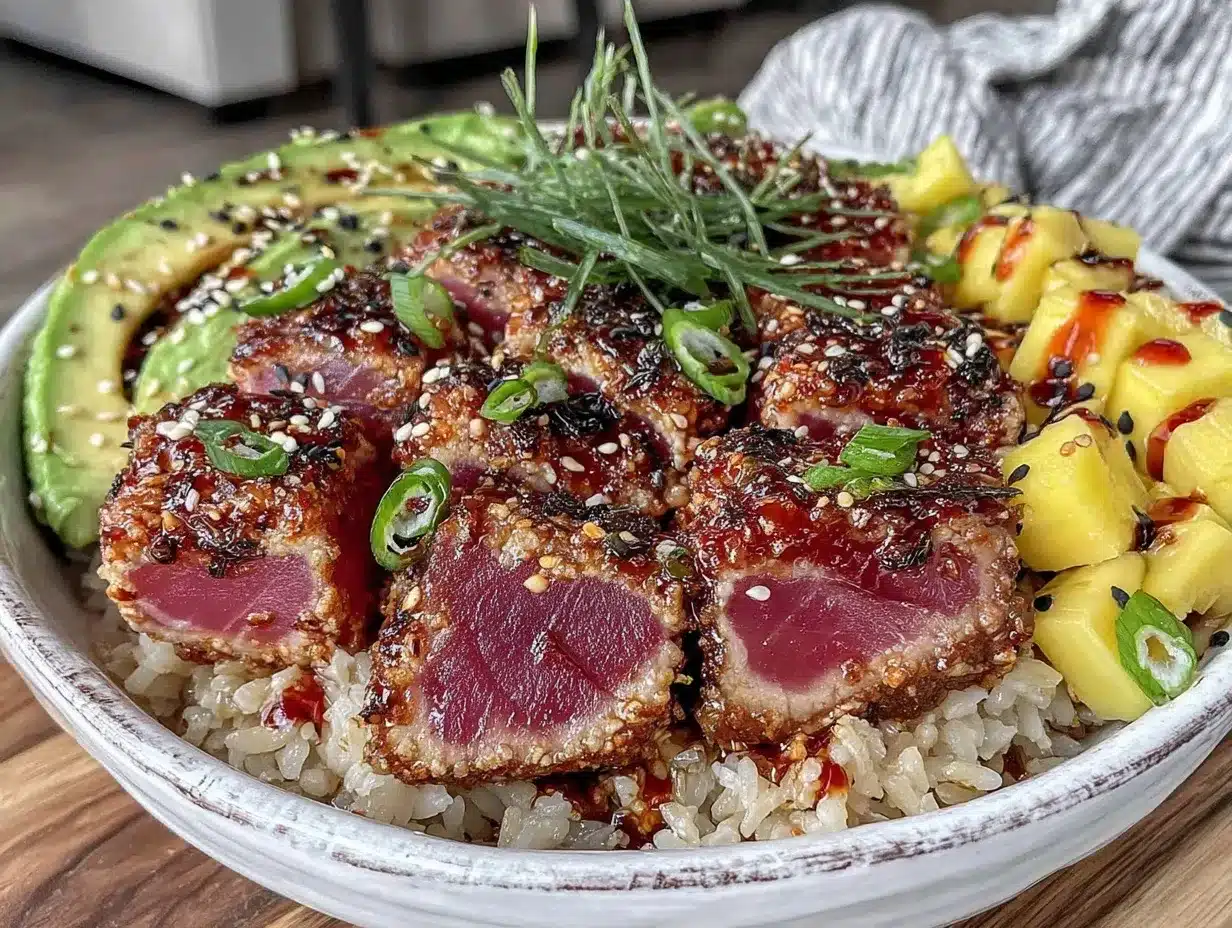
- Cook the rice: Rinse 2 cups (400 grams) of sushi rice under cold water until the water runs clear. Cook according to package instructions (usually about 18 minutes in a rice cooker or simmer covered on the stove). Once done, fluff with a fork and let cool slightly. This step takes around 25 minutes total.
- Prepare the dressing: In a small bowl, whisk together 2 tablespoons (30 ml) soy sauce, 1 teaspoon (5 ml) toasted sesame oil, 1 tablespoon (15 ml) rice vinegar, 1 teaspoon (5 ml) honey, and juice of half a lime. Adjust to taste if you like it tangier or sweeter.
- Prep the produce: Dice the mango and avocado into bite-sized pieces. Thinly slice 1 green onion. Set aside.
- Sear the ahi tuna: Pat the 8-ounce (225 grams) ahi tuna steak dry with paper towels. Heat a skillet over medium-high heat until very hot (about 2-3 minutes). Add a tiny drizzle of neutral oil (like canola). Place the tuna in the pan and sear for about 30-45 seconds per side to get a nice crust but keep the center rare. Remove and let rest for a couple of minutes.
- Slice the tuna: Using a sharp knife, slice the tuna into thin strips or bite-sized cubes. The contrast between the seared edges and soft center is key here.
- Assemble the bowl: Divide the rice between two bowls. Arrange the seared tuna, mango, and avocado on top. Drizzle the dressing evenly over each bowl. Sprinkle with green onion and toasted sesame seeds. Add optional garnishes like pickled ginger or seaweed flakes if you have them handy.
Pro tip: When searing, don’t overcrowd the pan. If your tuna steak is thick, consider slicing it in half horizontally to ensure even searing. Also, resting the tuna briefly lets the juices redistribute for tender bites.
Cooking Tips & Techniques
Mastering that perfect sear on ahi tuna is the heart of this recipe. Here’s what I’ve learned from a few kitchen misadventures:
- High heat is your friend: Make sure your skillet is screaming hot before adding the tuna. This helps form a golden crust without overcooking the inside.
- Minimal flipping: Resist the urge to move the fish around. Let it sear undisturbed for 30-45 seconds per side to get that beautiful crust.
- Pat dry the tuna: Moisture on the surface will steam the fish instead of searing it. A quick dab with paper towels makes a big difference.
- Rice texture matters: Slightly sticky rice works best for a poke bowl. If your rice is too dry, try adding a splash of rice vinegar while fluffing.
- Toss dressing last: Add the dressing just before serving to keep the avocado and mango fresh and vibrant.
If you ever find your tuna turning gray or mushy, it’s probably overcooked. Remember, you want that raw center for the best texture and flavor. Also, I’ve found that slicing the tuna against the grain helps keep each bite tender.
Variations & Adaptations
This poke bowl invites creativity and works well with a few tweaks based on what you have or prefer:
- Spicy Version: Add a drizzle of sriracha mayo or mix in a little chili oil with the dressing for a kick.
- Gluten-Free: Use tamari instead of soy sauce to keep the recipe gluten-free without losing flavor.
- Protein Swap: If you can’t find ahi tuna, try seared salmon or cooked shrimp for a different take.
- Grain-Free: Skip the rice and serve over cauliflower rice or mixed greens for a lighter, low-carb bowl.
- Crunch Factor: Add thinly sliced cucumber or toasted macadamia nuts for extra texture contrast. I love this addition on lazy weekends.
The first time I made a version with a spicy sesame dressing and added edamame pods, it became a family favorite—especially for those who like a little heat. Feel free to customize the bowl to your taste buds and pantry.
Serving & Storage Suggestions
This fresh seared ahi tuna poke bowl is best enjoyed immediately to appreciate its vibrant flavors and textures. Serve it slightly chilled or at room temperature with a wedge of lime on the side.
Pair it with a light, crisp white wine or iced green tea to keep the meal refreshing. If you want a simple side, a seaweed salad or a small bowl of miso soup complements it well.
For leftovers, store the components separately in airtight containers: keep the tuna chilled and the rice refrigerated. The avocado may brown over time, so it’s best to add it fresh when serving again. Reheat rice gently in the microwave or on the stove with a splash of water.
Over time, the flavors meld nicely if the bowl is dressed just before eating. But honestly, this is one of those dishes where fresh is best for that perfect balance of creamy mango, tender tuna, and fluffy rice.
Nutritional Information & Benefits
This poke bowl offers a nutritious balance of lean protein, healthy fats, and complex carbs. A typical serving (about one bowl) provides roughly:
| Calories | Approx. 450 kcal |
|---|---|
| Protein | 35 grams (from ahi tuna) |
| Fat | 18 grams (mostly from avocado and sesame oil) |
| Carbohydrates | 40 grams (mainly from rice and mango) |
Ahi tuna is rich in omega-3 fatty acids that support heart and brain health. Avocado adds fiber and monounsaturated fats, great for sustained energy. Mango provides vitamin C and antioxidants, while the sesame oil contributes beneficial compounds like sesamin.
This recipe is naturally gluten-free if you use tamari and dairy-free, making it a thoughtful choice for many dietary needs. Just be mindful of soy allergy considerations.
Conclusion
Fresh seared ahi tuna poke bowl with mango and avocado is one of those dishes that feels both special and simple—something you can whip up quickly yet savor like a little culinary treat. It’s a recipe that’s stuck with me because it balances bright, creamy, and savory flavors in a way that’s endlessly satisfying without being complicated.
Don’t hesitate to make it your own by swapping in your favorite toppings or adjusting the dressing to your liking. I love how adaptable it is—whether for a solo late-night meal or casual weekend hosting.
Give it a try and see how this poke bowl might just become your new summer favorite. And if you enjoy the fresh flavors here, you might appreciate the comforting simplicity of old-fashioned apple crisp for dessert or the hearty satisfaction of homemade old-fashioned meatloaf on cooler nights.
FAQs About Fresh Seared Ahi Tuna Poke Bowl with Mango and Avocado
Can I use frozen tuna for this poke bowl?
Frozen tuna can work if it’s thawed properly and still sushi-grade quality. Thaw in the fridge overnight and pat dry before searing to avoid excess moisture.
How do I know when the tuna is seared enough?
The edges should be golden brown while the center remains pink and raw-like. About 30-45 seconds per side on high heat usually does the trick, depending on thickness.
Is it possible to make this poke bowl vegetarian?
Yes! Swap the tuna for grilled tofu or tempeh marinated in similar flavors, and you’ll get a delicious plant-based version.
Can I prep this poke bowl in advance?
Prepare the rice and dressing ahead of time, but slice and sear tuna and dice avocado and mango just before serving for best texture and freshness.
What are good side dishes to serve with this poke bowl?
Light sides like seaweed salad, miso soup, or steamed edamame complement this bowl well without overpowering the fresh flavors.
Pin This Recipe!
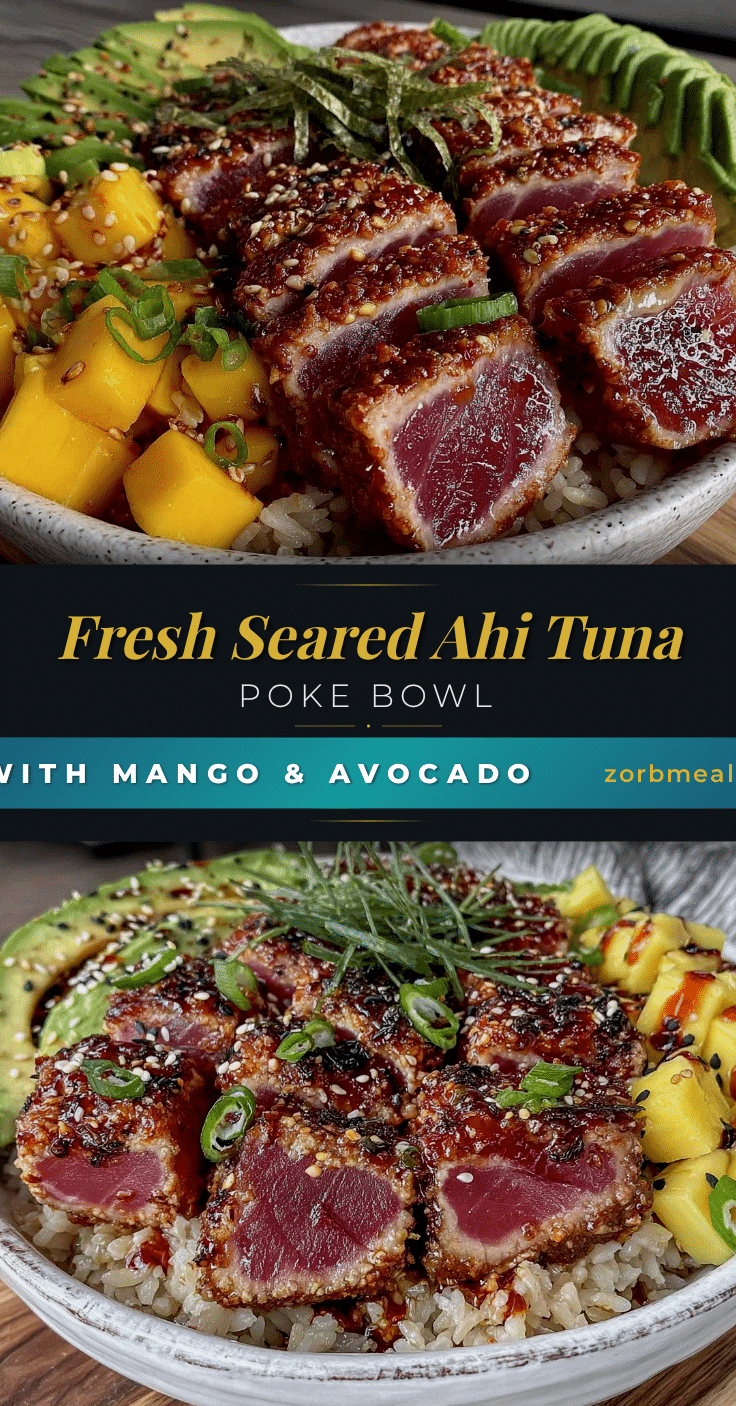
Fresh Seared Ahi Tuna Poke Bowl Recipe with Mango Avocado Easy and Delicious

A quick and fresh poke bowl featuring seared ahi tuna, ripe mango, and creamy avocado, balanced with a savory soy-based dressing. Perfect for a light yet satisfying meal.
- Prep Time: 10 minutes
- Cook Time: 15 minutes
- Total Time: 25 minutes
- Yield: 2 servings 1x
- Category: Main Course
- Cuisine: Hawaiian
Ingredients
- 8 ounces sushi-grade ahi tuna steak
- 1 large ripe mango, diced
- 1 ripe avocado, diced
- 2 cups cooked sushi rice or jasmine rice, cooled
- 2 tablespoons low-sodium soy sauce
- 1 teaspoon toasted sesame oil
- 1 tablespoon rice vinegar
- 1 teaspoon honey or agave nectar (optional)
- 1 stalk green onion, thinly sliced
- 1 tablespoon toasted sesame seeds
- Juice of ½ lime
- Optional garnishes: pickled ginger, seaweed flakes, thinly sliced radishes
Instructions
- Rinse 2 cups (400 grams) of sushi rice under cold water until the water runs clear. Cook according to package instructions (about 18 minutes in a rice cooker or simmer covered on the stove). Fluff with a fork and let cool slightly (about 25 minutes total).
- In a small bowl, whisk together 2 tablespoons soy sauce, 1 teaspoon toasted sesame oil, 1 tablespoon rice vinegar, 1 teaspoon honey, and juice of half a lime. Adjust to taste.
- Dice the mango and avocado into bite-sized pieces. Thinly slice the green onion and set aside.
- Pat the ahi tuna steak dry with paper towels. Heat a skillet over medium-high heat until very hot (2-3 minutes). Add a small drizzle of neutral oil. Sear the tuna for 30-45 seconds per side to create a crust while keeping the center rare. Remove and let rest for a couple of minutes.
- Slice the tuna into thin strips or bite-sized cubes.
- Divide the rice between two bowls. Arrange the seared tuna, mango, and avocado on top. Drizzle the dressing evenly over each bowl. Sprinkle with green onion and toasted sesame seeds. Add optional garnishes if desired.
Notes
Use sushi-grade tuna for safety and best flavor. Pat tuna dry before searing to get a good crust. Do not overcrowd the pan. Rest tuna after searing to redistribute juices. Add dressing just before serving to keep avocado and mango fresh. For gluten-free, substitute tamari for soy sauce. Optional spicy version: add sriracha mayo or chili oil.
Nutrition
- Serving Size: 1 bowl
- Calories: 450
- Fat: 18
- Carbohydrates: 40
- Protein: 35
Keywords: ahi tuna poke bowl, seared tuna, mango avocado bowl, quick poke bowl, fresh poke recipe, gluten-free poke, healthy poke bowl