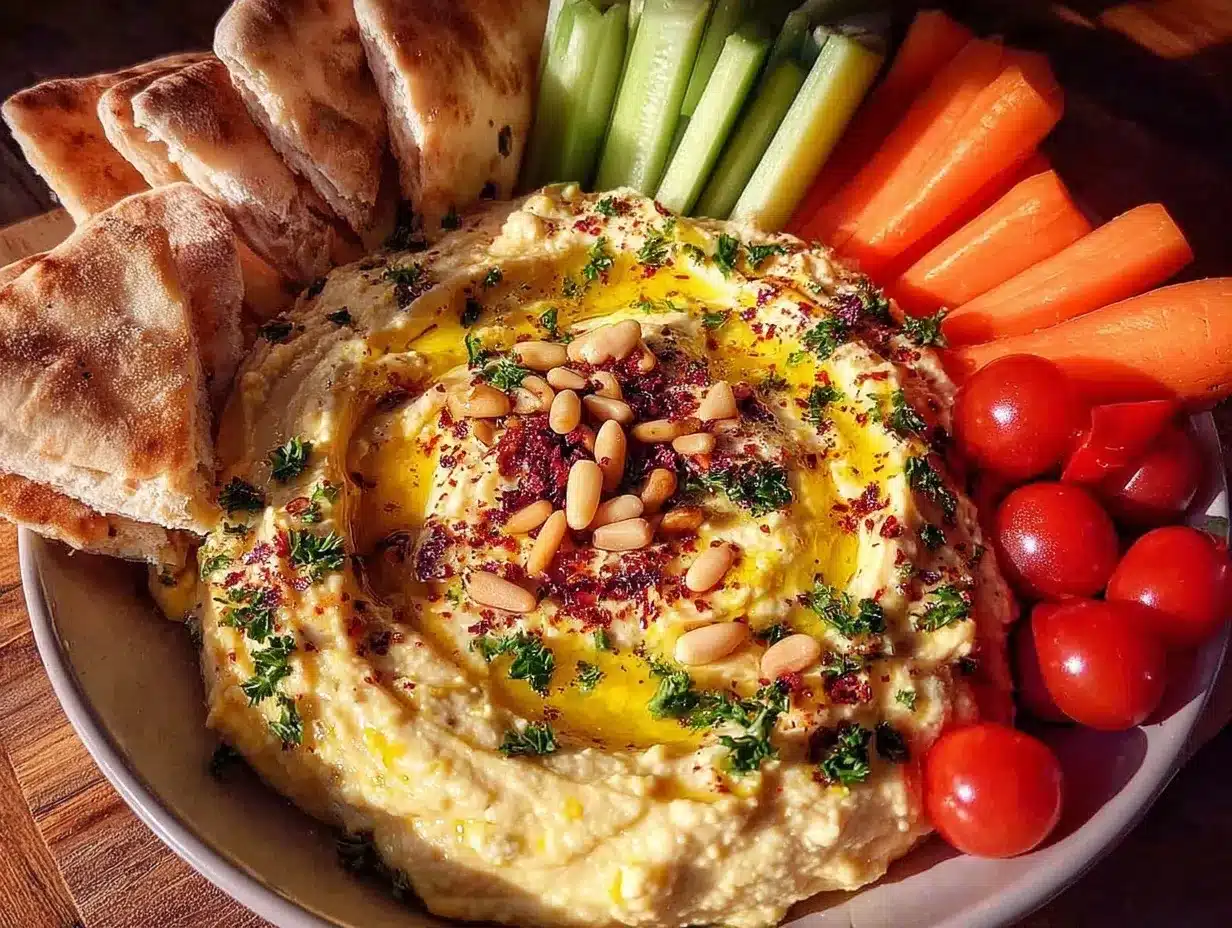
“Hey, you’ve gotta try this,” my friend texted me one evening after a long day of juggling work and a cranky toddler. Honestly, I wasn’t in the mood to cook, but her message came with a picture: a vibrant, fresh Mediterranean hummus platter, loaded with colorful veggies, fluffy pita, and a drizzle of golden olive oil. I was skeptical at first—could something so simple really hit the spot? Well, it did more than that.
That night, I threw together my own version of this easy, healthy snack idea. The mix of creamy hummus, crunchy crudités, and warm pita felt like a little Mediterranean escape right in my kitchen. It was the kind of snack that felt special enough for guests but easy enough for a solo late-night nibble while catching up on my favorite show.
The smell of garlic and lemon in the hummus, the fresh snap of cucumbers and bell peppers, and the earthy warmth of toasted pita—it all came together in a way that felt both indulgent and wholesome. No fuss, no complicated prep, just honest-to-goodness flavor. I kept making it over and over that week, sometimes swapping in different veggies or adding a sprinkle of za’atar for a little extra oomph.
It’s funny how a simple hummus platter can become a little ritual, a moment to slow down when life’s a bit hectic. This recipe stuck with me because it’s more than just a snack; it’s a small celebration of fresh food and easy comfort. If you’re looking for a dish that’s bright, satisfying, and totally doable, this Mediterranean hummus platter might just become your go-to too.
Why You’ll Love This Recipe
After testing this fresh loaded Mediterranean hummus platter countless times, I can say it’s one of those recipes that checks all the boxes for busy folks and flavor lovers alike. Here’s why it’s such a win:
- Quick & Easy: Ready in about 15 minutes, perfect for busy weeknights or spontaneous get-togethers.
- Simple Ingredients: Uses mostly pantry staples and fresh produce you can grab from any grocery store.
- Perfect for Entertaining: Ideal for casual gatherings, picnics, or a light lunch that feels special without stress.
- Crowd-Pleaser: Even picky eaters love the creamy hummus paired with crunchy veggies and soft pita.
- Unbelievably Delicious: The balance of creamy, tangy, fresh, and savory flavors is just right every time.
What makes this platter different from others? Well, it’s all about layering textures and freshness. I blend the hummus with just the right amount of lemon juice and tahini to get that smooth, velvety texture without it being too heavy. The fresh veggies bring a crisp contrast, and the pita—lightly toasted or warm straight from the bag—makes each bite feel complete. Honestly, it’s like comfort food with a bright, fresh twist.
It’s also a recipe that’s surprisingly versatile. Whether you’re making it for a solo snack or a full spread, it feels thoughtful and satisfying. And if you want to impress without the fuss, this platter has your back.
What Ingredients You Will Need
This fresh loaded Mediterranean hummus platter uses simple, wholesome ingredients to create bold flavors and satisfying textures without any complicated steps. Most of these are pantry staples or easy-to-find fresh produce, making it perfect for quick prep.
- For the Hummus:
- 1 can (15 oz / 425 g) chickpeas, drained and rinsed (I prefer Goya or Bumble Bee)
- 3 tablespoons tahini (sesame paste; Joyva is my go-to brand)
- 2 tablespoons fresh lemon juice (about half a lemon)
- 1 clove garlic, minced (adds a punch!)
- 2 tablespoons extra virgin olive oil, plus extra for drizzling
- 1/2 teaspoon ground cumin
- Salt to taste (start with 1/2 teaspoon)
- 2-3 tablespoons cold water (to loosen the hummus)
- For the Crudités:
- 1 medium cucumber, sliced into rounds or sticks
- 1 red bell pepper, sliced thinly
- 1 cup cherry tomatoes, halved
- 1 small carrot, peeled and sliced into sticks
- A handful of radishes, thinly sliced
- For the Pita:
- 4 pita breads, warmed or lightly toasted (whole wheat or regular)
- Toppings & Extras:
- Fresh parsley or cilantro, chopped (for garnish)
- Za’atar seasoning or smoked paprika (optional, for a flavor kick)
- Olives (Kalamata or green, pitted)
- Feta cheese crumbles (optional)
If you want to make this gluten-free, swap pita for gluten-free flatbread or serve with extra veggies. For a dairy-free option, just skip the feta or use a plant-based cheese alternative.
Equipment Needed
- Food processor or high-speed blender – This is key for smooth, creamy hummus. I’ve tried both; a food processor gives a chunkier texture while a blender makes it silky.
- Sharp knife – For slicing the fresh vegetables and pita.
- Cutting board – Preferably a sturdy one to work safely with crisp veggies.
- Mixing bowls – One for the hummus and another to arrange the platter.
- Measuring spoons and cups – To get the balance of flavors just right, especially for tahini and lemon juice.
- Serving platter or large shallow bowl – For a beautiful presentation.
If you don’t have a food processor, a sturdy blender will do (you might need to scrape down the sides a few times). For budget-friendly options, many brands offer compact processors that work great without breaking the bank. I also recommend occasionally cleaning the blades well to keep the hummus tasting fresh and to maintain sharpness.
Preparation Method
- Prepare the hummus base: In your food processor, combine the drained chickpeas, tahini, fresh lemon juice, minced garlic, ground cumin, and salt. Pulse briefly to start breaking down the chickpeas. Expect it to look a bit chunky at this stage. (About 2 minutes)
- Add olive oil and water: While the processor runs, slowly drizzle in the 2 tablespoons of olive oil and 2-3 tablespoons of cold water. This loosens the mixture and creates a creamy texture. Scrape down the sides as needed. Stop when you reach your preferred consistency – smooth but still slightly thick. (1-2 minutes)
- Taste and adjust: Give it a quick taste. If it’s too thick, add a little more water. If it needs more brightness, add extra lemon juice. More salt or garlic? Now’s the time to tweak. (1 minute)
- Prep the vegetables: While the hummus blends, wash and slice your cucumber, bell pepper, cherry tomatoes, carrots, and radishes. Try to keep slices relatively uniform for a nice presentation. (5-7 minutes)
- Warm the pita: Heat pita breads in a dry skillet over medium heat for about 30 seconds each side or wrap in foil and warm in a 350°F (175°C) oven for 5 minutes. Cut into triangles or strips for easy dipping. (5 minutes)
- Assemble the platter: Spread the hummus in a shallow bowl or on a serving plate. Drizzle extra virgin olive oil over the top. Arrange the fresh crudités and pita around or on top of the hummus. Scatter olives, feta crumbles, and a sprinkle of za’atar or smoked paprika if desired. Finish with fresh parsley or cilantro for a pop of color. (5 minutes)
- Final touch: Let the platter sit at room temperature for 10 minutes before serving to allow flavors to meld and the pita to warm naturally. (Optional)
Pro tip: If your hummus feels dry or grainy, adding a spoonful of plain Greek yogurt (or dairy-free yogurt) can smooth it out without overpowering the flavor. This trick saved me during a few hurried makeovers!
Cooking Tips & Techniques
Making a fresh Mediterranean hummus platter is pretty straightforward, but a few tricks can take it beyond basic:
- Use room temperature ingredients: Chickpeas and lemon juice taste best when not chilled, helping the flavors blend better in the hummus.
- Rinse chickpeas well: This washes away canning liquid that can taste metallic or tinny.
- Slowly add liquid: Adding olive oil and water bit by bit helps avoid overly runny hummus.
- Garlic intensity: Fresh garlic can be strong—start with one clove and add if you want more punch.
- Toast pita lightly: This brings out a nutty aroma and prevents it from becoming soggy on the platter.
- Multitask: While the hummus blends, prep your vegetables to save time.
- Presentation matters: Drizzling olive oil on top and adding fresh herbs makes this simple dish feel special.
- Over-blending caution: Blend just until smooth; over-processing can make hummus gummy.
Once, I accidentally skipped the cumin and it tasted flat. Lesson learned—small spices really do make a difference! Also, I’ve found that fresh lemon juice beats bottled every time, but if you’re in a pinch, it’s okay to substitute.
Variations & Adaptations
This Mediterranean hummus platter is wonderfully flexible, so you can tweak it to your mood or dietary needs.
- Spicy twist: Add a pinch of cayenne or a swirl of harissa paste into the hummus for heat.
- Roasted red pepper hummus: Blend in a roasted red pepper for a smoky, sweet flavor variation.
- Seasonal crudités: Swap fresh veggies based on the season—summer zucchini ribbons, winter roasted beets, or spring asparagus.
- Different dips: Pair with baba ganoush or tzatziki instead of hummus for variety.
- Protein boost: Sprinkle toasted pine nuts or add a side of marinated grilled chicken for a heartier platter.
- Allergen-friendly: Replace tahini with sunflower seed butter if sesame is an issue.
Personally, I love swapping pita for crunchy lavash crackers when I want more crunch or serving alongside crispy Maryland crab cakes for a fun surf-and-turf appetizer combo.
Serving & Storage Suggestions
This platter is best served fresh at room temperature, letting the flavors shine and the textures stay crisp. If you’re serving guests, consider setting out bowls of extra olive oil, za’atar, and olives for folks to customize their bites.
Complement with light sides like a crisp green salad or a chilled white wine to keep things balanced. For a casual family night, pair with warm pita and a refreshing cucumber salad.
To store, cover the hummus tightly in an airtight container and refrigerate up to 4 days. Keep cut veggies in separate containers to maintain crunch. Pita is best warmed fresh but can be wrapped in foil and reheated in a toaster oven or skillet.
Reheat pita gently to avoid drying out, and note that hummus may thicken slightly after chilling—just stir in a little water or olive oil to loosen before serving again.
Nutritional Information & Benefits
One serving (about 1/4 of the platter with pita and veggies) typically contains approximately:
| Calories | 250-300 kcal |
|---|---|
| Protein | 8-10 g |
| Fat | 12-15 g (mostly healthy fats from olive oil and tahini) |
| Carbohydrates | 30-35 g |
| Fiber | 7-9 g |
Hummus is packed with plant-based protein and fiber from chickpeas, which helps keep you full and supports digestion. Olive oil adds heart-healthy monounsaturated fats, and fresh veggies bring vitamins, minerals, and antioxidants to the table. This platter is naturally gluten-free if you swap out pita for gluten-free options, and it fits well into vegetarian and vegan diets (just skip the optional feta).
From my perspective, this platter isn’t just about nutrition—it’s about eating well without stress, and that’s a kind of wellness all its own.
Conclusion
This fresh loaded Mediterranean hummus platter with pita and crudités has become one of those recipes I reach for when I want something tasty, wholesome, and effortlessly beautiful. It’s got the kind of fresh, vibrant flavors that make you want to linger over a snack and savor the moment.
Feel free to make it your own—swap veggies, toss on your favorite toppings, or pair with a side that fits your mood. I love how this platter feels both comforting and light, perfect for any time of day.
If you try it, I’d love to hear how you put your own spin on the recipe. Sharing those little twists is part of what makes cooking fun, isn’t it? Here’s to many happy snacking moments ahead!
Frequently Asked Questions
Can I make the hummus ahead of time?
Yes! Hummus can be made up to 3 days in advance. Store it in an airtight container in the fridge and give it a good stir before serving.
What can I use instead of pita bread?
Great alternatives include gluten-free flatbread, crackers, or extra fresh veggies like celery and bell pepper strips for dipping.
How do I keep the veggies crisp?
Store cut vegetables in cold water in the fridge until serving to keep them crisp and fresh. Drain and pat dry before arranging on the platter.
Is tahini necessary for hummus?
Tahini adds a nutty richness, but if you don’t have it, you can omit or substitute with a mild nut butter like sunflower seed butter for a different but tasty flavor.
Can I add other toppings to the platter?
Absolutely! Ingredients like roasted chickpeas, pine nuts, chopped herbs, or even a drizzle of pomegranate molasses add wonderful texture and flavor.
For more easy, crowd-pleasing dishes that bring comfort and flavor to your table, you might enjoy the cozy grandma’s Sunday pot roast or the creamy southern banana pudding. Both are classics that pair beautifully with a light snack like this Mediterranean platter for a balanced meal experience.
Pin This Recipe!
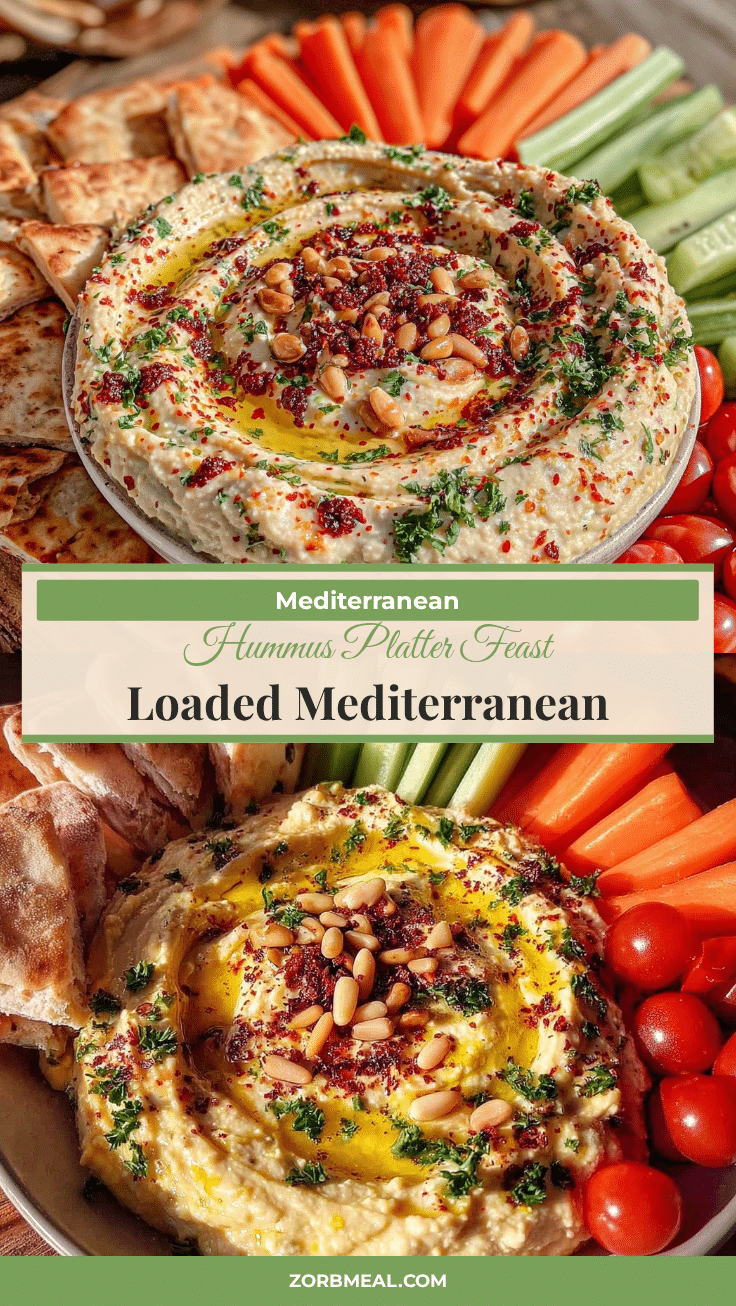
Fresh Loaded Mediterranean Hummus Platter
A quick and easy Mediterranean hummus platter loaded with creamy hummus, fresh crunchy veggies, warm pita, and flavorful toppings. Perfect for a healthy snack or casual entertaining.
- Prep Time: 10 minutes
- Cook Time: 5 minutes
- Total Time: 15 minutes
- Yield: 4 servings 1x
- Category: Snack
- Cuisine: Mediterranean
Ingredients
- 1 can (15 oz / 425 g) chickpeas, drained and rinsed
- 3 tablespoons tahini (sesame paste)
- 2 tablespoons fresh lemon juice (about half a lemon)
- 1 clove garlic, minced
- 2 tablespoons extra virgin olive oil, plus extra for drizzling
- 1/2 teaspoon ground cumin
- Salt to taste (start with 1/2 teaspoon)
- 2–3 tablespoons cold water (to loosen the hummus)
- 1 medium cucumber, sliced into rounds or sticks
- 1 red bell pepper, sliced thinly
- 1 cup cherry tomatoes, halved
- 1 small carrot, peeled and sliced into sticks
- A handful of radishes, thinly sliced
- 4 pita breads, warmed or lightly toasted (whole wheat or regular)
- Fresh parsley or cilantro, chopped (for garnish)
- Za’atar seasoning or smoked paprika (optional)
- Olives (Kalamata or green, pitted)
- Feta cheese crumbles (optional)
Instructions
- In a food processor, combine drained chickpeas, tahini, fresh lemon juice, minced garlic, ground cumin, and salt. Pulse briefly to start breaking down the chickpeas (about 2 minutes).
- While the processor runs, slowly drizzle in 2 tablespoons olive oil and 2-3 tablespoons cold water to loosen the mixture and create a creamy texture. Scrape down sides as needed. Stop when smooth but slightly thick (1-2 minutes).
- Taste and adjust seasoning: add more water if too thick, more lemon juice for brightness, or more salt/garlic as desired (1 minute).
- Wash and slice cucumber, bell pepper, cherry tomatoes, carrots, and radishes into uniform pieces for presentation (5-7 minutes).
- Warm pita breads in a dry skillet over medium heat for about 30 seconds each side or wrap in foil and warm in a 350°F (175°C) oven for 5 minutes. Cut into triangles or strips (5 minutes).
- Spread hummus in a shallow bowl or serving plate. Drizzle extra virgin olive oil on top. Arrange fresh crudités and pita around or on top of the hummus. Scatter olives, feta crumbles, and sprinkle za’atar or smoked paprika if desired. Garnish with fresh parsley or cilantro (5 minutes).
- Optional: Let the platter sit at room temperature for 10 minutes before serving to allow flavors to meld and pita to warm naturally.
Notes
Use room temperature ingredients for best flavor. Rinse chickpeas well to remove canning liquid taste. Add liquids slowly to avoid runny hummus. Toast pita lightly to prevent sogginess. If hummus is dry or grainy, add a spoonful of plain Greek or dairy-free yogurt to smooth it out. Store hummus in airtight container refrigerated up to 4 days. Keep cut veggies in cold water to maintain crispness.
Nutrition
- Serving Size: About 1/4 of the pla
- Calories: 275
- Sugar: 5
- Sodium: 300
- Fat: 13.5
- Saturated Fat: 2
- Carbohydrates: 32.5
- Fiber: 8
- Protein: 9
Keywords: hummus platter, Mediterranean snack, healthy snack, easy appetizer, pita and veggies, vegetarian, vegan, gluten-free option