“You really have to try these rolls,” my coworker said over coffee one hectic morning, sliding a small box across the table. I glanced inside to see perfectly soft, pillowy Japanese milk bread rolls—nothing like any roll I’d ever made or bought. Honestly, I was skeptical. Bread baking always felt a bit intimidating, and making something so light and fluffy from scratch? It sounded almost too good to be true.
But that afternoon, worn out from a day packed with deadlines and endless emails, I found myself craving a little comfort—something warm, simple, and satisfying. So I pulled out my ingredients and gave it a shot. The dough was surprisingly forgiving, and as it rose, the smell filled my kitchen with a gentle sweetness that reminded me of cozy bakeries I had visited on trips to Japan.
When those rolls finally came out of the oven, golden and soft, I took a bite and almost closed my eyes in relief. They weren’t just soft—they were clouds of buttery, milky goodness, perfectly tender and just slightly sweet. It felt like a quiet victory, a reset after a tough day, and honestly, I made these rolls three times that week, each batch a little better than the last.
Now, whenever the world feels a bit overwhelming, I find myself reaching for this recipe. It’s the kind of bread that makes you pause for a moment, savor the texture, and appreciate the simple joys of homemade food. These fluffy Japanese milk bread rolls from scratch aren’t just bread; they’ve become a little pocket of calm in my busy life.
Why You’ll Love This Recipe
This recipe has been tested multiple times in my kitchen, earning a spot as a go-to whenever I want something soft, fluffy, and utterly delicious. It’s straightforward enough for weekday baking but special enough to impress guests without fuss.
- Quick & Easy: The dough comes together in under 20 minutes of active prep, making it perfect for busy days when you want fresh bread without the wait.
- Simple Ingredients: You don’t need anything exotic—just staple pantry items like bread flour, milk, sugar, and yeast.
- Perfect for Any Occasion: These rolls shine at brunch, dinner, or even as a sweet snack with butter and jam.
- Crowd-Pleaser: Kids adore the softness, and adults appreciate the subtle sweetness and fluffy texture.
- Unbelievably Delicious: Thanks to the “tangzhong” technique—a cooked flour and milk paste—the rolls stay moist and tender for days.
- What Sets It Apart: Unlike typical bread recipes, this one uses a milk-based starter that locks in moisture, making the rolls feel light yet rich. It’s a little trick that transforms everyday bread into something extraordinary.
Honestly, this recipe isn’t just good baking; it’s the kind that makes you stop and savor, the kind that invites second and third helpings without guilt. Whether you’re serving these with a hearty meal like a cozy Sunday pot roast or as a comforting side to a creamy New England clam chowder, these rolls fit right in.
What Ingredients You Will Need
This recipe uses simple, wholesome ingredients to deliver bold flavor and satisfying texture without the fuss. Most are pantry staples, and the few fresh ingredients add richness and softness to the dough.
- For the Tangzhong Starter:
- 1/4 cup (30g) bread flour (I recommend King Arthur for best texture)
- 1/2 cup (120ml) whole milk, room temperature
- For the Dough:
- 2 1/2 cups (320g) bread flour, plus extra for dusting
- 3 tbsp (40g) granulated sugar (feel free to use organic cane sugar)
- 1 tsp (6g) salt
- 2 tsp (7g) instant yeast (active dry yeast works, but increase proofing time)
- 1/2 cup (120ml) whole milk, warm (about 110°F / 43°C)
- 1 large egg, room temperature
- 1/4 cup (60g) unsalted butter, softened (use dairy-free butter if needed)
- For Brushing:
- 1 egg yolk beaten with 1 tbsp water (for a shiny golden crust)
You can swap whole milk for almond or oat milk for a dairy-free version. If you want a slightly less sweet roll, reduce the sugar by a tablespoon. Just be sure to keep the butter—it’s what makes these rolls so incredibly tender.
Equipment Needed
While this recipe is approachable, having the right tools makes a noticeable difference.
- Mixing Bowls: At least two—one for the tangzhong starter and one for the dough.
- Whisk and Wooden Spoon: For mixing the starter and dough.
- Kitchen Scale: Highly recommended for precise measurements, especially with flour and liquids.
- Stand Mixer with Dough Hook (optional): Makes kneading easier, but hand kneading works perfectly fine with about 10 minutes of elbow grease.
- Loaf Pan or Baking Sheet: For shaping the rolls. A 9×5 inch loaf pan gives that classic pull-apart effect, but a baking sheet works if you prefer individual rolls.
- Pastry Brush: For applying the egg wash to get that lovely golden finish.
- Clean Kitchen Towel or Plastic Wrap: To cover the dough while it rises.
If you don’t have a kitchen scale, measuring cups can suffice, but the texture might vary slightly. I’ve tried both methods and can say the scale really helps with consistency. Also, I keep a small spray bottle handy to mist the dough during proofing to prevent drying out.
Preparation Method
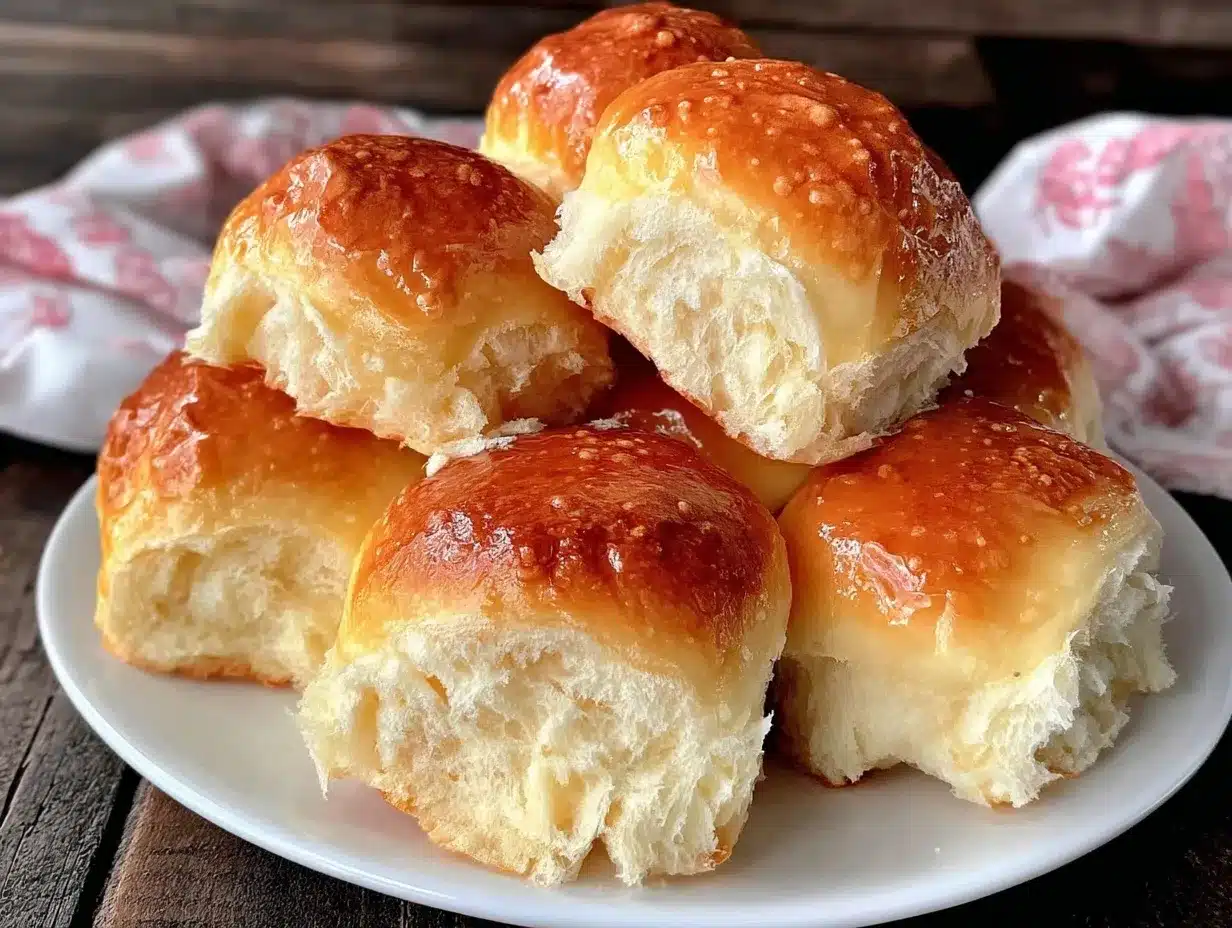
- Make the Tangzhong Starter (about 5 minutes): In a small saucepan, whisk together 1/4 cup bread flour and 1/2 cup milk until smooth. Cook over medium-low heat, stirring constantly, until the mixture thickens to a pudding-like consistency (around 149°F / 65°C). Remove from heat and let cool to room temperature. This step is crucial for that signature softness.
- Mix the Dough (about 10 minutes): In a large bowl or stand mixer, combine bread flour, sugar, salt, and instant yeast. Whisk to blend. Add the cooled tangzhong, warm milk, and egg. Mix until just combined.
- Add Butter and Knead (about 10 minutes): Add softened butter in chunks. Knead the dough until it becomes smooth, elastic, and slightly tacky but not sticky. If kneading by hand, this takes about 10 minutes; with a mixer, about 5-7 minutes on medium speed.
- First Rise (about 1 hour): Shape the dough into a ball and place it in a lightly greased bowl. Cover with a damp towel or plastic wrap. Let it rise until doubled in size. A warm spot (around 75-80°F / 24-27°C) speeds this up.
- Shape the Rolls (about 10 minutes): Punch down the risen dough gently. Divide into 8 equal portions (about 70g / 2.5 oz each). Roll each into a smooth ball. Place them side by side in a greased loaf pan or spaced evenly on a baking sheet.
- Second Rise (about 40-50 minutes): Cover again and let the rolls rise until puffy and almost doubled.
- Preheat Oven and Brush (10 minutes): Preheat the oven to 350°F (175°C). Brush the rolls gently with the egg wash for that glossy, golden crust.
- Bake (20-25 minutes): Bake until the tops are golden brown and the rolls sound hollow when tapped. If you have a thermometer, internal temp should be about 190°F (88°C).
- Cool Before Serving: Let the rolls cool in the pan for 10 minutes, then transfer to a wire rack. Resist the urge to cut right away—this allows the crumb to set and the texture to shine.
If your dough feels too sticky, add flour sparingly during kneading—too much can make rolls dense. Also, if your kitchen is cold, try proofing near a warm stove or inside an oven with just the light on. These little tricks helped me nail the rise every time.
Cooking Tips & Techniques
Getting these fluffy Japanese milk bread rolls just right takes a bit of attention, but it’s worth the effort. Here’s what I learned after a few batches.
- The Tangzhong Starter Is a Game-Changer: Don’t skip this step. It keeps the bread moist and soft for days, unlike regular rolls that get hard fast.
- Measure Flour Carefully: Flour can vary a lot in moisture and weight. Using a scale helps keep your dough consistent. If you’re eyeballing it, add flour gradually until the dough is tacky but not sticky.
- Warm Milk for Yeast Activation: Make sure your milk is warm, not hot—around 110°F (43°C). Too hot and you kill the yeast; too cold and it won’t rise well.
- Kneading Matters: Knead until the dough passes the “windowpane test” — stretch a small piece until it’s thin and translucent without tearing. That’s how you know gluten developed well.
- Proofing Environment: Dough loves warmth and humidity. Covering it with a damp towel or plastic wrap and placing it in a slightly warm spot helps it rise perfectly.
- Egg Wash for Shine: The egg wash not only adds color but also a delicate crust that’s soft yet visually appealing.
- Don’t Rush Cooling: Cutting into warm bread can ruin texture. Patience here makes a difference.
I once baked these rolls at high altitude and learned that increasing the yeast slightly and adding a touch more flour helped maintain fluffiness. Baking is part science, part feel, and part trial and error—so don’t be discouraged if your first batch isn’t perfect.
Variations & Adaptations
You can tweak this recipe to suit your taste or dietary needs without losing that signature fluffiness.
- Sweet Version: Add 2 tbsp honey or maple syrup to the dough for a lightly sweet roll that pairs beautifully with tea or jam.
- Gluten-Free Adaptation: Use a gluten-free all-purpose blend and xanthan gum, but be mindful that texture will differ. The tangzhong method still helps improve softness.
- Dairy-Free Variation: Replace milk and butter with almond milk and coconut oil or dairy-free margarine. It’s surprisingly tasty and stays soft.
- Stuffed Rolls: Before the second rise, flatten each dough ball slightly and add fillings like sweet red bean paste, cream cheese, or even savory options like ham and cheese.
- Seasonal Twist: For fall, try adding warm spices like cinnamon or nutmeg to the dough along with raisins or chopped nuts.
One of my favorite tweaks was adding a swirl of homemade garlic butter inside the rolls for a quick pull-apart garlic bread. If you like experimenting, you might enjoy pairing these rolls with rich gravies or hearty stews like that budget-friendly family dinner recipe I tried recently.
Serving & Storage Suggestions
Serve these fluffy Japanese milk bread rolls warm with a pat of butter or alongside soups and stews. They’re perfect fresh from the oven but keep well for days.
- Serving Temperature: Best enjoyed slightly warm or at room temperature to fully appreciate the soft crumb.
- Pairing Ideas: Try with hearty meals like meatloaf or classic comfort foods. They’re also amazing with sweet spreads for breakfast.
- Storage: Store in an airtight container at room temperature for up to 3 days. For longer storage, freeze them individually wrapped for up to 2 months.
- Reheating: Warm in a 300°F (150°C) oven for 5-7 minutes or microwave covered with a damp paper towel for 15 seconds to bring back softness.
- Flavor Development: The rolls taste even better the next day as the flavors meld and the crumb becomes more tender.
From experience, wrapping them tightly before freezing prevents freezer burn and keeps that delicate texture intact. It’s a treat to pull out fresh-tasting homemade bread on busy mornings!
Nutritional Information & Benefits
Each roll (about 70g) contains roughly:
| Calories | 150-170 kcal |
|---|---|
| Carbohydrates | 25g |
| Protein | 4g |
| Fat | 4g (mostly from butter) |
| Fiber | 1g |
Key ingredients like milk and butter provide calcium and vitamin A, while the bread flour offers energy-boosting carbohydrates. This recipe is naturally free from nuts and soy, but contains dairy and gluten, so plan accordingly.
From a wellness standpoint, making bread from scratch means you control the ingredients—no preservatives or additives. Plus, the tangzhong method means less reliance on fats or sugars to keep bread soft, making these rolls a more wholesome choice compared to many store-bought options.
Conclusion
These fluffy Japanese milk bread rolls from scratch have become a quiet favorite in my kitchen for good reason. They’re surprisingly easy to make, deliciously soft, and versatile enough for every meal. Whether you’re new to bread baking or looking for a reliable recipe that consistently delivers, this one has a way of winning you over bite by bite.
Feel free to customize the sweetness, try different fillings, or pair them with your favorite meals. I love how baking these rolls turns an ordinary day into a little celebration of simple, homemade goodness. I’d love to hear how your batch turns out or how you’ve made the recipe your own—drop a comment or share your tweaks anytime!
Here’s to soft, fluffy bread and the joy of baking at home.
Frequently Asked Questions
What is the tangzhong method and why is it used?
The tangzhong method involves cooking a small portion of flour with milk to create a thick paste. This paste is added to the dough to retain moisture, resulting in bread that stays soft and fresh longer.
Can I use all-purpose flour instead of bread flour?
Yes, but bread flour has a higher protein content which helps develop gluten for that soft, chewy texture. Using all-purpose flour may yield slightly denser rolls.
How do I know when the dough has risen enough?
The dough should roughly double in size. You can do the “poke test”—gently press a finger into the dough; if the indentation springs back slowly, it’s ready.
Can I make these rolls ahead of time?
Absolutely! You can prepare the dough and shape the rolls a day ahead, refrigerate overnight, then bake fresh the next day. Just allow extra time for the rolls to come to room temperature and rise before baking.
What can I do if my rolls turn out dense?
Dense rolls usually mean the dough wasn’t kneaded enough or didn’t rise properly. Make sure to knead until smooth and elastic, and give the dough enough time to double in size during proofing.
Pin This Recipe!
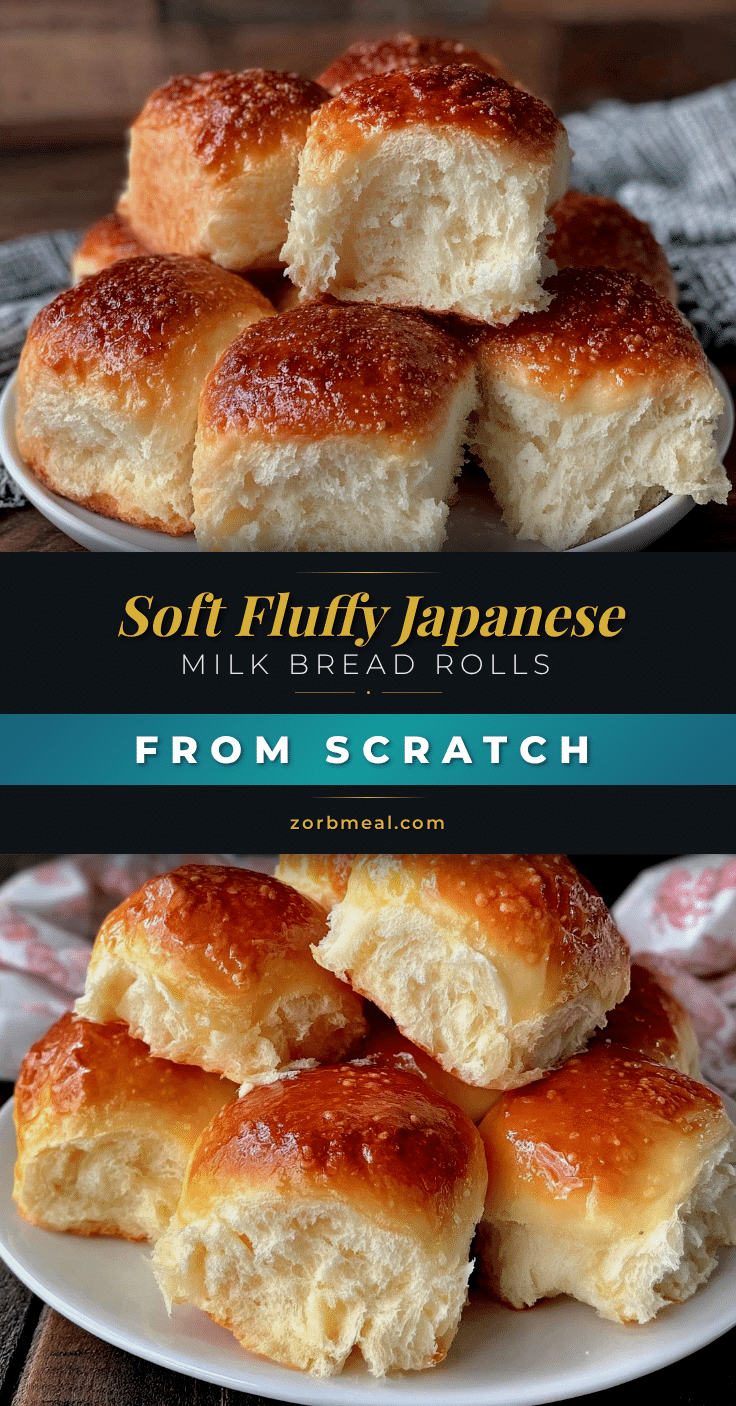
Fluffy Japanese Milk Bread Rolls from Scratch

Soft, fluffy, and slightly sweet Japanese milk bread rolls made using the tangzhong method for a tender, moist texture. Perfect for any occasion and easy enough for weekday baking.
- Prep Time: 20 minutes
- Cook Time: 25 minutes
- Total Time: 2 hours 35 minutes
- Yield: 8 rolls 1x
- Category: Bread
- Cuisine: Japanese
Ingredients
- For the Tangzhong Starter:
- 1/4 cup (30g) bread flour
- 1/2 cup (120ml) whole milk, room temperature
- For the Dough:
- 2 1/2 cups (320g) bread flour, plus extra for dusting
- 3 tbsp (40g) granulated sugar
- 1 tsp (6g) salt
- 2 tsp (7g) instant yeast
- 1/2 cup (120ml) whole milk, warm (about 110°F / 43°C)
- 1 large egg, room temperature
- 1/4 cup (60g) unsalted butter, softened
- For Brushing:
- 1 egg yolk beaten with 1 tbsp water
Instructions
- Make the Tangzhong Starter: In a small saucepan, whisk together 1/4 cup bread flour and 1/2 cup milk until smooth. Cook over medium-low heat, stirring constantly, until the mixture thickens to a pudding-like consistency (around 149°F / 65°C). Remove from heat and let cool to room temperature.
- Mix the Dough: In a large bowl or stand mixer, combine bread flour, sugar, salt, and instant yeast. Whisk to blend. Add the cooled tangzhong, warm milk, and egg. Mix until just combined.
- Add Butter and Knead: Add softened butter in chunks. Knead the dough until it becomes smooth, elastic, and slightly tacky but not sticky. Knead by hand for about 10 minutes or with a mixer for 5-7 minutes on medium speed.
- First Rise: Shape the dough into a ball and place it in a lightly greased bowl. Cover with a damp towel or plastic wrap. Let it rise until doubled in size, about 1 hour, in a warm spot (75-80°F / 24-27°C).
- Shape the Rolls: Punch down the risen dough gently. Divide into 8 equal portions (about 2.5 oz / 70g each). Roll each into a smooth ball. Place them side by side in a greased loaf pan or spaced evenly on a baking sheet.
- Second Rise: Cover again and let the rolls rise until puffy and almost doubled, about 40-50 minutes.
- Preheat Oven and Brush: Preheat the oven to 350°F (175°C). Brush the rolls gently with the egg wash for a glossy, golden crust.
- Bake: Bake for 20-25 minutes until the tops are golden brown and the rolls sound hollow when tapped. Internal temperature should be about 190°F (88°C).
- Cool Before Serving: Let the rolls cool in the pan for 10 minutes, then transfer to a wire rack. Allow the crumb to set before cutting.
Notes
Use a kitchen scale for best results. Warm milk to about 110°F to activate yeast properly. Do not skip the tangzhong starter for soft, moist rolls. Knead until dough passes the windowpane test. Proof dough in a warm, humid environment. Let rolls cool before slicing to preserve texture. For dairy-free version, substitute milk and butter with almond milk and coconut oil or dairy-free margarine. Adjust sugar to taste. Add fillings before second rise for stuffed rolls.
Nutrition
- Serving Size: 1 roll (about 2.5 oz
- Calories: 160
- Sugar: 3
- Sodium: 150
- Fat: 4
- Saturated Fat: 2.5
- Carbohydrates: 25
- Fiber: 1
- Protein: 4
Keywords: Japanese milk bread, fluffy rolls, tangzhong method, soft bread, homemade rolls, easy bread recipe, milk bread rolls