My neighbor wasn’t trying to impress me. I’d stopped by to borrow a corkscrew—mine had vanished into the same black hole that eats single socks—and this smell hit me before I even made it past her screen door. Warm, toasty, with this subtle earthy sweetness that made no sense for a Tuesday afternoon in October. She was standing at her counter, casually scraping something out of a food processor, and when I asked what she was making, she just shrugged and said, “Oh, just something weird I threw together.”
She handed me a cracker with this gorgeous orange dip on it, and honestly? I almost dropped the corkscrew. It was hummus, but not like any hummus I’d ever had. Creamy, a little smoky, with this warm spice thing happening that made me want to curl up on her couch and never leave. She mentioned pumpkin puree like it was no big deal, like she hadn’t just created something that was going to haunt my kitchen dreams for weeks. I stood there eating three more crackers while she looked for my corkscrew, which she eventually found in her utensil drawer.
I went home that night with the corkscrew and a scribbled list of ingredients on a napkin. It took me four tries to get it right—my first batch was too watery, my second had way too much cumin—but when I finally nailed it, I understood why she’d been so casual about it. This recipe doesn’t need to show off. It just needs to exist. Maybe you’ve been there, where a dish becomes a whole mood, not just something you eat. That’s this hummus. It’s the kind of thing you make when you want the kitchen to smell like comfort and you want your snack to feel like a warm hug. Let me tell you, it delivers every single time.
Why You’ll Love This Recipe
This isn’t your average hummus. I mean, I love classic hummus—I really do—but this spiced pumpkin version is something else entirely. It’s like regular hummus put on a cozy sweater and decided to stay for the whole season. Here’s why this recipe has become my most-requested appetizer:
- Quick & Easy: Comes together in under 15 minutes. No soaking chickpeas overnight, no complicated steps. Throw everything in a food processor and let it do the work.
- Simple Ingredients: You probably already have most of these in your pantry. Canned pumpkin, chickpeas, tahini—these are not fancy grocery store finds.
- Perfect for Cozy Nights: This is the snack you want when the weather turns cold and you’re craving something warm and satisfying without turning on the oven.
- Crowd-Pleaser: I’ve brought this to three different gatherings now, and every single time, someone asks for the recipe. Even people who swear they don’t like pumpkin end up going back for seconds.
- Unbelievably Delicious: The texture is ridiculously creamy—like, silky-smooth in a way that feels almost indulgent—and the spice blend is just right. Not too heavy, not too subtle.
What makes this recipe different from the dozens of pumpkin hummus recipes out there? It’s the balance. I tested this thing seven times before I was happy with it. The first few tries were either too pumpkin-forward (like eating pumpkin pie dip with crackers—weird) or not pumpkiny enough (why bother?). The trick is treating the pumpkin as a supporting player, not the star. The chickpeas still do their job, the tahini brings that nutty depth, and the pumpkin just adds this velvety texture and a hint of sweetness that plays beautifully with the warm spices.
This recipe is the kind that makes you close your eyes after the first bite. It’s comfort food reimagined—healthier than you’d expect, faster than you’d think, but with the same soul-soothing satisfaction. Perfect for impressing guests without stress, or turning a simple Tuesday night into something memorable. Honestly, it’s become my go-to for everything from holiday parties to lazy Sunday afternoons.
What Ingredients You Will Need
This recipe uses simple, wholesome ingredients to deliver bold flavor and satisfying texture without the fuss. Most of these are pantry staples or easy to find at any grocery store. Let’s break down what you’ll need and why each ingredient matters.
For the Hummus Base
- 1 can (15 oz) chickpeas, drained and rinsed — I prefer Goya or 365 Whole Foods brand for consistent texture. Rinsing removes the canned taste and makes the hummus smoother. Pro tip: reserve a tablespoon of the chickpea liquid (aquafaba) if you want extra creaminess later.
- 1 cup canned pumpkin puree — Make sure you grab 100% pure pumpkin puree, not pumpkin pie filling. The pie filling has added sugar and spices that will throw off the whole recipe. Libby’s is my go-to brand for consistent results.
- 1/4 cup tahini — Tahini is basically sesame seed butter, and it’s non-negotiable here. It adds that nutty depth that makes hummus taste like hummus. I recommend Soom or Seed + Mill for the smoothest texture. Stir your tahini well before measuring—it separates in the jar.
- 2 tablespoons extra virgin olive oil — Use a good-quality oil here since you’ll taste it. I like California Olive Ranch for its balanced, fruity flavor. Reserve a little extra for drizzling on top.
- 2 tablespoons fresh lemon juice — Fresh is absolutely worth it. Bottled lemon juice has a flat, almost metallic taste that doesn’t brighten the hummus the same way. Roll your lemon on the counter before juicing to get the most juice out.
- 1 small clove garlic, minced — One clove is plenty. Raw garlic can be overpowering, so don’t go overboard. If you want a milder garlic flavor, roast the clove first for about 10 minutes at 350°F.
- 1/2 teaspoon salt — I use fine sea salt. Start with this amount and adjust to taste at the end.
- 2-3 tablespoons ice-cold water — This is the secret to ultra-creamy hummus. The cold water helps emulsify the tahini and creates that silky texture. Add it slowly while the food processor is running.
For the Spice Blend
- 1 teaspoon ground cumin — Cumin adds warmth and earthiness. I’ve tried toasting whole cumin seeds and grinding them myself, and honestly? It’s lovely but not necessary. Pre-ground cumin from Simply Organic works beautifully.
- 1/2 teaspoon smoked paprika — This is the secret weapon. Smoked paprika adds a subtle smoky depth that makes the hummus taste like it’s been simmering all day. Regular paprika works in a pinch, but you’ll miss that cozy smokiness.
- 1/4 teaspoon ground cinnamon — Just a whisper. Cinnamon adds warmth without making the hummus taste sweet. It plays beautifully with the pumpkin and cumin.
- 1/4 teaspoon ground ginger — Another warm spice that adds complexity. If you don’t have ground ginger, a tiny pinch of nutmeg works as a substitute.
- Pinch of cayenne pepper (optional) — For a little heat. I add this about half the time, depending on my mood. It’s totally optional.
For the Topping
- 1/3 cup pepitas (pumpkin seeds) — Look for raw, shelled pepitas. Go Raw brand has great texture. Toasting them brings out their nutty flavor—we’ll do that right before serving.
- Extra drizzle of olive oil — For that gorgeous finishing touch.
- Sprinkle of smoked paprika — For color and a little extra flavor.
- Fresh parsley or cilantro (optional) — Adds a pop of green and freshness. I usually skip it if I’m feeling lazy, and it’s still beautiful.
Equipment Needed
The beauty of this recipe is that it doesn’t require a ton of fancy equipment. Here’s what you’ll need:
- Food processor — This is the most important tool. I use a 7-cup Cuisinart food processor, and it handles this recipe perfectly. If you have a smaller one, you might need to scrape down the sides more often. A high-speed blender works in a pinch, but you’ll need to stop and stir more frequently to get the right texture.
- Measuring cups and spoons — Accurate measurements matter here, especially for the spices. I use stainless steel measuring spoons because they don’t warp over time.
- Rubber spatula — For scraping down the sides of the food processor and getting every last bit of hummus out. A silicone spatula is heat-resistant and won’t scratch your equipment.
- Small skillet — For toasting the pepitas. Any non-stick or stainless steel pan works. I use my 8-inch Lodge cast iron skillet because it heats evenly.
- Serving bowl — Something wide and shallow shows off the beautiful color and texture. I love using a white ceramic bowl for contrast.
- Citrus juicer (optional but helpful) — If you make fresh lemon juice often, a simple handheld juicer makes the job easier. I have a cheap plastic one that’s lasted years.
If you don’t have a food processor, you can make this by hand with a potato masher and some serious elbow grease, but the texture won’t be as silky. Trust me, I tried it once when my food processor was in the dishwasher, and it was not the same experience. The food processor is worth the investment if you make dips or spreads regularly.
Preparation Method
Let’s make some hummus. I’ve broken this down into clear steps with all the little details I’ve learned from making this recipe more times than I can count. Take your time, and don’t rush the blending process—that’s where the magic happens.
Step 1: Prepare the Chickpeas
Drain and rinse your can of chickpeas under cold running water. Let them sit in the colander for a minute to drain off excess water. Here’s a trick I learned from my neighbor: if you want extra-smooth hummus, gently rub the chickpeas between your hands or a clean kitchen towel to remove the skins. It’s tedious, I know, but it makes a noticeable difference in texture. I only do this about half the time—when I’m feeling patient or when I’m making this for company. Most days, I skip it and the hummus turns out perfectly fine.
Step 2: Toast the Pepitas
Heat a small skillet over medium heat. Add the pepitas and toast them, stirring frequently, for 2-3 minutes until they start to brown and smell nutty. Watch them carefully—they can go from toasted to burnt in about 15 seconds. You’ll know they’re done when they start popping and releasing a warm, toasty aroma. Remove them from the pan immediately and set them aside. Don’t salt them yet; we’ll do that right before serving.
Step 3: Blend the Tahini and Lemon Juice
This is the step that makes or breaks your hummus texture. Add the tahini and fresh lemon juice to your food processor. Blend for about 1 minute until the mixture turns thick and pale. It might look a little grainy at first—that’s normal. Keep blending until it becomes smooth and creamy. This step emulsifies the tahini and creates that silky base. Scrape down the sides of the bowl once during this process.
Step 4: Add the Olive Oil and Garlic
With the food processor running, drizzle in the olive oil through the feed tube. Add the minced garlic clove. Blend for another 30 seconds until everything is well combined. You should start to smell the garlic and olive oil coming together—it’s a good sign.
Step 5: Add the Pumpkin and Spices
Add the pumpkin puree, cumin, smoked paprika, cinnamon, ginger, cayenne (if using), and salt to the food processor. Blend for 30 seconds until the mixture is smooth and uniformly orange. Scrape down the sides and bottom of the bowl with your rubber spatula to make sure everything gets incorporated.
Step 6: Add the Chickpeas
Add the drained chickpeas to the food processor. Blend for about 1 minute, then stop and scrape down the sides. Blend for another 1-2 minutes until the hummus is very smooth. This is where patience pays off—the longer you blend, the creamier it gets. If the hummus seems too thick, add the ice-cold water 1 tablespoon at a time while the processor is running. The cold water helps create that light, airy texture.
Step 7: Taste and Adjust
Stop the food processor and taste your hummus. This is the most important step. Does it need more salt? More lemon juice? A pinch more cumin? Seasoning is personal, so trust your taste buds. I usually end up adding another squeeze of lemon and a pinch of salt. Blend for another 10 seconds after any adjustments.
Step 8: Rest and Serve
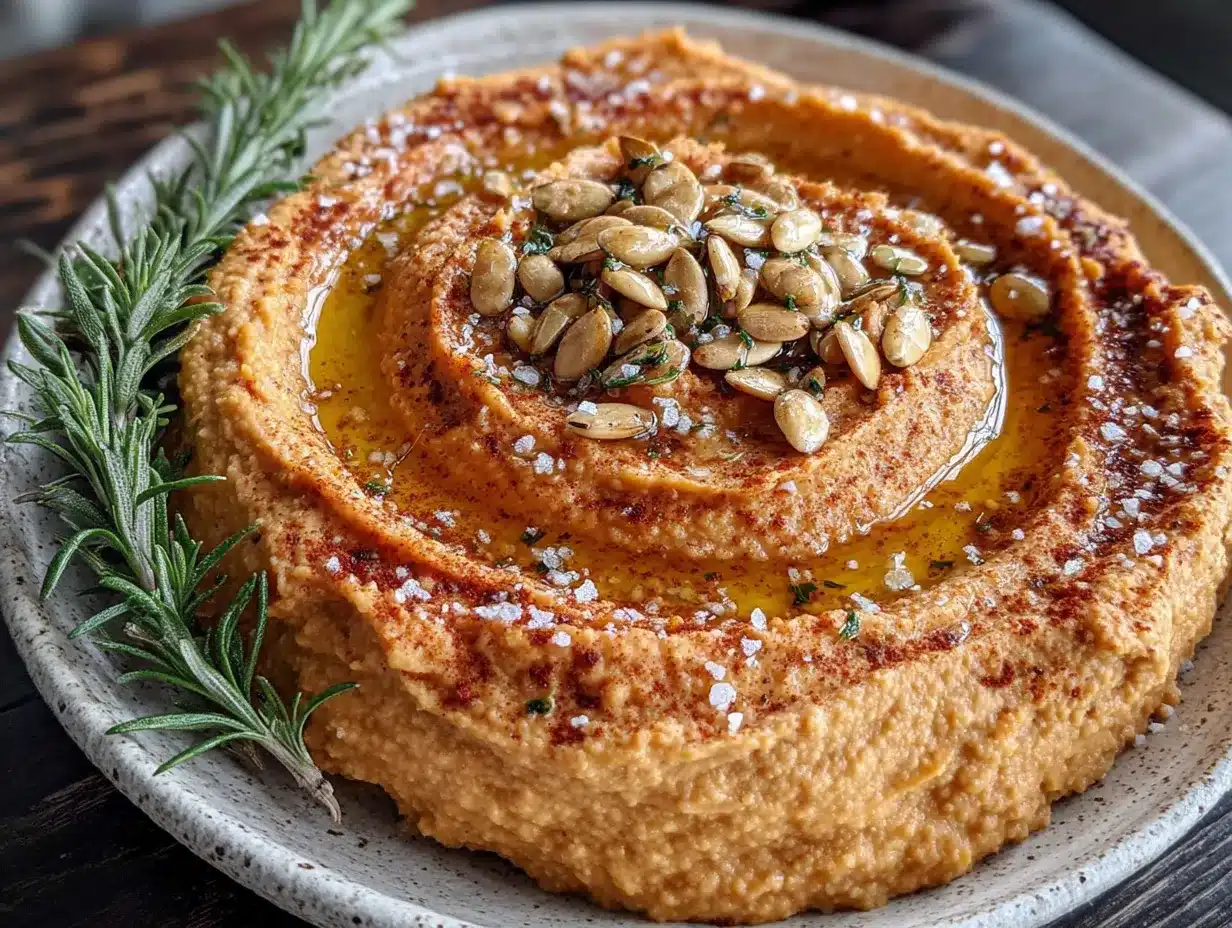
Transfer the hummus to a serving bowl. Let it rest at room temperature for at least 15 minutes—this allows the flavors to meld and the texture to settle. I know it’s tempting to dig in right away, but trust me, it’s better after a short rest. When you’re ready to serve, create a well in the center with the back of a spoon, drizzle with olive oil, sprinkle with the toasted pepitas, and add a final dusting of smoked paprika.
Cooking Tips & Techniques
After making this recipe more times than I care to count, I’ve collected a few hard-won lessons. Let me save you from making the same mistakes I did.
Don’t skip the tahini-lemon step. I know it seems fussy, but blending the tahini and lemon juice first creates an emulsion that makes your hummus significantly creamier. I skipped this step once when I was in a hurry, and the hummus was noticeably grainier. It still tasted good, but it wasn’t that silky texture you’re after. Just take the extra minute.
Temperature matters more than you think. Cold ingredients can make your hummus seize up and become stiff. Let your chickpeas come to room temperature after rinsing, and use room-temperature pumpkin puree. If you’re in a hurry, you can warm the chickpeas in the microwave for about 15 seconds. The ice-cold water at the end is the exception—that cold shock actually helps create a lighter texture.
My biggest failure with this recipe? The first time I made it, I used pumpkin pie filling instead of pure pumpkin puree. I was in a hurry, grabbed the wrong can, and ended up with hummus that tasted like dessert. It was… not good. I tried to salvage it with extra cumin and garlic, but you can’t un-sweeten hummus. Learn from my mistake: always check the label.
For the smoothest hummus, blend longer than you think you need to. I set a timer for 3 minutes of continuous blending after adding the chickpeas. It seems like a long time, but that’s what creates that velvety texture. Stop once or twice to scrape down the sides, but otherwise, let the machine do its work.
Toast your spices for extra depth. If you have an extra 2 minutes, toast the cumin and smoked paprika in a dry skillet over medium heat for about 30 seconds until they become fragrant. This wakes up the essential oils and adds a warmth you can’t get from using them raw. Just watch them carefully—burnt spices taste bitter and can ruin the whole batch.
Multitasking tip: While the hummus is resting after blending, toast your pepitas and prep any garnishes. This way everything comes together at the same time, and you’re not scrambling at the end.
Variations & Adaptations
One of the best things about this recipe is how adaptable it is. I’ve tried several variations over the months, and here are my favorites:
Roasted Garlic Version
Instead of using raw garlic, roast a whole head of garlic in the oven at 400°F for about 40 minutes until the cloves are soft and golden. Squeeze out 3-4 cloves and add them to the food processor. The roasted garlic adds a sweet, mellow depth that’s absolutely gorgeous with the pumpkin and spices. I make this version when I’m serving company—it feels a little more special.
Spicy Chipotle Twist
Add 1-2 chipotle peppers in adobo sauce (from a can) along with the spices. This gives the hummus a smoky heat that’s incredible with the pumpkin sweetness. Start with one pepper and taste before adding more—those little guys pack serious heat. I love this version with crunchy raw vegetables like bell peppers and cucumber slices.
Herb-Infused Version
Add a handful of fresh sage leaves or rosemary sprigs to the olive oil before blending. Heat the oil gently with the herbs for about 5 minutes, then let it cool and strain out the herbs. Use this infused oil in place of the regular olive oil. The herbaceous notes complement the warm spices beautifully. I tried this last Thanksgiving and it was a hit.
Dairy-Free and Vegan
This recipe is already naturally vegan and dairy-free, so no adjustments needed! Just make sure your tahini doesn’t contain any added dairy (most don’t, but it’s worth checking).
Lower-Fat Option
Reduce the olive oil to 1 tablespoon and skip the drizzle on top. The hummus won’t be quite as rich, but it will still be creamy and delicious. You can also replace the tahini with 2 tablespoons of Greek yogurt (if you’re not vegan) for a lighter option.
Different Seed Toppings
If you don’t have pepitas, toasted sunflower seeds or sesame seeds work beautifully. I’ve also used crushed pistachios for a slightly sweeter, more luxurious topping. The key is to toast whatever you’re using to bring out the nutty flavor.
Serving & Storage Suggestions
This hummus is incredibly versatile when it comes to serving. Here’s how I like to enjoy it:
Serving Temperature: This hummus is best served at room temperature or slightly warm. If you’ve refrigerated it, let it sit out for about 20-30 minutes before serving. Cold hummus loses some of its creamy texture and the flavors don’t shine as brightly.
Presentation: Transfer the hummus to a wide, shallow bowl. Use the back of a spoon to create a well in the center—this catches the olive oil and looks gorgeous. Drizzle with good olive oil, sprinkle with the toasted pepitas, and add a final dusting of smoked paprika. A few fresh parsley or cilantro leaves on top add a beautiful green contrast.
What to Dip: This hummus is fantastic with warm pita bread, pita chips, or crusty bread. It’s also wonderful with fresh vegetables—carrot sticks, cucumber rounds, bell pepper strips, and cherry tomatoes all work beautifully. I’ve even spread it on sandwiches and wraps for an extra flavor boost. My favorite pairing? Warm, salted pretzel bites. The salt and the warm spices are a match made in heaven.
Complementary Dishes: This hummus pairs beautifully with a simple Greek salad, roasted vegetables, or grilled chicken. It also works as a spread for grain bowls or buddha bowls. If you’re serving it as part of a mezze platter, include olives, pickled vegetables, and some fresh herbs for contrast.
Storage: Store leftover hummus in an airtight container in the refrigerator for up to 5 days. The flavor actually deepens and improves after a day or two—the spices have time to meld together. Just give it a good stir before serving, as some separation might occur.
Freezing: This hummus freezes beautifully! Transfer it to a freezer-safe container, leaving about half an inch of headspace for expansion. It will keep for up to 3 months. To thaw, move it to the refrigerator overnight, then let it come to room temperature before serving. Give it a good stir and add a fresh drizzle of olive oil and pepitas.
Reheating: If you prefer your hummus warm, you can gently heat it in the microwave in 15-second intervals, stirring between each. Or transfer it to a small saucepan and warm it over low heat, stirring frequently. Don’t boil it—you just want to take the chill off.
Flavor Development: Here’s something I’ve noticed: this hummus tastes even better the next day. The spices mellow and meld together, creating a more rounded, cohesive flavor. So if you’re planning a party, make it a day ahead—your future self will thank you.
Nutritional Information & Benefits
This spiced pumpkin hummus isn’t just delicious—it’s actually pretty good for you. Here’s a rough breakdown per serving (about 1/4 cup):
Estimated Nutritional Values: Approximately 120 calories, 7g fat (1g saturated), 12g carbohydrates, 4g fiber, 4g protein, 180mg sodium. These values will vary based on your specific ingredients and portion sizes.
Health Benefits: Chickpeas are packed with fiber and plant-based protein, which help keep you full and satisfied. Pumpkin puree is loaded with vitamin A (great for eye health and immune function) and antioxidants. Tahini provides healthy fats and minerals like calcium and iron. The olive oil adds heart-healthy monounsaturated fats, and the pepitas are a good source of magnesium and zinc.
Dietary Considerations: This recipe is naturally vegan, gluten-free, dairy-free, and nut-free. It’s also relatively low in sugar and can fit into a variety of eating patterns, from Mediterranean to plant-based to low-carb (in moderation, given the chickpeas).
Potential Allergens: Sesame seeds (tahini) are the main allergen to be aware of. If you have a sesame allergy, you can substitute the tahini with sunflower seed butter or omit it entirely (though the texture will be different).
Personal Wellness Perspective: I love that this recipe lets me enjoy something that feels indulgent while actually being pretty nutritious. It’s the kind of snack that makes me feel good—not just because it tastes amazing, but because I know I’m eating something that’s fueling my body well. And on a cold, gray day, that warm, spiced flavor is exactly the comfort I need.
Conclusion
This spiced pumpkin hummus has become a staple in my kitchen for good reason. It’s quick, it’s forgiving, and it delivers that cozy, comforting flavor that makes you want to curl up with a good book and a plate of warm pita. Whether you’re making it for a holiday gathering, a weeknight snack, or just because you need a little comfort in your life, this recipe delivers every single time.
Don’t be afraid to make it your own. Add more spice, less garlic, a different topping—the beauty of this recipe is that it’s incredibly adaptable. I’ve made it with roasted garlic, chipotle peppers, and even a splash of maple syrup when I wanted a slightly sweeter version. Each variation has been delicious in its own way.
Honestly, this recipe has become my go-to for everything from impromptu gatherings to quiet nights in. It reminds me of that afternoon at my neighbor’s house, when something so simple turned into something so memorable. I hope it brings you the same warmth and comfort it’s brought me.
If you make this recipe, I’d love to hear about it! Leave a comment below and let me know how it turned out—did you add any twists? What did you serve it with? Your feedback and adaptations inspire me to keep experimenting in the kitchen. Happy cooking, friends!
Frequently Asked Questions
Can I use homemade pumpkin puree instead of canned?
Absolutely! Roast a sugar pumpkin at 400°F for about 45 minutes until tender, then scoop out the flesh and puree it until smooth. Just make sure to drain any excess liquid—homemade pumpkin puree tends to be more watery than canned. You might need to reduce the ice-cold water in the recipe slightly.
Why is my hummus grainy instead of smooth?
Grainy hummus usually happens for one of three reasons: the tahini wasn’t blended long enough with the lemon juice, the chickpeas were cold when added, or the food processor wasn’t run long enough. Make sure your ingredients are at room temperature and blend for a full 3 minutes after adding the chickpeas. Removing the chickpea skins also helps achieve that silky texture.
Can I make this hummus without a food processor?
Yes, but it takes more effort. You can use a potato masher or a fork to mash the chickpeas and pumpkin together, then whisk in the remaining ingredients. The texture won’t be as smooth, but it will still taste delicious. A high-speed blender also works if you stop and scrape down the sides frequently.
How long will this hummus last in the refrigerator?
Stored in an airtight container, this hummus will keep for up to 5 days in the refrigerator. The flavor actually improves after a day or two as the spices meld together. Just give it a good stir before serving, and let it come to room temperature for the best texture and flavor.
Can I use dried chickpeas instead of canned?
Definitely! Soak 1/2 cup of dried chickpeas overnight, then cook them until very tender—about 1.5 to 2 hours. The cooking time depends on the age of your chickpeas. Cook them until they’re almost falling apart; this makes for the smoothest hummus. You’ll need about 1.5 cups of cooked chickpeas for this recipe.
Pin This Recipe!

Easy Spiced Pumpkin Hummus with Crunchy Pepitas
This spiced pumpkin hummus is creamy, a little smoky, with warm spices that make it perfect for cozy nights. It comes together in under 15 minutes with simple pantry ingredients and is a crowd-pleasing appetizer that delivers comfort in every bite.
- Prep Time: 10 minutes
- Cook Time: 5 minutes
- Total Time: 15 minutes
- Yield: 8 servings 1x
- Category: Appetizer
- Cuisine: American
Ingredients
- 1 can (15 oz) chickpeas, drained and rinsed
- 1 cup canned pumpkin puree (100% pure, not pumpkin pie filling)
- 1/4 cup tahini
- 2 tablespoons extra virgin olive oil
- 2 tablespoons fresh lemon juice
- 1 small clove garlic, minced
- 1/2 teaspoon fine sea salt
- 2–3 tablespoons ice-cold water
- 1 teaspoon ground cumin
- 1/2 teaspoon smoked paprika
- 1/4 teaspoon ground cinnamon
- 1/4 teaspoon ground ginger
- Pinch of cayenne pepper (optional)
- 1/3 cup pepitas (raw, shelled pumpkin seeds)
- Extra drizzle of olive oil (for topping)
- Sprinkle of smoked paprika (for topping)
- Fresh parsley or cilantro (optional, for garnish)
Instructions
- Drain and rinse the chickpeas under cold running water. Let them drain in a colander. For extra-smooth hummus, gently rub the chickpeas between your hands or a clean kitchen towel to remove the skins (optional).
- Heat a small skillet over medium heat. Add the pepitas and toast them, stirring frequently, for 2-3 minutes until they start to brown and smell nutty. Remove from the pan immediately and set aside.
- In a food processor, combine the tahini and fresh lemon juice. Blend for about 1 minute until the mixture turns thick and pale and becomes smooth and creamy. Scrape down the sides once during this process.
- With the food processor running, drizzle in the olive oil through the feed tube. Add the minced garlic. Blend for another 30 seconds until well combined.
- Add the pumpkin puree, cumin, smoked paprika, cinnamon, ginger, cayenne (if using), and salt to the food processor. Blend for 30 seconds until smooth and uniformly orange. Scrape down the sides and bottom of the bowl.
- Add the drained chickpeas to the food processor. Blend for about 1 minute, then stop and scrape down the sides. Blend for another 1-2 minutes until very smooth. If the hummus seems too thick, add the ice-cold water 1 tablespoon at a time while the processor is running.
- Taste the hummus and adjust seasoning as needed—add more salt, lemon juice, or a pinch more cumin. Blend for another 10 seconds after any adjustments.
- Transfer the hummus to a serving bowl. Let it rest at room temperature for at least 15 minutes to allow flavors to meld. When ready to serve, create a well in the center with the back of a spoon, drizzle with olive oil, sprinkle with the toasted pepitas, and add a final dusting of smoked paprika. Garnish with fresh parsley or cilantro if desired.
Notes
For the smoothest hummus, blend for a full 3 minutes after adding the chickpeas. Let ingredients come to room temperature before blending. The hummus tastes even better the next day as flavors meld. Store in an airtight container in the refrigerator for up to 5 days, or freeze for up to 3 months. To serve cold hummus, let it sit at room temperature for 20-30 minutes before serving.
Nutrition
- Serving Size: 1/4 cup
- Calories: 120
- Sugar: 3
- Sodium: 180
- Fat: 7
- Saturated Fat: 1
- Carbohydrates: 12
- Fiber: 4
- Protein: 4
Keywords: pumpkin hummus, spiced hummus, fall appetizer, easy hummus, pumpkin recipe, healthy snack, vegan appetizer, gluten-free dip


