This was supposed to be a whole different dinner. I had this grand plan for a pan-seared salmon with a fancy beurre blanc sauce—the kind that takes twenty minutes of whisking and a prayer that it doesn’t break. But here’s the thing about Tuesday nights: they have a way of humbling your ambitions. I got home late, the butter I meant to soften was still a cold brick in the fridge, and honestly, I was already annoyed. I grabbed the wrong baking dish—too big—and just tossed the salmon fillets in there out of spite. I squeezed a lemon that was probably past its prime, threw in some butter slices that weren’t even room temperature, and shoved the whole thing in the oven. I was mentally preparing to order takeout.
What came out of that oven was nothing like the plan. And it was better. The salmon was flaky, the butter had melted into this glorious lemony pool, and the whole thing took maybe five minutes of actual work. I stood there eating straight from the baking dish, which is not something I’m proud of, but also—maybe you know that feeling—sometimes the best meals come from your lowest expectations. That night, I scribbled the rough measurements on a sticky note and stuck it to my fridge. It’s still there, slightly grease-stained, and I use it at least twice a month. This Easy Lemon Butter Salmon Bake became my weeknight secret weapon, and honestly, it’s the recipe I tell everyone about when they say they don’t have time to cook a real dinner.
Why You’ll Love This Recipe
Let’s be real for a second. Weeknight dinners are not about showing off. They’re about getting something delicious on the table without losing your mind or spending an hour scrubbing pans. This Easy Lemon Butter Salmon Bake checks every single box.
- Quick & Easy: From fridge to table in 20 minutes flat. No marinating, no complicated techniques, no standing over a hot stove. The oven does all the heavy lifting.
- Simple Ingredients: You probably have lemon and butter in your kitchen right now. Salmon is the star, but the supporting cast is minimal—garlic, salt, pepper, maybe some fresh herbs if you’re feeling fancy. No grocery store detours required.
- Perfect for Busy Weeknights: This is the definition of a low-effort, high-reward meal. It’s fancy enough to serve to guests but simple enough to make on a Tuesday when you’re exhausted and hungry.
- Crowd-Pleaser: Even people who claim they don’t like fish love this. The butter and lemon mellow out any strong fishy flavor, and the texture is perfectly tender every time.
- Unbelievably Delicious: There’s something magic about how butter and lemon come together in the oven. The salmon stays moist, the edges get slightly crispy, and the sauce is basically liquid gold. You’ll want to spoon it over rice, potatoes, or just drink it straight (I won’t judge).
What makes this version different from every other lemon butter salmon recipe out there? It’s the technique. Most recipes have you sear the salmon first or make a separate sauce. This one is a true bake—everything goes in one dish, and the flavors meld together while you set the table or pour yourself a glass of wine. It’s not just another version; it’s the version that makes you wonder why you ever bothered with anything more complicated. Close your eyes after that first bite. You’ll see what I mean.
What Ingredients You Will Need
This recipe uses simple, wholesome ingredients that work together to create something greater than the sum of their parts. Most of these are pantry staples, which is exactly what you want on a busy weeknight.
- Salmon Fillets (4 fillets, about 6 oz each): Look for fillets that are roughly the same thickness so they cook evenly. I prefer wild-caught salmon when I can find it, but farm-raised Atlantic salmon works beautifully here too. If using frozen, make sure to thaw it completely in the refrigerator overnight and pat it very dry before baking.
- Unsalted Butter (4 tablespoons, softened): The butter is the backbone of this dish. I use unsalted so I can control the salt level. Let it come to room temperature for easier spreading, but honestly, I’ve used cold butter straight from the fridge and it still works—it just takes a minute longer to melt in the oven.
- Fresh Lemon (2 lemons): You need both the zest and the juice. One lemon for zesting and juicing into the butter mixture, and another sliced thin for topping the salmon. Don’t skip the zest—it adds a brightness that bottled lemon juice just can’t replicate.
- Garlic (4 cloves, minced): Fresh garlic is non-negotiable here. The pre-minced stuff in a jar has a different flavor that can turn bitter in the oven. Take the extra 30 seconds to mince fresh cloves.
- Salt and Black Pepper (to taste): I use kosher salt for its clean flavor. A generous pinch on each fillet makes a big difference.
- Fresh Dill or Parsley (optional, for garnish): Not strictly necessary, but fresh herbs add a pop of color and a fresh flavor that balances the richness of the butter. I’ve used dried dill in a pinch, but fresh is noticeably better.
- Red Pepper Flakes (optional, for heat): A tiny pinch adds a subtle warmth that complements the lemon. Totally optional, but I almost always add it.
That’s it. Seven ingredients, most of which you probably already have. I’ve made this with salted butter in a pinch (just reduce the added salt), and I’ve even used lime instead of lemon when I ran out. It’s forgiving that way.
Equipment Needed
One of the best things about this recipe is how little equipment it requires. Minimal cleanup is the name of the game.
- Baking Dish (9×13 inch or similar): You want a dish large enough to hold the fillets in a single layer without crowding. A glass or ceramic dish works great. I’ve also used a rimmed baking sheet lined with parchment paper, which makes cleanup even easier.
- Small Bowl: For mixing the butter, lemon zest, garlic, and seasonings together.
- Chef’s Knife and Cutting Board: For mincing garlic and slicing lemons.
- Microplane or Zester: If you don’t have one, you can use the fine side of a box grater. Honestly, a vegetable peeler can work in a pinch, but you’ll get thicker strips rather than fine zest.
- Instant-Read Thermometer (optional but recommended): Salmon is perfectly cooked at 125°F to 130°F in the center. A thermometer takes the guesswork out and prevents overcooking.
- Measuring Spoons: For the salt and pepper. Eyeballing is fine, but measuring ensures consistency.
I bought my microzester for about eight dollars years ago, and it’s still going strong. If you don’t have one, the fine side of a box grater works—just be careful not to grate your knuckles. Ask me how I know.
Preparation Method
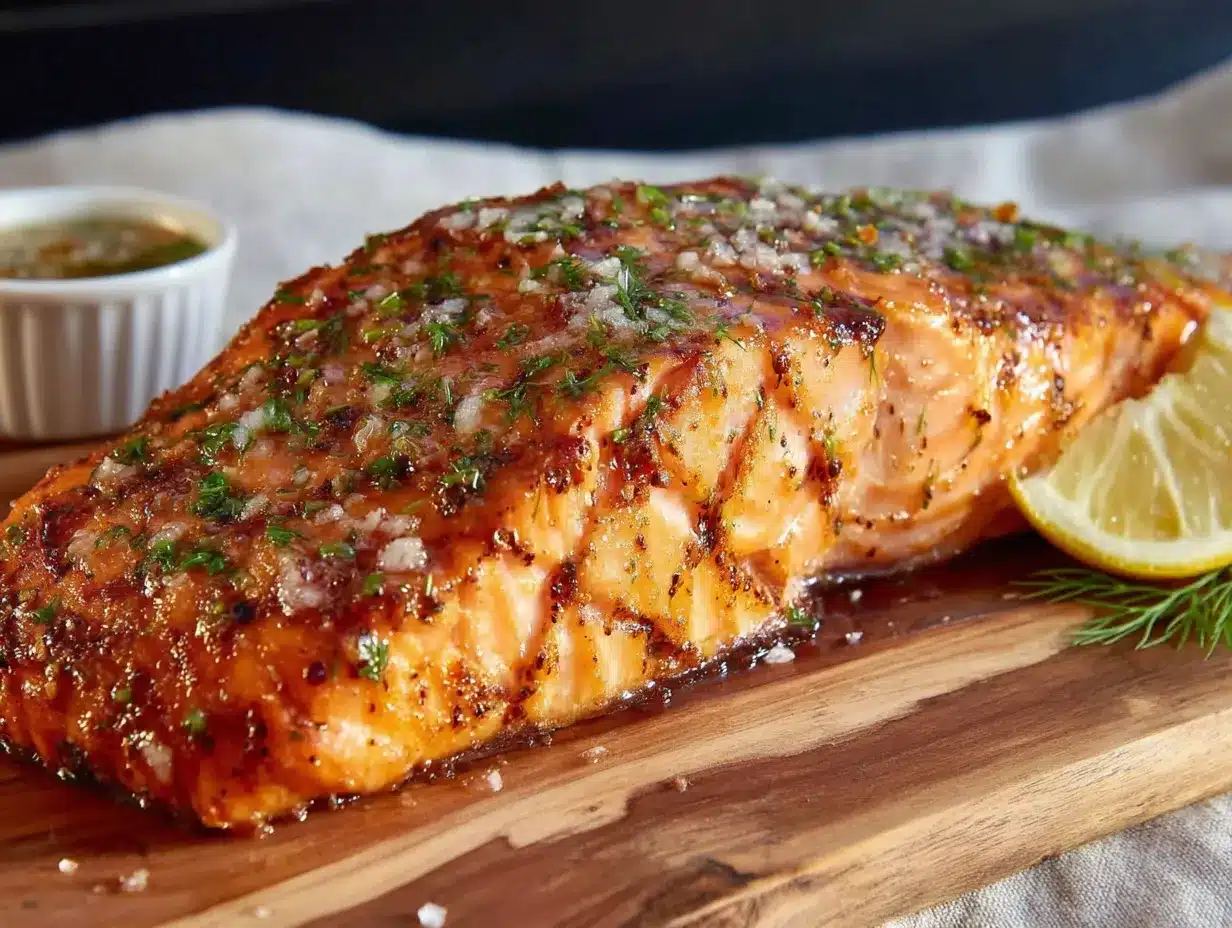
This is where the magic happens. Follow these steps, and you’ll have dinner on the table in 20 minutes flat.
- Preheat your oven to 400°F (200°C). This is important—don’t skip the preheat. A hot oven ensures the salmon cooks quickly and evenly. While the oven is heating, take your salmon fillets out of the fridge and let them sit at room temperature for about 10 minutes. This helps them cook more evenly.
- Pat the salmon fillets dry with paper towels. This is a crucial step that people often skip. Excess moisture creates steam, which prevents the salmon from developing those lovely golden edges. Pat them dry, then season both sides generously with salt and black pepper.
- In a small bowl, combine the softened butter, minced garlic, lemon zest (from one lemon), and a pinch of red pepper flakes if using. Mash it all together with a fork until it’s well combined. The mixture should be spreadable but not melted. If your butter is too cold, microwave it for 5-10 seconds to soften it slightly.
- Arrange the salmon fillets in your baking dish, skin-side down if they have skin. Leave a little space between each fillet so they cook evenly. Don’t crowd them—if your dish is too small, use two dishes or bake in batches.
- Spread the garlic-lemon butter mixture evenly over the top of each fillet. Don’t worry about being precise; just get a nice even coating. The butter will melt and create a sauce as it bakes.
- Slice the second lemon into thin rounds and place 2-3 slices on top of each fillet. This looks beautiful and infuses the salmon with even more lemony flavor as it bakes.
- Bake for 12-15 minutes, depending on the thickness of your fillets. For 1-inch thick fillets, start checking at 12 minutes. The salmon is done when it flakes easily with a fork and the internal temperature reaches 125°F to 130°F (52°C to 54°C) for medium. If you like it more well-done, cook to 135°F (57°C).
- Remove from the oven and let rest for 2 minutes. This is important—the residual heat continues cooking the salmon, and the resting time allows the juices to redistribute. Spoon some of the buttery pan sauce over the top of each fillet.
- Garnish with fresh dill or parsley and serve immediately. The salmon is best right out of the oven, when the butter sauce is still warm and glossy.
One thing I learned the hard way: don’t walk away during those last few minutes of baking. Salmon goes from perfectly flaky to dry and overcooked very quickly. Set a timer and check early. You can always bake it a minute or two longer, but you can’t undo overcooked fish.
Cooking Tips & Techniques
I’ve made this Easy Lemon Butter Salmon Bake probably fifty times by now, and I’ve made every mistake in the book so you don’t have to.
Don’t skip the pat-dry step. I know it seems fussy, but moisture is the enemy of good texture. If your salmon is wet, it will steam instead of bake, and you’ll end up with pale, sad-looking fish instead of those beautiful golden edges.
Room temperature matters. Salmon straight from the fridge takes longer to cook, which means the outside can overcook before the inside is done. Letting it sit out for 10 minutes while the oven preheats makes a real difference.
Watch your oven like a hawk. Ovens vary wildly. My friend’s oven runs hot, and her salmon is done in 10 minutes. Mine takes a full 14. The first time I made this, I set the timer for 15 minutes and ended up with salmon that was closer to shoe leather than dinner. Learn from my failure.
Use a thermometer. I cannot stress this enough. An instant-read thermometer costs about ten bucks and will save you from ever serving dry salmon again. Insert it into the thickest part of the fillet—you want 125°F for medium, which is perfectly cooked and still moist.
Make extra sauce. The buttery lemon sauce that pools in the bottom of the dish is liquid gold. I sometimes double the butter mixture just so I have extra to spoon over rice or vegetables. No regrets.
Line your dish with parchment paper. If you hate scrubbing baked-on butter residue, this is a game-changer. The salmon still gets those nice edges, but cleanup takes about ten seconds.
Variations & Adaptations
This recipe is incredibly versatile. Here are a few ways I’ve changed it up depending on what I have in the fridge or what I’m craving.
Herb-Crusted Salmon: Add a tablespoon of chopped fresh dill, parsley, and chives to the butter mixture. The herbs toast slightly in the oven and create a beautiful crust. This is my go-to when I want something that looks impressive for guests.
Spicy Lemon Salmon: Double the red pepper flakes and add a pinch of smoked paprika to the butter mixture. The smokiness pairs beautifully with the lemon. My husband requests this version constantly.
Garlic-Parmesan Salmon: Add 2 tablespoons of grated Parmesan cheese to the butter mixture and sprinkle another tablespoon over the top before baking. The cheese melts and creates a golden, crispy topping. It’s indulgent but absolutely worth it.
Mediterranean-Style: After spreading the butter, top each fillet with a few cherry tomato halves, sliced olives, and a sprinkle of oregano. The tomatoes burst in the oven and create a chunky sauce. Serve with couscous or crusty bread.
Dairy-Free Version: Substitute the butter with a good quality olive oil or vegan butter. Add an extra tablespoon of lemon juice to compensate for the missing tang. It’s not quite the same, but it’s still delicious.
Air Fryer Adaptation: Cook at 375°F (190°C) for 8-10 minutes. The air fryer creates an even crispier exterior. I’ve done this when I didn’t want to heat up the whole oven, and it works beautifully.
I tried the Mediterranean version last summer when I had an abundance of cherry tomatoes from my neighbor’s garden. It was so good that I’ve made it three times since. That’s the beauty of this recipe—it’s a perfect base for experimenting.
Serving & Storage Suggestions
This salmon is best served immediately, straight from the oven, with a generous spoonful of that buttery pan sauce over the top. The sauce is the star, so don’t let it go to waste.
What to Serve With It: I love this with simple sides that soak up the sauce. Steamed rice or quinoa is perfect. Mashed potatoes are a close second. For vegetables, roasted asparagus, green beans, or a simple arugula salad with lemon vinaigrette are all excellent choices. The salmon is rich, so keep sides light and fresh.
Storage: Leftover salmon keeps in an airtight container in the refrigerator for up to 3 days. The texture won’t be quite as perfect as fresh, but it’s still delicious. I often make extra on purpose so I have lunch for the next day.
Reheating: The microwave will dry out salmon, so avoid it if you can. Instead, reheat gently in a 300°F (150°C) oven for about 5-7 minutes, or until warmed through. You can also flake the cold salmon over a salad for an easy lunch. Honestly, cold salmon with that lemony butter sauce is pretty amazing straight from the fridge.
Freezing: Cooked salmon freezes well for up to 2 months. Wrap individual fillets tightly in plastic wrap and then foil. Thaw in the refrigerator overnight and reheat gently. The texture will be slightly softer, but the flavor will still be great.
One thing I’ve noticed: the flavors actually meld and deepen overnight. Day-old salmon, flaked over a bed of greens with some cherry tomatoes and that leftover sauce drizzled on top? That’s a lunch I look forward to.
Nutritional Information & Benefits
Salmon is one of the healthiest proteins you can eat, and this recipe keeps it that way without sacrificing flavor.
Per serving (1 fillet with sauce): Approximately 380-420 calories, 28g protein, 28g fat, 2g carbohydrates, 0g fiber, 1g sugar. These values will vary based on the exact size of your fillets and the amount of butter used.
Health Benefits: Salmon is packed with omega-3 fatty acids, which are fantastic for heart health and brain function. It’s also an excellent source of high-quality protein, B vitamins, selenium, and potassium. The lemon adds a good dose of vitamin C, and garlic has anti-inflammatory properties. Even the butter, in moderation, provides fat-soluble vitamins A, D, and E.
Dietary Considerations: This recipe is naturally gluten-free, low-carb, and keto-friendly. For dairy-free, use olive oil instead of butter. It’s also suitable for pescatarian diets. The main allergen to note is fish, obviously, and dairy from the butter.
I’m not a nutritionist, but I do pay attention to what I eat. This salmon bake makes me feel good—satisfied but not heavy, energized but not sluggish. It’s the kind of meal that supports a busy lifestyle without feeling like a compromise.
Conclusion
This Easy Lemon Butter Salmon Bake is proof that you don’t need complicated techniques or a dozen ingredients to make something truly memorable. It’s the recipe I turn to on nights when I’m tired, when I’m short on time, and when I just need something good to eat without a lot of fuss. It started as a mistake, evolved into a habit, and became a staple that I genuinely look forward to making.
I hope you’ll give it a try and make it your own. Maybe you’ll add capers or swap the lemon for lime. Maybe you’ll serve it over pasta or with a side of roasted potatoes. However you make it, I think you’ll see why this simple bake has earned a permanent spot in my weeknight rotation.
Have you made this recipe? I’d love to hear how it turned out. Drop a comment below and let me know what variations you tried, what you served it with, or any questions you have. And if you loved it, share it with a friend who needs an easy dinner win. Happy cooking!
Frequently Asked Questions
Can I use frozen salmon for this recipe?
Yes, but you need to thaw it completely first. The best way is to transfer it from the freezer to the refrigerator the night before. Once thawed, pat it very dry with paper towels before proceeding. If you try to bake it from frozen, the outside will overcook before the inside is done.
How do I know when the salmon is done?
The most reliable method is an instant-read thermometer. Insert it into the thickest part of the fillet—you’re looking for 125°F to 130°F for medium. If you don’t have a thermometer, look for the salmon to flake easily with a fork and turn opaque all the way through. The center should still be slightly translucent when you remove it from the oven, as it will continue cooking while resting.
Can I make this recipe with other types of fish?
Absolutely. This method works beautifully with other firm-fleshed fish like cod, halibut, arctic char, or sea bass. Adjust the cooking time based on the thickness of the fillets. Thinner fillets like trout will cook faster, while thicker cuts like cod might need a few extra minutes.
Can I prepare this ahead of time?
You can assemble the butter mixture up to 3 days in advance and store it in the refrigerator. You can also arrange the salmon in the baking dish, spread the butter on top, and refrigerate for up to 4 hours before baking. Just add the lemon slices right before you put it in the oven, and you may need to add 1-2 minutes to the cooking time if the dish is cold from the fridge.
What can I use instead of fresh dill?
Fresh parsley is my go-to substitute. Chives, tarragon, or basil also work well. If you only have dried herbs, use about one-third of the amount and add them to the butter mixture rather than sprinkling on top. Dried dill or dried parsley are both fine options in a pinch.
Pin This Recipe!
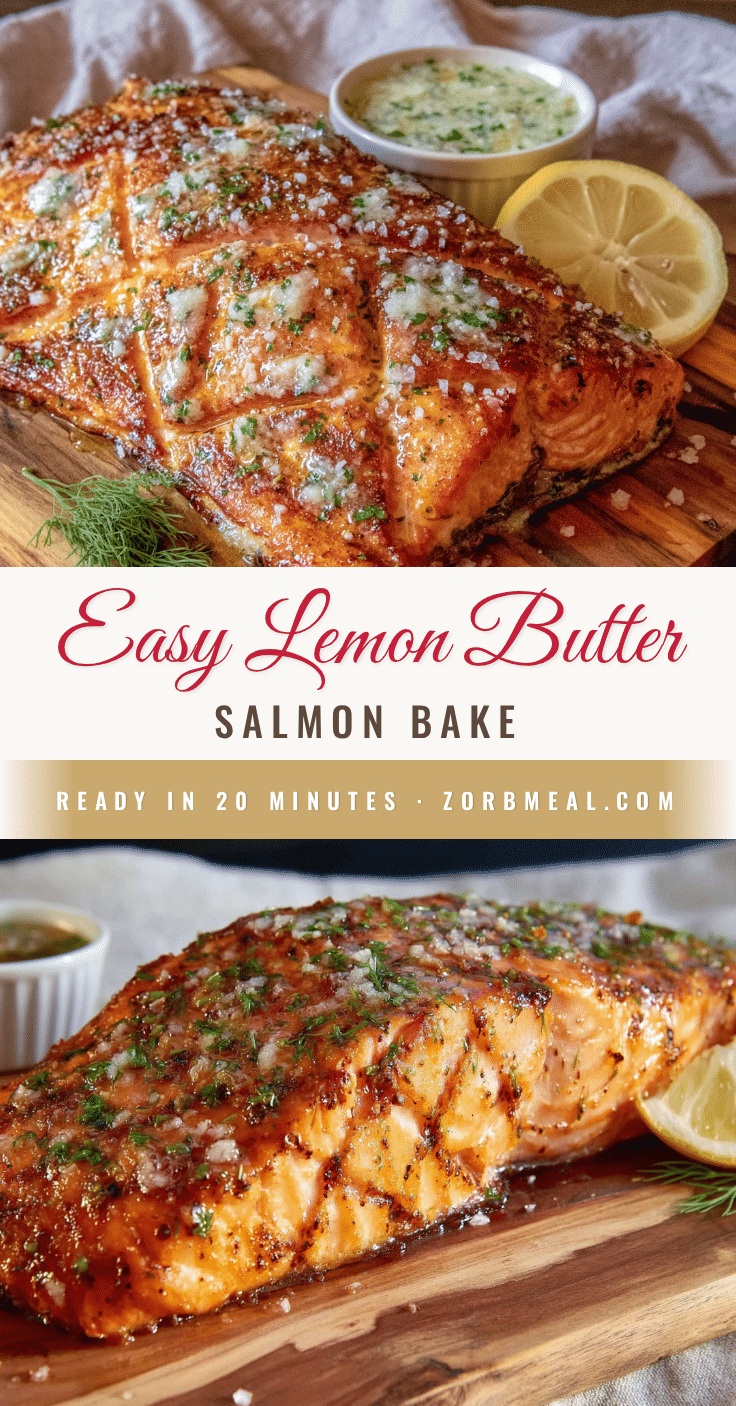
Easy Lemon Butter Salmon Bake: Ready in 20 Minutes

This Easy Lemon Butter Salmon Bake is a quick and delicious weeknight dinner that comes together in just 20 minutes. With simple ingredients like salmon, butter, lemon, and garlic, it’s a low-effort, high-reward meal that’s perfect for busy nights.
- Prep Time: 5 minutes
- Cook Time: 15 minutes
- Total Time: 20 minutes
- Yield: 4 servings 1x
- Category: Main Course
- Cuisine: American
Ingredients
- 4 salmon fillets (about 6 oz each)
- 4 tablespoons unsalted butter, softened
- 2 lemons (zest and juice of 1, the other sliced thin)
- 4 cloves garlic, minced
- Salt and black pepper to taste
- Fresh dill or parsley for garnish (optional)
- Red pepper flakes for heat (optional)
Instructions
- Preheat your oven to 400°F (200°C). Let salmon fillets sit at room temperature for about 10 minutes.
- Pat the salmon fillets dry with paper towels. Season both sides generously with salt and black pepper.
- In a small bowl, combine softened butter, minced garlic, lemon zest (from one lemon), and a pinch of red pepper flakes if using. Mash together with a fork until well combined.
- Arrange salmon fillets in a 9×13 inch baking dish, skin-side down if they have skin. Leave space between each fillet.
- Spread the garlic-lemon butter mixture evenly over the top of each fillet.
- Slice the second lemon into thin rounds and place 2-3 slices on top of each fillet.
- Bake for 12-15 minutes, depending on thickness. Salmon is done when it flakes easily with a fork and internal temperature reaches 125°F to 130°F (52°C to 54°C) for medium.
- Remove from oven and let rest for 2 minutes. Spoon some of the buttery pan sauce over the top of each fillet.
- Garnish with fresh dill or parsley and serve immediately.
Notes
Don’t skip patting the salmon dry to avoid steaming. Let salmon sit at room temperature before baking for even cooking. Use an instant-read thermometer to prevent overcooking. Make extra butter sauce for serving over rice or vegetables. Line the dish with parchment paper for easy cleanup.
Nutrition
- Serving Size: 1 fillet with sauce
- Calories: 400
- Sugar: 1
- Sodium: 300
- Fat: 28
- Saturated Fat: 12
- Carbohydrates: 2
- Protein: 28
Keywords: salmon, lemon butter, easy dinner, weeknight meal, baked salmon, quick recipe


