I figured focaccia had to be a hands-on, all-day affair — you know, hours of kneading, folding, and obsessing over dough that never seemed to listen. It took about two tries for that notion to completely unravel. Honestly, this crispy no-knead rosemary garlic sourdough focaccia recipe came into my life on a day I was half-tempted to buy bread but stubbornly decided to “just try one thing.” The dough was shaggy, slack, and frankly looked like a mess after mixing. But somewhere between a lazy overnight rise and a quick, olive oil-slicked bake, magic happened.
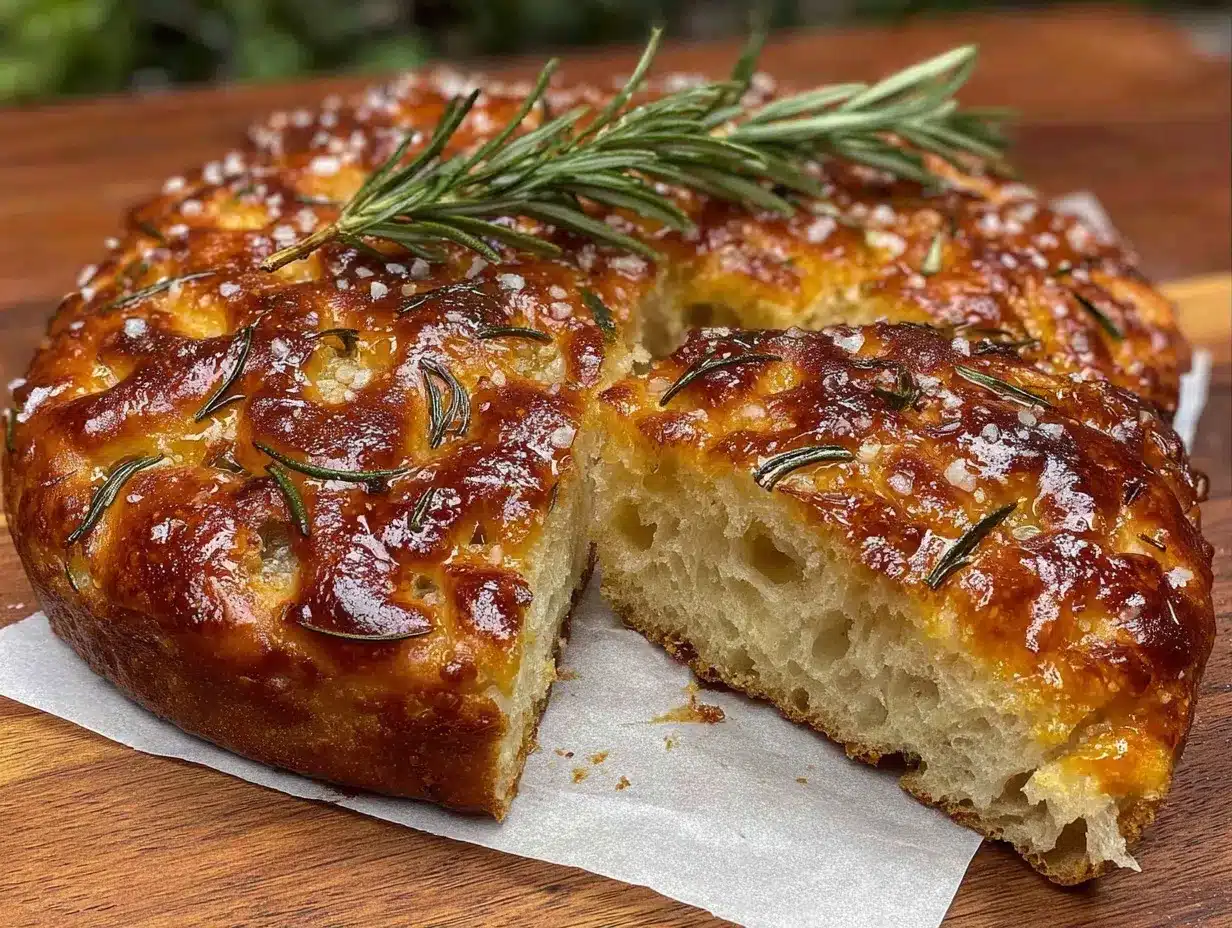
The crust turned out crackly and golden, flecked with fragrant rosemary and those garlicky pockets that made me pause mid-bite, wondering if I’d just stumbled on bread nirvana. The inside was chewy with just the right tang from the sourdough starter, but without the fuss of traditional kneading. It was like the bread and I had a silent agreement: you do your thing, I’ll trust the process. No wonder this recipe stuck — it’s proof that great homemade bread doesn’t have to be complicated or intimidating.
What’s been quietly satisfying about this focaccia is how it fits into my kitchen rhythm. I can mix the dough before bed, let it rest on the counter, and wake up to a bread scenario that’s both rustic and polished. Plus, the rosemary and garlic combo is such an easy flavor punch that even a distracted cook like me feels like a pro. This isn’t just another bread recipe; it’s the kind that makes you want to slow down, savor, and maybe even share a piece or two with friends over something simple, like a creamy buffalo chicken dip or a fresh caprese skewer.
So yeah, it’s not just bread — it’s the kind of homemade comfort that sneaks up on you and sticks around. And that, honestly, is why I keep coming back to this crispy no-knead rosemary garlic sourdough focaccia.
Why You’ll Love This Crispy No-Knead Rosemary Garlic Sourdough Focaccia Recipe
After testing countless focaccia recipes, this one stood out for reasons that go beyond just taste. Here’s why this crisp, garlicky bread became a staple in my kitchen:
- Quick & Easy: The no-knead method means you spend less active time in the kitchen — typically under 15 minutes of prep. Perfect for busy weeknights or when you want fresh bread without the drama.
- Simple Ingredients: No fancy or hard-to-find items here. You likely have flour, garlic, rosemary, and olive oil on hand already.
- Perfect for Entertaining: Whether it’s alongside a cozy honey bourbon baked beans spread or a flavorful grilled street corn salad, this focaccia shines as a crowd-pleaser at casual dinners or potlucks.
- Crowd-Pleaser: Kids, adults, and even picky eaters seem to love the crispy edges and chewy crumb. It’s got that universally appealing texture and flavor.
- Unbelievably Delicious: The sourdough starter adds a subtle tang that balances the savory garlic and fresh rosemary, creating a harmony that keeps people reaching for more.
What really sets this recipe apart is the hands-off fermentation approach combined with a crispy crust that usually requires more technique. I’ve tried blending cottage cheese into doughs for smoothness, but here, it’s the slow rise and generous olive oil that creates a tender crumb and perfectly blistered top. It’s comfort food with a rustic twist — a recipe that rewards patience but doesn’t punish you for skipping complicated steps. And if you’ve ever wished for a focaccia that can hold its own with a creamy whipped feta dip or a batch of crispy garlic chicken, this is exactly it.
What Ingredients You Will Need for Crispy No-Knead Rosemary Garlic Sourdough Focaccia
This recipe uses simple, wholesome ingredients to deliver bold flavor and satisfying texture without the fuss. Most are pantry staples, with a few fresh touches to lift the flavor.
- All-purpose flour (about 500g or 4 cups) — I prefer King Arthur for consistent results, but any unbleached flour works fine.
- Active sourdough starter (150g or ⅔ cup) — fed and bubbly. This gives the focaccia that signature tang and chew.
- Warm water (400ml or 1 ⅔ cups) — helps activate the starter and hydrate the dough.
- Sea salt (10g or 2 tsp) — balances the flavors and strengthens gluten.
- Extra virgin olive oil (60ml or ¼ cup plus more for drizzling) — the key to a crisp crust and moist crumb. Use a good quality oil like Colavita if you can.
- Fresh rosemary (2 tbsp, chopped) — the herb star of the show, fresh is best for that piney aroma.
- Garlic cloves (3 large, thinly sliced) — roasted or raw slices work; roasted softens the sharpness.
Optional add-ins:
- Coarse sea salt flakes for sprinkling on top (adds crunch and flavor bursts)
- Fresh cracked black pepper to taste
- Grated Parmesan cheese for a savory finish
You can swap all-purpose flour with bread flour for a chewier texture or use a gluten-free flour blend if needed (though expect a denser crumb). If fresh rosemary isn’t around, dried works but use less—about 1 tsp. For dairy-free diets, the recipe is naturally free of dairy, which is a nice bonus.
Equipment Needed
- Large mixing bowl: For combining dough. Glass or plastic works well. I like something with enough room for the dough to rise without spillover.
- Bench scraper or spatula: To help fold and transfer the sticky dough.
- 9×13-inch (23×33 cm) baking pan or sheet pan: For shaping and baking. A rimmed sheet pan works great to hold the dough’s shape and olive oil.
- Kitchen towel or plastic wrap: To cover the dough during fermentation.
- Oven: Reliable heat source capable of reaching 450°F (232°C).
- Optional: A spray bottle for misting the oven to help crust development, but not necessary.
I’ve tried baking this focaccia in cast iron pans and ceramic baking dishes, but the sheet pan produces the best crispy edges. If you want to invest, a heavy-duty baking stone can also improve the bottom crust. For budget-conscious cooks, any sturdy rimmed pan will do just fine.
Preparation Method
- Mix the dough: In your large mixing bowl, stir together 500g (4 cups) all-purpose flour and 10g (2 tsp) sea salt.
- Add starter and water: Pour in 150g (⅔ cup) active sourdough starter and 400ml (1 ⅔ cups) warm water. Use a wooden spoon or spatula to mix until no dry flour remains — the dough will be shaggy and sticky. This takes about 3-5 minutes.
- First rise: Cover the bowl tightly with a kitchen towel or plastic wrap, leave at room temperature for 12-18 hours. The dough will double in size and become bubbly — a good sign your starter is happy.
- Prepare the pan: Generously oil your 9×13-inch pan with olive oil (about 2 tbsp). This helps crisp the focaccia’s bottom and prevents sticking.
- Shape the dough: Using a well-oiled spatula or your oiled hands, transfer the dough into the pan. Gently spread it out to fill the pan, but don’t overwork it — the dough should feel loose and soft. If it resists, let it rest 10 minutes then try again.
- Second rise: Cover loosely and let it rise for 1-2 hours at room temperature until puffy but not necessarily doubled.
- Preheat oven: Set oven to 450°F (232°C) about 30 minutes before baking.
- Add toppings: Press your fingertips gently all over the dough to create dimples. Drizzle ¼ cup (60ml) olive oil evenly on top, then scatter 2 tbsp chopped fresh rosemary, 3 thinly sliced garlic cloves, and optional coarse sea salt flakes.
- Bake: Place pan in the oven’s middle rack. Bake for 20-25 minutes until the crust is golden and crisp, edges bubbling with oil.
- Cool and serve: Remove from oven, let cool 10 minutes in the pan to let flavors meld and oil settle. Slice into squares or wedges and enjoy warm or at room temperature.
Pro tip: If your dough feels too sticky to handle, wet your hands before shaping — it’s a game changer. Also, watch the crust in the last 5 minutes; ovens vary and you want that perfect golden hue without burning the garlic.
Cooking Tips & Techniques for Perfect Focaccia Every Time
Getting that ideal balance between crispy crust and tender crumb can be tricky, but these tips have saved me from many a disappointing bake:
- Don’t skip the no-knead wait: That long fermentation is what builds flavor and gluten strength without fuss. Rushing it results in flat, bland bread.
- Room temperature starter matters: A cold or inactive starter will slow fermentation, so feed yours a few hours before mixing.
- Oil, oil, oil: Don’t be stingy with olive oil on the pan and top — it’s crucial for crispness and flavor. When in doubt, add a little more.
- Finger dimples aren’t just for looks: They trap oil and toppings, creating those irresistible pockets of flavor and texture.
- Watch the garlic: Thin slices roast quickly and can burn, so keep an eye and rotate the pan if needed.
- Batch bake for variety: I often make extra dough and bake half as focaccia, half as rolls, to mix things up.
- Learn from mistakes: I once baked a focaccia too cold and got a gummy inside — lesson learned to preheat thoroughly and trust the rise times.
Variations & Adaptations
This focaccia is wonderfully flexible, and you can tweak it for different tastes or occasions:
- Herb swaps: Try thyme, oregano, or a mix of Mediterranean herbs instead of rosemary for a fresh twist.
- Cheese addition: Sprinkle grated Parmesan or crumbled feta before baking for an extra savory boost.
- Vegan adaptation: The recipe is naturally dairy-free and vegan-friendly; just confirm your starter doesn’t contain dairy.
- Gluten-free option: Use a gluten-free flour blend and add xanthan gum if needed, but expect a denser texture.
- Garlic confit topping: Swap raw garlic slices for soft garlic confit to mellow the flavor and add richness.
Personally, I once swapped fresh rosemary for fresh basil and added sun-dried tomatoes, turning this focaccia into a summery, Italian-inspired snack. It paired beautifully with a creamy classic deviled eggs platter during a casual brunch.
Serving & Storage Suggestions
This focaccia is best enjoyed warm or at room temperature, fresh from the oven or within a day or two. Serve it alongside hearty dishes or dips, like a creamy buffalo chicken dip or a fresh caprese skewer, for a balanced meal.
- Serving temperature: Warm it slightly in a 350°F (175°C) oven for 5-7 minutes to refresh the crust.
- Pairings: Goes well with soups, salads, or as a sandwich base. It’s also fantastic dipped in balsamic vinegar and olive oil or topped with whipped feta dip.
- Storage: Wrap tightly in plastic wrap or store in an airtight container at room temperature for up to 2 days.
- Freezing: Freeze cooled focaccia in a freezer bag for up to 3 months. Thaw at room temperature and reheat in the oven to restore crispness.
- Flavor development: The sourdough tang deepens slightly after resting overnight, making next-day slices even tastier.
Nutritional Information & Benefits
One generous slice (approx. 100g) of this crispy no-knead rosemary garlic sourdough focaccia contains roughly:
| Nutrient | Amount |
|---|---|
| Calories | 220 kcal |
| Carbohydrates | 35g |
| Protein | 6g |
| Fat | 7g |
| Fiber | 2g |
The sourdough starter contributes to improved digestibility and a lower glycemic index compared to regular bread. Rosemary offers antioxidants and anti-inflammatory compounds, while garlic is well-known for its immune-boosting properties. This focaccia fits nicely into a balanced diet, especially when paired with protein and veggies.
Conclusion
This crispy no-knead rosemary garlic sourdough focaccia recipe is proof that homemade bread doesn’t need to be intimidating or time-consuming. It’s straightforward, uses ingredients you already have, and delivers satisfying crunch and flavor with minimal effort.
Feel free to customize it to your taste—whether adding different herbs, toppings, or pairing it with your favorite dips and salads. I love this recipe because it bridges the gap between rustic charm and reliable weeknight cooking, making bread-baking accessible without compromising on that crave-worthy texture.
Give it a try, and let me know how your focaccia adventure goes—there’s something special about sharing homemade bread stories, isn’t there?
FAQs About Crispy No-Knead Rosemary Garlic Sourdough Focaccia
How long does the dough need to rise for this no-knead focaccia?
A slow rise of 12-18 hours at room temperature is best. It helps develop flavor and gluten without kneading.
Can I use instant yeast instead of sourdough starter?
Yes, but the flavor and texture will differ. Use about 2 tsp instant yeast and reduce the rise time to 1-2 hours.
How do I know when the focaccia is done baking?
Look for a golden-brown crust with blistered edges and a hollow sound when tapped. The internal temperature should be around 200°F (93°C).
What if my dough is too sticky to handle?
Wet your hands and tools with water or olive oil before shaping to prevent sticking.
Can I make the focaccia ahead of time?
Absolutely. You can prepare the dough and refrigerate it overnight, then bake the next day. Just bring it to room temperature before baking.
Pin This Recipe!
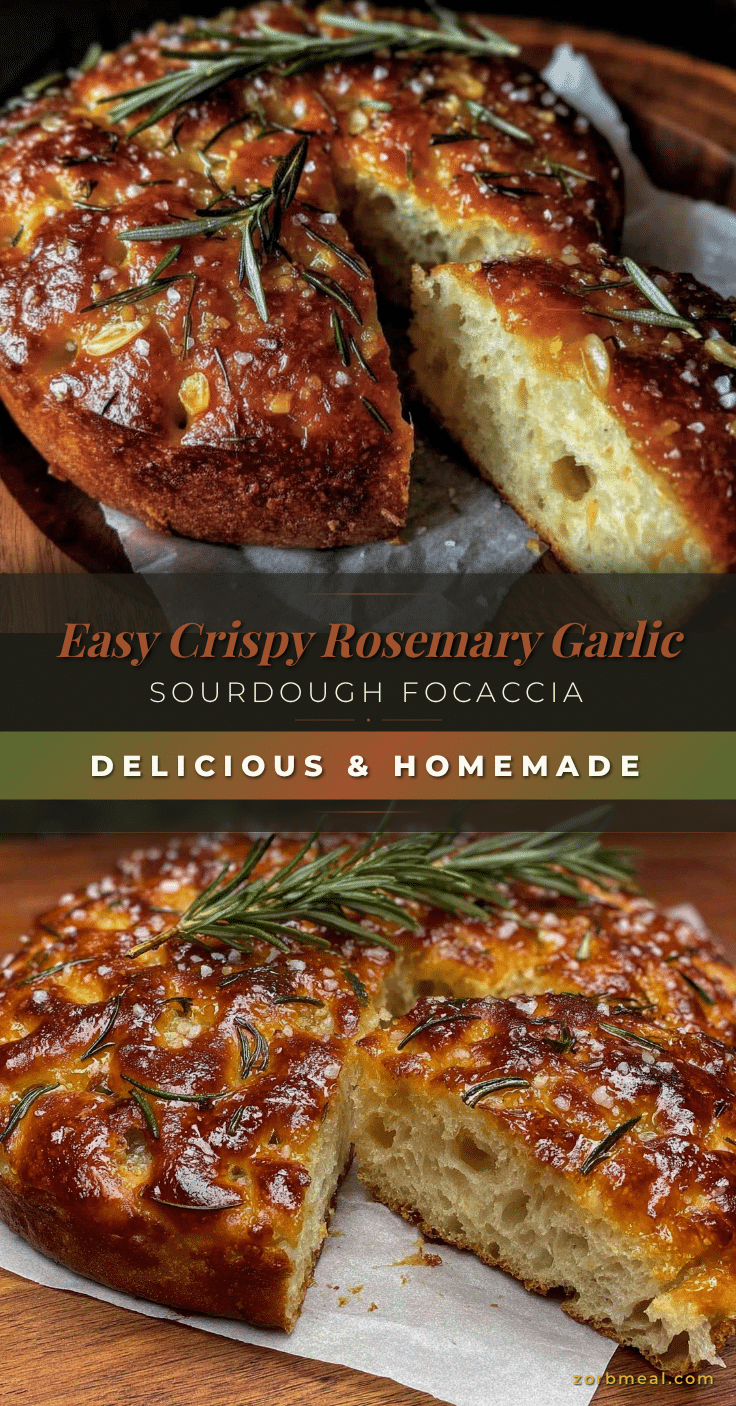
Crispy No-Knead Rosemary Garlic Sourdough Focaccia
A simple, no-knead sourdough focaccia with crispy crust, fragrant rosemary, and garlicky pockets, perfect for homemade bread lovers seeking an easy yet flavorful recipe.
- Prep Time: 15 minutes
- Cook Time: 20-25 minutes
- Total Time: 13 hours 35 minutes
- Yield: 8 servings 1x
- Category: Bread
- Cuisine: Italian
Ingredients
- 4 cups (500g) all-purpose flour
- 2 tsp (10g) sea salt
- 2/3 cup (150g) active sourdough starter
- 1 2/3 cups (400ml) warm water
- 1/4 cup (60ml) extra virgin olive oil, plus more for drizzling and pan
- 2 tbsp fresh rosemary, chopped
- 3 large garlic cloves, thinly sliced
- Optional: coarse sea salt flakes for sprinkling
- Optional: fresh cracked black pepper to taste
- Optional: grated Parmesan cheese for a savory finish
Instructions
- In a large mixing bowl, stir together 4 cups (500g) all-purpose flour and 2 tsp (10g) sea salt.
- Add 2/3 cup (150g) active sourdough starter and 1 2/3 cups (400ml) warm water. Mix with a wooden spoon or spatula until no dry flour remains; dough will be shaggy and sticky (about 3-5 minutes).
- Cover the bowl tightly with a kitchen towel or plastic wrap and let rise at room temperature for 12-18 hours until doubled in size and bubbly.
- Generously oil a 9×13-inch baking pan with about 2 tbsp olive oil.
- Transfer the dough into the oiled pan using a spatula or oiled hands. Gently spread to fill the pan without overworking. If dough resists, let rest 10 minutes and try again.
- Cover loosely and let the dough rise for 1-2 hours at room temperature until puffy but not necessarily doubled.
- Preheat oven to 450°F (232°C) about 30 minutes before baking.
- Press fingertips gently all over the dough to create dimples. Drizzle 1/4 cup (60ml) olive oil evenly on top, then scatter 2 tbsp chopped fresh rosemary, 3 thinly sliced garlic cloves, and optional coarse sea salt flakes.
- Bake on the middle rack for 20-25 minutes until crust is golden and crisp with bubbling edges.
- Remove from oven and let cool in the pan for 10 minutes. Slice into squares or wedges and serve warm or at room temperature.
Notes
Wet your hands before shaping sticky dough to prevent sticking. Watch garlic slices closely during baking to avoid burning. Use generous olive oil on pan and top for crispness. Long fermentation (12-18 hours) is key for flavor and texture. Dough can be refrigerated overnight and baked next day after bringing to room temperature.
Nutrition
- Serving Size: 1 slice (approx. 100
- Calories: 220
- Fat: 7
- Carbohydrates: 35
- Fiber: 2
- Protein: 6
Keywords: focaccia, no-knead bread, sourdough, rosemary garlic bread, homemade bread, crispy crust, easy bread recipe