I was standing in the grocery store parking lot last Tuesday, gripping a plastic bag that had just started to leak, when the smell hit me. It wasn’t the rain-soaked asphalt or the exhaust from the bus idling nearby. It was a whiff of something savory and herbal—dill, maybe, and something else I couldn’t name—drifting from a woman’s takeout container as she walked past. And just like that, I was eight years old, sitting at my Aunt Rita’s kitchen table in Pittsburgh, watching her drop a handful of fresh parsley into a pot of bubbling broth.
Aunt Rita wasn’t a fancy cook. She used store-bought chicken—always a rotisserie bird from the Giant Eagle down the street—and she’d shred it with her bare hands while telling me to stay back from the stove. The kitchen was always too warm, the windows fogged up, and the soup she made was the only thing that could fix a bad day at school or a winter cold that wouldn’t quit. She’s been gone almost ten years now, and I still can’t make this soup without thinking about the way she’d taste the broth from a wooden spoon and then hand it to me, saying, “You tell me if it needs more salt.”
Honestly, I’ve been chasing that exact feeling ever since. Not the soup itself—though that’s part of it—but the way the whole house would go quiet and warm when that pot was on the stove. Maybe you’ve been there, standing in your own kitchen, trying to remember exactly how someone else’s hands moved when they made something that felt like home. This cozy rotisserie chicken noodle soup is my best attempt at getting it right. It’s not fancy, and it doesn’t pretend to be. It’s just good, honest soup that takes thirty minutes and tastes like it’s been simmering all day. Let me show you how I make it.
Why You’ll Love This Recipe
Let me tell you why this particular soup has earned a permanent spot in my weekly rotation. I’ve tested it more times than I care to admit—burned a batch, overseasoned another, once even forgot the noodles entirely (don’t ask). But every time I get it right, I remember why I keep coming back to it.
- Quick & Easy: This comes together in about 30 minutes flat. No all-day simmering required. That rotisserie chicken does the heavy lifting for you, which means dinner is on the table before you’ve even finished unpacking the groceries.
- Simple Ingredients: You probably already have most of this in your kitchen. Carrots, celery, onion, garlic, chicken broth, egg noodles, and that rotisserie chicken. Nothing weird, nothing expensive. I mean it when I say you can make this on a Tuesday night without a special trip to the store.
- Perfect for Cozy Evenings: This is the soup you make when the weather turns cold, when you’ve had a rough day, or when you just need something warm to hold onto. It’s comfort food in its purest form—no gimmicks, no fuss.
- Crowd-Pleaser: I’ve served this to picky kids, skeptical in-laws, and friends who claim they don’t like soup. Every single person has asked for the recipe. It’s one of those rare dishes that everyone agrees on.
- Unbelievably Delicious: The secret is in the broth. Using the rotisserie chicken carcass to make a quick stock while the vegetables soften gives you a depth of flavor that tastes like it took hours. Plus, the noodles soak up all that goodness without turning into mush.
What makes this version different from every other chicken noodle soup recipe out there? It’s the technique. Most recipes skip the step of simmering the chicken bones in the broth, but that’s where all the magic happens. You get that rich, silky texture and that deep chicken flavor without standing over the stove all afternoon. It’s comfort food reimagined—faster, smarter, but with the same soul-soothing satisfaction that makes you close your eyes after the first bite.
What Ingredients You Will Need
This recipe uses simple, wholesome ingredients to deliver that big, comforting flavor without any fuss. Most of these are pantry staples, so you can whip this up whenever the craving hits.
- 1 rotisserie chicken (about 2-3 pounds) — Pick up a good quality one from the store. I personally like the ones from Costco or my local deli counter. You’ll use both the meat and the bones, so don’t throw anything away yet.
- 2 tablespoons unsalted butter — Adds richness to the base. You can use olive oil if you prefer, but butter gives it that cozy, old-fashioned flavor.
- 1 large yellow onion, diced — About 1 ½ cups. Sweet onions work too, but yellow onions give the best savory foundation.
- 3 medium carrots, peeled and sliced into rounds — About 1 ½ cups. I like them cut into thick coins so they hold their shape in the soup.
- 3 celery stalks, sliced — About 1 cup. Include the leaves if they’re attached—they add extra flavor.
- 4 cloves garlic, minced — Fresh is best here. Don’t use the jarred stuff if you can help it; it makes a difference.
- 8 cups low-sodium chicken broth — I recommend Swanson or Kitchen Basics for consistent flavor. Low-sodium is key so you can control the salt level yourself.
- 2 cups water — Helps stretch the broth and gives the bones room to simmer.
- 2 bay leaves — Adds that subtle herbal note that makes the broth taste complex.
- 1 teaspoon dried thyme — Or 3 sprigs of fresh thyme if you have it. I’ve used both and they work beautifully.
- ½ teaspoon dried rosemary — Crush it between your fingers before adding to release the oils.
- ½ teaspoon black pepper — Plus more to taste at the end.
- 1 teaspoon salt — Start with this and adjust later. Different broths have different salt levels.
- 3 cups wide egg noodles — About 8 ounces. I prefer the extra-wide style for that old-fashioned feel. Reames or Mrs. Miller’s are my go-to brands.
- ¼ cup fresh parsley, chopped — For garnish and that final pop of freshness. Flat-leaf or curly both work.
- 1 tablespoon fresh lemon juice — Optional but highly recommended. It brightens everything up at the end.
Substitution Guidance: If you need a gluten-free option, use gluten-free egg noodles or even rice noodles. For a lower-carb version, swap the noodles for zucchini ribbons added in the last 2 minutes of cooking. You can also use leftover turkey instead of chicken—perfect for post-Thanksgiving soup. And if you’re dairy-free, just swap the butter for a good olive oil or your favorite plant-based butter.
Equipment Needed
You don’t need a fancy kitchen to make this soup. Here’s what I use every single time:
- Large stockpot or Dutch oven (at least 6-quart) — I use my trusty Le Creuset Dutch oven, but any heavy-bottomed pot will work. The key is having enough room for the broth, bones, and noodles without everything boiling over.
- Wooden spoon — For stirring the vegetables and scraping up any browned bits. A silicone spatula works too, but I like the sturdiness of wood.
- Chef’s knife and cutting board — A sharp knife makes dicing the vegetables so much easier. Trust me on this one.
- Measuring cups and spoons — For accuracy, especially with the broth and seasonings.
- Tongs or two forks — For shredding the chicken. I use forks because I like the control, but tongs work great too.
- Fine-mesh strainer — Optional but helpful if you want to strain the broth before adding the vegetables. I usually skip this step for a more rustic soup.
- Ladle — For serving. A good ladle makes all the difference when you’re trying not to splash hot soup everywhere.
If you don’t have a Dutch oven, any large pot will do. I’ve made this in a cheap stockpot from Target and it came out just as good. The most important thing is that it’s big enough—you don’t want everything spilling over when you add the noodles.
Preparation Method
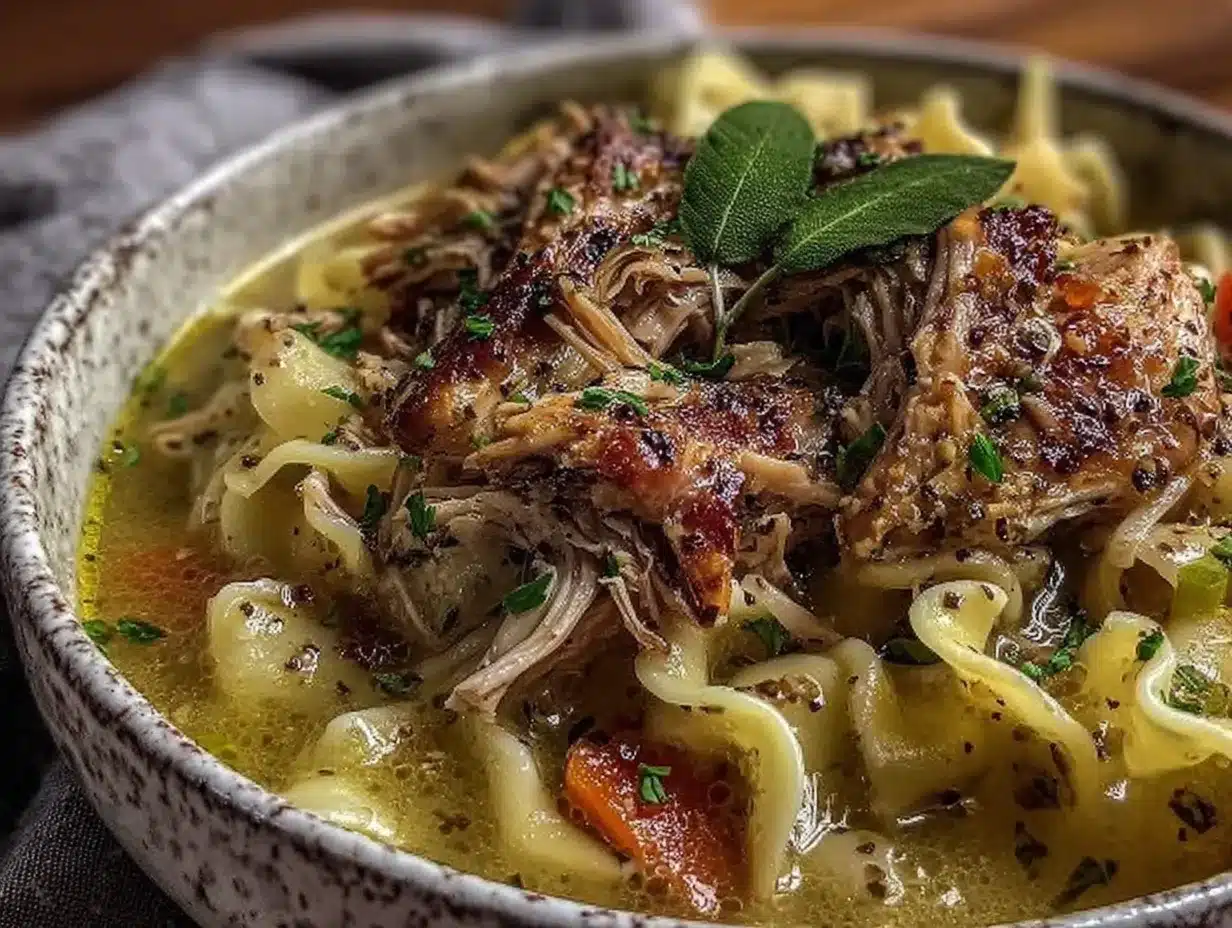
Alright, let’s get cooking. This is the part where the magic happens. I’ll walk you through every step, including the little things I’ve learned from making this soup probably fifty times now.
- Prep your rotisserie chicken. First things first—pull all the meat off the chicken. Use your hands (it’s easier) and separate the meat into two piles: the white meat (breasts and wings) and the dark meat (thighs and drumsticks). Shred or chop the meat into bite-sized pieces. Don’t stress about making it perfect—rustic is fine. Place the meat in a bowl and set it aside. Keep all the bones, skin, and any juices from the bottom of the container. This is gold for the broth.
- Start the broth. In your large pot or Dutch oven, add the chicken bones, skin, and any collected juices. Pour in the 8 cups of chicken broth and 2 cups of water. Add the bay leaves, dried thyme, and dried rosemary. Bring this to a boil over high heat, then reduce to a simmer. Let it bubble away gently while you work on the vegetables—about 10 to 15 minutes. The longer you let it go, the richer the flavor gets. I’ve let it simmer up to 30 minutes when I had the time, and it was incredible.
- Cook the vegetables. While the broth simmers, melt the butter in a separate large skillet or in the pot if you’ve removed the bones (more on that in a sec). Add the diced onion, sliced carrots, and celery. Cook over medium heat, stirring occasionally, until the onions are translucent and the carrots start to soften—about 6 to 8 minutes. Add the minced garlic and cook for one more minute until fragrant. You should be able to smell it across the kitchen.
- Strain and combine. After the broth has simmered, remove the bones and skin using tongs or a slotted spoon. If you want a cleaner broth, pour it through a fine-mesh strainer into another pot or bowl. I usually just fish out the big pieces and leave the little bits—they add flavor and texture. Add the sautéed vegetables to the broth. Stir everything together and bring it back to a gentle boil.
- Add the noodles. Once the broth is boiling, stir in the egg noodles. Cook according to package directions—usually about 6 to 8 minutes for wide egg noodles. Stir occasionally to prevent sticking. Keep an eye on the pot; noodles have a tendency to boil over if you’re not watching. I’ve cleaned up more than a few stovetop messes from this exact mistake.
- Add the chicken. When the noodles are just about tender, reduce the heat to low. Stir in the shredded chicken. Let it warm through for about 2 to 3 minutes. You don’t want to boil the chicken—it’ll get tough and dry. Gentle heat is your friend here.
- Finish and season. Remove the bay leaves (they’re not fun to bite into). Stir in the fresh parsley and the lemon juice if you’re using it. Taste the broth and adjust the salt and pepper. This is the moment of truth. Trust your taste buds—if it needs more salt, add it a pinch at a time. If it needs more brightness, another squeeze of lemon works wonders.
- Rest and serve. Let the soup sit off the heat for about 5 minutes before serving. This allows the flavors to meld together and the noodles to soak up a bit more broth. Ladle into bowls and garnish with extra parsley if you’re feeling fancy. Serve with crusty bread or saltines—both are excellent choices.
A few notes from my many trials: If you’re making this ahead, undercook the noodles by about a minute. They’ll continue to soften as they sit in the broth. And if the soup seems too thick after resting, just add a splash of water or extra broth to thin it out. No harm done.
Cooking Tips & Techniques
I’ve made every mistake you can imagine with this soup. Here’s what I’ve learned so you don’t have to go through the same trials.
Don’t skip the bone-simmering step. I know it adds an extra 10 minutes, but this is where the real flavor comes from. The bones release collagen and gelatin into the broth, giving it that silky, almost velvety texture that store-bought broth just can’t replicate. I once skipped this step because I was in a hurry, and the soup tasted flat and thin. Never again.
Watch your salt levels. Rotisserie chickens are already seasoned, sometimes heavily. And store-bought broth has salt too. I always start with low-sodium broth and only add salt at the very end after tasting. You can always add more, but you can’t take it out. One time I oversalted the broth and ended up adding a whole extra cup of water to fix it—the soup was still good, but it wasn’t my finest moment.
Don’t overcook the noodles. This is probably the most common mistake. Noodles continue to cook even after you turn off the heat, so pull them off when they’re just al dente. If you’re planning to have leftovers, I actually recommend cooking the noodles separately and adding them to individual bowls before pouring the hot broth over them. That way, the noodles don’t turn into mush by day two.
Multitask like a pro. While the bones are simmering, chop your vegetables. While the vegetables are cooking, shred your chicken. This soup comes together in 30 minutes, but only if you’re efficient with your time. I’ve learned to read the whole recipe through before starting—sounds obvious, but I’ve definitely started cooking only to realize I forgot to buy egg noodles.
Use the chicken juices. That gelatinous liquid at the bottom of the rotisserie chicken container? Pour it into the broth. It’s concentrated flavor that you’d otherwise throw away. I used to toss it without thinking, and now I guard it like it’s liquid gold.
Variations & Adaptations
One of the best things about this soup is how flexible it is. Here are some variations I’ve tried and loved:
- Spicy Chicken Noodle Soup: Add 1 teaspoon of red pepper flakes or a diced jalapeño with the vegetables. The heat cuts through the richness beautifully. I made this version when I had a cold last winter, and it cleared my sinuses in minutes.
- Creamy Chicken Noodle Soup: Stir in ½ cup of heavy cream or half-and-half at the end, just before serving. It turns the broth into something decadent and luxurious. Perfect for when you want the soup equivalent of a warm blanket.
- Lemon-Herb Chicken Noodle Soup: Double the lemon juice and add a tablespoon of fresh dill along with the parsley. The brightness is incredible, especially in spring or summer. This is my go-to when I want something that feels lighter but still satisfying.
- Vegetable-Loaded Version: Add a cup of frozen peas and a cup of chopped spinach in the last 3 minutes of cooking. You get extra nutrients and color without changing the flavor much. My kids don’t even notice the spinach.
- Gluten-Free Adaptation: Use gluten-free egg noodles or substitute with rice noodles. You can also use quinoa or rice for a completely different texture. Just adjust cooking times accordingly.
- Slow Cooker Method: Sauté the vegetables on the stovetop first, then transfer everything except the noodles and chicken to the slow cooker. Cook on low for 6 to 8 hours. Add the chicken and noodles in the last 30 minutes. The flavor is even deeper this way.
I once tried a version with coconut milk and curry powder—don’t do it. It wasn’t bad, but it wasn’t chicken noodle soup anymore. Sometimes the classic is classic for a reason.
Serving & Storage Suggestions
This soup is best served piping hot in deep bowls. I like to pair it with a thick slice of crusty sourdough bread or a handful of saltines. The crunch against the tender noodles and broth is pure comfort. For a complete meal, serve it alongside a simple green salad with a lemony vinaigrette—the acidity balances the richness of the soup.
Storage: Let the soup cool completely before transferring to airtight containers. It will keep in the refrigerator for up to 4 days. The flavors actually get better after a day or two as everything melds together. Just be aware that the noodles will continue to absorb liquid, so the soup will thicken. That’s normal.
Freezing: This soup freezes beautifully, but there’s a trick. If you plan to freeze it, cook the noodles separately and add them fresh when you reheat. Frozen noodles turn into a sad, mushy mess. Freeze the broth and chicken mixture in freezer-safe bags or containers for up to 3 months. To reheat, thaw overnight in the refrigerator, then warm on the stovetop with a splash of water or broth. Cook fresh noodles and add them in.
Reheating: The best way to reheat is on the stovetop over medium-low heat, stirring occasionally. Add a little water or broth if it’s too thick. You can microwave individual portions in 1-minute intervals, stirring between each. The soup will still taste great, but the noodles might be a bit softer.
One thing I’ve noticed: the soup tastes even better the next day. The flavors deepen, the chicken absorbs more of the broth, and everything becomes more cohesive. So don’t be afraid to make it a day ahead.
Nutritional Information & Benefits
Here’s an approximate nutritional breakdown per serving (based on 6 servings):
- Calories: 380
- Protein: 32g
- Carbohydrates: 35g
- Fat: 12g
- Fiber: 3g
- Sodium: 780mg (varies based on broth and chicken)
This soup is packed with protein from the chicken, which helps keep you full and satisfied. The carrots and celery provide vitamins A and K, plus antioxidants that support your immune system. The bone broth (yes, simmering those bones counts!) offers collagen and amino acids that are great for joint health and digestion. And the garlic? It’s a natural immune booster—perfect for cold and flu season.
If you’re watching your sodium, use low-sodium broth and skip the added salt until the end. You can also remove the skin from the rotisserie chicken to reduce the fat content. For a lower-carb option, swap the noodles for zucchini noodles or simply double the vegetables.
This isn’t a health food, but it’s real food made from real ingredients. And honestly, sometimes the most nourishing thing you can eat is a bowl of soup that makes you feel cared for.
Conclusion
This cozy rotisserie chicken noodle soup has become my go-to for so many reasons. It’s fast enough for a weeknight, comforting enough for a sick day, and forgiving enough for a beginner cook. But more than that, it’s the kind of recipe that becomes part of your life—the thing you make when you need a hug in a bowl, the thing you bring to a friend who’s having a rough time, the thing that fills your kitchen with a smell that says everything is going to be okay.
I hope you’ll try it and make it your own. Add extra carrots if that’s your thing. Throw in some dill if you’re feeling adventurous. Leave out the celery if you hate it (I won’t judge). The beauty of this soup is that it adapts to you, not the other way around.
I’d love to hear how it turns out. Drop a comment below and let me know what variations you tried, or tag me in your photos if you share them online. There’s something special about knowing this little recipe is warming up kitchens all over the place. Now go make some soup—you deserve it.
Frequently Asked Questions
Can I use leftover homemade chicken instead of rotisserie?
Absolutely. Any cooked chicken works here—roasted, poached, grilled, whatever you have. The rotisserie chicken just adds extra flavor from the seasoning on the skin. If you’re using plain leftover chicken, consider adding a little extra thyme or a pinch of poultry seasoning to the broth.
Why is my soup too salty?
This usually happens when the rotisserie chicken is heavily seasoned and the broth is also salted. Always use low-sodium chicken broth and taste before adding any salt. If your soup is already too salty, add a peeled potato to the pot and simmer for 15 minutes—the potato will absorb some of the salt. Remove it before serving.
Can I make this in an Instant Pot?
Yes! Use the sauté function to cook the vegetables, then add the broth, bones, and seasonings. Pressure cook on high for 10 minutes. Quick release, remove the bones, then add the noodles and chicken. Cook on sauté for another 6 to 8 minutes until the noodles are tender. It’s even faster than the stovetop method.
How do I keep the noodles from getting mushy in leftovers?
The best trick is to cook the noodles separately and store them in a different container. When you reheat the soup, add the noodles to each bowl and pour the hot broth over them. This keeps them firm and prevents them from absorbing all the liquid overnight.
Can I add other vegetables to this soup?
Definitely. Mushrooms, zucchini, bell peppers, green beans, or even corn would work well. Just add them at the same time as the carrots and celery so they have time to soften. Leafy greens like spinach or kale should go in during the last 2 minutes of cooking.
Pin This Recipe!
Cozy Rotisserie Chicken Noodle Soup: Easy 30-Min Recipe

This cozy rotisserie chicken noodle soup comes together in just 30 minutes using a store-bought rotisserie chicken and simple pantry staples. It’s comfort food in its purest form—fast, forgiving, and full of soul-soothing flavor.
- Prep Time: 10 minutes
- Cook Time: 20 minutes
- Total Time: 30 minutes
- Yield: 6 servings 1x
- Category: Main Course
- Cuisine: American
Ingredients
- 1 rotisserie chicken (about 2–3 pounds)
- 2 tablespoons unsalted butter
- 1 large yellow onion, diced (about 1 ½ cups)
- 3 medium carrots, peeled and sliced into rounds (about 1 ½ cups)
- 3 celery stalks, sliced (about 1 cup)
- 4 cloves garlic, minced
- 8 cups low-sodium chicken broth
- 2 cups water
- 2 bay leaves
- 1 teaspoon dried thyme
- ½ teaspoon dried rosemary
- ½ teaspoon black pepper
- 1 teaspoon salt
- 3 cups wide egg noodles (about 8 ounces)
- ¼ cup fresh parsley, chopped
- 1 tablespoon fresh lemon juice (optional)
Instructions
- Prep your rotisserie chicken: Pull all the meat off the chicken, separating white and dark meat. Shred or chop into bite-sized pieces. Set aside. Keep all bones, skin, and any juices from the container.
- Start the broth: In a large pot or Dutch oven, add the chicken bones, skin, and collected juices. Pour in 8 cups chicken broth and 2 cups water. Add bay leaves, dried thyme, and dried rosemary. Bring to a boil over high heat, then reduce to a simmer. Let it simmer for 10-15 minutes while you work on the vegetables.
- Cook the vegetables: While the broth simmers, melt the butter in a separate large skillet. Add diced onion, sliced carrots, and celery. Cook over medium heat, stirring occasionally, until onions are translucent and carrots start to soften (about 6-8 minutes). Add minced garlic and cook for one more minute until fragrant.
- Strain and combine: After the broth has simmered, remove the bones and skin using tongs or a slotted spoon. If desired, strain the broth through a fine-mesh strainer. Add the sautéed vegetables to the broth. Stir and bring back to a gentle boil.
- Add the noodles: Once the broth is boiling, stir in the egg noodles. Cook according to package directions (usually 6-8 minutes for wide egg noodles), stirring occasionally to prevent sticking.
- Add the chicken: When the noodles are just about tender, reduce heat to low. Stir in the shredded chicken. Let it warm through for about 2-3 minutes. Do not boil.
- Finish and season: Remove the bay leaves. Stir in fresh parsley and lemon juice (if using). Taste and adjust salt and pepper as needed.
- Rest and serve: Let the soup sit off the heat for about 5 minutes before serving. Ladle into bowls and garnish with extra parsley if desired. Serve with crusty bread or saltines.
Notes
If making ahead, undercook the noodles by about a minute. For leftovers, cook noodles separately and add fresh when reheating. To fix oversalted soup, add a peeled potato and simmer for 15 minutes, then remove before serving. The soup tastes even better the next day.
Nutrition
- Serving Size: 1 bowl (about 1 ½ cu
- Calories: 380
- Sugar: 6
- Sodium: 780
- Fat: 12
- Saturated Fat: 4
- Carbohydrates: 35
- Fiber: 3
- Protein: 32
Keywords: chicken noodle soup, rotisserie chicken soup, easy chicken soup, 30-minute soup, comfort food, winter soup, cozy soup


