I swore I wasn’t a squash person. For years, I said it with the kind of certainty that only someone who’s never actually tried something properly can muster. I’d side-eye the bins of acorn squash at the farmers’ market, walking right past them to the sweet potatoes I knew and trusted. It wasn’t until last November, standing in my neighbor Carol’s kitchen while she pulled a sheet pan out of the oven, that I got caught. The rings were caramelized at the edges, glossy with something that smelled like brown butter and maple, and I asked, “What is that?” before I could stop myself. She just smiled and slid one onto a plate. That was it. I’ve been making up for lost time ever since.
These roasted acorn squash rings with maple butter are the kind of side dish that steals the show without even trying. They’re sweet, savory, and just a little bit fancy—but they come together with about ten minutes of hands-on work. Honestly, that’s my favorite kind of cooking. The oven does the heavy lifting while you go set the table or pour yourself something cozy to drink. Maybe you’ve been there, standing over a cutting board wondering why you signed up for a complicated recipe on a Tuesday night. This one fixes that.
What I love most is how the maple butter seeps into every ridge of the squash as it roasts. The edges get all crispy and almost candied, while the centers stay tender and buttery. It’s the perfect balance of textures—crunchy on the outside, soft in the middle. I’ve made these for Thanksgiving, for quiet Sunday dinners, and even as a side for a simple roast chicken on a random Wednesday. Each time, someone asks for the recipe. And each time, I remember how close I came to missing out entirely.
Why You’ll Love This Recipe
Let me tell you why this one earns a permanent spot in your fall and winter rotation. First off, it’s incredibly simple. You slice the squash into rings, whisk together a quick maple butter sauce, toss everything on a sheet pan, and roast. That’s it. No peeling, no cubing, no fussing with awkwardly shaped squash halves.
- Quick & Easy : From knife to oven in about 10 minutes. Hands-off roasting means you can focus on the rest of the meal.
- Simple Ingredients : You probably have maple syrup and butter in the fridge right now. Acorn squash is easy to find at any grocery store or farmers’ market during the season.
- Perfect for Cozy Gatherings : These rings look stunning on a platter, making them ideal for Thanksgiving, Friendsgiving, or a casual dinner party. But they’re just as good on a quiet weeknight.
- Crowd-Pleaser : Even self-proclaimed squash skeptics (I know a few) end up reaching for seconds. The maple butter does something magical.
- Unbelievably Delicious : The combination of caramelized edges and tender centers, with that rich maple butter glaze, is next-level comfort food.
What sets this recipe apart is the technique. Instead of roasting squash halves face-down or struggling to cube them evenly, slicing into rings ensures every piece cooks at the same rate. The maple butter sauce isn’t just brushed on—it’s emulsified with a touch of cinnamon and salt, then basted halfway through for maximum flavor absorption. This isn’t just another roasted squash recipe. It’s the one that will make you close your eyes after the first bite.
What Ingredients You Will Need
This recipe relies on a short list of wholesome ingredients that come together to create something truly special. Most of these are pantry staples, especially if you cook seasonally. Here’s what you’ll need and why each one matters.
- Acorn squash (2 medium, about 1 ½ pounds each) – Look for squash that feels heavy for its size, with firm, unblemished skin. The ridges are natural, but try to choose ones that sit flat-ish on the counter so they’re easier to slice. I’ve found that organic squash from the farmers’ market tends to have a slightly sweeter, nuttier flavor.
- Unsalted butter (4 tablespoons, melted) – I prefer unsalted here so we can control the salt level. Kerrygold is my go-to for its rich, creamy taste, but any good-quality butter works. If you’re dairy-free, you can substitute with a plant-based butter or coconut oil—though the flavor will shift slightly.
- Pure maple syrup (3 tablespoons) – Please use the real stuff, not pancake syrup. Grade A dark amber has a deeper, more robust flavor that stands up to the squash beautifully. I buy mine from a local sugarmaker in Vermont, but any pure maple syrup will do.
- Cinnamon (½ teaspoon) – Ground cinnamon adds warmth and depth. You can substitute with pumpkin pie spice if you’re feeling festive, or even a pinch of nutmeg for a slightly different vibe.
- Salt (½ teaspoon, plus more for finishing) – Fine sea salt is my preference. The salt balances the sweetness of the maple and brings out the natural earthiness of the squash. I like to add a tiny sprinkle of flaky sea salt right before serving for a nice textural contrast.
- Black pepper (¼ teaspoon, freshly ground) – Just a touch. It’s subtle, but it rounds out the flavors and keeps the dish from being one-note sweet.
- Optional garnish: fresh thyme or sage leaves – A few leaves scattered over the top after roasting adds a lovely herbal note and makes the dish look extra polished. I use thyme most often because it’s what I usually have on hand.
That’s it. Seven ingredients, and you probably have most of them already. The beauty of this recipe is that it doesn’t hide behind a long list of obscure items. It lets the squash and the maple butter shine.
Equipment Needed
You don’t need a lot of fancy tools for this one, which is part of the appeal. Here’s what you’ll want to have ready.
- Sharp chef’s knife – Acorn squash is tough. A dull knife is both frustrating and dangerous. I use an 8-inch Wusthof, but any sharp, sturdy knife works. Take your time slicing through the stem end.
- Cutting board – A large, stable board makes a difference. I prefer wood because it’s gentler on the knife, but plastic is fine too.
- Small bowl or liquid measuring cup – For whisking together the maple butter sauce. I use a 2-cup Pyrex measuring cup because the spout makes it easy to pour.
- Whisk or fork – To emulsify the melted butter and maple syrup. A small whisk works best, but a fork does the job in a pinch.
- Large rimmed baking sheet (half-sheet pan) – You need enough space to arrange the rings in a single layer without crowding. If they overlap, they’ll steam instead of caramelizing. I love my Nordic Ware aluminum half-sheet pans—they’re affordable and conduct heat beautifully.
- Parchment paper or silicone baking mat (optional but recommended) – Lining the pan makes cleanup a breeze. The maple butter can get sticky as it caramelizes, and parchment prevents any burnt-on mess.
- Pastry brush (optional) – For brushing the maple butter onto the rings. You can also just drizzle and toss with your hands, but a brush helps you get an even coat.
If you don’t have a pastry brush, don’t worry. I’ve made this recipe countless times using just my hands to coat the rings. It’s a little messier, but it works perfectly.
Preparation Method
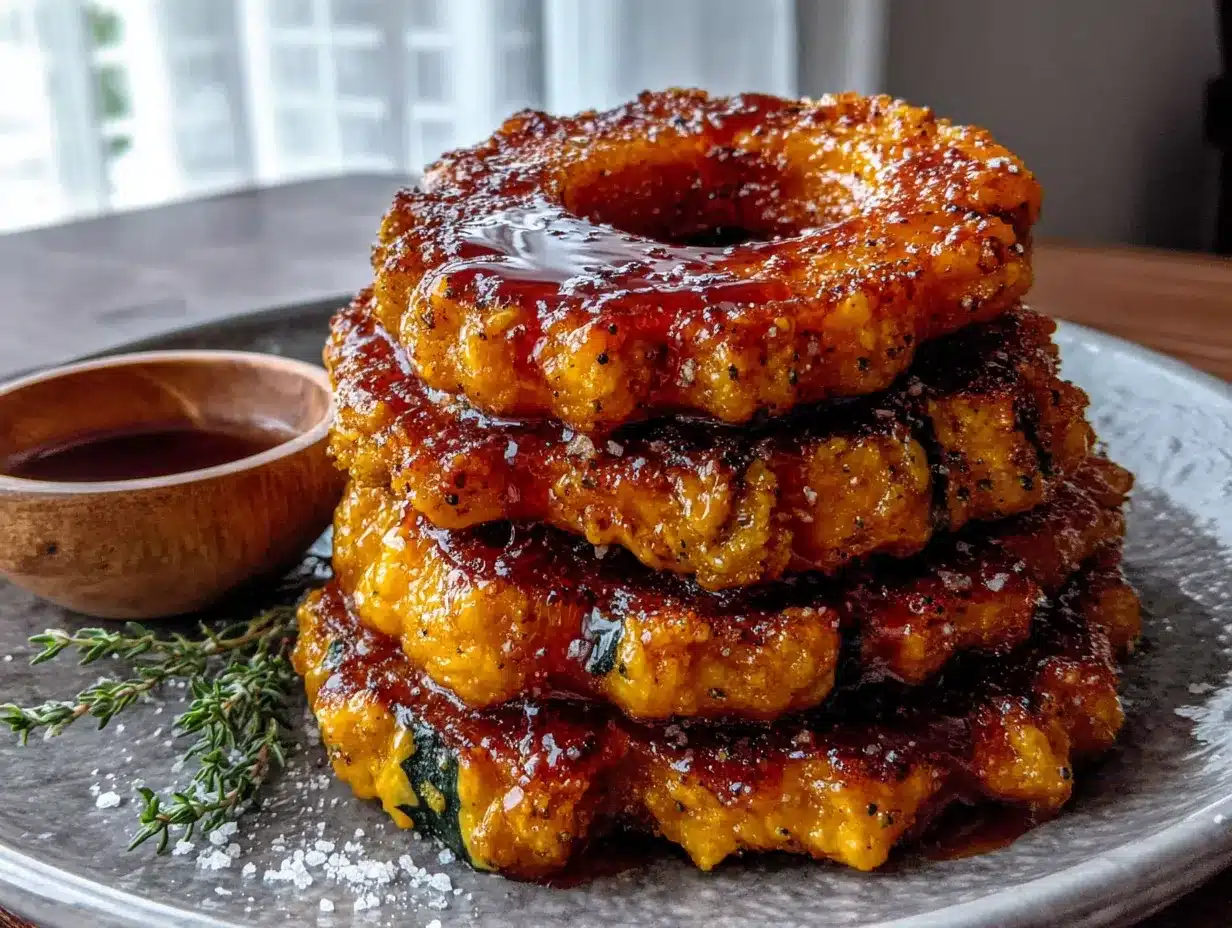
Let’s walk through this step by step. I’ll include all the little details I’ve learned from making these rings more times than I can count.
- Preheat your oven to 400°F (200°C). Position a rack in the middle of the oven. While it heats, line a large rimmed baking sheet with parchment paper or a silicone mat.
- Prepare the squash. Using a sharp chef’s knife, carefully trim off the very tip of the stem end and the bottom of each acorn squash so they sit flat on the cutting board. This step is crucial for stability. Then, slice each squash crosswise into ½-inch to ¾-inch thick rings. I aim for about 4 to 5 rings per squash, depending on its size. Use a spoon or a small paring knife to scoop out the seeds and stringy pulp from the center of each ring. Don’t worry about getting every last fiber—just remove the seeds and the worst of the strings. Rinse the rings quickly under cold water and pat them dry with a clean kitchen towel. Excess moisture will prevent caramelization, so take an extra second to blot them well.
- Make the maple butter. In a small bowl or liquid measuring cup, combine the 4 tablespoons of melted unsalted butter, 3 tablespoons of pure maple syrup, ½ teaspoon of ground cinnamon, ½ teaspoon of fine sea salt, and ¼ teaspoon of freshly ground black pepper. Whisk until the mixture is smooth and well combined. Taste it. You should taste sweet, salty, and warm spice. Adjust the salt or cinnamon if you like, but this balance is pretty spot-on.
- Coat the rings. Arrange the squash rings in a single layer on the prepared baking sheet. Using a pastry brush, brush the maple butter mixture generously over both sides of each ring. Don’t be shy—use all of the sauce. If you run out, drizzle any remaining sauce over the tops. I like to flip the rings once after brushing to make sure both sides get love.
- Roast for 20 minutes. Place the sheet pan in the preheated oven and roast for 20 minutes. The squash will start to soften and the edges will begin to caramelize.
- Flip and baste. Remove the pan from the oven. Using a spatula, carefully flip each ring over. If there’s any pooled maple butter on the pan, spoon it back over the rings. Return the pan to the oven and roast for another 15 to 20 minutes. The squash is done when the rings are tender all the way through—a fork should slide in easily—and the edges are deeply caramelized and slightly crispy. Some spots may look almost burnt; that’s good. That’s the candy-like part.
- Finish and serve. Transfer the roasted acorn squash rings to a serving platter. If you’re using fresh thyme or sage, scatter a few leaves over the top. Finish with a tiny pinch of flaky sea salt, if you have it. Serve hot or warm. I’ve found they’re actually delicious at room temperature too, which makes them great for buffets.
Cooking Tips & Techniques
Over the years, I’ve made every mistake you can imagine with squash. Here are the lessons I’ve learned so you don’t have to repeat them.
Don’t skip the drying step. I once rushed through patting the squash dry, thinking it wouldn’t matter. It did. The rings steamed instead of caramelizing, and I ended up with pale, sad squash. Water is the enemy of browning. Take the extra 30 seconds to blot them well.
Slice evenly. Aim for uniform thickness—about ½ to ¾ inch. If some rings are thinner, they’ll cook faster and might burn before the thicker ones are done. I use my fingers as a rough guide, but you can also use a ruler the first time until you get the hang of it.
Watch the oven, not the clock. Ovens vary wildly. My old oven ran hot and could char these rings in 30 minutes flat. My current oven takes a full 40. Start checking at the 30-minute mark. The edges should be deep golden brown, almost amber in spots. If they’re still pale, give them more time.
Use a silicone mat for easy cleanup. The maple butter caramelizes and can stick to the pan. Parchment paper works, but I’ve had it tear when flipping the rings. A silicone mat is sturdier and reusable. Either way, line that pan.
Multitask wisely. While the squash roasts, you have plenty of time to prepare the rest of your meal. I often make these alongside a simple roasted chicken or a pork tenderloin. They both roast at 400°F, so everything comes out of the oven at the same time.
One more thing— don’t overcrowd the pan. If the rings are touching, they’ll steam. Leave a little space between each ring for hot air to circulate. Use two pans if you need to.
Variations & Adaptations
This recipe is wonderfully flexible. Here are a few ways I’ve adapted it over the years.
- Spicy Maple Butter: Add a pinch of cayenne pepper or red pepper flakes to the maple butter mixture. The heat cuts through the sweetness beautifully. I did this once for a Friendsgiving and it was the first thing to disappear.
- Herb-Infused Version: Add 1 teaspoon of fresh chopped rosemary or sage to the maple butter before brushing. The herbs get aromatic as they roast. I personally love rosemary with maple—it feels very autumnal.
- Vegan Adaptation: Substitute the butter with melted coconut oil or a high-quality vegan butter. The flavor changes slightly—coconut oil adds a subtle tropical note—but it’s still delicious. Maple syrup is naturally vegan, so no issues there.
- Air Fryer Method: Cook the rings in a single layer in the air fryer basket at 375°F (190°C) for 12 to 15 minutes, flipping halfway through. They get even crispier this way. I’ve done this when I’m short on time and it works great.
- Savory Twist: Skip the cinnamon and add a teaspoon of smoked paprika and a pinch of garlic powder instead. The result is a smoky, savory side that pairs beautifully with grilled meats or black beans.
I’ve tried all of these variations at one point or another, and honestly, I keep coming back to the original. But it’s nice to know I can switch it up depending on my mood or what I’m serving.
Serving & Storage Suggestions
These roasted acorn squash rings are incredibly versatile. Here’s how I like to serve and store them.
Serving: Transfer the rings to a warm platter and garnish with fresh thyme or sage. A sprinkle of flaky sea salt right before serving adds a lovely crunch and a pop of saltiness. They pair beautifully with roasted meats—think roast chicken, turkey, pork chops, or even a seared steak. I’ve also served them alongside a hearty grain bowl with farro and roasted Brussels sprouts for a vegetarian main. They’re great at room temperature, which makes them ideal for potlucks or holiday buffets.
Storage: Store leftovers in an airtight container in the refrigerator for up to 4 days. The texture softens a bit upon reheating, but the flavor remains wonderful. I actually love them cold, straight from the fridge, as a snack.
Reheating: The best way to reheat is in the oven at 350°F (175°C) for about 5 to 7 minutes, or until warmed through. This helps restore some of the caramelized edges. You can also reheat in an air fryer at 350°F for 3 to 4 minutes. The microwave works in a pinch, but the rings will be much softer. I don’t recommend freezing them—the texture becomes watery and mushy upon thawing.
Make-Ahead Tip: You can slice the squash into rings and store them in a sealed bag in the fridge up to 2 days ahead. The maple butter can also be mixed in advance and kept in the fridge. When you’re ready, just toss and roast. This is a lifesaver on Thanksgiving morning.
Nutritional Information & Benefits
Acorn squash is a nutritional powerhouse, and this recipe keeps things relatively light despite the butter and maple syrup. Here’s the breakdown per serving (about 4 rings, assuming 4 servings total).
| Nutrient | Amount per Serving |
|---|---|
| Calories | 210 |
| Total Fat | 12g |
| Saturated Fat | 7g |
| Carbohydrates | 28g |
| Fiber | 4g |
| Sugar | 14g |
| Protein | 2g |
| Vitamin A | 45% DV |
| Vitamin C | 25% DV |
| Potassium | 15% DV |
Health Benefits: Acorn squash is rich in vitamin A (from beta-carotene), which supports eye health and immune function. It’s also a good source of vitamin C, fiber, and potassium. The fiber helps keep you full and supports digestion. The maple syrup and butter add some sugar and fat, but the overall dish is still nutrient-dense and satisfying. If you’re watching your sugar intake, you can reduce the maple syrup to 2 tablespoons—it will still be plenty sweet.
Dietary Considerations: This recipe is naturally vegetarian and gluten-free. For a vegan version, use coconut oil or vegan butter. It contains dairy (butter) and tree nuts (maple syrup is naturally nut-free, but check your brand if allergies are a concern).
Conclusion
I never thought I’d be the person evangelizing about roasted acorn squash rings, but here we are. This recipe is proof that sometimes the things we think we hate are just waiting for the right preparation. The maple butter transforms humble squash into something that feels special—caramelized, tender, and deeply comforting. It’s the kind of dish that makes you slow down and actually taste what you’re eating.
I hope you give these a try, whether for a holiday table or a quiet Tuesday dinner. Customize them to your liking—add herbs, spice them up, or keep them classic. And please, let me know how they turn out. Drop a comment below with your favorite variation, or tag me in your photos. I love seeing these rings in kitchens all over the world, one maple-butter-coated bite at a time.
Happy roasting, friends. You’ve got this.
Frequently Asked Questions
Can I use butternut squash or another variety instead of acorn squash?
Yes, you can substitute butternut or delicata squash. Butternut is denser and may need a few extra minutes of roasting. Delicata has thinner skin and cooks faster, so check it at the 20-minute mark. The flavor will be slightly different, but still delicious with the maple butter.
Do I need to peel the acorn squash before roasting?
No, the skin is edible and becomes tender after roasting. It’s also where a lot of the fiber lives. If you prefer a softer texture, you can peel it with a vegetable peeler before slicing, but I honestly love the slight chewiness of the roasted skin.
Can I make this recipe ahead of time for a holiday meal?
Absolutely. You can slice the squash and mix the maple butter up to 2 days in advance. Roast them just before serving for the best texture. If you need to reheat, use the oven or air fryer rather than the microwave to preserve the caramelized edges.
What’s the best way to cut an acorn squash safely?
First, trim a thin slice off the stem end and the bottom so the squash sits flat. Then, use a sharp chef’s knife to slice crosswise into rings. If the squash is very hard, you can microwave it for 1 to 2 minutes to soften it slightly before cutting. Always use a stable cutting board and keep your fingers curled away from the blade.
Can I freeze the roasted squash rings?
I don’t recommend it. The texture becomes watery and mushy upon thawing because of the high water content in the squash. These are best enjoyed fresh or within a few days of roasting. If you have leftovers, store them in the fridge and reheat in the oven for the best results.
Pin This Recipe!
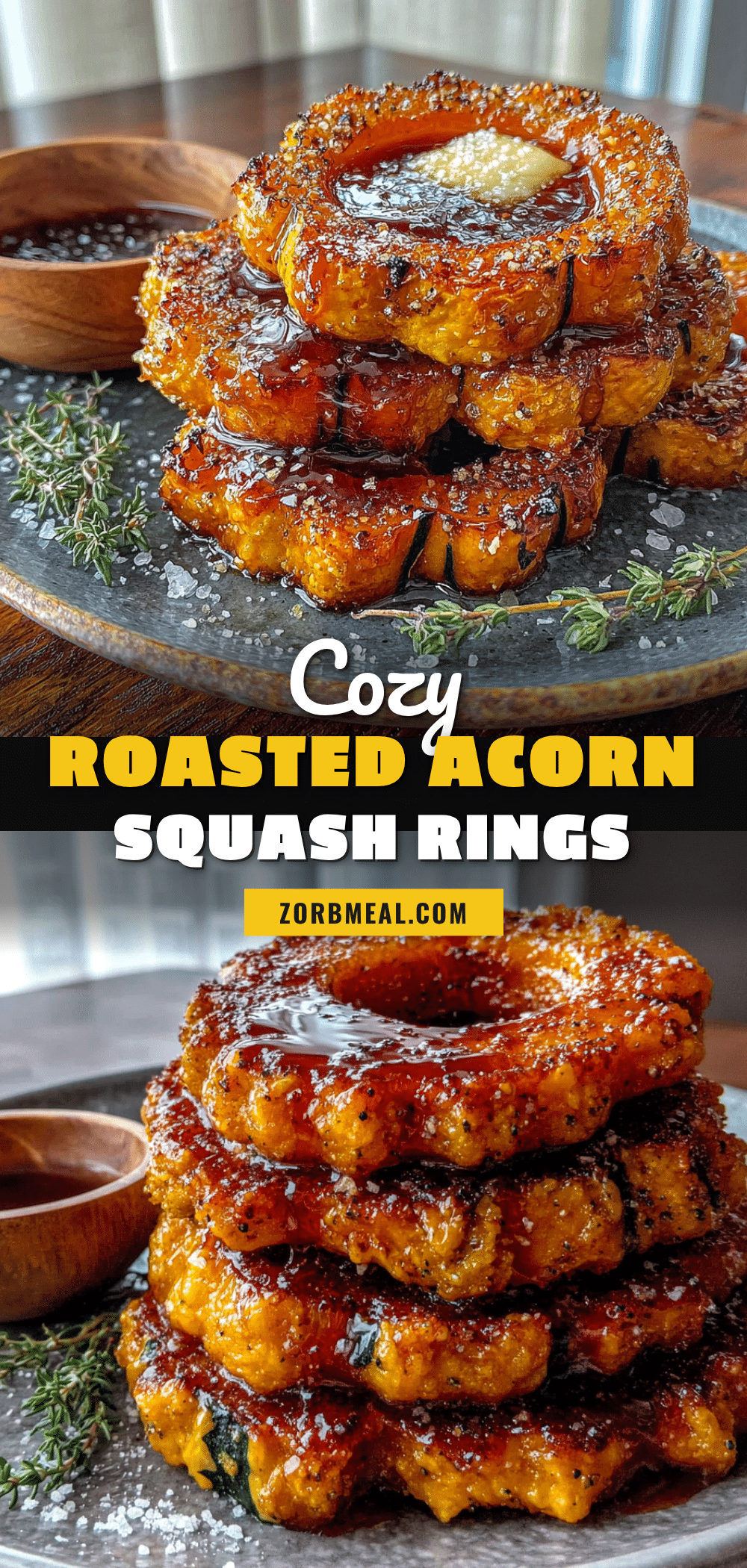
Cozy Roasted Acorn Squash Rings with Maple Butter
These roasted acorn squash rings with maple butter are a sweet and savory side dish that comes together with minimal hands-on work. The maple butter caramelizes the edges while keeping the centers tender, making them perfect for holidays or weeknight dinners.
- Prep Time: 10 minutes
- Cook Time: 35 minutes
- Total Time: 45 minutes
- Yield: 4 servings 1x
- Category: Side Dish
- Cuisine: American
Ingredients
- 2 medium acorn squash (about 1 ½ pounds each)
- 4 tablespoons unsalted butter, melted
- 3 tablespoons pure maple syrup
- ½ teaspoon ground cinnamon
- ½ teaspoon fine sea salt, plus more for finishing
- ¼ teaspoon freshly ground black pepper
- Optional garnish: fresh thyme or sage leaves
Instructions
- Preheat your oven to 400°F (200°C). Position a rack in the middle of the oven. Line a large rimmed baking sheet with parchment paper or a silicone mat.
- Prepare the squash: Using a sharp chef’s knife, trim off the very tip of the stem end and the bottom of each acorn squash so they sit flat. Slice each squash crosswise into ½-inch to ¾-inch thick rings (about 4 to 5 rings per squash). Use a spoon or small paring knife to scoop out the seeds and stringy pulp from the center of each ring. Rinse the rings quickly under cold water and pat them dry with a clean kitchen towel.
- Make the maple butter: In a small bowl or liquid measuring cup, combine the melted butter, maple syrup, cinnamon, salt, and black pepper. Whisk until smooth and well combined.
- Coat the rings: Arrange the squash rings in a single layer on the prepared baking sheet. Brush the maple butter mixture generously over both sides of each ring, using all of the sauce.
- Roast for 20 minutes: Place the sheet pan in the preheated oven and roast for 20 minutes.
- Flip and baste: Remove the pan from the oven. Carefully flip each ring over. Spoon any pooled maple butter from the pan back over the rings. Return to the oven and roast for another 15 to 20 minutes, until the rings are tender and the edges are deeply caramelized and slightly crispy.
- Finish and serve: Transfer the rings to a serving platter. Garnish with fresh thyme or sage if desired, and finish with a tiny pinch of flaky sea salt. Serve hot or warm.
Notes
Don’t skip drying the squash rings; excess moisture prevents caramelization. Slice evenly for uniform cooking. Oven times vary; start checking at 30 minutes. Use a silicone mat for easy cleanup. Do not overcrowd the pan.
Nutrition
- Serving Size: about 4 rings
- Calories: 210
- Sugar: 14
- Sodium: 300
- Fat: 12
- Saturated Fat: 7
- Carbohydrates: 28
- Fiber: 4
- Protein: 2
Keywords: roasted acorn squash, maple butter, fall side dish, Thanksgiving side, easy squash recipe


