The summer I turned thirty, my neighbor across the hall, Fatima, watched me haul yet another sad bag of groceries into my apartment. I was in a rut, honestly. Every week it was the same chicken, the same broccoli, the same pasta. She didn’t say anything at first. She just gave me that knowing look. Then, a few days later, there was a small ceramic bowl wrapped in a tea towel on my doormat. Inside was this incredible thing—roasted squash, these little ruby jewels I later learned were pomegranate seeds, and salty crumbles of cheese. There was no note. It just was. I mean, who does that?
I was too embarrassed to admit I didn’t even know what a butternut squash looked like uncut, let alone how to roast one properly. So, I did what any sensible person would do. I knocked on her door and asked, “What is this magic, and how do I make it?” She laughed—a warm, rolling laugh—and invited me in. She didn’t give me a formal lesson. She just talked while she chopped, telling me about her mother’s kitchen back in Lebanon. The recipe arrived through that conversation, not through a transaction. It was a gift, wrapped in stories about family and food that wasn’t supposed to be complicated.
This roasted butternut squash with pomegranate and feta is the one I’ve made more than any other in the last five years. It’s the dish I bring to potlucks when I want to look like I tried really hard (even though it’s dead simple). It’s the side dish that makes a Tuesday night roast chicken feel like a holiday. And it’s the first thing I think of when I see squash at the market in the fall. Maybe you’ve been there, needing one recipe that feels special without a ton of work. This is that recipe. It came to me through kindness, and I’ve never stopped making it.
Why You’ll Love This Recipe
Let’s be real for a second. Not every vegetable side dish is a showstopper. Most are just… fine. But this one? It’s different. It’s the kind of dish that gets eaten first, even before the main course. I’ve tested this more times than I can count, tweaking the roasting time and the seasoning until it was just right. It’s family-approved, potluck-proven, and honestly, it’s forgiving enough for a Tuesday night.
- Quick & Easy: The active prep time is about 15 minutes. The oven does the rest of the work. Perfect for those evenings when you’re juggling homework and hungry kids.
- Simple Ingredients: No fancy trips to a specialty store. You need a squash, a pomegranate, some feta, and pantry staples like olive oil and salt. That’s it.
- Perfect for Any Occasion: It works for a quiet family dinner, a Thanksgiving spread, or a casual holiday party. It’s fancy enough for guests, simple enough for a Wednesday.
- Crowd-Pleaser: I’ve seen picky eaters go back for seconds. The sweetness of the squash and the pop of the pomegranate is a winning combo for kids and adults.
- Unbelievably Delicious: The texture is what gets me every time. Soft, caramelized squash with a tangy, salty feta and a burst of sweet-tart juice from the seeds. It’s comfort food that feels a little bit elegant.
What makes this different from every other roasted squash recipe? It’s the balance. The squash is roasted until it’s deeply golden and almost jammy, not just soft. The pomegranate seeds are added at the very end so they stay bright and juicy. And the feta? It’s not melted into a mess. It’s crumbled on top while the squash is still warm, so it softens just slightly. It’s a technique I learned from watching Fatima’s hands move, and it makes all the difference.
What Ingredients You Will Need
This recipe uses simple, honest ingredients to create something truly special. Most of these are pantry staples or easy to find at any grocery store. The combination is what makes it magic.
- 1 large butternut squash (about 2.5 to 3 pounds), peeled, seeded, and cut into 1-inch cubes. Look for one that feels heavy for its size with a matte, not shiny, skin. A shiny skin usually means it was picked too early.
- 3 tablespoons extra-virgin olive oil, plus a little more for drizzling at the end. I like using a good quality one here since you’ll taste it on the final dish.
- 1 teaspoon kosher salt, plus more to taste. I use Diamond Crystal. If you’re using a finer salt, start with half the amount.
- 1/2 teaspoon black pepper, freshly ground.
- 1/2 teaspoon ground cinnamon (optional, but highly recommended). It brings out the squash’s natural sweetness without making it taste like dessert.
- 1/4 teaspoon cayenne pepper (optional). Just a pinch for warmth, not heat. It wakes up the other flavors.
- Seeds from 1 large pomegranate (about 1 cup). To get them out without a mess, cut the pomegranate in half crosswise, hold it cut-side down over a bowl, and whack the back with a wooden spoon. The seeds fall right out.
- 1/2 cup crumbled feta cheese. Buy a block and crumble it yourself. It tastes creamier and less dry than the pre-crumbled stuff. I recommend a sheep’s milk feta for the best tang.
- 1/4 cup fresh mint leaves, roughly chopped. Or flat-leaf parsley if mint isn’t your thing. Both work beautifully.
- 2 tablespoons pomegranate molasses (optional, for drizzling). This is like a secret weapon. It adds a deep, tangy-sweet glaze that ties everything together. Find it in the international aisle or at a Middle Eastern market.
Substitution Guidance
No pomegranate molasses? No problem. You can swap it with a mix of 1 tablespoon balsamic vinegar and 1 teaspoon honey. It’s not the same, but it’s still delicious. For a dairy-free version, use a good vegan feta or skip the cheese entirely and add toasted pine nuts for crunch.
Equipment Needed
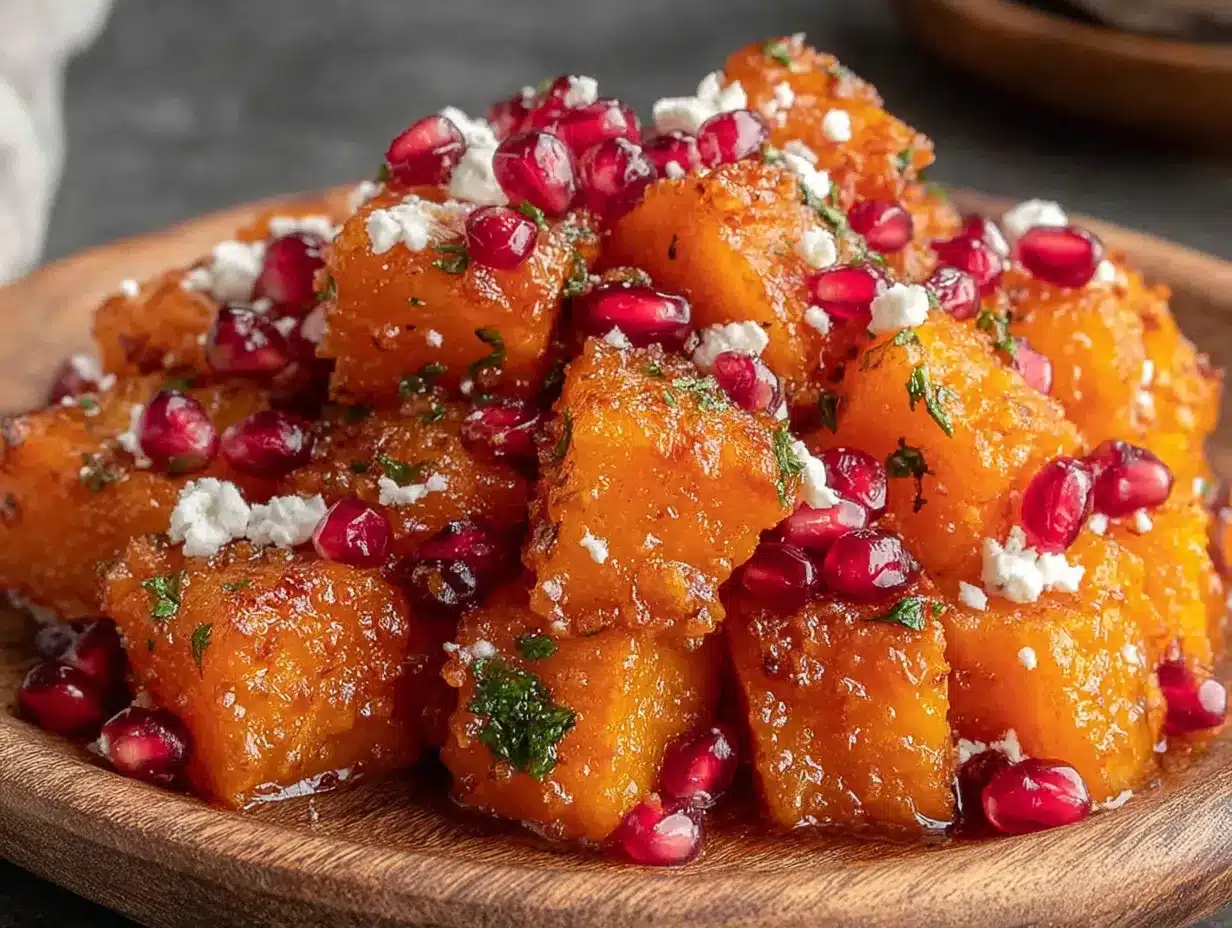
You don’t need a fancy kitchen to pull this off. Here’s what you’ll actually use:
- Large baking sheet (half-sheet pan). A rimmed one is best to catch any juices. If you cram the squash on a smaller pan, it’ll steam instead of caramelize. Trust me on this one—I learned the hard way.
- Sharp chef’s knife. Butternut squash is tough. A dull knife is a recipe for a trip to the ER. Take your time and use a sturdy, sharp blade.
- Vegetable peeler. A Y-peeler works best for the squash’s curved shape.
- Large bowl for tossing the squash with oil and spices.
- Wooden spoon or spatula for stirring.
- Small bowl for the pomegranate seeds and feta.
If you don’t have a Y-peeler, a regular straight peeler will do the job, just take it slow. And honestly, if you’re really short on time, many grocery stores sell pre-cut butternut squash cubes. They’re not quite as flavorful, but they’ll save you 10 minutes.
Preparation Method
Alright, let’s get cooking. This is straightforward, but I’ll walk you through every step so you get that perfect caramelized result.
- Preheat your oven to 400°F (200°C). Get it hot and keep it hot. A properly preheated oven is the secret to golden, not soggy, squash.
- Prepare the squash. This is the most labor-intensive part. Cut off the top and bottom of the squash so it sits flat. Use your Y-peeler to remove all the skin. Then, cut it in half lengthwise and scoop out the seeds with a spoon. I use a grapefruit spoon with a serrated edge—it works like a charm. Cut the flesh into 1-inch cubes. Try to make them even in size so they cook at the same rate.
- Season the squash. In your large bowl, toss the cubes with the 3 tablespoons of olive oil, 1 teaspoon salt, 1/2 teaspoon pepper, and the cinnamon and cayenne if you’re using them. Use your hands for this. It’s the best way to make sure every piece is coated. Don’t be shy.
- Spread on the baking sheet. Arrange the squash in a single layer on your baking sheet. Give them a little space. If they’re crowded, they’ll steam. If they’re too spread out, they might burn. It’s a Goldilocks situation. Aim for a single layer with about a half-inch between pieces.
- Roast for 25 minutes. Pop the pan in the oven. Set a timer. Don’t open the door to peek for at least 20 minutes—you’ll let all the heat out.
- Flip and roast again. After 25 minutes, take the pan out and flip each piece with your spatula. They should be golden on the bottom. Return to the oven for another 15-20 minutes. The squash is done when it’s fork-tender and deeply caramelized on the edges. The smell at this point is incredible—sweet and nutty.
- Rest for 5 minutes. Take the pan out and let the squash sit for a few minutes. This lets the caramelization set so the pieces don’t stick to the pan.
- Transfer and top. Gently move the warm squash to a serving platter. Sprinkle the pomegranate seeds, crumbled feta, and fresh mint over the top. Drizzle with a little more olive oil and the pomegranate molasses if you’re using it. The feta will soften just slightly from the warmth of the squash—that’s what you want.
- Serve immediately. This dish is best enjoyed warm, not hot. The flavors are brighter and the textures are more interesting. Dig in!
Cooking Tips & Techniques
I’ve made this recipe probably fifty times by now. Here are the things I wish someone had told me from the start.
Don’t skip the flipping. I know it’s tempting to just let it roast and be done with it. But flipping the pieces halfway through is the difference between a good side dish and a great one. It ensures even caramelization on all sides. I once forgot to flip, and the bottom was perfect while the top was pale and sad. Learn from my mistake.
Pat the squash dry. After you peel and cut the squash, pat the cubes dry with a clean kitchen towel or paper towels. Excess moisture is the enemy of browning. Dry squash = crispy edges. Wet squash = steamed squash.
Watch the salt. Feta is already salty. So be careful not to over-salt the squash before roasting. I use a light hand with the salt on the squash, knowing the feta will add more later. You can always add more at the table.
Use room temperature feta. Take the feta out of the fridge about 15 minutes before you’re ready to crumble it. Cold feta crumbles into dry, chalky bits. Room temperature feta crumbles into creamy, soft pieces that melt slightly on the warm squash.
Timing is everything. I like to roast the squash while I’m making the rest of the meal. It takes about 40 minutes total, which is perfect for cooking a protein or setting the table. The squash holds well for about 15 minutes after it’s done, so don’t stress about perfect timing.
Variations & Adaptations
This recipe is a great base for experimentation. Here are a few ways I’ve changed it up over the years.
Maple-Balsamic Version: Swap the pomegranate molasses for a drizzle of good balsamic glaze and a teaspoon of maple syrup mixed into the olive oil before roasting. It gives the squash a deeper, almost sticky sweetness that’s incredible with the salty feta.
Warm Winter Salad: Toss the roasted squash with a handful of baby arugula, some toasted walnuts, and the pomegranate seeds. Skip the feta and use shaved parmesan instead. It’s a whole meal on a plate, especially if you add some leftover roasted chicken.
Spicy Harissa Twist: Stir a tablespoon of harissa paste into the olive oil before tossing with the squash. The smoky heat pairs beautifully with the sweet squash and the cool feta. It’s my personal favorite when I want something with a little kick.
Make it a Grain Bowl: Serve the squash, pomegranate, and feta over a bed of warm quinoa or farro. Add a handful of spinach and a lemon-tahini dressing. It’s a hearty, healthy lunch that keeps well for meal prep.
Herb Swap: Not a mint fan? Use fresh basil, dill, or cilantro instead. Each herb brings a different personality to the dish. Basil is sweet and peppery, dill is fresh and grassy, and cilantro is bright and citrusy.
Serving & Storage Suggestions
This dish is best served warm, right after you’ve assembled it. The contrast between the warm squash and the cool pomegranate seeds and feta is what makes it special. I like to serve it on a large, white platter so the colors really pop. It’s a stunner on a holiday table.
What to serve with it: This is a versatile side. It pairs beautifully with roasted chicken, grilled lamb chops, or a simple pan-seared salmon. For a vegetarian main, serve it with a lentil stew or a hearty grain salad. A crisp white wine like Sauvignon Blanc or a light red like Pinot Noir works well.
Storage: Leftovers keep well in an airtight container in the fridge for up to 3 days. The squash will soften a bit, and the pomegranate seeds might lose some of their crunch, but the flavor is still fantastic.
Reheating: The best way to reheat is in a 350°F (175°C) oven for about 10 minutes. The microwave works in a pinch, but it’ll make the squash mushy. I actually like eating the leftovers cold, straight from the fridge, as a salad topping.
Make-ahead tip: You can roast the squash up to a day in advance and keep it in the fridge. Let it come to room temperature before assembling, or gently reheat it in the oven. Add the pomegranate seeds, feta, and herbs right before serving.
Nutritional Information & Benefits
This dish is as good for you as it is delicious. Butternut squash is packed with vitamin A (great for your eyes and immune system) and fiber (keeps you full and happy). Pomegranate seeds are little antioxidant powerhouses—they’re full of vitamin C and polyphenols that fight inflammation. Feta adds calcium and protein, plus that salty tang we all love.
Here’s an approximate breakdown per serving (serves 6):
| Nutrient | Amount |
|---|---|
| Calories | 210 |
| Fat | 12g |
| Saturated Fat | 4g |
| Carbohydrates | 24g |
| Fiber | 5g |
| Sugar | 9g |
| Protein | 6g |
| Vitamin A | 280% DV |
| Vitamin C | 35% DV |
| Calcium | 15% DV |
Dietary Notes: This recipe is naturally gluten-free and vegetarian. To make it vegan, skip the feta or use a plant-based alternative. It’s also low-carb friendly if you watch your portion size.
Conclusion
This roasted butternut squash with pomegranate and feta is more than just a side dish. It’s the recipe I turn to when I want to feel like a good cook without breaking a sweat. It’s the one that makes people ask for the recipe, every single time. And it’s the one that reminds me of Fatima, her warm laugh, and the way she shared her food with a neighbor she barely knew.
I hope you make this and make it your own. Maybe you’ll add a little more cinnamon, or skip the cayenne, or use parsley instead of mint. That’s the beauty of a simple recipe—it leaves room for your own touch. The squash will be sweet, the pomegranate will pop, and the feta will tie it all together in the most satisfying way.
I’d love to hear how it turns out for you. Did your kids go back for seconds? Did you try a fun variation? Drop a comment below and let me know. And if you’re looking for another simple, family-friendly side, you might want to check out my roasted broccoli with lemon and parmesan—it’s another weeknight hero. Happy cooking, friends!
Frequently Asked Questions
Can I use frozen butternut squash?
You can, but I don’t recommend it for this recipe. Frozen squash releases a lot of water as it thaws, which will make it steam instead of caramelize. The texture won’t be as good. Fresh is definitely worth the extra few minutes of peeling.
How do I know when the squash is done?
The squash should be fork-tender—a fork should slide in with very little resistance. The edges should be deep golden brown and slightly crispy. The smell is also a good clue. When it smells sweet and nutty, it’s probably done.
Can I prepare the pomegranate seeds in advance?
Absolutely. You can deseed a pomegranate up to 3 days in advance. Store the seeds in an airtight container in the fridge. They’ll stay bright and juicy. Just make sure they’re completely dry before storing to prevent them from getting mushy.
What if I can’t find pomegranate molasses?
No worries at all. You can skip it entirely, or make a quick substitute by simmering 1/2 cup of pomegranate juice with 1 tablespoon of sugar until it’s syrupy (about 10 minutes). Or just use a good balsamic glaze—it’s different but still delicious.
Is this recipe good for meal prep?
Yes, with a small caveat. You can roast the squash and deseed the pomegranate up to 3 days ahead. Store them separately in the fridge. When you’re ready to eat, reheat the squash, then add the pomegranate, feta, and herbs. This keeps the toppings fresh and bright.
Pin This Recipe!
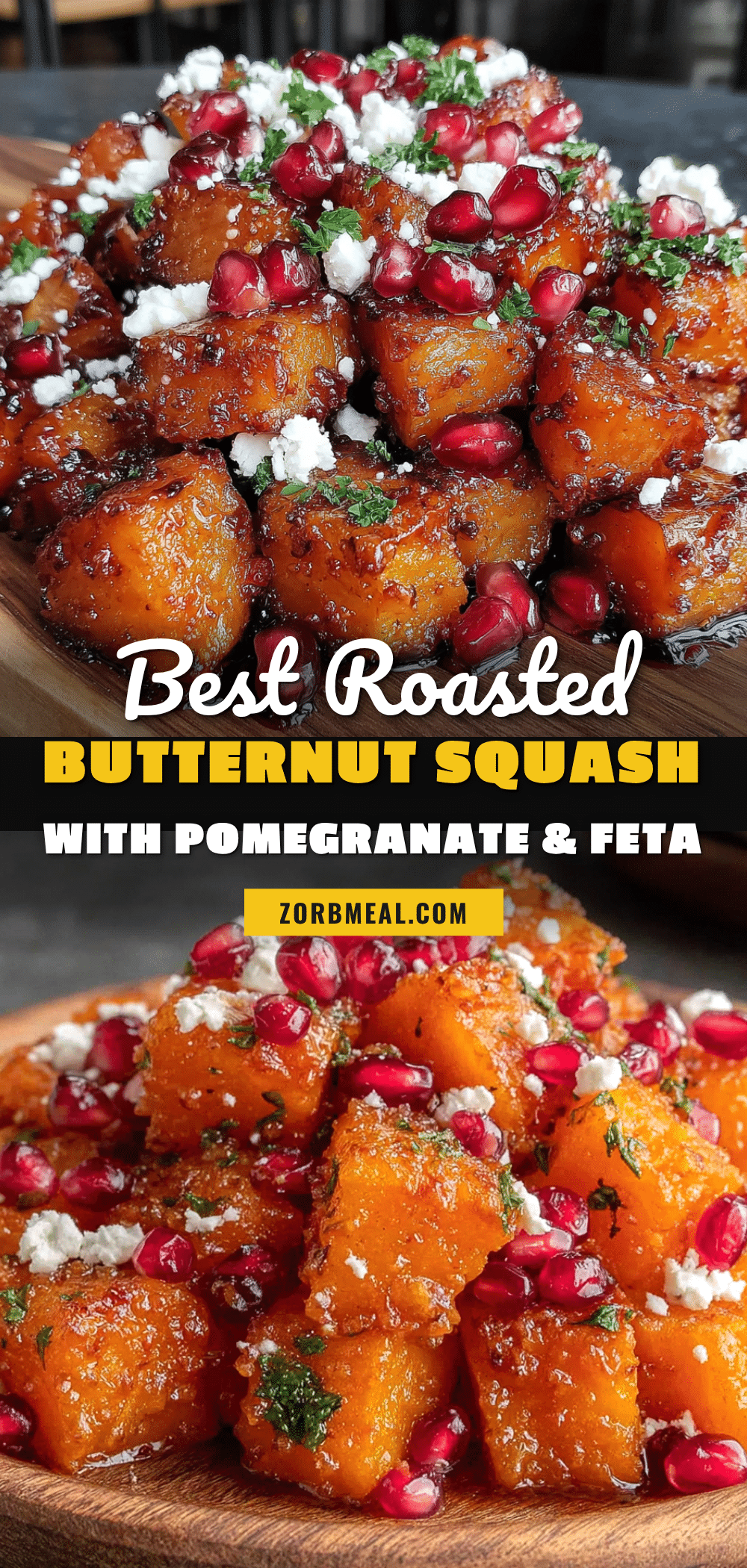
Best Roasted Butternut Squash with Pomegranate & Feta
This roasted butternut squash with pomegranate and feta is a showstopper side dish that’s quick and easy to make. The squash is roasted until deeply caramelized, then topped with juicy pomegranate seeds, salty feta, and fresh mint for a perfect balance of sweet, tangy, and savory flavors.
- Prep Time: 15 minutes
- Cook Time: 40 minutes
- Total Time: 55 minutes
- Yield: 6 servings 1x
- Category: Side Dish
- Cuisine: Mediterranean
Ingredients
- 1 large butternut squash (about 2.5 to 3 pounds), peeled, seeded, and cut into 1-inch cubes
- 3 tablespoons extra-virgin olive oil, plus more for drizzling
- 1 teaspoon kosher salt (Diamond Crystal recommended; use half if using finer salt)
- 1/2 teaspoon black pepper, freshly ground
- 1/2 teaspoon ground cinnamon (optional but recommended)
- 1/4 teaspoon cayenne pepper (optional)
- Seeds from 1 large pomegranate (about 1 cup)
- 1/2 cup crumbled feta cheese (preferably from a block, sheep’s milk recommended)
- 1/4 cup fresh mint leaves, roughly chopped (or flat-leaf parsley)
- 2 tablespoons pomegranate molasses (optional, for drizzling)
Instructions
- Preheat your oven to 400°F (200°C).
- Prepare the squash: Cut off the top and bottom so it sits flat. Use a Y-peeler to remove all the skin. Cut in half lengthwise and scoop out the seeds with a spoon. Cut the flesh into 1-inch cubes, making them even in size.
- Season the squash: In a large bowl, toss the cubes with 3 tablespoons olive oil, 1 teaspoon salt, 1/2 teaspoon pepper, and the cinnamon and cayenne (if using). Use your hands to ensure every piece is coated.
- Spread on the baking sheet: Arrange the squash in a single layer on a large rimmed baking sheet, leaving about half an inch between pieces.
- Roast for 25 minutes: Place the pan in the oven and roast without opening the door for at least 20 minutes.
- Flip and roast again: After 25 minutes, remove the pan and flip each piece with a spatula. Return to the oven for another 15-20 minutes, until fork-tender and deeply caramelized on the edges.
- Rest for 5 minutes: Remove the pan from the oven and let the squash sit for a few minutes to allow the caramelization to set.
- Transfer and top: Gently move the warm squash to a serving platter. Sprinkle pomegranate seeds, crumbled feta, and fresh mint over the top. Drizzle with a little more olive oil and pomegranate molasses (if using).
- Serve immediately: Enjoy warm, not hot, for the best flavor and texture.
Notes
For best results, pat the squash cubes dry before seasoning to ensure crispy edges. Use room temperature feta for creamier crumbles. Don’t skip flipping the squash halfway through roasting for even caramelization. If you can’t find pomegranate molasses, substitute with a mix of 1 tablespoon balsamic vinegar and 1 teaspoon honey, or use balsamic glaze.
Nutrition
- Serving Size: 1 serving (about 1 c
- Calories: 210
- Sugar: 9
- Sodium: 480
- Fat: 12
- Saturated Fat: 4
- Carbohydrates: 24
- Fiber: 5
- Protein: 6
Keywords: roasted butternut squash, pomegranate, feta, fall side dish, holiday side dish, vegetarian, gluten-free, easy side dish


