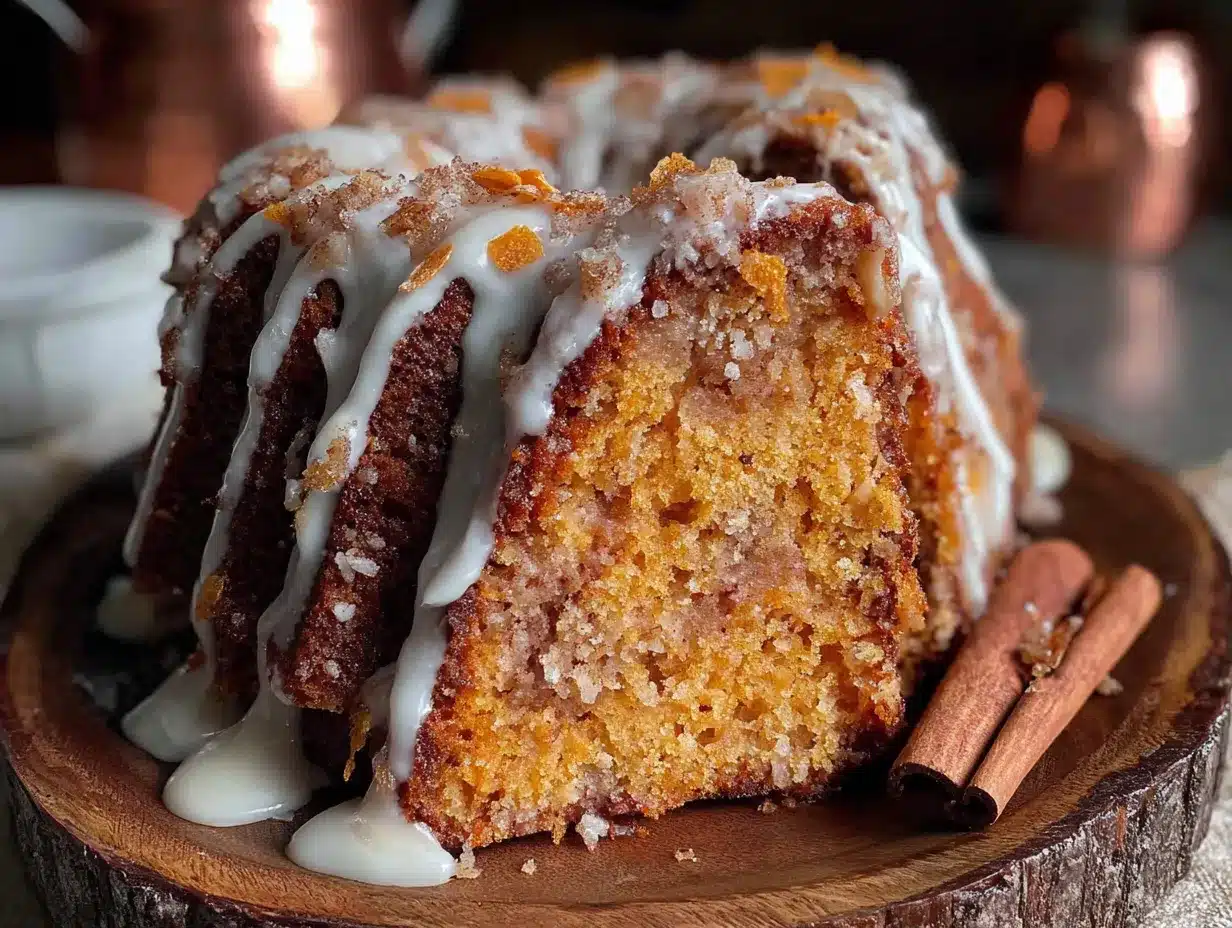
I did not trust apple cider in a cake. It sounded like a gimmick, honestly—something that would taste faintly of juice and leave you wondering where the apple flavor actually went. A friend brought one to a fall gathering a few years back, and I remember eyeing it the way you eye a salad at a barbecue. Polite nod. No intention of participating. But then she cut into it, and the smell hit me from across the room. Not sugary. Not fake. It smelled like the moment you walk into an orchard in October.
I took a slice to be polite, and I stood there in her kitchen, fork halfway to my mouth, and just… stopped. The crumb was tender in a way I hadn’t expected. Dense enough to feel substantial but light enough that you didn’t regret the second bite. And the glaze—that simple vanilla drizzle—set against the warm spice of the cake was exactly what I didn’t know I needed. I asked for the recipe before I finished the slice. She laughed and said it was nothing special. She was wrong.
That cake became my go-to for every fall get-together after that. I’ve tweaked it over the years—added more cider, swapped the oil for butter, messed with the spice blend until it felt right. This version, the one I’m sharing today, is the one I keep coming back to. It’s the one that makes people stop mid-conversation and ask, “What is that?” It’s the one that tastes like a sweater-weather afternoon in a single slice. This is the perfect spiced apple cider bundt cake with vanilla glaze, and I think it might just change your mind about cider in cake, too.
Why You’ll Love This Recipe
This isn’t just another bundt cake recipe. After testing this thing more times than I care to admit, I can tell you exactly why it works—and why you’ll keep coming back to it.
- Deep, Real Apple Flavor : Most apple cakes rely on chunks of fruit or apple sauce, which can make the texture heavy or the flavor muted. By reducing apple cider on the stovetop, you concentrate the apple taste into something bold and unmistakable. No gimmicks here.
- Incredibly Moist Crumb : The combination of butter and reduced cider creates a tender, almost velvety texture that stays moist for days. I’ve left this cake on the counter for three days, and it was still fork-tender on day three.
- Perfect Spice Balance : I tested four different spice blends before landing on this one. It’s warm without being overpowering, aromatic without tasting like a candle. Cinnamon, nutmeg, ginger, and a whisper of clove—nothing fights for attention.
- Simple Ingredients : You probably have most of these in your pantry right now. No specialty flours, no obscure extracts, no trips to three different stores. Just real, honest baking staples.
- That Vanilla Glaze : The glaze is simple—powdered sugar, milk, vanilla—but it’s the perfect counterpoint to the spiced cake. It sets into a soft, crackly shell that gives way to the tender crumb underneath. Honestly, I’ve been known to eat the glaze straight from the bowl. No regrets.
This cake is the kind that makes you close your eyes after the first bite. It’s comfort baking at its finest—the kind of recipe that fills your kitchen with the smell of fall and makes everyone wander in asking, “Is it ready yet?”
What Ingredients You Will Need
This recipe uses simple, wholesome ingredients to deliver that deep apple flavor and warm spice without any fuss. Most of these are pantry staples, which is exactly how I like my baking.
For the Cake
- Apple cider (2 cups) – You’ll reduce this on the stovetop to concentrate the flavor. Don’t skip this step. Regular cider straight from the jug won’t give you the same depth. I prefer unfiltered cider from a local orchard when it’s in season.
- Unsalted butter (1 cup, softened) – Butter gives this cake its rich flavor and tender crumb. Make sure it’s at room temperature before you start creaming it.
- Granulated sugar (1 ½ cups) – Just enough sweetness to balance the tartness of the cider.
- Light brown sugar (½ cup, packed) – Adds moisture and a hint of molasses that plays nicely with the spices.
- Large eggs (3, room temperature) – Room temperature eggs incorporate better into the batter, giving you a more even crumb.
- All-purpose flour (3 cups) – Spoon and level your flour for the most accurate measurement. Scooping directly from the bag can pack it down and make the cake dry.
- Baking powder (2 teaspoons) – For lift.
- Baking soda (½ teaspoon) – Helps the cake rise and brown.
- Salt (1 teaspoon) – Don’t skip it. Salt balances the sweetness and brings out the spice flavors.
- Ground cinnamon (2 teaspoons) – The backbone of the spice blend.
- Ground nutmeg (1 teaspoon) – Freshly grated if you have it. It makes a difference.
- Ground ginger (½ teaspoon) – Adds warmth without heat.
- Ground cloves (¼ teaspoon) – A little goes a long way. Trust me on this.
- Vanilla extract (1 teaspoon) – Pure, not imitation.
- Buttermilk (½ cup, room temperature) – Adds tang and tenderness. If you don’t have buttermilk, you can make a quick substitute by adding 1 tablespoon of lemon juice or vinegar to ½ cup of milk and letting it sit for 5 minutes.
For the Vanilla Glaze
- Powdered sugar (1 ½ cups) – Sifted to avoid lumps.
- Whole milk (2-3 tablespoons) – Start with 2 and add more if needed.
- Vanilla extract (1 teaspoon) – Pure, please.
- Pinch of salt – It balances the sweetness.
One note on the cider reduction: I recommend using a brand like Martinelli’s or any unfiltered variety from a local farm. The flavor is noticeably better than the filtered, shelf-stable stuff. If you’re using a really tart cider, you might want to add an extra tablespoon of brown sugar to the batter.
Equipment Needed
You don’t need a lot of fancy equipment for this cake, which is part of its charm. Here’s what you’ll need:
- 10-cup bundt pan – This is non-negotiable. A smaller pan will cause the batter to overflow. I use a standard 10-cup Nordic Ware pan, and it releases beautifully every time.
- Saucepan – For reducing the apple cider. A small to medium saucepan works fine.
- Stand mixer or hand mixer – You can do this by hand if you’re feeling strong, but a mixer makes creaming the butter and sugar much easier.
- Large mixing bowls – One for dry ingredients, one for wet.
- Whisk – For combining dry ingredients.
- Rubber spatula – For folding the batter and scraping the bowl clean.
- Cooling rack – Essential for even cooling and preventing a soggy bottom.
- Measuring cups and spoons – Accurate measurements matter in baking.
- Kitchen scale (optional but helpful) – For the most precise measurements, especially with flour.
If you don’t have a stand mixer, a hand mixer works just as well. And if you don’t have a hand mixer, you can absolutely cream the butter and sugar by hand with a wooden spoon—it’s a good arm workout, honestly.
Preparation Method
Let’s get to the good part. Here’s how to make this cake step by step.
- Reduce the apple cider : Pour 2 cups of apple cider into a small saucepan and bring it to a boil over medium-high heat. Once it’s boiling, reduce the heat to medium-low and let it simmer, stirring occasionally, until it reduces to about ½ cup. This takes about 15-20 minutes. You’ll know it’s ready when it’s thick, syrupy, and smells intensely of apples. Let it cool completely before using. I usually do this step first so it has time to cool while I prep everything else.
- Preheat and prep the pan : Preheat your oven to 350°F (175°C). Grease your bundt pan thoroughly with butter or baking spray, making sure to get into all the crevices. Dust it with a light coating of flour, tap out the excess, and set it aside. This step is crucial—a well-prepped pan is the difference between a beautiful cake and a crumbling disaster.
- Whisk the dry ingredients : In a large bowl, whisk together the flour, baking powder, baking soda, salt, cinnamon, nutmeg, ginger, and cloves. Set aside.
- Cream the butter and sugars : In the bowl of a stand mixer fitted with the paddle attachment, beat the softened butter, granulated sugar, and brown sugar together on medium speed until light and fluffy, about 3-4 minutes. Scrape down the sides of the bowl halfway through.
- Add the eggs and vanilla : Add the eggs one at a time, beating well after each addition. Add the vanilla extract and beat until combined. The mixture should look smooth and slightly glossy.
- Alternate the dry ingredients and buttermilk : With the mixer on low speed, add about one-third of the dry ingredients, then half of the buttermilk, then another third of the dry ingredients, then the remaining buttermilk, and finally the last third of the dry ingredients. Mix just until combined after each addition. Overmixing at this stage will make the cake tough.
- Add the reduced cider : Pour the cooled, reduced apple cider into the batter and fold it in gently with a rubber spatula until it’s fully incorporated. The batter will be thick and fragrant—you’ll already smell the spices and apples coming through.
- Fill the pan : Spoon the batter into the prepared bundt pan and spread it evenly with the spatula. Give the pan a gentle tap on the counter to release any air bubbles.
- Bake : Bake for 50-60 minutes, or until a wooden skewer inserted into the center of the cake comes out clean or with just a few moist crumbs. The top should be golden brown and the edges should be pulling away from the pan slightly.
- Cool in the pan : Let the cake cool in the pan on a wire rack for 15 minutes. This allows the structure to set before you attempt to turn it out. After 15 minutes, invert the cake onto the cooling rack and let it cool completely—at least 1 hour.
- Make the glaze : While the cake is cooling, whisk together the powdered sugar, 2 tablespoons of milk, vanilla extract, and a pinch of salt in a small bowl. Add more milk, 1 teaspoon at a time, until the glaze is thick but pourable. It should coat the back of a spoon but still drip slowly.
- Glaze the cake : Once the cake is completely cool, place it on a serving plate. Drizzle the glaze over the top, letting it cascade down the sides naturally. Let the glaze set for about 15 minutes before slicing.
A few notes on timing: The reduced cider needs to cool completely, so start that first. The cake itself needs at least an hour to cool before glazing, so plan accordingly. I usually make the cake in the afternoon and glaze it right before serving.
Cooking Tips & Techniques
I’ve made this cake more times than I can count, and I’ve learned a few things along the way. Here are the tips that make the difference between a good cake and a great one.
Don’t rush the cider reduction. This is the most important step in the entire recipe. If you try to speed it up by cranking the heat, you risk burning the cider and ending up with a bitter, scorched flavor. Keep it at a gentle simmer and stir it every few minutes. You’re looking for a syrupy consistency—think maple syrup, not water. And let it cool completely before adding it to the batter. Hot cider will melt the butter in your creamed mixture and ruin the texture.
Room temperature ingredients matter. I know, I know—every recipe says this. But it’s true. Cold eggs and cold buttermilk will seize the butter in your batter, leading to a dense, uneven crumb. Take everything out of the fridge about 30 minutes before you start baking. If you forget, you can warm the eggs in a bowl of warm water for 5 minutes and microwave the buttermilk for 10 seconds.
Grease that pan like you mean it. Bundt pans are notorious for sticking, especially if they have intricate designs. I use a pastry brush to coat every nook and cranny with melted butter, then dust with flour. Some people swear by baking spray with flour in it, like Baker’s Joy. I’ve used both, and they both work. Just don’t skip this step—I learned that lesson the hard way when half my cake stayed in the pan.
Check for doneness early. Every oven runs a little differently. Start checking your cake at the 50-minute mark. Insert a skewer into the thickest part of the cake—it should come out clean or with just a few moist crumbs. If it’s still wet, give it another 5 minutes and check again. Overbaking will dry out the cake, so err on the side of checking too early.
Let it cool properly. The 15-minute rest in the pan is non-negotiable. If you try to turn the cake out too soon, it will fall apart. If you wait too long, it might stick. Set a timer. After 15 minutes, run a thin spatula around the edges to loosen it, then invert it onto a cooling rack. If it doesn’t release immediately, give the pan a gentle tap on the counter.
Variations & Adaptations
One of the things I love about this cake is how adaptable it is. Here are a few variations I’ve tried over the years.
Gluten-Free Version : Substitute the all-purpose flour with a good 1:1 gluten-free baking flour blend. I’ve used King Arthur Measure for Measure and Cup4Cup with great results. The texture will be slightly more delicate, so handle the cake gently when turning it out of the pan.
Dairy-Free Version : Replace the butter with a high-quality vegan butter (I like Miyoko’s) and use a dairy-free milk like oat or almond in the glaze. For the buttermilk, add 1 tablespoon of lemon juice to ½ cup of unsweetened oat milk and let it sit for 5 minutes.
Maple Glaze Variation : For a fall twist, replace the vanilla extract in the glaze with 2 tablespoons of pure maple syrup. Reduce the milk to 1 tablespoon to compensate for the extra liquid. The maple flavor pairs beautifully with the apple and spice.
Add-Ins : Fold ½ cup of toasted, chopped pecans or walnuts into the batter along with the reduced cider. The crunch adds a nice contrast to the tender crumb. I’ve also added ½ cup of dried cranberries for a tart pop of flavor.
Spice Blend Swap : If you don’t have all the individual spices, you can use 1 tablespoon of pumpkin pie spice instead of the cinnamon, nutmeg, ginger, and cloves. It won’t be exactly the same, but it’s a solid shortcut in a pinch.
I once tried a version with a bourbon glaze—just swapped 2 tablespoons of the milk for bourbon. It was dangerous in the best way. If you’re feeling adventurous, give it a try.
Serving & Storage Suggestions
This cake is best served at room temperature, which allows the flavors to really shine. The glaze will set into a soft shell, and the crumb will be tender and moist.
For presentation, I like to place the cake on a simple white pedestal stand and dust it with a light sprinkle of cinnamon or a few fresh apple slices arranged around the base. It’s rustic enough for a casual Sunday brunch but pretty enough for a holiday table.
This cake pairs beautifully with a cup of hot coffee, a chai latte, or a glass of cold milk. If you’re serving it as a dessert, a dollop of lightly sweetened whipped cream or a scoop of vanilla ice cream takes it over the top. I’ve also served it alongside a warm mug of mulled cider for the full fall experience.
Storage : Store the cake in an airtight container at room temperature for up to 4 days. The glaze will soften slightly over time, but the cake stays moist and flavorful. Do not refrigerate it—the fridge will dry out the cake and make the crumb dense.
Freezing : This cake freezes beautifully. Wrap the completely cooled, unglazed cake tightly in plastic wrap, then in a layer of aluminum foil. Freeze for up to 3 months. When you’re ready to serve, thaw it overnight in the refrigerator, bring it to room temperature, and then glaze it fresh. I’ve done this several times, and no one can tell it was frozen.
Reheating : If you want to serve the cake warm, pop individual slices in the microwave for 10-15 seconds. The glaze will get slightly melty, and the cake will taste like it just came out of the oven.
I’ve noticed that the flavors actually deepen after the first day. The spices meld together, and the apple flavor becomes more pronounced. If you can resist eating it all on day one, day two is even better.
Nutritional Information & Benefits
Let’s be honest—this is a butter-and-sugar cake, and it’s meant to be enjoyed as a treat. But there are a few redeeming qualities worth mentioning.
Estimated Nutritional Values (per slice, based on 12 servings):
- Calories: 420
- Fat: 18g
- Carbohydrates: 62g
- Protein: 5g
- Fiber: 1g
- Sugar: 38g
Apple cider contains antioxidants and polyphenols, which are known to support heart health and reduce inflammation. The cinnamon in this recipe has been shown to help regulate blood sugar levels, and ginger is known for its anti-inflammatory properties. So while this cake isn’t health food, it does have a few bright spots.
Dietary Considerations: This recipe contains gluten, dairy, and eggs. For gluten-free and dairy-free adaptations, see the Variations section above. It is not suitable for vegan diets as written, but a vegan version could be made with plant-based butter, a flax egg, and non-dairy milk.
Allergens: This cake contains wheat, milk, and eggs. If you’re serving a crowd, be sure to label it clearly for anyone with allergies.
Personally, I think this cake is best enjoyed without guilt. It’s a celebration of fall flavors, and sometimes you just need a slice of something warm and spiced to make the season feel complete.
Conclusion
This spiced apple cider bundt cake with vanilla glaze is the kind of recipe that becomes a tradition. It’s the cake you bring to Thanksgiving, the one you bake on a rainy October afternoon, the one that makes your house smell like a candle aisle at a farm stand. It’s simple enough for a beginner baker but impressive enough to earn you serious dessert credit.
I love this recipe because it feels honest. No fake flavors, no complicated techniques, no fuss. Just real apple cider, warm spices, and a simple vanilla glaze that ties it all together. It’s the cake I make when I want to slow down and enjoy the season. And honestly, it’s the cake I make when I just want something that tastes like home.
I’d love to hear how yours turns out. Did you try a variation? Add something unexpected? Leave a comment below and let me know—I read every single one. And if you’re looking for more fall-inspired desserts, you might enjoy this moist lemon raspberry pound cake or this decadent chocolate espresso bundt cake for when you want something a little different. Happy baking, friends.
Frequently Asked Questions
Can I use store-bought apple cider from the grocery store?
Absolutely. Just make sure it’s 100% apple cider, not apple juice. Apple juice is filtered and lacks the depth of flavor you need for this recipe. Unfiltered cider is ideal, but any pure apple cider will work.
Why did my cake stick to the bundt pan?
This usually happens when the pan isn’t greased thoroughly enough. Make sure you get into every crevice with melted butter or baking spray, and dust it with flour after. Letting the cake cool for exactly 15 minutes before turning it out also helps—too soon and it will fall apart, too late and it might stick.
Can I make this cake without reducing the cider?
Technically yes, but I wouldn’t recommend it. The reduction concentrates the apple flavor and removes excess liquid that would make the batter too thin. Using unreduced cider will result in a less flavorful, denser cake. It’s worth the extra 15 minutes.
How do I know when the cake is done baking?
Insert a wooden skewer or toothpick into the thickest part of the cake. If it comes out clean or with just a few moist crumbs, it’s done. If it’s wet with batter, give it another 5-10 minutes. The top should also be golden brown and the edges should be pulling away from the pan.
Can I freeze this cake with the glaze on it?
I don’t recommend it. The glaze can become sticky and lose its texture during freezing and thawing. It’s best to freeze the cake unglazed, then thaw it and add the fresh glaze just before serving. The glaze takes about 2 minutes to make, so it’s not an extra hassle.
Pin This Recipe!
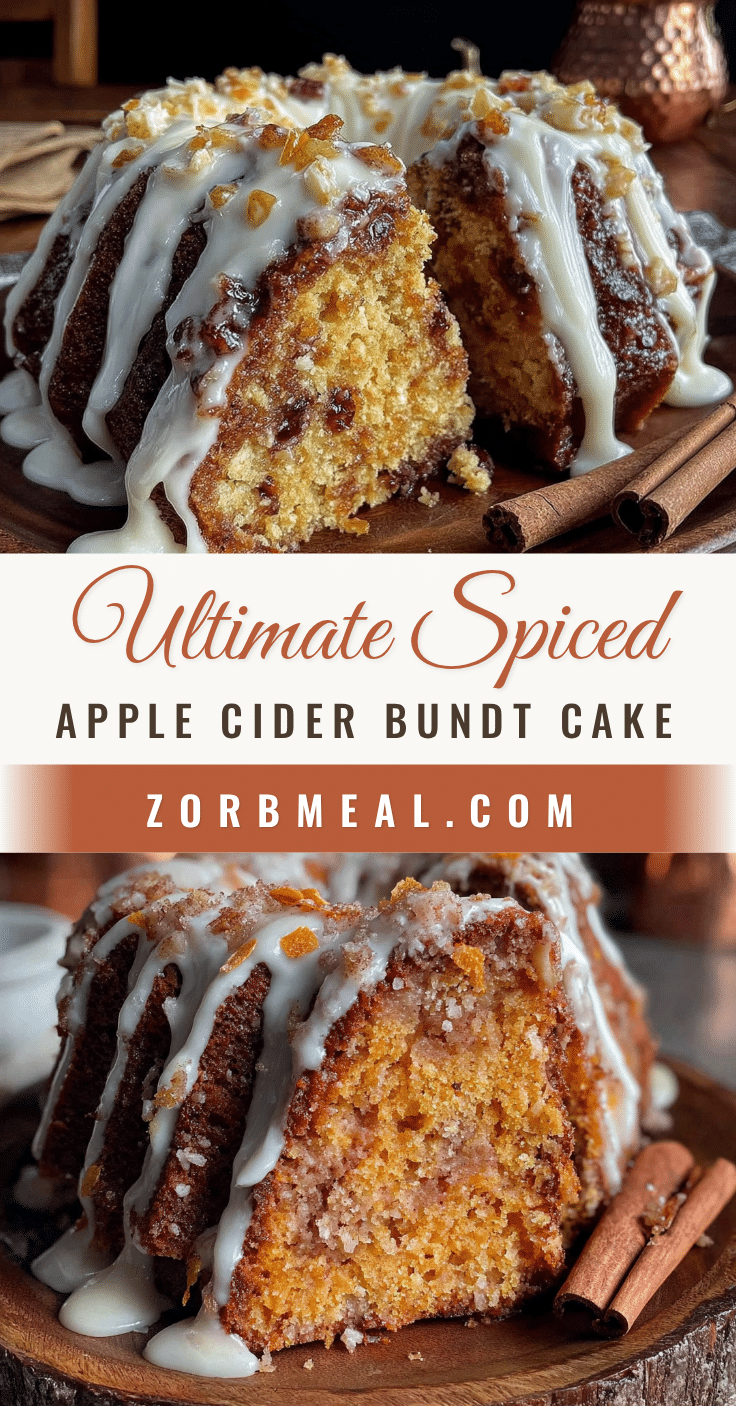
Best Easy Spiced Apple Cider Bundt Cake with Vanilla Glaze
This spiced apple cider bundt cake with vanilla glaze is the perfect fall dessert. It features deep, real apple flavor from reduced cider, an incredibly moist crumb, and a warm spice blend that tastes like an orchard in October.
- Prep Time: 30 minutes
- Cook Time: 55 minutes
- Total Time: 1 hour 25 minutes
- Yield: 12 servings 1x
- Category: Dessert
- Cuisine: American
Ingredients
- 2 cups apple cider
- 1 cup unsalted butter, softened
- 1 ½ cups granulated sugar
- ½ cup light brown sugar, packed
- 3 large eggs, room temperature
- 3 cups all-purpose flour
- 2 teaspoons baking powder
- ½ teaspoon baking soda
- 1 teaspoon salt
- 2 teaspoons ground cinnamon
- 1 teaspoon ground nutmeg
- ½ teaspoon ground ginger
- ¼ teaspoon ground cloves
- 1 teaspoon vanilla extract
- ½ cup buttermilk, room temperature
- 1 ½ cups powdered sugar
- 2–3 tablespoons whole milk
- 1 teaspoon vanilla extract (for glaze)
- Pinch of salt (for glaze)
Instructions
- Reduce the apple cider: Pour 2 cups of apple cider into a small saucepan and bring to a boil over medium-high heat. Reduce heat to medium-low and simmer, stirring occasionally, until reduced to about ½ cup (15-20 minutes). Let cool completely.
- Preheat oven to 350°F (175°C). Grease a 10-cup bundt pan thoroughly with butter or baking spray, dust with flour, and tap out excess.
- In a large bowl, whisk together flour, baking powder, baking soda, salt, cinnamon, nutmeg, ginger, and cloves. Set aside.
- In a stand mixer fitted with the paddle attachment, beat softened butter, granulated sugar, and brown sugar on medium speed until light and fluffy (3-4 minutes). Scrape down sides.
- Add eggs one at a time, beating well after each addition. Add vanilla extract and beat until combined.
- With mixer on low speed, add dry ingredients and buttermilk alternately: one-third of dry ingredients, half of buttermilk, another third of dry ingredients, remaining buttermilk, and final third of dry ingredients. Mix just until combined after each addition.
- Pour cooled reduced apple cider into batter and fold gently with a rubber spatula until fully incorporated.
- Spoon batter into prepared bundt pan and spread evenly. Tap pan gently on counter to release air bubbles.
- Bake for 50-60 minutes, or until a wooden skewer inserted into the center comes out clean or with a few moist crumbs. Cool in pan on a wire rack for 15 minutes.
- Invert cake onto cooling rack and let cool completely (at least 1 hour).
- Make the glaze: In a small bowl, whisk together powdered sugar, 2 tablespoons milk, vanilla extract, and a pinch of salt. Add more milk, 1 teaspoon at a time, until thick but pourable.
- Once cake is completely cool, place on serving plate and drizzle glaze over the top. Let set for 15 minutes before slicing.
Notes
Don’t rush the cider reduction; keep at a gentle simmer to avoid burning. Room temperature ingredients are crucial for best texture. Grease the bundt pan thoroughly to prevent sticking. Check for doneness at 50 minutes. Let cake cool exactly 15 minutes in pan before turning out. Flavors deepen after the first day.
Nutrition
- Serving Size: 1 slice
- Calories: 420
- Sugar: 38
- Sodium: 320
- Fat: 18
- Saturated Fat: 10
- Carbohydrates: 62
- Fiber: 1
- Protein: 5
Keywords: apple cider bundt cake, spiced apple cake, fall dessert, bundt cake with glaze, apple cider recipe