My neighbor showed up at my door holding a brown paper bag full of what looked like orangey-red tomatoes. “You bake, right?” she asked, thrusting the bag into my hands. I peered inside at the squat, tomato-like fruits and honestly had no clue what to do with them. She called them Fuyu persimmons and said her tree was dropping them faster than she could eat them. I nodded, smiled, and shut the door feeling completely out of my depth. I had never cooked with a persimmon in my life.
The internet told me you could eat them raw, so I sliced one up. It was crunchy, mildly sweet, and kind of… there. Not bad, but not life-changing. I let the bag sit on my counter for three days, feeling guilty every time I walked past. On day four, one of them had gone soft and almost jelly-like inside. I was about to toss the whole bag when I figured I had nothing to lose. I mashed that overripe persimmon into a bowl, added flour, sugar, and butter, and threw it in the oven. That first loaf came out lopsided and a little dense, but the flavor stopped me mid-chew. It was spiced and deeply sweet, with this almost honeyed undertone I couldn’t place. I made three more loaves that week trying to get it right, and somewhere between loaf two and three, I stopped following the internet and started following my gut. This Homemade Persimmon Bread with Toasted Walnuts is the result of that stubborn curiosity—a recipe I didn’t know I needed until I accidentally stumbled into it.
Why You’ll Love This Recipe
Let me tell you why this bread keeps disappearing from my kitchen counter before it even has a chance to cool completely. After testing this recipe on my family, my book club, and my skeptical husband (who “doesn’t do fruit breads”), I can confidently say this one wins people over.
- Quick & Easy : From start to oven in about 15 minutes. No mixer required, no complicated techniques. Just a bowl, a spoon, and a little patience while it bakes.
- Simple Ingredients : You probably have most of this in your pantry already. The only special item is the persimmons, and they show up at grocery stores every fall without fail.
- Perfect for Fall Baking : This bread screams autumn without being another pumpkin or apple recipe. It’s the unexpected guest at the bake sale that everyone asks about.
- Crowd-Pleaser : My kids ate two slices before dinner. My neighbor who gave me the persimmons asked for the recipe after one bite. Even people who claim they don’t like fruit-based sweets come back for seconds.
- Unbelievably Moist : The persimmon pulp creates a texture that stays tender for days. No dry crumb here—this bread stays soft and sliceable from day one through day four.
What makes this version different from every other persimmon bread out there is the toasted walnut situation. I toast my walnuts twice—once before chopping and once after adding them to the batter. That extra step releases their oils and gives you a nutty crunch in every single bite. Plus, I use a blend of cinnamon, nutmeg, and a whisper of cardamom that makes the persimmon flavor sing rather than hide behind the spices. This isn’t just another quick bread recipe. It’s the one that makes you close your eyes after that first warm slice with butter melting into the crumb.
What Ingredients You Will Need
This recipe relies on simple, everyday ingredients that come together to create something genuinely special. The persimmon does the heavy lifting here, so let’s talk about what you need and why it matters.
For the Persimmon Pulp:
- 2 cups ripe Fuyu persimmon pulp (about 4-5 medium persimmons) — You want them soft, almost squishy to the touch. Hachiya persimmons work too, but they must be incredibly ripe or they’ll be astringent. I prefer Fuyu for their consistent sweetness.
- 1 teaspoon lemon juice — This brightens the persimmon flavor and keeps the color from turning muddy. Fresh or bottled works fine here.
For the Dry Ingredients:
- 2 cups all-purpose flour (240 grams) — Spoon and level your flour into the measuring cup. Scooping directly packs it down and gives you a dry, heavy loaf.
- 1 teaspoon baking soda — This is your leavener. Make sure it’s fresh or your bread won’t rise properly.
- 1/2 teaspoon baking powder — Adds a little extra lift alongside the baking soda.
- 1/2 teaspoon salt — Fine sea salt works best. It balances the sweetness without being noticeable.
- 1 1/2 teaspoons ground cinnamon — I use Saigon cinnamon for its warm, bold flavor, but any good cinnamon works.
- 1/2 teaspoon ground nutmeg — Freshly grated if you have it, but pre-ground is perfectly fine.
- 1/4 teaspoon ground cardamom — This is my secret ingredient. It adds a floral, citrusy note that makes the persimmon taste brighter. Skip it if you must, but don’t.
For the Wet Ingredients:
- 1 cup granulated sugar (200 grams) — Regular white sugar keeps the crumb light. You can substitute coconut sugar for a deeper flavor, but the color will be darker.
- 1/2 cup packed light brown sugar (100 grams) — Adds moisture and a subtle molasses note that pairs beautifully with the persimmons.
- 1/2 cup vegetable oil (120 ml) — Use a neutral oil like canola or grapeseed. Olive oil will overpower the delicate persimmon flavor.
- 2 large eggs, room temperature — Cold eggs can seize the batter. Let them sit out for 15 minutes before starting.
- 1 teaspoon vanilla extract — Pure vanilla makes a difference here. Imitation works, but the flavor won’t be as rich.
For the Toasted Walnuts:
- 1 cup walnut halves and pieces (100 grams) — I buy raw walnuts and toast them myself. Pre-toasted nuts can be stale and unevenly roasted.
Ingredient Substitution Notes: If you can’t find persimmons, you can substitute the same amount of mashed ripe banana or pumpkin puree. The texture will be similar, but the flavor will obviously change. For a dairy-free option, this recipe already uses oil instead of butter, so you’re good there. If you need to avoid nuts, toasted pepitas or sunflower seeds make a great crunchy topping instead of walnuts.
Equipment Needed
You don’t need a fancy kitchen to make this bread. Here’s what you’ll actually use:
- 9×5-inch loaf pan — Metal pans conduct heat better than glass, giving you a more even bake. If you only have glass, reduce the oven temperature by 25°F.
- Mixing bowls — One large bowl for the wet ingredients and one medium bowl for the dry ingredients.
- Whisk or wooden spoon — A whisk helps break up any lumps in the dry ingredients. A wooden spoon works fine for mixing the batter.
- Parchment paper — Line your loaf pan with a sling of parchment paper. It makes lifting the bread out so much easier than greasing and flouring the pan.
- Measuring cups and spoons — Use dry measuring cups for the flour and sugar, and a liquid measuring cup for the oil.
- Skillet or baking sheet — For toasting the walnuts. A dry skillet on the stove works faster, but a baking sheet in the oven is more hands-off.
- Cooling rack — Letting the bread cool in the pan for 10 minutes, then transferring it to a rack prevents a soggy bottom.
I used a cheap loaf pan from the grocery store for years and it worked just fine. Don’t overthink the equipment. A sharp knife for slicing the persimmons and a fork for mashing them is really all the specialty tools you need.
Preparation Method
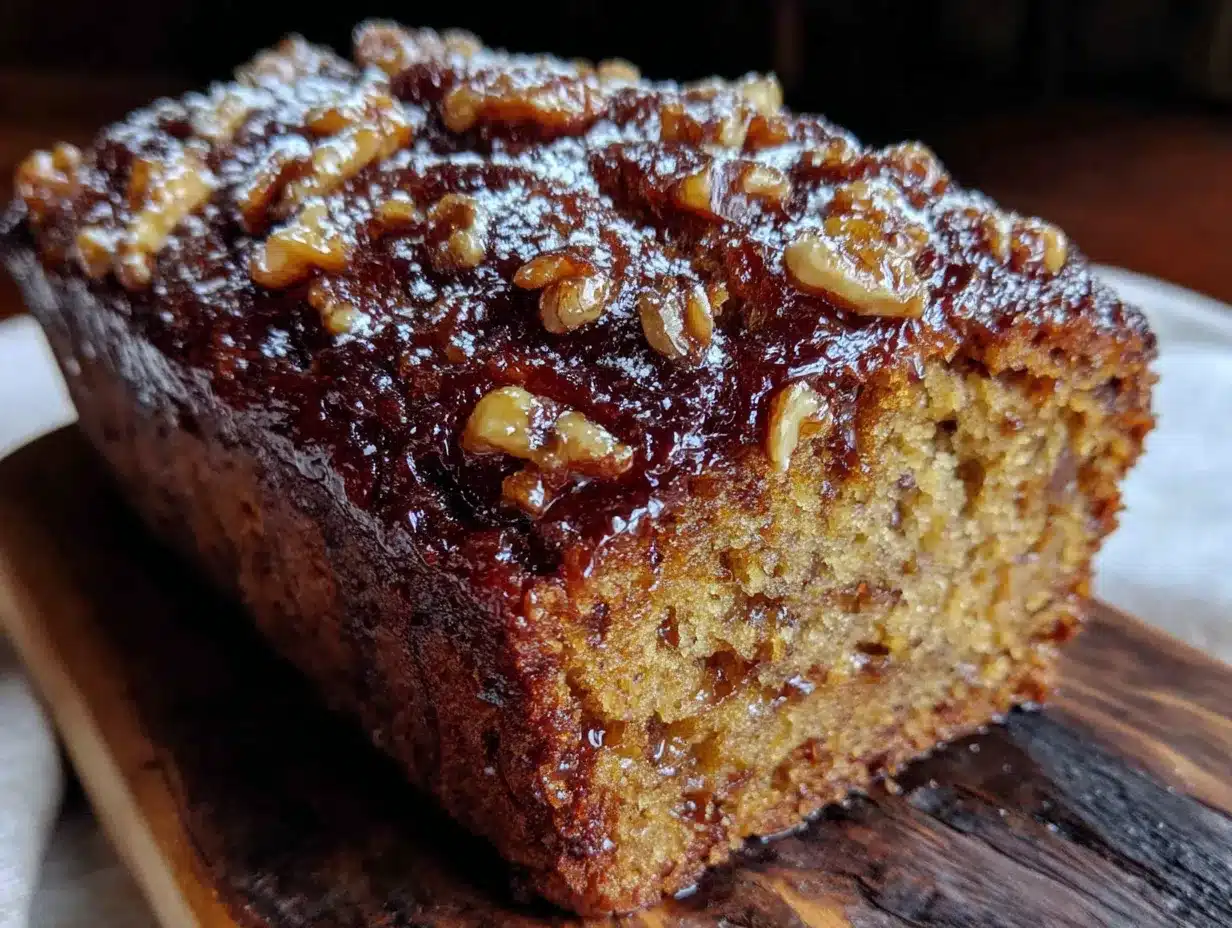
Let me walk you through this step by step. I’ve made this bread at least twenty times now, so I know exactly where things can go sideways and how to keep you on track.
Step 1: Prep Your Persimmons
Start by washing your persimmons thoroughly. Cut off the green calyx (the leafy top part) and slice the fruit into quarters. If you’re using Fuyu persimmons, the skin is thin and edible, so leave it on. If you’re using Hachiya, peel them first—the skin gets tough when baked. Place the quarters in a bowl and mash them with a fork until you have a chunky pulp. You want some texture here, not baby food. Measure out 2 cups of pulp and stir in the lemon juice. Set it aside while you prep everything else.
Step 2: Toast the Walnuts
This step changes everything. Place your walnut halves in a dry skillet over medium heat. Shake the pan every 30 seconds or so, and toast them for about 4 to 5 minutes until they smell nutty and look slightly darker. Do not walk away—walnuts go from perfectly toasted to burnt in about 15 seconds. Transfer them to a cutting board to cool, then roughly chop them into small pieces. Leave a few larger chunks for texture. Set aside 2 tablespoons of chopped walnuts for topping the loaf.
Step 3: Preheat and Prep Your Pan
Preheat your oven to 350°F (175°C). Cut a piece of parchment paper long enough to hang over the two long sides of your loaf pan. Press it into the pan so it fits snugly against the bottom and sides. This parchment sling will let you lift the finished bread out cleanly. You don’t need to grease the paper.
Step 4: Mix the Dry Ingredients
In a medium bowl, whisk together the flour, baking soda, baking powder, salt, cinnamon, nutmeg, and cardamom. Whisking aerates the flour and distributes the spices evenly. If you skip this step, you might end up with a pocket of pure cardamom in one bite and nothing in the next. Trust me, I learned that the hard way.
Step 5: Mix the Wet Ingredients
In a large bowl, combine the granulated sugar, brown sugar, and vegetable oil. Whisk them together until the mixture looks smooth and glossy, about 1 minute. Add the eggs one at a time, whisking well after each addition. Stir in the vanilla extract. Now add your persimmon pulp and mix until everything is combined. The batter will look a little thin at this point—that’s normal.
Step 6: Combine Wet and Dry
Pour the dry ingredients into the wet ingredients. Use a rubber spatula or wooden spoon to fold them together gently. Stir just until you no longer see streaks of flour. A few small lumps are fine. Overmixing develops gluten and will make your bread tough and dense. Fold in the chopped walnuts (except the 2 tablespoons you set aside) with just a few strokes.
Step 7: Fill the Pan and Add Topping
Pour the batter into your prepared loaf pan and spread it into an even layer. Sprinkle the reserved 2 tablespoons of chopped walnuts over the top, pressing them gently into the batter so they stick during baking.
Step 8: Bake
Place the pan in the center of the oven and bake for 55 to 65 minutes. At the 50-minute mark, check the bread. If the top is browning too quickly, tent it loosely with aluminum foil. The bread is done when a toothpick inserted into the center comes out clean or with just a few moist crumbs attached. The top should be golden brown and spring back when you gently press it.
Step 9: Cool
Let the bread cool in the pan for 10 minutes. Then lift it out using the parchment sling and transfer it to a wire rack. Let it cool completely before slicing—about 2 hours. I know that wait feels cruel, but slicing it warm will give you crumbly, gummy slices. Patience pays off here.
Cooking Tips & Techniques
I’ve made every mistake you can imagine with this bread so you don’t have to. Here are the lessons I learned the hard way.
Check your persimmon ripeness. Under-ripe persimmons are tannic and will leave your mouth feeling fuzzy and dry. Your persimmons should feel like a very ripe peach—soft but not mushy. If they’re still firm, leave them on the counter for a few days until they soften. You can speed this up by placing them in a paper bag with an apple or banana.
Don’t overmix the batter. This is the number one mistake I see in quick bread recipes. Mix until the flour disappears, then stop. A few streaks of flour are better than a tough, rubbery loaf. Fold gently and with purpose, not aggression.
Toast your walnuts twice. I mentioned this earlier, but it bears repeating. Toasting the whole walnuts first, chopping them, then adding them to the batter gives you maximum crunch. If you skip the first toast, the walnuts steam inside the batter and turn soft. If you skip the second toast on top, you miss that beautiful golden-brown crust.
Use room temperature eggs. Cold eggs straight from the fridge can cause your oil-based batter to seize up slightly, creating a denser texture. Let your eggs sit on the counter for 15 to 20 minutes before you start. If you forgot to take them out, place them in a bowl of warm water for 5 minutes.
Let it cool completely. I know I sound like a broken record, but this bread needs a full 2 hours to set up properly. The interior continues cooking from residual heat as it cools. Cutting into it early releases steam and moisture, leaving you with a gummy, collapsed crumb. I ruined my first two loaves this way because I couldn’t wait.
Variations & Adaptations
One of the best things about this recipe is how flexible it is. Here are some ways I’ve adapted it over the years.
Gluten-Free Version: Substitute the all-purpose flour with a 1:1 gluten-free baking flour blend that contains xanthan gum. I’ve used Bob’s Red Mill and King Arthur brands with good results. The texture will be slightly more tender and a little crumbly, but the flavor stays intact. Add an extra tablespoon of oil to compensate for the dryness of gluten-free flours.
Vegan Adaptation: Replace the two eggs with two flax eggs (2 tablespoons ground flaxseed mixed with 6 tablespoons water, let sit for 5 minutes until gel-like). The bread will be a touch denser but still delicious. Use coconut sugar instead of brown sugar to keep it fully plant-based.
Spiced Chocolate Chip Version: Reduce the walnuts to 1/2 cup and add 1/2 cup dark chocolate chips or chopped dark chocolate. The chocolate pairs surprisingly well with the warm spices and persimmon sweetness. I made this version for a holiday party and it disappeared faster than the original.
Orange and Cranberry Twist: Add the zest of one orange to the wet ingredients and fold in 1/2 cup dried cranberries along with the walnuts. The orange brightens the persimmon flavor, and the cranberries add little bursts of tartness. This version is my go-to for Thanksgiving morning.
Lower Sugar Option: Reduce the granulated sugar to 3/4 cup and the brown sugar to 1/4 cup. The bread will be less sweet but still moist and flavorful. You can also substitute half the sugar with applesauce or mashed banana, but that will change the texture slightly.
Serving & Storage Suggestions
This bread shines at room temperature, but it’s also incredible warm. Here’s how I serve and store mine.
Serving Suggestions: Slice the bread about 1/2-inch thick and serve it plain or with a pat of salted butter melting into the warm crumb. For a more indulgent treat, toast the slices lightly and spread them with cream cheese or mascarpone. A drizzle of honey over the top never hurts either. This bread pairs beautifully with a hot cup of coffee or chai tea in the morning, and it holds its own as an afternoon snack alongside a glass of cold milk.
Storage Instructions: Wrap the cooled loaf tightly in plastic wrap or aluminum foil and store it at room temperature for up to 4 days. The flavor actually improves on day two as the spices mellow and the persimmon flavor deepens. Do not refrigerate the bread—it will dry out faster in the fridge.
Freezing Instructions: This bread freezes beautifully. Wrap the completely cooled loaf in plastic wrap, then a layer of aluminum foil, and place it in a freezer-safe bag. It will keep for up to 3 months. To thaw, leave it on the counter overnight still wrapped, or slice it frozen and toast individual slices directly from the freezer.
Reheating Tips: For that just-baked experience, warm individual slices in a 300°F oven for 5 to 7 minutes, or pop them in the toaster on a low setting. Microwaving works in a pinch (about 15 seconds per slice), but the texture won’t be as nice.
Nutritional Information & Benefits
Here’s a rough breakdown per slice (based on 10 slices per loaf):
- Calories: Approximately 320
- Total Fat: 16g
- Saturated Fat: 2g
- Carbohydrates: 42g
- Fiber: 2g
- Sugar: 27g
- Protein: 5g
Health Benefits: Persimmons are packed with vitamin A (great for eye health), vitamin C (immune support), and manganese. They also contain antioxidants like flavonoids and tannins that help reduce inflammation. Walnuts add omega-3 fatty acids, which support brain health and heart function. While this bread is definitely a treat rather than a health food, using oil instead of butter keeps the saturated fat content lower than traditional quick breads.
Dietary Considerations: This recipe is dairy-free as written. It contains gluten (from the flour), eggs, and walnuts. For a nut-free version, substitute the walnuts with toasted pepitas or simply omit them. For a gluten-free version, see the variations section above.
Conclusion
This Homemade Persimmon Bread with Toasted Walnuts started as a happy accident born from a bag of mystery fruit and a stubborn refusal to waste food. Now it’s the recipe I look forward to making every fall when persimmons appear at the market. There’s something deeply satisfying about turning a fruit you barely understand into a loaf of bread that makes people close their eyes and smile. The warm spices, the tender crumb, the crunch of toasted walnuts—it all comes together in a way that feels both simple and special.
I hope you give this recipe a chance, even if you’ve never cooked with persimmons before. Trust the process, let the fruit get fully ripe, and don’t skip that double-toasting step on the walnuts. If you make it, I’d love to hear how it turns out. Drop a comment below and let me know if this bread won over any skeptics in your house. And if you come up with your own twist on it—maybe a different spice blend or a glaze—share that too. Happy baking, friends!
Frequently Asked Questions
Can I use Hachiya persimmons instead of Fuyu?
Yes, but they must be extremely ripe—almost jelly-like inside. Hachiya persimmons are astringent when under-ripe and will leave a terrible fuzzy feeling in your mouth. Wait until they feel like a water balloon, then scoop out the flesh. Fuyu persimmons are much easier to work with because they’re sweet even when firm.
Why did my persimmon bread sink in the middle?
This usually happens for one of three reasons: your oven temperature was too low (invest in an oven thermometer), your baking soda was expired, or you opened the oven door too early. Wait until the 50-minute mark to check on the bread, and resist the urge to peek before that.
Can I make this bread into muffins instead?
Absolutely. Grease a 12-cup muffin tin or line it with paper liners. Fill each cup about 3/4 full and bake at 350°F for 18 to 22 minutes. Check for doneness with a toothpick. This is a great option if you want individual servings or need to freeze them for quick breakfasts.
How do I know when persimmons are ripe enough?
Fuyu persimmons should yield slightly to gentle pressure, like a ripe tomato or a peach. The skin will look deep orange-red and may develop a few small brown spots. If they’re still hard and pale orange, give them more time on the counter at room temperature.
Can I add a glaze to this bread?
Yes, and it’s lovely. Whisk together 1 cup powdered sugar with 2 to 3 tablespoons of fresh orange juice until smooth. Drizzle it over the cooled loaf and let it set for about 15 minutes before slicing. The orange glaze complements the persimmon and spice flavors beautifully. If you enjoy that kind of bright, citrusy finish, you might also like our moist lemon raspberry pound cake with zesty glaze for another fruity, glazed treat.
If you’re looking for more cozy, fruit-forward baked goods, our rustic nectarine galette with creamy almond filling is another fantastic way to showcase seasonal fruit. And for a completely different kind of sweet treat that’s perfect for parties, try our festive firework-themed rice krispie treats on sticks.
Pin This Recipe!
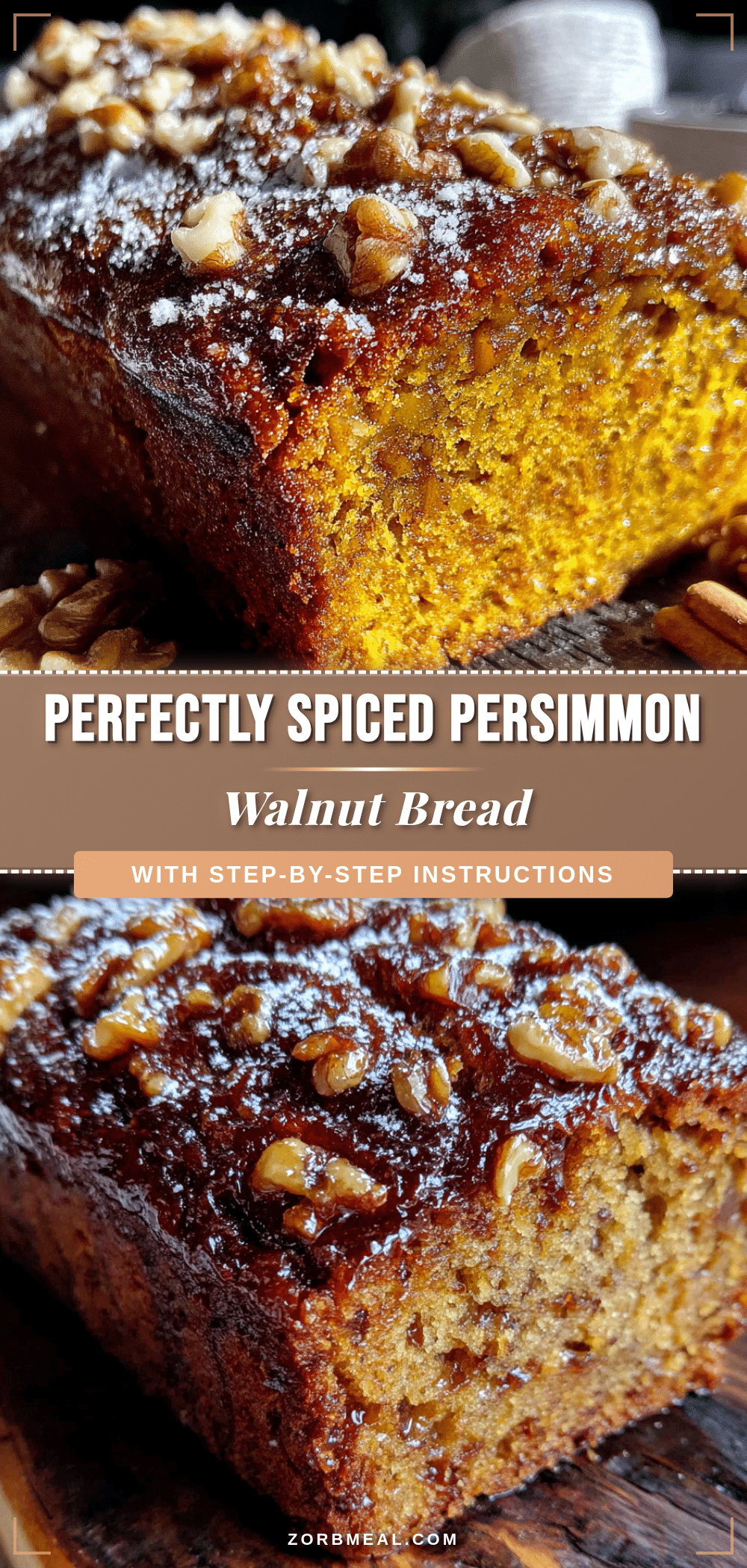
Best Easy Homemade Persimmon Bread with Toasted Walnuts
This moist, spiced persimmon bread features double-toasted walnuts and a blend of cinnamon, nutmeg, and cardamom. It’s an easy, crowd-pleasing fall bake that turns ripe persimmons into a tender, flavorful loaf.
- Prep Time: 15 minutes
- Cook Time: 55-65 minutes
- Total Time: 1 hour 10 minutes to 1 hour 20 minutes
- Yield: 10 servings 1x
- Category: Dessert
- Cuisine: American
Ingredients
- 2 cups ripe Fuyu persimmon pulp (about 4–5 medium persimmons)
- 1 teaspoon lemon juice
- 2 cups all-purpose flour (240 grams)
- 1 teaspoon baking soda
- 1/2 teaspoon baking powder
- 1/2 teaspoon salt
- 1 1/2 teaspoons ground cinnamon
- 1/2 teaspoon ground nutmeg
- 1/4 teaspoon ground cardamom
- 1 cup granulated sugar (200 grams)
- 1/2 cup packed light brown sugar (100 grams)
- 1/2 cup vegetable oil (120 ml)
- 2 large eggs, room temperature
- 1 teaspoon vanilla extract
- 1 cup walnut halves and pieces (100 grams)
Instructions
- Prep your persimmons: Wash, remove calyx, and quarter. Mash with a fork to a chunky pulp. Measure 2 cups and stir in lemon juice. Set aside.
- Toast the walnuts: In a dry skillet over medium heat, toast walnut halves for 4-5 minutes, shaking often, until fragrant. Cool, then roughly chop. Reserve 2 tablespoons for topping.
- Preheat oven to 350°F (175°C). Line a 9×5-inch loaf pan with parchment paper, leaving overhang on long sides.
- Mix dry ingredients: In a medium bowl, whisk together flour, baking soda, baking powder, salt, cinnamon, nutmeg, and cardamom.
- Mix wet ingredients: In a large bowl, whisk together granulated sugar, brown sugar, and oil until smooth. Add eggs one at a time, whisking well. Stir in vanilla and persimmon pulp.
- Combine: Pour dry ingredients into wet. Fold gently with a spatula until just combined. Fold in chopped walnuts (except reserved 2 tablespoons).
- Fill pan: Pour batter into prepared pan. Sprinkle reserved walnuts on top, pressing gently.
- Bake: Place in center of oven and bake 55-65 minutes. If top browns too quickly, tent with foil at 50 minutes. Bread is done when a toothpick inserted in center comes out clean or with moist crumbs.
- Cool: Let bread cool in pan for 10 minutes, then lift out using parchment sling and transfer to a wire rack. Cool completely (about 2 hours) before slicing.
Notes
Use very ripe Fuyu persimmons for best sweetness. Double-toasting the walnuts (once whole, then again on top) maximizes crunch. Do not overmix the batter. Let bread cool completely before slicing to avoid gummy texture. Store at room temperature for up to 4 days; freeze for up to 3 months.
Nutrition
- Serving Size: 1 slice (1/10 of loa
- Calories: 320
- Sugar: 27
- Sodium: 220
- Fat: 16
- Saturated Fat: 2
- Carbohydrates: 42
- Fiber: 2
- Protein: 5
Keywords: persimmon bread, easy persimmon bread, homemade persimmon bread, persimmon walnut bread, fall baking, quick bread, persimmon recipe


