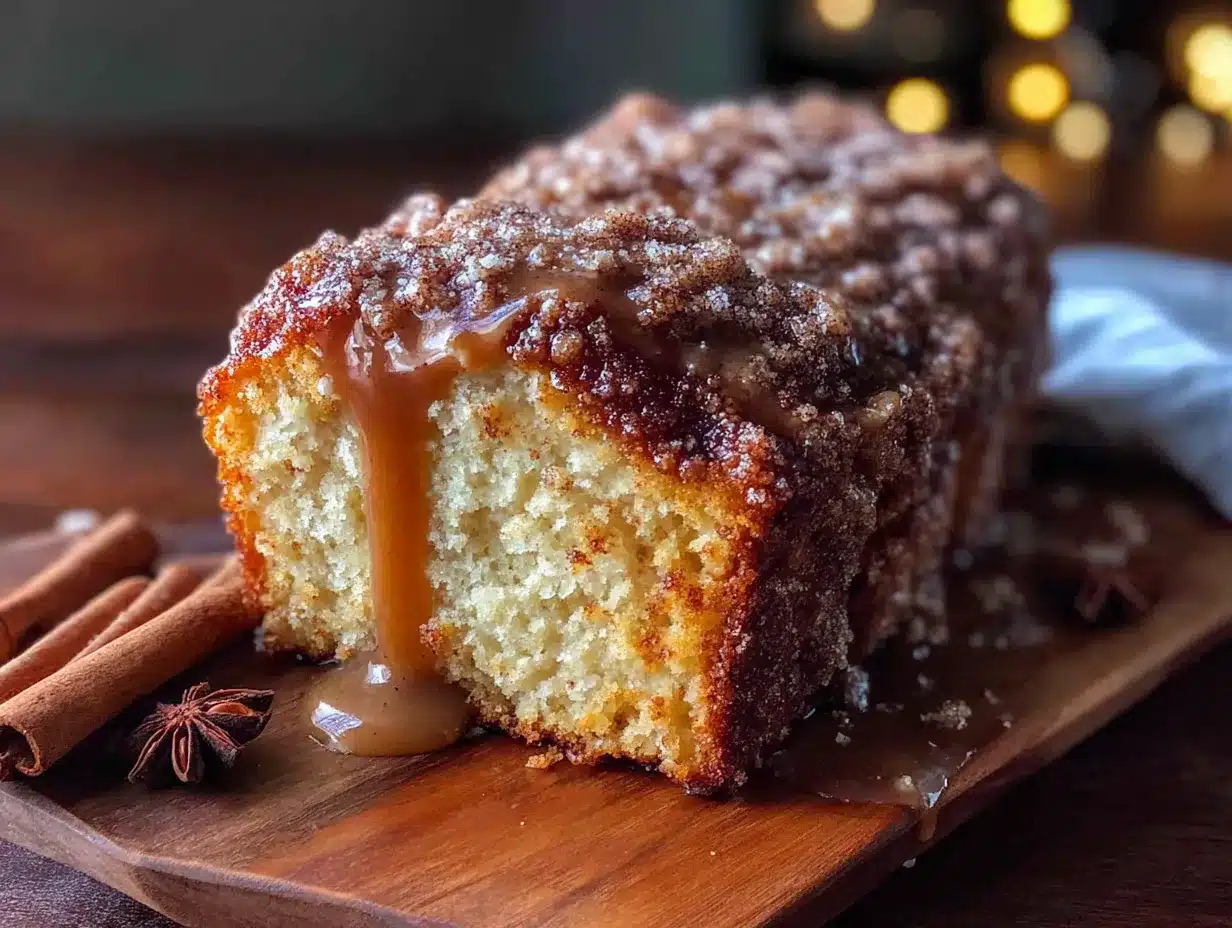
I want apple cider donut bread right now. Like, not in an hour after the oven preheats and I dig through the pantry for the right pan. I want it sitting on the counter, that cinnamon-sugar crust already cracking under my knife. But here’s the thing—I never have cider donuts just lying around. They’re a fall-only thing at the orchard, and honestly, even then, I eat three before I get home. So I started thinking (while staring at a half-gallon of apple cider in my fridge) what if I just made the bread version? The one that tastes exactly like the donut but doesn’t require deep-frying or standing over hot oil? That’s how this recipe was born. It’s not a compromise. It’s an upgrade.
The first time I made it, I pulled the loaf out of the pan too fast and half the cinnamon-sugar crust stuck to the parchment paper. I stood there, holding a naked loaf of bread, and almost cried. But then I sliced it, toasted a piece, and realized the flavor was dead-on. That deep, tangy apple cider taste. The soft, tender crumb. That hit of cinnamon that makes you close your eyes. So I tweaked it. I let it cool longer, brushed it with melted butter while it was still warm, and double-coated the crust. Now it’s perfect. This is the bread you make when you want fall in a pan, no orchard trip required.
Why You’ll Love This Recipe
I’ve tested this recipe seven times. Seven. My kitchen smelled like a cider mill for three straight days, and honestly, I’m not mad about it. The first loaf was too dense. The second was too dry. The third? The third was the one where I actually called my mom and said, “You need to come over right now.” So trust me when I say this version is the one.
- Quick & Easy : From start to finish, you’re looking at about an hour. No yeast, no proofing, no standing over hot oil. Just mix, bake, and coat.
- Simple Ingredients : You probably have most of this already. Flour, sugar, butter, eggs, cinnamon. The only special thing is apple cider, and that’s easy to find in fall.
- Perfect for Fall Mornings : This bread was made for crisp October mornings with a hot cup of coffee. It’s also incredible for Thanksgiving brunch or a cozy weekend breakfast.
- Crowd-Pleaser : I brought a loaf to a potluck once, and someone asked for the recipe before they even finished their slice. Kids love it. Adults love it. It’s a universal win.
- Unbelievably Delicious : The texture is soft and tender, almost like a cake, but the crust gives you that crackly, sugary crunch that makes donuts so addictive. It’s the best of both worlds.
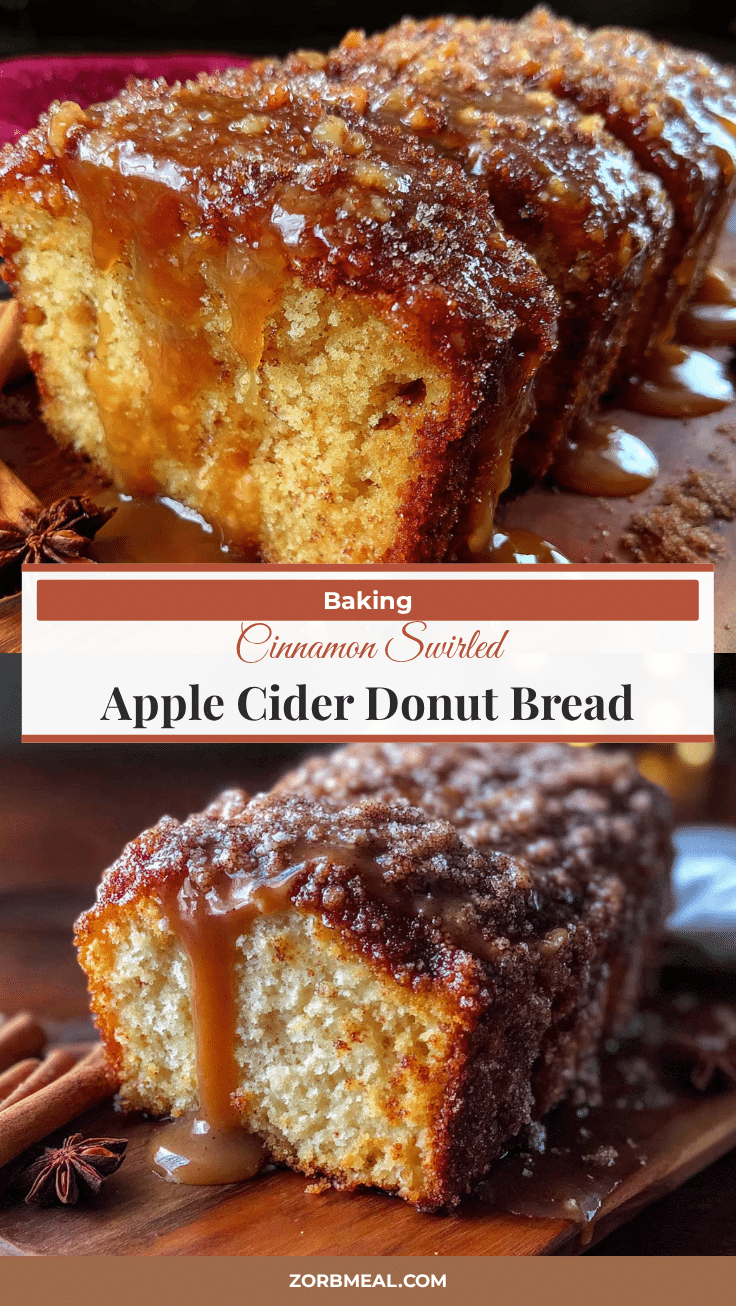
What makes this different from other apple cider breads? Most recipes just add cider to a standard quick bread and call it a day. But I reduced the cider first—boiled it down until it was concentrated and almost syrupy. That little extra step gives you a deep, tangy apple flavor that doesn’t get lost in the batter. And the double-coating on the crust? That’s the secret. You brush the warm loaf with melted butter, roll it in cinnamon sugar, then let it set. The sugar melts slightly into the crust, creating that signature donut texture.
This is the bread that makes you slow down. It’s not just breakfast. It’s the kind of thing you slice, toast, and eat while standing at the counter, staring out the window at the leaves changing. It’s comfort food that actually delivers.
What Ingredients You Will Need
This recipe uses simple, wholesome ingredients that come together to create something genuinely special. No weird extracts or hard-to-find specialty items. Just real food that tastes like fall.
For the Bread
- 1 ½ cups apple cider (you’ll reduce this to about ⅓ cup, so don’t skip this step—it’s where the flavor comes from)
- 2 cups all-purpose flour (I use King Arthur, but any brand works fine)
- 1 teaspoon baking powder
- ½ teaspoon baking soda
- ½ teaspoon salt
- 1 ½ teaspoons ground cinnamon
- ¼ teaspoon ground nutmeg (freshly grated is best, but pre-ground works too)
- ⅛ teaspoon ground cloves (optional, but adds that classic mulled cider warmth)
- ½ cup unsalted butter, softened (room temperature is key here)
- ¾ cup granulated sugar
- ¼ cup light brown sugar, packed
- 2 large eggs, room temperature
- 1 teaspoon vanilla extract
- ⅓ cup buttermilk, room temperature (or make your own by adding 1 teaspoon lemon juice to regular milk and letting it sit 5 minutes)
For the Cinnamon Sugar Crust
- ¼ cup unsalted butter, melted
- ½ cup granulated sugar
- 1 ½ tablespoons ground cinnamon
A few notes on ingredients. I recommend using a good-quality apple cider, not apple juice. Cider has more body and that slightly fermented tang that makes donut-shop donuts taste so good. If you can find fresh-pressed cider from a local orchard, even better. For the butter, go unsalted so you control the salt level. And please, please use room temperature eggs and buttermilk. Cold ingredients seize the butter and give you a dense, heavy loaf. I learned that the hard way on attempt number two.
If you’re dairy-free, you can substitute the butter with a plant-based stick butter and the buttermilk with a dairy-free milk mixed with a little lemon juice. The texture will be slightly different, but the flavor still works.
Equipment Needed
You don’t need a fancy kitchen for this recipe. Here’s what you’ll actually use:
- 9×5-inch loaf pan (standard size, metal or glass both work—I prefer metal for even browning)
- Parchment paper (trust me, this makes lifting the bread out so much easier)
- Small saucepan (for reducing the cider)
- Two mixing bowls (one medium, one large)
- Whisk
- Rubber spatula
- Electric hand mixer or stand mixer (you can do this by hand, but a mixer makes the butter and sugar creaming much easier)
- Cooling rack
- Pastry brush (for the melted butter on the crust)
- Shallow dish or pie plate (for rolling the bread in cinnamon sugar)
If you don’t have a pastry brush, just use a spoon to drizzle the melted butter over the bread. It’s not as elegant, but it works. And if you don’t have a cooling rack, you can let the bread cool in the pan for 10 minutes, then transfer it to a cutting board. Just be careful—the bottom can get a little soggy if it sits too long.
I’ve made this with both metal and glass loaf pans, and I honestly prefer metal. Glass takes longer to heat up, so the edges of the bread can get overdone before the center is fully baked. Metal gives you a more even result. Just my two cents.
Preparation Method
Alright, let’s get into it. This looks like a lot of steps, but I promise it’s straightforward. Take your time with the cider reduction—that’s where the magic happens.
- Reduce the apple cider. Pour the 1 ½ cups of apple cider into a small saucepan. Bring it to a boil over medium-high heat, then reduce the heat to medium-low and let it simmer. Stir occasionally. You want it to reduce down to about ⅓ cup. This takes about 12-15 minutes. It should look syrupy and smell intensely of apples. Set it aside to cool while you prep the rest. Don’t skip this—it’s the secret to the deep flavor.
- Preheat the oven and prep the pan. Set your oven to 350°F (175°C). Line a 9×5-inch loaf pan with parchment paper, leaving some overhang on the long sides so you can lift the bread out later. Lightly spray the parchment with non-stick spray, just to be safe.
- Mix the dry ingredients. In a medium bowl, whisk together the flour, baking powder, baking soda, salt, cinnamon, nutmeg, and cloves (if using). Set this aside.
- Cream the butter and sugars. In a large bowl, beat the softened butter, granulated sugar, and brown sugar together until light and fluffy. This takes about 3 minutes with an electric mixer on medium speed. Scrape down the sides of the bowl halfway through. The mixture should look pale and almost whipped.
- Add the eggs and vanilla. Add the eggs one at a time, beating well after each addition. Then mix in the vanilla extract and the cooled reduced cider. The batter might look a little curdled at this point—that’s totally normal. Don’t panic.
- Alternate the dry ingredients and buttermilk. With the mixer on low speed, add about a third of the flour mixture, then half of the buttermilk, then another third of flour, the rest of the buttermilk, and finally the last of the flour. Mix just until combined. Overmixing will give you a tough bread. A few streaks of flour are fine—fold them in gently with a spatula.
- Pour the batter into the pan. Use your spatula to scrape every last bit into the prepared loaf pan. Smooth the top so it bakes evenly. Give the pan a gentle tap on the counter to release any air bubbles.
- Bake. Place the pan in the center of the oven and bake for 50-60 minutes. Start checking at 50 minutes by inserting a toothpick into the center. If it comes out clean or with just a few moist crumbs, it’s done. If the top is browning too quickly, tent it loosely with foil for the last 10-15 minutes.
- Cool in the pan. Let the bread cool in the pan on a wire rack for exactly 10 minutes. Don’t skip this—it needs that time to set so it doesn’t fall apart when you take it out.
- Make the cinnamon sugar crust. While the bread cools, mix the ½ cup sugar and 1 ½ tablespoons cinnamon together in a shallow dish. Melt the ¼ cup butter in a small bowl.
- Apply the first coat. After 10 minutes, lift the bread out of the pan using the parchment overhang. While it’s still warm (but not hot), brush the top and all four sides with melted butter. Roll the warm bread in the cinnamon sugar mixture, pressing gently so it sticks. Don’t forget the ends.
- Let it set. Place the coated bread back on the cooling rack and let it cool completely. The sugar will set into a slightly crackly crust as it cools. This is the hardest part—waiting. But it’s worth it.
One thing I learned the hard way: if you try to slice the bread while it’s still warm, the crust will slide right off. I know it smells incredible, but be patient. Let it cool fully, about an hour. Then slice and enjoy.
Cooking Tips & Techniques
I’ve made a lot of mistakes so you don’t have to. Here’s what I wish someone had told me before I started:
Reduce the cider properly. This is non-negotiable. If you just pour regular cider into the batter, you’ll end up with a bland, watery bread. Reducing concentrates the flavor and removes excess liquid. Watch it closely—if it reduces too much, it’ll turn into caramel and harden. You want it syrupy, not solid.
Room temperature ingredients matter. I know it’s annoying to wait for eggs and buttermilk to warm up, but cold ingredients don’t emulsify properly. Your batter will look curdled, and your bread will be dense. Take the eggs and buttermilk out of the fridge 30 minutes before you start. Set a timer if you have to.
Don’t overmix the batter. This is the most common mistake with quick breads. Mix until the flour just disappears, then stop. Overmixing develops gluten, and gluten makes bread tough. You want this bread to be tender, not chewy.
Check your oven temperature. Ovens lie. I’ve had ovens that run 25 degrees hot. An oven thermometer is a cheap investment that saves you from burnt edges and raw centers. If your bread is browning too fast, lower the temperature by 10-15 degrees and extend the baking time.
The crust technique. The double-coating is key. Brush the warm bread with butter, then roll it in cinnamon sugar. Let it cool completely. The sugar will set into that signature donut crust. If you want an even thicker crust, let the first coat set for 5 minutes, then brush with more butter and roll again. That’s the pro move.
I once forgot to reduce the cider and just used it straight from the bottle. The bread was so bland, I actually tried to save it by brushing it with cider syrup after baking. It helped a little, but it wasn’t the same. Learn from my mistakes. Reduce the cider.
Variations & Adaptations
This recipe is flexible. Here are some ways to make it your own:
Gluten-Free Version: Substitute the all-purpose flour with a 1:1 gluten-free baking flour blend. I’ve used Bob’s Red Mill with good results. Add an extra tablespoon of buttermilk since gluten-free flours tend to absorb more liquid. The texture will be slightly more crumbly, but the flavor is still spot on.
Spiced Apple Variation: Fold in ½ cup of finely diced fresh apple (I like Honeycrisp or Fuji) into the batter right before pouring it into the pan. The apple pieces soften during baking and add little bursts of fresh fruit flavor. Toss the diced apple in a tablespoon of flour first so they don’t sink to the bottom.
Maple Glaze Version: Skip the cinnamon sugar crust and drizzle the cooled bread with a simple maple glaze instead. Whisk together 1 cup powdered sugar, 2 tablespoons maple syrup, and 1 tablespoon milk until smooth. Pour over the bread and let it set. This gives you more of a coffee cake vibe.
Vegan Adaptation: Substitute the butter with vegan stick butter, use flax eggs (1 tablespoon ground flaxseed mixed with 3 tablespoons water per egg), and swap the buttermilk for almond milk mixed with a little lemon juice. The texture will be denser, but the flavor still works beautifully.
Streusel Topping: Before baking, sprinkle a streusel topping over the batter. Mix ¼ cup flour, ¼ cup brown sugar, 2 tablespoons cold butter, and ½ teaspoon cinnamon until crumbly. Sprinkle over the batter and bake as directed. This gives you a crunchy top layer without the rolling step.
I personally love the spiced apple variation with a drizzle of maple glaze on top. It’s over-the-top in the best way, perfect for a special occasion breakfast or holiday brunch. If you’re looking for another cozy fall option, try my sausage and egg breakfast casserole for a savory balance.
Serving & Storage Suggestions
This bread is best served slightly warm or at room temperature. I like to slice it, toast it lightly, and serve it with a pat of butter and a drizzle of honey. The toasting step brings back that crackly crust and warms the spices. It’s incredible with a hot cup of coffee or a cold glass of apple cider.
For a full fall spread, serve this alongside a blueberry cream cheese stuffed French toast for a breakfast that feels like a celebration. Or keep it simple with just the bread and coffee—sometimes that’s all you need.
Storage: Wrap the cooled bread tightly in plastic wrap or aluminum foil and store at room temperature for up to 3 days. The crust will soften slightly over time, but it still tastes great. Do not refrigerate—the fridge dries out baked goods.
Freezing: This bread freezes beautifully. Wrap it tightly in plastic wrap, then a layer of foil, and freeze for up to 3 months. To thaw, leave it on the counter overnight. If you want to refresh the crust, pop slices in the toaster or a 300°F oven for 5 minutes.
Reheating: For that fresh-from-the-oven experience, microwave a slice for 15 seconds, then toast it. The microwave softens the interior, and the toaster crisps the crust. It’s not quite the same as fresh, but it’s close.
Flavor note: This bread actually tastes better on day two. The spices meld together overnight, and the apple flavor deepens. So don’t be afraid to make it a day ahead. Just wait to apply the cinnamon sugar crust until the day you’re serving it, or the sugar can get a little sticky.
Nutritional Information & Benefits
Here’s the estimated nutritional breakdown per slice (based on 10 slices):
| Nutrient | Amount per Slice |
|---|---|
| Calories | 285 |
| Total Fat | 12g |
| Saturated Fat | 7g |
| Cholesterol | 65mg |
| Sodium | 220mg |
| Total Carbohydrates | 42g |
| Dietary Fiber | 1g |
| Sugars | 26g |
| Protein | 4g |
Apple cider contains antioxidants called polyphenols, which can help reduce inflammation. Cinnamon is known for its anti-inflammatory properties and may help regulate blood sugar. The buttermilk adds calcium and probiotics (if you use cultured buttermilk).
This recipe is vegetarian and can be made vegan with the substitutions mentioned above. It contains gluten, dairy, and eggs, so it’s not suitable for those with allergies to those ingredients. If you’re looking for a gluten-free option, try the variation I shared earlier.
I’m not a nutritionist, and I don’t pretend to be. This is comfort food, plain and simple. But it’s made with real ingredients, and that counts for something. I’d rather eat a slice of this than a packaged donut any day.
Conclusion
This apple cider donut bread is the recipe I make every fall without fail. It’s the one my friends text me about when the leaves start changing. It’s the one I bring to Thanksgiving brunch and watch disappear in minutes. And now it’s yours.
What I love most about this recipe is how it captures a moment. That first bite takes me right back to the orchard, the crisp air, the paper bag of warm donuts. But it’s better, because I made it myself, in my own kitchen, with my own hands. And you can too.
Don’t be afraid to make it your own. Add more cinnamon. Swap the nutmeg for cardamom. Double the crust. This recipe is a starting point, not a rulebook. If you try it, I’d love to hear how it goes. Leave a comment below and tell me about your version. Did you add apples? Did you go for the maple glaze? Did you eat three slices before it cooled completely? (I won’t judge.)
Happy baking, friends. Fall is waiting.
Frequently Asked Questions
Can I use apple juice instead of apple cider?
You can, but the flavor won’t be as deep or tangy. Apple cider has more body and a slightly fermented taste that mimics donut-shop flavor. If you use juice, reduce it the same way, and consider adding a teaspoon of apple cider vinegar to the batter to replicate that tang.
Why did my bread turn out dense?
This usually happens for one of three reasons: overmixing the batter, using cold ingredients, or not reducing the cider enough. Overmixing develops gluten, cold ingredients don’t emulsify, and too much liquid throws off the flour-to-liquid ratio. Check each of these next time.
Can I make this into actual donuts?
Technically yes, but you’d need a donut pan and you’d have to adjust the baking time to about 10-12 minutes. The texture is more cake-like than fried donut, so it won’t be exactly the same. But if you’re craving donut-shaped bread, go for it.
How do I keep the cinnamon sugar crust from falling off?
Make sure the bread is warm but not hot when you apply the butter. If it’s too hot, the butter will melt and run off, taking the sugar with it. Let the bread cool for the full 10 minutes in the pan, then brush and roll. Let it set completely before slicing.
Can I double this recipe?
Absolutely. Double all the ingredients and bake in two loaf pans. You might need to increase the baking time by 5-10 minutes since the oven has more mass to heat. Check with a toothpick at the 55-minute mark and go from there.
Pin This Recipe!
Best Apple Cider Donut Bread with Easy Cinnamon Sugar Crust
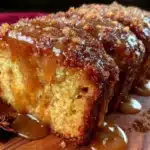
This apple cider donut bread captures the deep, tangy flavor of classic cider donuts without deep-frying. Reduced apple cider, warm spices, and a double-coated cinnamon sugar crust create a soft, tender loaf that’s perfect for fall mornings.
- Prep Time: 15 minutes
- Cook Time: 50-60 minutes
- Total Time: 1 hour 15 minutes
- Yield: 10 servings 1x
- Category: Dessert
- Cuisine: American
Ingredients
- 1 ½ cups apple cider
- 2 cups all-purpose flour
- 1 teaspoon baking powder
- ½ teaspoon baking soda
- ½ teaspoon salt
- 1 ½ teaspoons ground cinnamon
- ¼ teaspoon ground nutmeg
- ⅛ teaspoon ground cloves (optional)
- ½ cup unsalted butter, softened
- ¾ cup granulated sugar
- ¼ cup light brown sugar, packed
- 2 large eggs, room temperature
- 1 teaspoon vanilla extract
- ⅓ cup buttermilk, room temperature
- ¼ cup unsalted butter, melted (for crust)
- ½ cup granulated sugar (for crust)
- 1 ½ tablespoons ground cinnamon (for crust)
Instructions
- Reduce the apple cider: Pour 1 ½ cups apple cider into a small saucepan. Bring to a boil over medium-high heat, then reduce heat to medium-low and simmer until reduced to about ⅓ cup, about 12-15 minutes. Set aside to cool.
- Preheat oven to 350°F (175°C). Line a 9×5-inch loaf pan with parchment paper, leaving overhang on the long sides. Lightly spray with non-stick spray.
- In a medium bowl, whisk together flour, baking powder, baking soda, salt, cinnamon, nutmeg, and cloves (if using). Set aside.
- In a large bowl, beat softened butter, granulated sugar, and brown sugar together until light and fluffy, about 3 minutes with an electric mixer on medium speed.
- Add eggs one at a time, beating well after each addition. Mix in vanilla extract and cooled reduced cider. Batter may look curdled; that’s normal.
- With mixer on low speed, add dry ingredients and buttermilk alternately: about ⅓ of flour mixture, then half of buttermilk, another ⅓ flour, remaining buttermilk, and final ⅓ flour. Mix just until combined. Do not overmix.
- Pour batter into prepared loaf pan and smooth the top. Tap pan gently on counter to release air bubbles.
- Bake for 50-60 minutes, until a toothpick inserted in center comes out clean or with a few moist crumbs. If top browns too quickly, tent with foil for last 10-15 minutes.
- Cool bread in pan on a wire rack for exactly 10 minutes.
- While bread cools, mix ½ cup sugar and 1 ½ tablespoons cinnamon in a shallow dish. Melt ¼ cup butter in a small bowl.
- After 10 minutes, lift bread out of pan using parchment overhang. While still warm, brush top and all sides with melted butter. Roll bread in cinnamon sugar mixture, pressing gently to adhere.
- Place coated bread on cooling rack and let cool completely (about 1 hour) before slicing. The crust will set into a crackly coating.
Notes
Reduce the cider properly for deep flavor. Use room temperature ingredients for best texture. Do not overmix the batter. Let bread cool completely before slicing to keep crust intact. Bread tastes even better on day two. Store wrapped at room temperature for up to 3 days or freeze for up to 3 months.
Nutrition
- Serving Size: 1 slice
- Calories: 285
- Sugar: 26
- Sodium: 220
- Fat: 12
- Saturated Fat: 7
- Carbohydrates: 42
- Fiber: 1
- Protein: 4
Keywords: apple cider donut bread, cinnamon sugar crust, fall bread, quick bread, apple cider recipe, easy bread recipe