“Are you sure this will stretch for the whole week?” I remember asking myself that exact question while staring down a modest grocery haul that was meant to cover seven days. I’d just started planning a healthy SNAP budget meal plan for a week, trying to balance nutrition and affordability without turning every meal into a sad, repetitive snack. Honestly, I was skeptical at first. A limited budget often feels like a straightjacket on creativity, but surprisingly, this plan turned into a low-key obsession, with me making slight tweaks and repeating favorites almost every week.
One evening, while prepping dinner, the aroma of simmering beans and fresh herbs filled the kitchen — a simple reminder that good food doesn’t have to come with a hefty price tag. This meal plan isn’t about fancy ingredients or complicated steps; it’s about making smart, wholesome choices that stick without breaking the bank. And the best part? It’s designed with SNAP benefits in mind, so every ingredient counts towards nourishing meals that feel satisfying and real.
What’s stayed with me through all the weeks of following this plan is the quiet confidence that eating well on a budget is doable. No stress, no last-minute fast food runs, just dependable, tasty food that carries you through busy days and quiet evenings alike. And that sense of calm in the kitchen — that’s why this healthy SNAP budget meal plan for a week really sticks around.
Why You’ll Love This Recipe
After testing this healthy SNAP budget meal plan for a week multiple times, it’s clear why it’s become a go-to for many trying to eat better without overspending. It’s not just a list of meals, but a thoughtful approach that respects your time, wallet, and taste buds. Here’s what makes it stand out:
- Quick & Easy: Most meals come together in under 30 minutes, perfect for busy weeknights or those days when you’re just too tired to fuss.
- Simple Ingredients: This plan relies on pantry staples and seasonal produce, so you won’t need a special trip to some fancy store.
- Perfect for Meal Prep: Designed to batch cook and store well, helping you avoid food waste and save time.
- Crowd-Pleaser: Balanced flavors that appeal to kids and adults alike, making it family-friendly.
- Unbelievably Delicious: Thoughtful seasoning and ingredient combos ensure every bite feels satisfying and nourishing.
This isn’t your average budget meal list. For example, blending cottage cheese into sauces gives a creamy texture without adding heavy cream, and swapping traditional rice for quinoa adds that extra protein punch. It’s about making small smart swaps that make a big difference. This meal plan isn’t just practical — it’s the kind of daily food that makes you slow down and savor the moment, even when life is hectic.
What Ingredients You Will Need
This healthy SNAP budget meal plan for a week uses straightforward, wholesome ingredients that come together to create big flavors with minimal fuss. Most are pantry staples, with fresh veggies and proteins to keep things balanced. Here’s what you’ll want on hand:
- Grains & Staples:
- Brown rice or quinoa (1 lb / 450 g) – hearty and filling base for many dishes
- Whole wheat pasta (8 oz / 225 g) – great for quick meals
- Dried beans (black beans, chickpeas – 1 lb / 450 g each) – economical protein source
- Rolled oats (1 cup / 90 g) – breakfast and baking staple
- Proteins:
- Eggs (1 dozen) – versatile and affordable protein
- Chicken thighs or drumsticks (2 lbs / 900 g) – budget-friendly and flavorful
- Canned tuna or salmon (2 cans) – quick and easy protein addition
- Cottage cheese (16 oz / 450 g) – creamy texture and good protein
- Vegetables & Fruits:
- Carrots (1 lb / 450 g) – great raw or cooked
- Onions (3 medium) – foundational flavor
- Sweet potatoes (2 medium) – filling and nutrient-dense
- Frozen spinach or kale (10 oz / 280 g) – affordable greens
- Bananas (4 ripe) – natural sweetness and snack staple
- Apples or seasonal fruit (4 pieces) – easy snacks or dessert
- Pantry & Seasonings:
- Olive oil or vegetable oil (small bottle) – for cooking
- Garlic (2 bulbs) – flavor powerhouse
- Salt and pepper – basic seasoning
- Cumin, paprika, chili powder (small jars) – add warmth and depth
- Low-sodium soy sauce or tamari – versatile seasoning
- Chicken or vegetable broth (4 cups / 1 liter) – base for soups and stews
If you want to swap ingredients, almond flour works well for gluten-free baking, and dairy-free coconut yogurt can replace cottage cheese if needed. I’ve found that using small-curd cottage cheese gives the best creamy texture, but don’t stress if you only find large-curd varieties. For fresh produce, frozen vegetables like spinach are fantastic year-round and save money without sacrificing nutrition.
Equipment Needed
Thankfully, this meal plan keeps equipment simple, so you won’t need anything fancy. Here’s what you’ll want close by:
- Large saucepan or pot – essential for cooking grains and beans
- Non-stick skillet or frying pan – for sautéeing veggies and cooking proteins
- Baking sheet – useful for roasting sweet potatoes or chicken
- Mixing bowls – for combining ingredients and prepping
- Measuring cups and spoons – accuracy helps keep the plan on budget and balanced
- Colander or strainer – for rinsing beans and draining pasta
If you don’t have a baking sheet, a sturdy casserole dish works in a pinch. For those on a budget, consider investing in a decent non-stick pan; it makes cooking and cleanup way easier. I’ve been through several, and a good one really lasts years if cared for properly. When it comes to measuring tools, even simple plastic sets get the job done.
Preparation Method
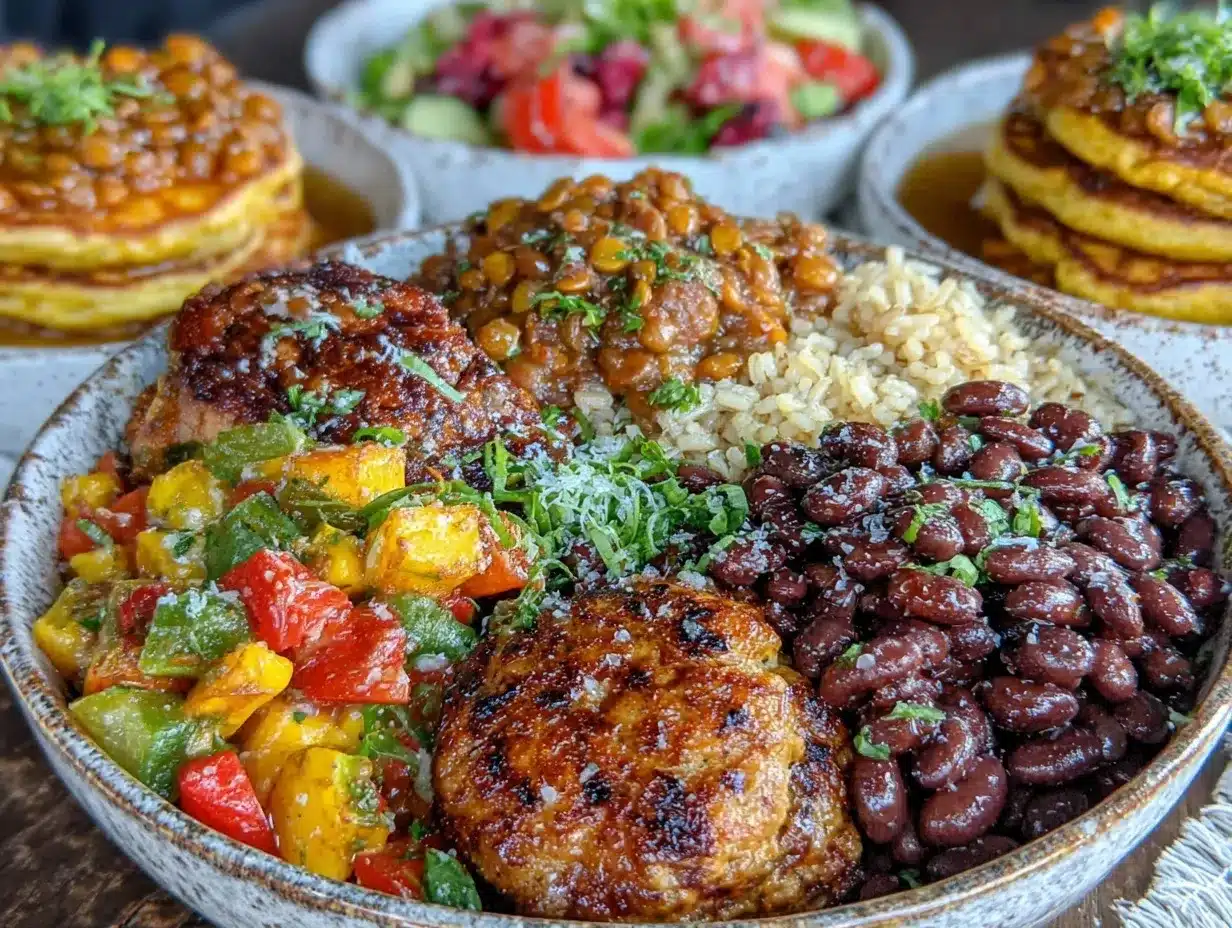
- Cook Your Grains and Beans: Rinse 1 cup (190 g) of brown rice or quinoa under cold water. In a medium saucepan, combine with 2 cups (475 ml) water and a pinch of salt. Bring to a boil, then reduce heat to low, cover, and simmer for 40-45 minutes until water is absorbed. For dried beans, soak them overnight in plenty of water, then drain and cook in fresh water for about 1 hour until tender.
- Prep Vegetables: Peel and dice 2 sweet potatoes into 1-inch chunks, slice 2 carrots, and chop 1 onion finely. For faster prep, use pre-cut frozen spinach or kale if fresh isn’t available.
- Roast Sweet Potatoes and Chicken: Preheat oven to 425°F (220°C). Toss sweet potatoes with 1 tbsp (15 ml) olive oil, salt, pepper, and paprika. Spread on a baking sheet and roast for 25-30 minutes until tender and caramelized. Place seasoned chicken thighs alongside or on a separate sheet, roasting for 35-40 minutes until juices run clear and skin is crispy.
- Prepare a Simple Veggie Stir-Fry: Heat 1 tbsp (15 ml) oil in a skillet over medium heat. Add chopped onions and sauté for 3 minutes until translucent. Toss in carrots and spinach, cook for 5-7 minutes until veggies are tender but still vibrant. Season with garlic, cumin, salt, and pepper to taste.
- Make a Protein-Packed Sauce: Blend 1 cup (225 g) cottage cheese with a clove of garlic, a squeeze of lemon juice, and salt until smooth. This adds creaminess to dishes without heavy cream or expensive cheese.
- Assemble Meals: Combine grains, roasted veggies, and protein in containers for grab-and-go lunches or dinners. For example, layer brown rice with stir-fried veggies and shredded chicken, topping with the cottage cheese sauce for richness.
- Snack Prep: Portion out fruit like bananas and apples, and prepare quick energy bites like no-bake peanut butter protein balls to keep hunger at bay during busy days.
Some tips: When cooking beans, adding a pinch of baking soda can speed up the process (just rinse well afterward). For roasting, flipping sweet potatoes halfway through helps them brown evenly. And don’t be shy about seasoning liberally—flavor makes a big difference, especially on a budget.
Cooking Tips & Techniques
Cooking on a budget doesn’t mean skimping on flavor or texture. Here’s what I’ve learned from many weeks of following this healthy SNAP budget meal plan:
- Batch Cook Wisely: Cooking grains and beans in bulk saves time and energy. Portion leftovers into airtight containers and refrigerate for up to 4 days.
- Use Layered Seasoning: Season vegetables, proteins, and sauces separately to build depth. For instance, cumin in the stir-fry and smoked paprika on roasted sweet potatoes complement each other nicely.
- Don’t Overcook Greens: When using frozen spinach or kale, add them towards the end of cooking to retain color and nutrients.
- Multi-task: While rice simmers, chop veggies and prepare proteins so nothing sits idle. This keeps kitchen chaos manageable.
- Learn From Mistakes: I once over-salted a batch of beans that could have been a disaster, but rinsing them under cold water helped fix the flavor. Don’t be afraid to taste and adjust as you go.
Variations & Adaptations
Flexibility is key in any budget meal plan, especially when ingredients or preferences change. Here are some ways to make this plan your own:
- Vegetarian Version: Swap chicken with extra beans or lentils, and add tofu or tempeh if available. Lentil stew with roasted sweet potatoes makes a hearty meal.
- Seasonal Swaps: Use fresh summer veggies like zucchini or bell peppers instead of carrots and spinach when in season. Frozen vegetables are great substitutes in colder months.
- Low-Carb Option: Replace grains with cauliflower rice or spiralized veggies for fewer carbs but plenty of volume.
- Flavor Boosts: Add a splash of hot sauce or a sprinkle of fresh herbs like cilantro or parsley to brighten dishes.
- Personal Favorite: I love turning the leftover chicken and rice into a quick salsa chicken taco bowl with avocado crema and black beans for a fun twist midweek.
Serving & Storage Suggestions
This meal plan is made for convenience, so serving and storing meals properly makes a big difference. Here’s how I handle it:
- Serving Temperature: Many meals taste great warm or at room temperature. For example, roasted sweet potatoes and chicken are best served hot, while grain and bean salads can be enjoyed chilled.
- Presentation: Using meal prep containers with compartments keeps ingredients fresh and visually appealing. Sprinkle fresh herbs or a squeeze of lemon just before eating for brightness.
- Storage: Store cooked grains and proteins separately from veggies where possible to avoid sogginess. Meals keep well for 3-4 days in the fridge.
- Freezing: Beans and cooked chicken freeze well in portioned containers. Just thaw overnight in the fridge before reheating gently on the stove or microwave.
- Reheating Tips: Add a splash of broth or water when reheating rice to keep it fluffy. For stir-fries, heat gently to avoid overcooking the vegetables.
Over time, flavors meld and deepen, especially in soups or stews made with leftover ingredients. This makes for some surprisingly tasty lunches later in the week, kind of like how the chicken and dumpling soup recipe gets better after a day or two.
Nutritional Information & Benefits
This healthy SNAP budget meal plan is balanced to provide roughly 400-500 calories per serving, featuring moderate carbohydrates, lean protein, and fiber-rich vegetables. Key benefits include:
- High Fiber: Beans, whole grains, and veggies support digestion and sustained energy.
- Lean Protein: Chicken, eggs, and cottage cheese help maintain muscle and fullness.
- Micronutrients: Sweet potatoes provide vitamin A, and greens supply vitamins C and K.
- Gluten-Free Options: Easily adaptable by swapping pasta for rice or quinoa.
- Low in Added Sugars and Unhealthy Fats: Focuses on wholesome fats from oils and natural foods.
From a wellness perspective, this plan supports balanced blood sugar levels and sustained energy throughout the day, which I found especially helpful during busy weeks when skipping meals wasn’t an option.
Conclusion
Making a healthy SNAP budget meal plan for a week isn’t about sacrificing taste or satisfaction — it’s about being smart, intentional, and a bit creative with what you have. Whether you’re cooking for one or feeding a family, this plan offers flexible, affordable meals that nourish without stress. I’ve loved how it changed my approach to grocery shopping and meal prep, turning what used to be a source of anxiety into something manageable and even enjoyable.
Feel free to customize the ingredients based on your preferences or what’s on sale, and remember that small swaps can keep things fresh. If you try this plan, I’d love to hear how you make it your own or what new combos you come up with — sharing those little wins keeps the inspiration flowing!
Here’s to good food that fits your life and your budget, one meal at a time.
FAQs
Can I use canned beans instead of dried beans for this meal plan?
Absolutely! Canned beans are a great time-saver. Just rinse them well to reduce sodium and use about 1.5 cups (240 g) canned beans to replace 1 cup dried beans.
How do I store meals to keep them fresh all week?
Store components separately when possible (grains, proteins, veggies) in airtight containers in the fridge. Most meals stay fresh for 3-4 days; freeze portions if you want to extend that.
Is this meal plan suitable for vegetarians?
Yes! Simply swap animal proteins for plant-based options like beans, lentils, or tofu. You can create hearty vegetarian meals without losing flavor or nutrition.
What if I don’t have access to fresh vegetables?
Frozen vegetables like spinach, kale, or mixed veggies work wonderfully and often cost less. They retain nutrients well and are convenient for quick meals.
How can I add more flavor without spending extra money?
Using pantry spices like cumin, paprika, and garlic powder adds big flavor without extra cost. Also, a squeeze of lemon juice or a dash of soy sauce can brighten dishes effectively.
Pin This Recipe!
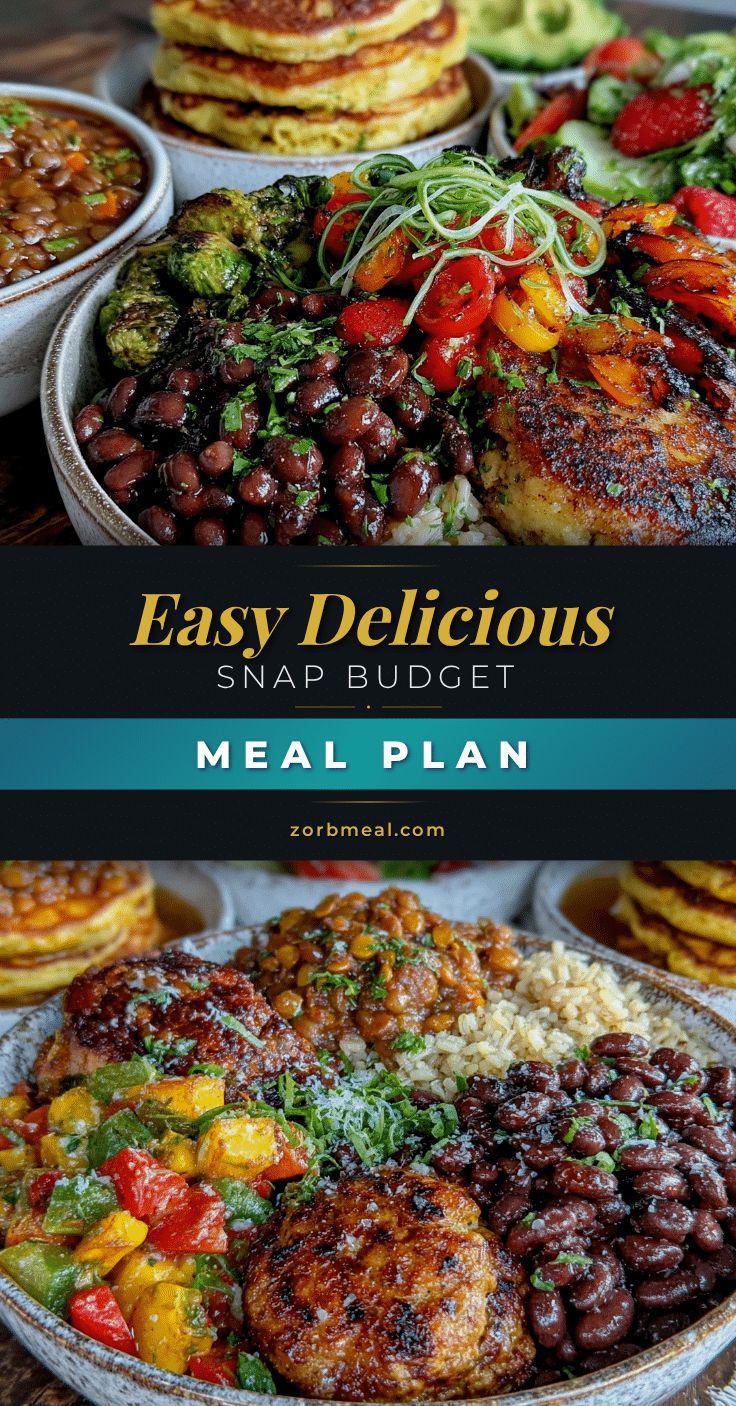
Healthy SNAP Budget Meal Plan for a Week Easy Affordable Recipes
A practical and affordable weekly meal plan designed to balance nutrition and budget, featuring simple ingredients and easy preparation methods ideal for busy lifestyles.
- Prep Time: 20 minutes
- Cook Time: 1 hour 15 minutes
- Total Time: 1 hour 35 minutes
- Yield: 6 servings
- Category: Main Course
- Cuisine: American
Ingredients
- Brown rice or quinoa (1 lb / 450 g)
- Whole wheat pasta (8 oz / 225 g)
- Dried beans (black beans, chickpeas – 1 lb / 450 g each)
- Rolled oats (1 cup / 90 g)
- Eggs (1 dozen)
- Chicken thighs or drumsticks (2 lbs / 900 g)
- Canned tuna or salmon (2 cans)
- Cottage cheese (16 oz / 450 g)
- Carrots (1 lb / 450 g)
- Onions (3 medium)
- Sweet potatoes (2 medium)
- Frozen spinach or kale (10 oz / 280 g)
- Bananas (4 ripe)
- Apples or seasonal fruit (4 pieces)
- Olive oil or vegetable oil (small bottle)
- Garlic (2 bulbs)
- Salt and pepper
- Cumin, paprika, chili powder (small jars)
- Low-sodium soy sauce or tamari
- Chicken or vegetable broth (4 cups / 1 liter)
Instructions
- Rinse 1 cup (190 g) of brown rice or quinoa under cold water. In a medium saucepan, combine with 2 cups (475 ml) water and a pinch of salt. Bring to a boil, then reduce heat to low, cover, and simmer for 40-45 minutes until water is absorbed.
- Soak dried beans overnight in plenty of water, then drain and cook in fresh water for about 1 hour until tender.
- Peel and dice 2 sweet potatoes into 1-inch chunks, slice 2 carrots, and chop 1 onion finely. Use pre-cut frozen spinach or kale if fresh isn’t available.
- Preheat oven to 425°F (220°C). Toss sweet potatoes with 1 tbsp (15 ml) olive oil, salt, pepper, and paprika. Spread on a baking sheet and roast for 25-30 minutes until tender and caramelized.
- Place seasoned chicken thighs alongside or on a separate sheet, roasting for 35-40 minutes until juices run clear and skin is crispy.
- Heat 1 tbsp (15 ml) oil in a skillet over medium heat. Add chopped onions and sauté for 3 minutes until translucent. Toss in carrots and spinach, cook for 5-7 minutes until veggies are tender but still vibrant. Season with garlic, cumin, salt, and pepper to taste.
- Blend 1 cup (225 g) cottage cheese with a clove of garlic, a squeeze of lemon juice, and salt until smooth to make a creamy sauce.
- Combine grains, roasted veggies, and protein in containers for grab-and-go lunches or dinners. For example, layer brown rice with stir-fried veggies and shredded chicken, topping with the cottage cheese sauce.
- Portion out fruit like bananas and apples, and prepare quick energy bites like no-bake peanut butter protein balls to keep hunger at bay during busy days.
Notes
Add a pinch of baking soda when cooking beans to speed up the process but rinse well afterward. Flip sweet potatoes halfway through roasting for even browning. Season liberally to enhance flavor. Store cooked grains and proteins separately from veggies to avoid sogginess. Meals keep well refrigerated for 3-4 days and freeze well.
Nutrition
- Serving Size: Approximately 1 meal
- Calories: 450
- Sugar: 8
- Sodium: 400
- Fat: 12
- Saturated Fat: 3
- Carbohydrates: 55
- Fiber: 10
- Protein: 30
Keywords: budget meal plan, healthy meals, SNAP recipes, affordable cooking, meal prep, easy recipes, family-friendly, nutritious meals