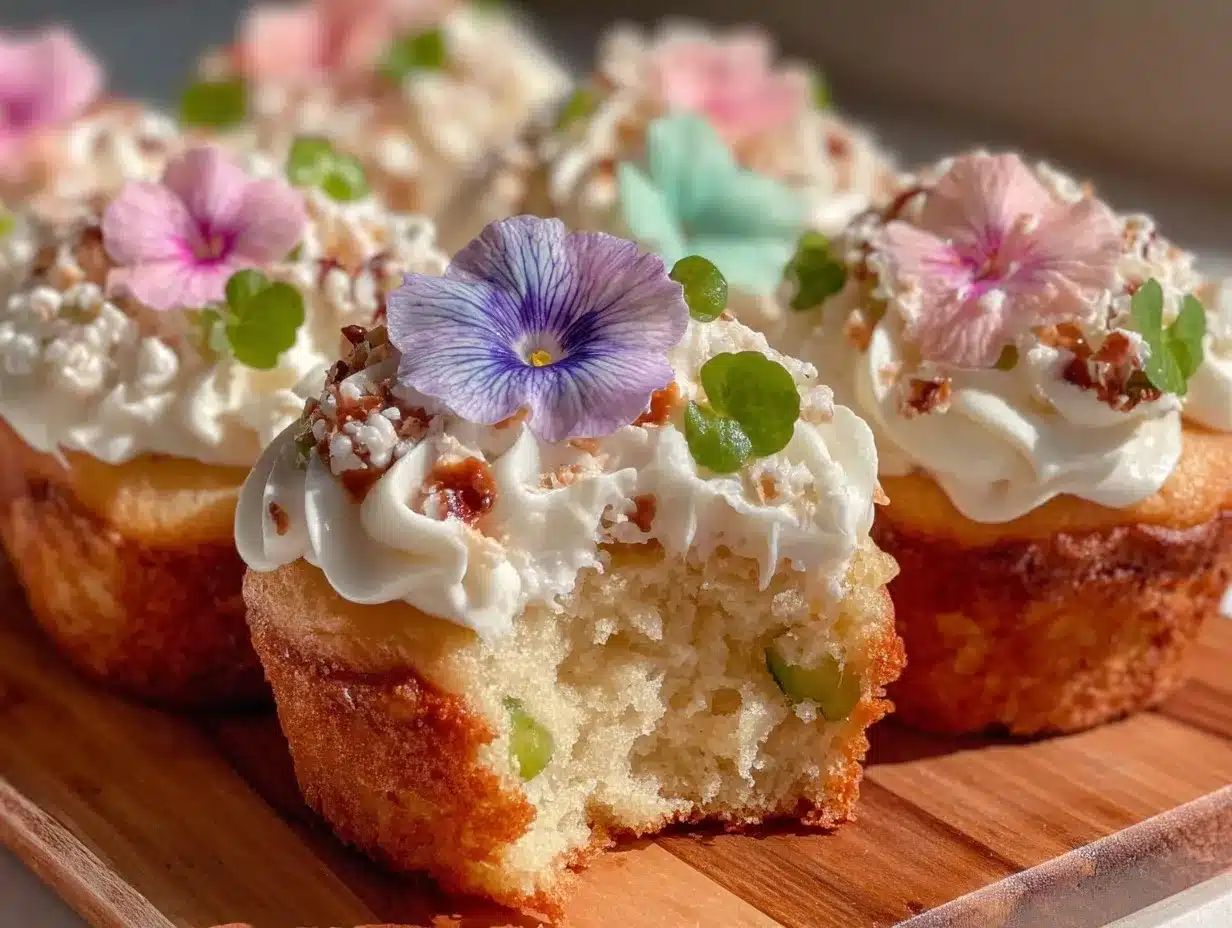
“Are you sure these cupcakes are from scratch?” my friend asked, staring at the delicate pastel buttercream petals that looked almost too pretty to eat. Honestly, I was half-skeptical myself when I first tried making these wildflower cupcakes. It all started on a lazy Sunday afternoon when I wanted something sweet but didn’t feel like complicated baking. I grabbed some basic pantry staples, threw together a simple batter, and decided to experiment with a piping technique I’d seen somewhere online. The result? These perfect wildflower cupcakes with pastel buttercream petals that not only looked stunning but tasted even better.
The texture was moist and tender — not dry or crumbly like some cupcakes I’ve made before. The buttercream petals? Soft, smooth, and bursting with just the right hint of sweetness. I remember sitting quietly in the kitchen, nibbling on one, realizing how something so simple could feel so special. Since then, I’ve made these cupcakes over and over (sometimes multiple times a week) for small get-togethers, last-minute gifts, and even just to brighten a regular Tuesday. They’ve turned into my go-to for when I want to impress without stress, and I think you’ll find the same joy in making them.
There’s something calming about the slow swirl of pastel colors on each cupcake, like a tiny garden you can hold in your hand. This recipe stuck with me because it combines ease, beauty, and flavor in a way that doesn’t require hours of work or fancy ingredients. It’s the kind of baking that feels cozy, approachable, and a little bit magical.
Why You’ll Love This Recipe
After testing countless cupcake recipes and buttercream techniques, I can confidently say these wildflower cupcakes stand out for several reasons. Here’s why you’ll want to keep this recipe tucked safely in your baking arsenal:
- Quick & Easy: The batter comes together in under 20 minutes, and the buttercream petals are simple to pipe once you get the hang of the technique — perfect for busy afternoons or spontaneous celebrations.
- Simple Ingredients: No need to hunt down specialty products. You’ll use everyday pantry staples and basic baking ingredients you likely have on hand.
- Perfect for Spring & Summer Gatherings: These cupcakes bring a fresh, floral vibe that’s ideal for garden parties, baby showers, or casual brunches with friends.
- Crowd-Pleaser: Kids love the soft pastel colors, and adults appreciate the light, fluffy crumb and balanced sweetness.
- Unbelievably Delicious: The contrast between the moist vanilla cupcake and the creamy, subtly flavored buttercream is pure comfort food magic.
What really sets this recipe apart is the buttercream petal technique. It’s not just about slapping on frosting — it’s about creating a delicate and artistic finish that feels like a mini floral arrangement. I’ve experimented with different buttercream recipes and found that a slightly stabilized version works best here, holding shape without being too stiff or greasy.
This isn’t your average cupcake frosting job; it’s a little craft project that yields beautiful results, giving you that feeling of accomplishment every time. It’s a recipe that’s approachable for beginners but satisfying enough for anyone who loves to bake and decorate.
Honestly, these cupcakes have become my quiet way to unwind, and I’m betting they’ll do the same for you.
What Ingredients You Will Need
This recipe uses simple, wholesome ingredients to deliver bold flavor and satisfying texture without fuss or fancy components. Most of these are pantry staples, with a few fresh items to round out the taste and texture.
- For the Cupcakes:
- All-purpose flour (1 ¾ cups / 220g) — I prefer King Arthur for consistent texture
- Baking powder (2 teaspoons) — fresh is key for good rise
- Salt (¼ teaspoon)
- Unsalted butter (½ cup / 115g), softened — room temp for smooth batter
- Granulated sugar (1 cup / 200g) — classic sweetness
- Large eggs (2), room temperature — helps with batter consistency
- Pure vanilla extract (2 teaspoons) — quality vanilla makes a difference
- Whole milk (¾ cup / 180ml), room temperature — adds moisture and tenderness
- For the Pastel Buttercream Petals:
- Unsalted butter (1 cup / 230g), softened — use a good quality brand like Plugrá if you can
- Powdered sugar (4 cups / 480g), sifted — for smooth, lump-free frosting
- Heavy cream or whole milk (2-3 tablespoons) — adjusts frosting consistency
- Pure vanilla extract (1 teaspoon)
- Gel food coloring in pastel shades (light pink, lavender, mint green, soft yellow) — gel is best for vibrant colors without thinning frosting
Ingredient Tips: If dairy isn’t your thing, swap the milk and butter for plant-based alternatives like almond milk and vegan butter, but note the texture might shift slightly. For a gluten-free option, use a 1:1 gluten-free flour blend instead of all-purpose flour — just be sure it contains xanthan gum for structure.
Equipment Needed
- Standard 12-cup muffin tin — I’ve tried mini tins too, but regular size works best for the petals to shine
- Parchment cupcake liners — prevents sticking and makes cleanup easier
- Electric mixer (stand or handheld) — crucial for fluffy batter and smooth buttercream
- Mixing bowls — a couple of medium size
- Measuring cups and spoons — precise measurement helps consistency
- Offset spatula — great for smoothing cupcake tops before frosting
- Piping bags and petal piping tips (Wilton #104 or similar) — these tips create the signature petal shapes
- Food-safe gel color palette or small bowls for mixing pastel colors
Not everyone has a piping tip on hand, but honestly, a small petal tip makes all the difference here. If you don’t have one, a small round tip can work for simple rosettes instead, but the wildflower effect won’t be quite the same. For beginners, I recommend grabbing a reusable piping bag to save waste and make cleanup easier.
Keep your tools clean and dry — especially the piping tips — to prevent frosting from clumping or slipping.
Preparation Method
- Preheat your oven to 350°F (175°C). Line your muffin tin with parchment cupcake liners and set aside.
- Mix dry ingredients: In a medium bowl, whisk together 1 ¾ cups (220g) all-purpose flour, 2 teaspoons baking powder, and ¼ teaspoon salt. Set aside.
- Cream butter and sugar: In a large mixing bowl, beat ½ cup (115g) softened unsalted butter with 1 cup (200g) granulated sugar using an electric mixer on medium speed. Beat until light and fluffy, about 3-4 minutes — this step is key for a tender crumb.
- Add eggs and vanilla: Beat in 2 large eggs, one at a time, ensuring each is fully incorporated before adding the next. Stir in 2 teaspoons pure vanilla extract.
- Alternate adding dry ingredients and milk: With the mixer on low speed, add the dry ingredients in three parts, alternating with ¾ cup (180ml) room-temperature whole milk — start and end with the dry ingredients. Mix just until combined to avoid overworking the batter.
- Fill cupcake liners: Spoon batter into the prepared liners, filling each about 2/3 full. This prevents overflow but allows for a nice dome.
- Bake: Bake for 18-22 minutes or until a toothpick inserted into the center comes out clean. The cupcakes should be golden and spring back when lightly pressed.
- Cool: Let cupcakes cool in the pan for 5 minutes, then transfer to a wire rack to cool completely before frosting. Frosting warm cupcakes can cause melting and sogginess.
- Prepare buttercream: Beat 1 cup (230g) softened unsalted butter on medium speed until smooth and creamy, about 2 minutes. Gradually add 4 cups (480g) sifted powdered sugar, alternating with 2-3 tablespoons heavy cream or milk, until you reach a spreadable, slightly stiff consistency. Stir in 1 teaspoon vanilla extract.
- Color the buttercream: Divide buttercream into separate bowls (one for each pastel color). Add gel food coloring a tiny bit at a time, mixing until you get soft pastel shades.
- Fill piping bags: Fit piping bags with petal tips (#104). Load each bag with a different pastel color. Practice piping petals on parchment paper to get the hang of the motion — it’s a gentle flick with the wrist.
- Pipe petals onto cupcakes: Hold the piping bag at a 45-degree angle. Start at the center, squeeze and move the tip in a gentle arc outward to form each petal. Overlap petals slightly, rotating the cupcake as you go. Build layers for a dimensional wildflower effect.
- Finishing touches: For added realism, pipe small dots or tiny leaves with green buttercream using a leaf tip.
Pro tip: If the buttercream softens too much while piping, pop it into the fridge for 10 minutes to firm up. Don’t over-chill or it’ll be hard to pipe smoothly.
Cooking Tips & Techniques
One thing I learned early on is that the secret to perfect wildflower cupcakes isn’t just the recipe—it’s the technique. Here are some tips I picked up after a few messy batches:
- Room temperature ingredients: Always use room-temp butter, eggs, and milk. It helps the batter mix evenly and rise properly.
- Don’t overmix: Once you add the flour, mix just until incorporated. Overmixing develops gluten and makes cupcakes tough.
- Test your oven: Oven temperatures vary, so keep an eye on cupcakes starting at 18 minutes. A toothpick test is your best friend.
- Buttercream consistency: It should be firm enough to hold shape but soft enough to pipe easily. Adjust with powdered sugar or cream.
- Piping patience: It’s normal to feel clumsy at first. Practice on parchment paper. The petal tip works with a gentle squeeze and a flick of the wrist—not too hard or the petals flare out.
- Keep cupcakes cool: Frost only fully cooled cupcakes to prevent melting and sliding of petals.
I once tried using a basic round tip for petals and ended up with blobs instead of flowers. Lesson learned: the right tool and technique matter. Also, don’t rush the piping — the slow, steady rhythm makes a world of difference.
Variations & Adaptations
While the classic vanilla cupcake with pastel petals is a winner, I’ve found some fun ways to switch things up:
- Lemon Wildflower Cupcakes: Add 1 tablespoon lemon zest to the batter and swap vanilla for lemon extract. Use pale yellow and soft green buttercream for a citrusy look.
- Chocolate Base: Substitute ¼ cup (30g) of flour with unsweetened cocoa powder for a subtle chocolate twist. Dark purple and pink petals pair beautifully here.
- Dairy-Free Version: Use coconut oil instead of butter in the batter and vegan butter for the frosting. Almond or oat milk works well in place of dairy milk.
- Seasonal Berry Swirl: Fold in ½ cup (75g) pureed fresh berries into the batter for a marbled effect. Match buttercream colors to berry shades.
One time, I swapped out the pastel buttercream for a cream cheese frosting dyed soft peach and coral tones — it added a tangy twist that balanced the sweetness nicely. Feel free to customize colors and flavors to suit your mood or occasion.
Serving & Storage Suggestions
These cupcakes are best served at room temperature so the buttercream petals stay soft and delicate. Arrange them on a pretty platter or tiered stand for a garden-party vibe that wows guests without fuss.
They pair beautifully with light teas, lemonade, or even a sparkling rosé for grown-up gatherings. For a cozy afternoon, these cupcakes complement well with a comforting bowl of creamy loaded baked potato soup or a simple cup of coffee.
Store unfrosted cupcakes in an airtight container at room temperature for up to 2 days. Once frosted, keep refrigerated in a sealed container, but bring to room temperature before serving to soften the buttercream.
For longer storage, freeze unfrosted cupcakes wrapped tightly in plastic wrap, then in foil, for up to 3 months. Thaw completely before frosting. You can also freeze frosted cupcakes but note the petals may lose some shape.
Flavors tend to deepen after a day, so if you have the patience, letting cupcakes rest overnight can make them even better.
Nutritional Information & Benefits
Each cupcake contains approximately 280-320 calories, depending on the size and amount of buttercream. They provide a moderate amount of fat and sugar, typical for classic cupcakes, making them a treat best enjoyed in moderation.
Key ingredients like eggs and milk contribute protein and calcium, while butter provides fat-soluble vitamins. Using real vanilla extract adds flavor without artificial additives.
For those watching dietary concerns, this recipe can be adapted to gluten-free and dairy-free versions as mentioned earlier.
From a wellness perspective, I appreciate that these cupcakes offer a little celebration of simple, quality ingredients without unnecessary fillers or preservatives. They’re a way to enjoy a special moment without overcomplicating things.
Conclusion
Making these perfect wildflower cupcakes with pastel buttercream petals has become one of my favorite baking rituals. They’re approachable enough to make any day feel special, yet elegant enough to bring to a party or gift to someone you care about. The balance of tender cake and artistic frosting creates a delight that’s both delicious and visually charming.
Feel free to tweak the colors, flavors, or frosting technique until you find your own twist — this recipe is a canvas as much as it is a dessert. I love how it turns baking into a quiet, creative moment, and I hope it brings you that same joy.
If you try these cupcakes, I’d love to hear about your favorite variations or any tips you discover along the way. And if you’re looking for other comforting recipes to pair with your baking adventures, you might enjoy my creamy chicken pot pie or the irresistibly cozy moist red velvet cupcakes.
Here’s to sweet moments and pretty petals, one cupcake at a time.
FAQs
- Can I make the buttercream petals ahead of time?
Yes! You can pipe the petals onto cupcakes a day before serving. Keep them refrigerated in an airtight container and bring to room temperature before serving. - What if I don’t have a petal piping tip?
A small round tip can be used for simple rosettes, but the petal effect won’t be the same. You might want to practice with parchment paper before frosting the cupcakes. - How do I fix runny buttercream?
If your buttercream is too soft, add a little more powdered sugar and chill it for 10-15 minutes. Avoid adding too much liquid. - Can I freeze these cupcakes?
Yes, unfrosted cupcakes freeze best. Wrap tightly and freeze up to 3 months. Thaw completely before frosting. Frosted cupcakes can be frozen but petals might lose shape. - What’s the best way to color buttercream pastel?
Use gel food coloring sparingly, adding a tiny drop at a time until you reach the desired soft shade. Gel colors won’t thin your frosting like liquid colors can.
Pin This Recipe!
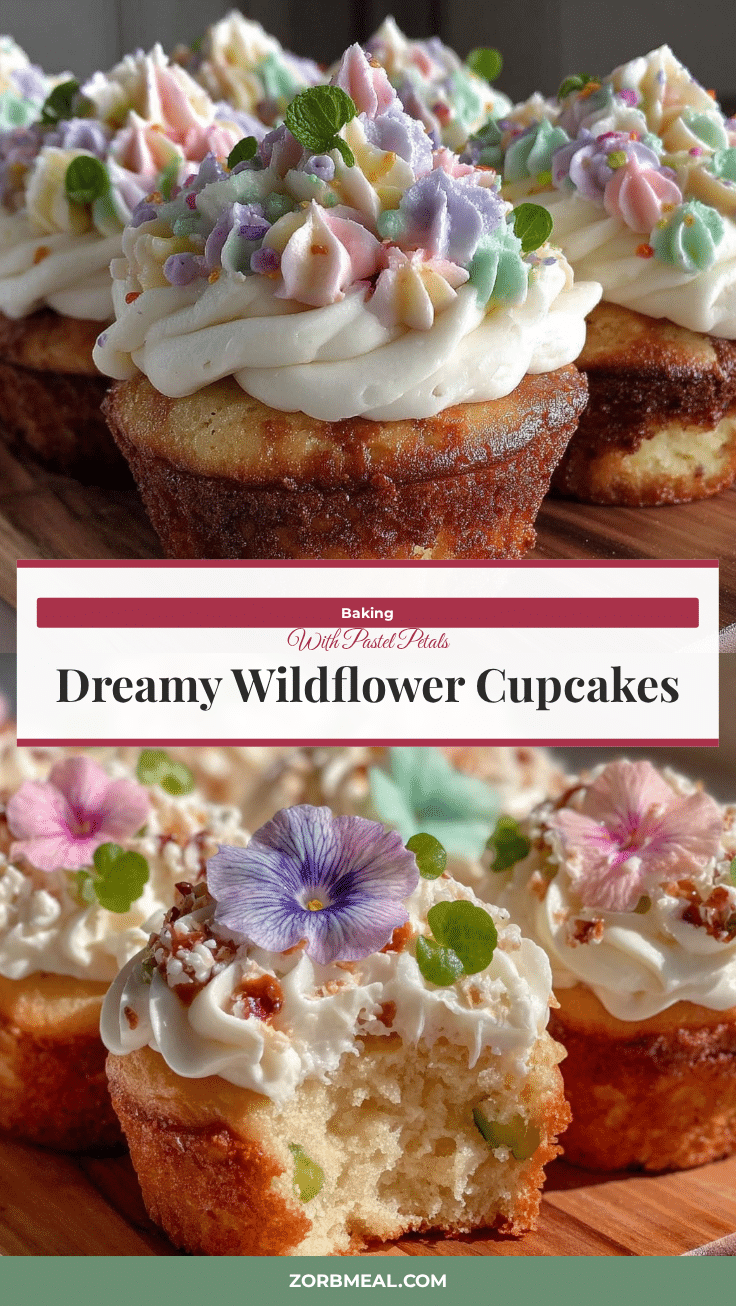
Perfect Wildflower Cupcakes Recipe with Easy Pastel Buttercream Petals Tutorial
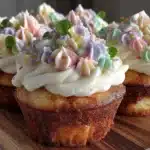
These wildflower cupcakes feature a moist vanilla base topped with soft, pastel buttercream petals, combining ease, beauty, and flavor for a delightful treat perfect for any occasion.
- Prep Time: 20 minutes
- Cook Time: 22 minutes
- Total Time: 42 minutes
- Yield: 12 servings 1x
- Category: Dessert
- Cuisine: American
Ingredients
- 1 ¾ cups (220g) all-purpose flour
- 2 teaspoons baking powder
- ¼ teaspoon salt
- ½ cup (115g) unsalted butter, softened
- 1 cup (200g) granulated sugar
- 2 large eggs, room temperature
- 2 teaspoons pure vanilla extract
- ¾ cup (180ml) whole milk, room temperature
- 1 cup (230g) unsalted butter, softened (for buttercream)
- 4 cups (480g) powdered sugar, sifted
- 2–3 tablespoons heavy cream or whole milk
- 1 teaspoon pure vanilla extract (for buttercream)
- Gel food coloring in pastel shades (light pink, lavender, mint green, soft yellow)
Instructions
- Preheat your oven to 350°F (175°C). Line a 12-cup muffin tin with parchment cupcake liners and set aside.
- In a medium bowl, whisk together the flour, baking powder, and salt. Set aside.
- In a large mixing bowl, beat the softened butter and granulated sugar on medium speed until light and fluffy, about 3-4 minutes.
- Beat in the eggs one at a time, ensuring each is fully incorporated before adding the next. Stir in the vanilla extract.
- With the mixer on low speed, add the dry ingredients in three parts, alternating with the milk, starting and ending with the dry ingredients. Mix just until combined.
- Spoon batter into the prepared liners, filling each about 2/3 full.
- Bake for 18-22 minutes or until a toothpick inserted into the center comes out clean. Cupcakes should be golden and spring back when lightly pressed.
- Let cupcakes cool in the pan for 5 minutes, then transfer to a wire rack to cool completely before frosting.
- To prepare buttercream, beat softened butter on medium speed until smooth and creamy, about 2 minutes. Gradually add powdered sugar, alternating with heavy cream or milk, until spreadable and slightly stiff. Stir in vanilla extract.
- Divide buttercream into separate bowls and add gel food coloring a little at a time to achieve soft pastel shades.
- Fit piping bags with petal tips (#104) and fill each with a different pastel color. Practice piping petals on parchment paper.
- Pipe petals onto cupcakes by holding the bag at a 45-degree angle, starting at the center and moving the tip in a gentle arc outward to form each petal. Overlap petals slightly and rotate the cupcake to build layers for a dimensional wildflower effect.
- Optionally, pipe small dots or tiny leaves with green buttercream using a leaf tip for added realism.
Notes
Use room temperature ingredients for best results. Do not overmix batter to avoid tough cupcakes. Practice piping petals on parchment paper before decorating cupcakes. If buttercream softens while piping, chill for 10 minutes. Frost only fully cooled cupcakes to prevent melting.
Nutrition
- Serving Size: 1 cupcake
- Calories: 300
- Sugar: 30
- Sodium: 150
- Fat: 15
- Saturated Fat: 9
- Carbohydrates: 40
- Fiber: 0.5
- Protein: 3
Keywords: wildflower cupcakes, pastel buttercream, easy cupcakes, vanilla cupcakes, cupcake decorating, spring desserts, baking tutorial