“You really want to eat dandelions?” my friend asked, raising an eyebrow as I held up a bunch of freshly picked greens. Honestly, I get it. For the longest time, dandelions were just those pesky yellow flowers invading my yard every spring. But one afternoon, after a long walk and with nothing but a half-empty pantry, I decided to test a wild idea — turning those bitter greens into a pesto. The result? A vibrant, earthy sauce that surprised everyone who tasted it.
The thing about this fresh dandelion green pesto with walnuts and Parmesan is that it came from a quiet moment of curiosity and a bit of kitchen improvisation. I wasn’t aiming to create some fancy dish, just to make something fresh and different with what was literally growing in my backyard. The first time I served it over a simple pasta, the sharp, tangy notes of the dandelion greens combined with the creamy Parmesan and the rich crunch of walnuts made me pause and savor every bite.
It’s not one of those recipes that demands rare ingredients or hours of prep. Instead, it’s a little wild, a little rustic, and totally rewarding. I found myself making it several times in a week — it’s that kind of recipe that feels both fresh and familiar. Plus, it’s a reminder that some of the best flavors come from unexpected places, like those humble dandelion greens you might usually pull out without a second thought.
What’s stuck with me is how this pesto manages to be bright and herbaceous without overpowering your palate. It’s an invitation to slow down and enjoy something genuinely homemade, just like when you mix a creamy spinach artichoke dip or whip up a batch of fluffy buttermilk pancakes — both of which bring that same comforting, made-from-scratch vibe to the table. If you’re curious about how to turn nature’s bounty into something delicious, this pesto is a quiet celebration of simple ingredients and bold flavors.
Why You’ll Love This Fresh Dandelion Green Pesto Recipe
After making this fresh dandelion green pesto with walnuts and Parmesan more times than I can count, I can confidently say it’s a keeper for good reasons. It’s a recipe that fits right into busy days and casual dinners without fuss, but still delivers on flavor and texture. Here’s why it’s become a staple in my kitchen:
- Quick & Easy: Ready in under 20 minutes, this pesto is perfect for when you want something fresh but don’t have a lot of time.
- Simple Ingredients: You don’t need to trek to specialty stores — dandelion greens grow wildly, walnuts and Parmesan are pantry classics.
- Perfect for Spring and Early Summer: When dandelions are at their tender best, this recipe shines as a seasonal treat.
- Crowd-Pleaser: The balance of bitter greens and nutty, cheesy goodness wins over skeptics every time.
- Unbelievably Delicious: The fresh, slightly bitter edge of the dandelion greens contrasted against creamy Parmesan and crunchy walnuts creates a unique flavor combo that’s hard to forget.
This isn’t just another pesto; it’s a twist on the classic that respects tradition but isn’t afraid to get a little wild. One key difference is the use of walnuts instead of pine nuts — they add a deeper, earthier flavor and a satisfying crunch. Also, I usually skip the garlic or keep it light, letting the dandelion greens take center stage, which makes this pesto fresher and lighter than usual.
Plus, it’s versatile. You can swirl it into warm pasta, spread it on crusty bread, or even dollop it atop roasted veggies. It’s the kind of homemade goodness that pairs well with many dishes, just like the creamy BLT dip I often make for gatherings, which also balances fresh ingredients with rich flavors. Trust me, this pesto will quickly become your go-to green sauce.
What Ingredients You Will Need
This recipe uses simple, wholesome ingredients to deliver bold flavor and satisfying texture without the fuss. Most are pantry staples or easy to find at local markets, and the dandelion greens can be freshly foraged or bought from farmers’ markets when in season.
- Dandelion greens (about 4 cups packed, washed and tough stems removed) — choose young, tender leaves for the best flavor
- Walnuts (½ cup, toasted) — I prefer slightly toasted walnuts for that warm nuttiness; raw works too but toasting wakes up the flavor
- Parmesan cheese (½ cup freshly grated) — freshly grated Parmesan is key here; I like Parmigiano-Reggiano for its rich, nutty notes
- Garlic (1 small clove, minced, optional) — adds a subtle kick; omit if you want a milder pesto
- Olive oil (⅓ cup extra virgin) — use a fruity, fresh olive oil for brightness
- Lemon juice (1 tablespoon fresh) — balances the bitterness with a bright, tangy note
- Salt (to taste) — sea salt or kosher salt is ideal for seasoning
- Black pepper (freshly ground, to taste) — adds a gentle heat and rounds out the flavors
Ingredient tips: When foraging dandelion greens, make sure they come from pesticide-free areas. Younger greens are less bitter, so if you find the taste too strong, swap some with fresh spinach or arugula. For a dairy-free version, swap Parmesan with nutritional yeast or a vegan cheese alternative.
Equipment Needed
- Food processor or high-speed blender: Essential for blending the pesto to a smooth, creamy consistency. I’ve used both and a food processor gives a nice rustic texture, while a blender makes it silkier.
- Measuring cups and spoons: To keep the balance of ingredients just right, especially the lemon juice and olive oil.
- Spatula: For scraping down the sides of the processor and mixing the pesto evenly.
- Toaster or dry skillet: For toasting the walnuts to bring out their flavor.
If you don’t have a food processor, a sturdy mortar and pestle can work, though it takes more elbow grease. For budget-friendly options, a basic blender or even a handheld immersion blender with a small bowl will do just fine. Just watch the texture as you blend, so you don’t over-process it into a paste that’s too smooth.
Preparation Method
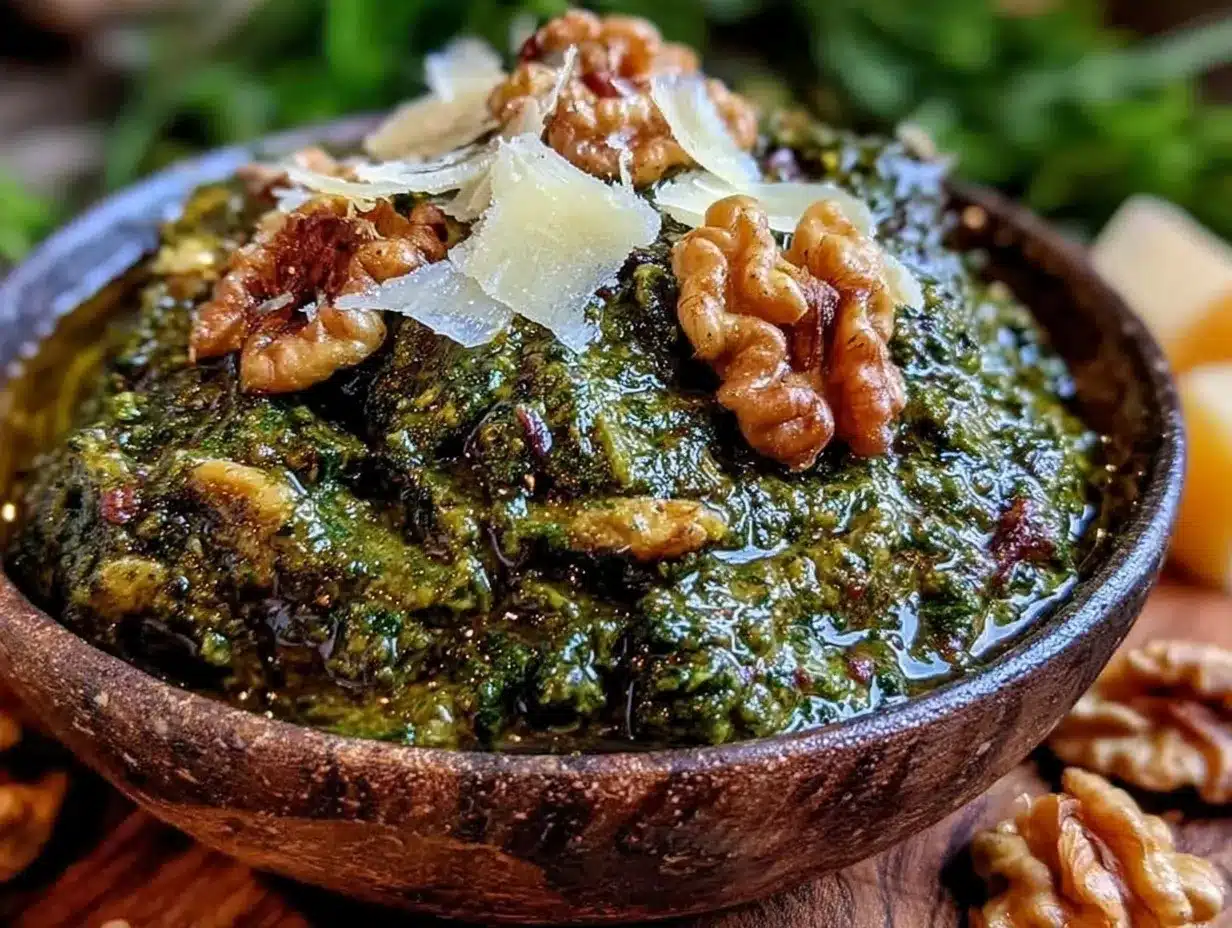
- Prepare the dandelion greens: Rinse about 4 cups of dandelion greens thoroughly to remove dirt and grit. Pat dry or spin in a salad spinner to remove excess water. Remove any tough stems — the leaves should be tender and pliable. (Prep time: 10 minutes)
- Toast the walnuts: Heat a dry skillet over medium heat. Add ½ cup walnuts and toast, stirring frequently, until fragrant and lightly browned, about 5 minutes. Be careful not to burn them. Let cool slightly.
- Grate the Parmesan: Use freshly grated Parmesan (about ½ cup) for the best flavor and texture. Pre-grated cheese won’t melt or blend as well.
- Combine ingredients: In your food processor, add the dandelion greens, toasted walnuts, Parmesan, and minced garlic (if using). Pulse a few times to start breaking down the greens.
- Add liquids: With the processor running, slowly drizzle in ⅓ cup extra virgin olive oil and 1 tablespoon fresh lemon juice. Scrape down the sides as needed to blend everything evenly.
- Season to taste: Add salt and freshly ground black pepper to your liking. Pulse a few final times to incorporate seasoning.
- Check consistency: The pesto should be thick but spreadable. If it’s too thick, add a teaspoon of olive oil or water at a time until desired texture is reached.
- Store or serve: Use immediately tossed with pasta, spread on bread, or refrigerate in an airtight container for up to 3 days. To preserve color, drizzle a thin layer of olive oil on top before sealing.
Pro tip: If your dandelion greens taste too bitter, blanch them in boiling water for 30 seconds, then shock in ice water before blending. This softens the bite without losing the green vibrancy.
Cooking Tips & Techniques
Making fresh dandelion green pesto is pretty straightforward, but a few tricks help nail the balance and texture every time. First, don’t skip toasting the walnuts — it brings out their oils and adds a warm nuttiness that complements the greens.
Also, the lemon juice is a small but mighty ingredient. It cuts through the bitterness of the dandelions and brightens the whole mixture. Without it, the pesto can feel flat or overly earthy.
When blending, pulse rather than run the processor continuously. You want some texture, not a completely smooth paste. That little bit of chunkiness gives it character and mouthfeel.
One mistake I made early on was using mature dandelion greens with thick stems — the pesto ended up bitter and fibrous. Always pick the tender young leaves and remove fibrous parts. If you’re unsure, mixing in some spinach or kale can soften the flavor.
Timing-wise, make your pesto just before serving for the freshest flavor. If you need to prep ahead, store it in a glass jar with a thin olive oil layer on top to slow oxidation.
For a quick meal, toss this pesto with warm pasta and finish with extra Parmesan. It’s a simple but impressive dish, much like the creamy spinach artichoke dip that’s perfect for sharing.
Variations & Adaptations
While this fresh dandelion green pesto recipe is fantastic as written, I like to tweak it depending on what I have on hand or the season. Here are some ideas to play with:
- Nut swaps: Use pecans or almonds instead of walnuts for a different flavor profile. Pine nuts can work if you want a classic pesto taste.
- Dairy-free version: Replace Parmesan with nutritional yeast or a vegan cheese alternative to keep that savory umami without dairy.
- Herb additions: Add fresh basil or parsley to mellow the dandelion’s bitterness and add herbal complexity.
- Spicy kick: Toss in a pinch of red pepper flakes or a small fresh chili for a subtle heat boost.
- Seasonal swaps: In late summer, swap dandelion greens for fresh arugula or watercress for a peppery twist.
One personal favorite variation is blending in some roasted garlic instead of raw. It softens the garlic’s edge and adds a sweet, mellow depth. This version pairs wonderfully with crusty bread, reminiscent of the hearty flavors in the creamy homemade French onion dip.
Serving & Storage Suggestions
This pesto is best served fresh at room temperature or slightly chilled. Toss it with warm pasta or spread it on toasted baguette slices for a quick appetizer. It also works beautifully as a sauce for grilled chicken or roasted vegetables.
For storage, keep the pesto in an airtight container in the fridge. To preserve its vibrant green color, pour a thin layer of olive oil over the surface before sealing. It will last up to 3 days this way.
If you want to freeze it, portion the pesto into ice cube trays. Once frozen, transfer cubes to a freezer bag. Thaw in the fridge overnight and stir well before using. Keep in mind, freezing might slightly change the texture but the flavor stays intact.
Reheating pesto isn’t necessary; it’s best enjoyed cold or at room temperature. If mixing with hot foods like pasta, add the pesto off the heat to keep its fresh flavor.
Flavors tend to deepen a bit after a day, so if you can prep it a little ahead, the taste will mature nicely. Just bring it back to room temperature before serving to get that fresh, bright burst.
Nutritional Information & Benefits
This fresh dandelion green pesto is a nutrient-rich addition to your meals. Dandelion greens are packed with vitamins A, C, and K, plus minerals like iron and calcium. They’re known for their antioxidant properties and support for digestion.
Walnuts add healthy omega-3 fatty acids and protein, while Parmesan contributes calcium and a good dose of flavor with minimal quantity. Olive oil provides heart-healthy monounsaturated fats.
This pesto is naturally gluten-free and, with substitutions, can be made dairy-free or vegan. It’s a great way to sneak more greens into your diet without the usual leafy bitterness.
From a wellness perspective, this recipe balances fresh, whole-food ingredients with satisfying fats and flavor, making it a smart choice for anyone wanting to eat well without fuss.
Conclusion
This fresh dandelion green pesto with walnuts and Parmesan is more than just a sauce — it’s a little reminder that creativity and nature can come together in unexpected ways. The combination of wild greens, rich nuts, and sharp cheese creates something both simple and special. It’s easy to make, flexible, and full of character.
Don’t hesitate to play with the ingredients and find your own favorite version — after all, pesto is a canvas for your kitchen creativity. I love how this recipe connects me to the season and invites me to slow down and appreciate flavors that are fresh, bold, and a bit wild.
If you give this pesto a try, I’d love to hear how you use it or what variations you come up with. Sharing these little kitchen adventures keeps the joy of cooking alive and makes every meal a bit more memorable.
Frequently Asked Questions
Can I use store-bought dandelion greens for this pesto?
Yes, if you find fresh dandelion greens at a farmers’ market or specialty store, they work well. Just make sure they’re clean and tender. Foraged greens are great but ensure they’re from pesticide-free areas.
How bitter will the dandelion greens make the pesto?
Dandelion greens have a natural bitterness, especially if mature. Using young leaves and removing stems reduces this. Adding lemon juice and toasting walnuts helps balance the flavor.
Can I freeze the pesto?
Absolutely! Freeze in small portions like ice cube trays. Thaw in the fridge before use. Texture might change slightly but the flavor stays delicious.
Is this pesto suitable for people with nut allergies?
If you have a nut allergy, you can substitute walnuts with seeds like pumpkin or sunflower seeds. The flavor and texture will differ but still be tasty.
What dishes pair well with fresh dandelion green pesto?
Try it tossed with pasta, spread on sandwiches, or as a dip with fresh veggies. It also complements grilled meats and roasted vegetables nicely, similar to how I use pesto variations in my crispy panko Parmesan zucchini fries.
Pin This Recipe!
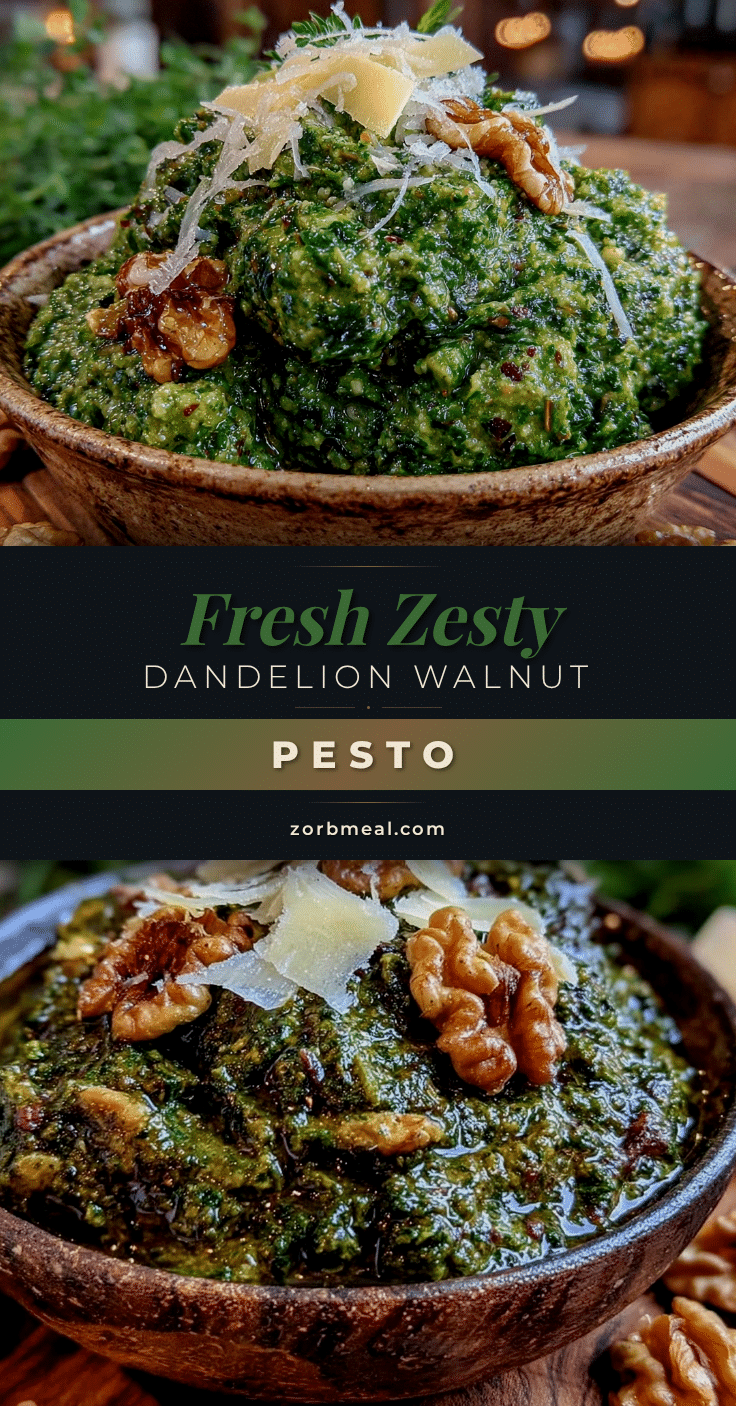
Fresh Dandelion Green Pesto Recipe with Walnuts and Parmesan

A vibrant, earthy pesto made from fresh dandelion greens, toasted walnuts, and Parmesan cheese. This easy homemade sauce is perfect for pasta, bread, or roasted vegetables and ready in under 20 minutes.
- Prep Time: 10 minutes
- Cook Time: 5 minutes
- Total Time: 15 minutes
- Yield: About 1 cup pesto (serves 4) 1x
- Category: Sauce
- Cuisine: American
Ingredients
- 4 cups packed dandelion greens, washed and tough stems removed
- ½ cup toasted walnuts
- ½ cup freshly grated Parmesan cheese
- 1 small clove garlic, minced (optional)
- ⅓ cup extra virgin olive oil
- 1 tablespoon fresh lemon juice
- Salt, to taste
- Freshly ground black pepper, to taste
Instructions
- Rinse about 4 cups of dandelion greens thoroughly to remove dirt and grit. Pat dry or spin in a salad spinner to remove excess water. Remove any tough stems.
- Heat a dry skillet over medium heat. Add ½ cup walnuts and toast, stirring frequently, until fragrant and lightly browned, about 5 minutes. Let cool slightly.
- Grate ½ cup Parmesan cheese freshly.
- In a food processor, add the dandelion greens, toasted walnuts, Parmesan, and minced garlic (if using). Pulse a few times to start breaking down the greens.
- With the processor running, slowly drizzle in ⅓ cup extra virgin olive oil and 1 tablespoon fresh lemon juice. Scrape down the sides as needed to blend evenly.
- Add salt and freshly ground black pepper to taste. Pulse a few final times to incorporate seasoning.
- Check the consistency; the pesto should be thick but spreadable. If too thick, add a teaspoon of olive oil or water at a time until desired texture is reached.
- Use immediately tossed with pasta, spread on bread, or refrigerate in an airtight container for up to 3 days. To preserve color, drizzle a thin layer of olive oil on top before sealing.
Notes
If dandelion greens taste too bitter, blanch them in boiling water for 30 seconds then shock in ice water before blending. Toast walnuts to enhance flavor. Pulse processor to keep some texture. Store with a thin olive oil layer on top to preserve color. Can freeze in ice cube trays.
Nutrition
- Serving Size: Approximately 1/4 cu
- Calories: 180
- Sugar: 0.5
- Sodium: 150
- Fat: 18
- Saturated Fat: 3
- Carbohydrates: 3
- Fiber: 1
- Protein: 5
Keywords: dandelion greens, pesto, walnuts, Parmesan, homemade sauce, easy pesto recipe, wild greens, spring recipe