“You want sushi, but also, you really don’t want to wrestle with seaweed sheets and bamboo mats tonight.” That was my thought the night I stumbled on this easy flavor-packed beginner homemade sushi bowls recipe. Honestly, I was half-watching a show and half-scrolling through my phone when a friend texted me a quick snap of her sushi bowl. It looked so colorful, fresh, and forgiving—no rolling, no fuss, just bowls packed with all the best sushi vibes. I was skeptical at first; sushi felt so delicate and precise, and here I was, craving something casual yet satisfying.
As I threw together my first homemade sushi bowl, the kitchen filled with the familiar tang of rice vinegar and the salty-sweet hum of soy sauce. The contrast of creamy avocado, crunchy cucumbers, and tender fish was the kind of combo that made me pause and smile mid-bite. No fancy sushi skills required—just easy layering and bold flavor. It quickly became my go-to for nights when I wanted that sushi fix without the fuss. And now, it’s stuck with me because it’s not only delicious but also fun to make, even when you’re juggling a busy schedule or just craving something fresh and bright.
So, if you’ve ever found sushi intimidating or thought homemade sushi was reserved for pros, this recipe is your kitchen shortcut to that vibrant, flavor-packed meal. It’s proof that sushi bowls can be simple, forgiving, and absolutely packed with taste. By the end, you might just find yourself making it more often than you’d expect.
Why You’ll Love This Recipe
From the moment I started tweaking this sushi bowl recipe, it was clear it was something special. Here’s why it quickly earned a permanent spot in my weeknight dinner rotation:
- Quick & Easy: Ready in about 30 minutes, this recipe is perfect for nights when you want something fresh without hours in the kitchen.
- Simple Ingredients: No need for exotic items—most ingredients are pantry staples or easy-to-find produce and seafood.
- Perfect for Casual Meals: Whether it’s a solo dinner or an unplanned gathering, this sushi bowl feels special without the stress.
- Crowd-Pleaser: Kids, picky eaters, and sushi fans alike love the combination of textures and flavors.
- Unbelievably Delicious: The balance between the tangy rice, creamy avocado, and savory protein hits all the right notes every time.
What sets this recipe apart is the subtle layering of flavors—seasoned sushi rice that’s just the right stickiness, a drizzle of homemade spicy mayo, and pickled ginger on the side for that authentic kick. Also, swapping traditional seaweed rolls for a bowl format takes all the pressure off and lets you customize your meal exactly how you want it. It’s the kind of dish that makes you pause mid-bite because the flavors surprise you, even though you made it yourself.
This recipe has that comforting feel of takeout but with way more control and freshness. If you’ve ever loved the idea of making sushi at home but felt overwhelmed, this is the recipe that’ll have you coming back for more.
What Ingredients You Will Need
This easy flavor-packed beginner homemade sushi bowls recipe uses straightforward, fresh ingredients that come together to deliver big flavor without fuss. Most can be found in your local grocery store or Asian market, and substitutions are simple if needed.
- Sushi Rice: 1 ½ cups (280g) sushi or short-grain rice, rinsed well (this is the foundation—look for brands like Nishiki for best results)
- Rice Vinegar Mixture: 3 tablespoons rice vinegar, 1 tablespoon sugar, ½ teaspoon salt (balances the rice perfectly)
- Protein: 8 oz (225g) fresh sashimi-grade salmon or cooked shrimp (choose what you like; cooked crab or tofu also work well)
- Vegetables: 1 medium cucumber, thinly sliced; 1 ripe avocado, diced; 2 green onions, sliced thinly; shredded carrots (for crunch and color)
- Pickled Ginger: about 2 tablespoons, store-bought or homemade for tang and brightness
- Spicy Mayo: ¼ cup mayonnaise mixed with 1 tablespoon sriracha (adjust heat to taste)
- Soy Sauce or Tamari: 2-3 tablespoons for dipping or drizzling (tamari for gluten-free option)
- Sesame Seeds: 1 tablespoon black or white, toasted (adds nutty aroma and texture)
- Nori Sheets or Furikake: Optional, for sprinkling on top if you want that classic seaweed flavor without rolling
For those wanting a plant-based twist, swapping the seafood for marinated tofu or crispy tempeh works wonders. Also, in warmer months, fresh mango chunks or edamame peas make great seasonal swaps. The rice vinegar mix is key to achieving that authentic sushi rice tang, so don’t skip it. I like to use Kewpie mayo for the spicy sauce—it’s creamier and slightly sweeter, which balances the heat nicely.
Equipment Needed
Making sushi bowls doesn’t require fancy gadgets, which is part of why I love this recipe so much. Here’s what you’ll want to have on hand:
- Rice Cooker or Medium Pot: For perfectly cooked sushi rice. A rice cooker takes the guesswork out of timing, but a pot with a tight lid works fine too.
- Mixing Bowls: One for the rice vinegar seasoning and another for tossing ingredients.
- Sharp Knife: Essential for slicing avocado, cucumber, and your protein neatly (trust me, a dull knife makes all the difference).
- Cutting Board: A sturdy, easy-to-clean surface is best.
- Measuring Cups and Spoons: For precise seasoning of the rice and sauces.
- Serving Bowls: Wide, shallow bowls let you layer and show off the colors and textures beautifully.
If you don’t have a rice cooker, no worries—I’ve made this recipe countless times just on the stovetop. Using a wooden spoon or rice paddle helps fluff the rice without mashing the grains. For toasting sesame seeds, a small dry skillet on medium heat works well; just keep an eye on them so they don’t burn. I usually keep a small brush handy to spread out the spicy mayo evenly across the bowl.
Preparation Method
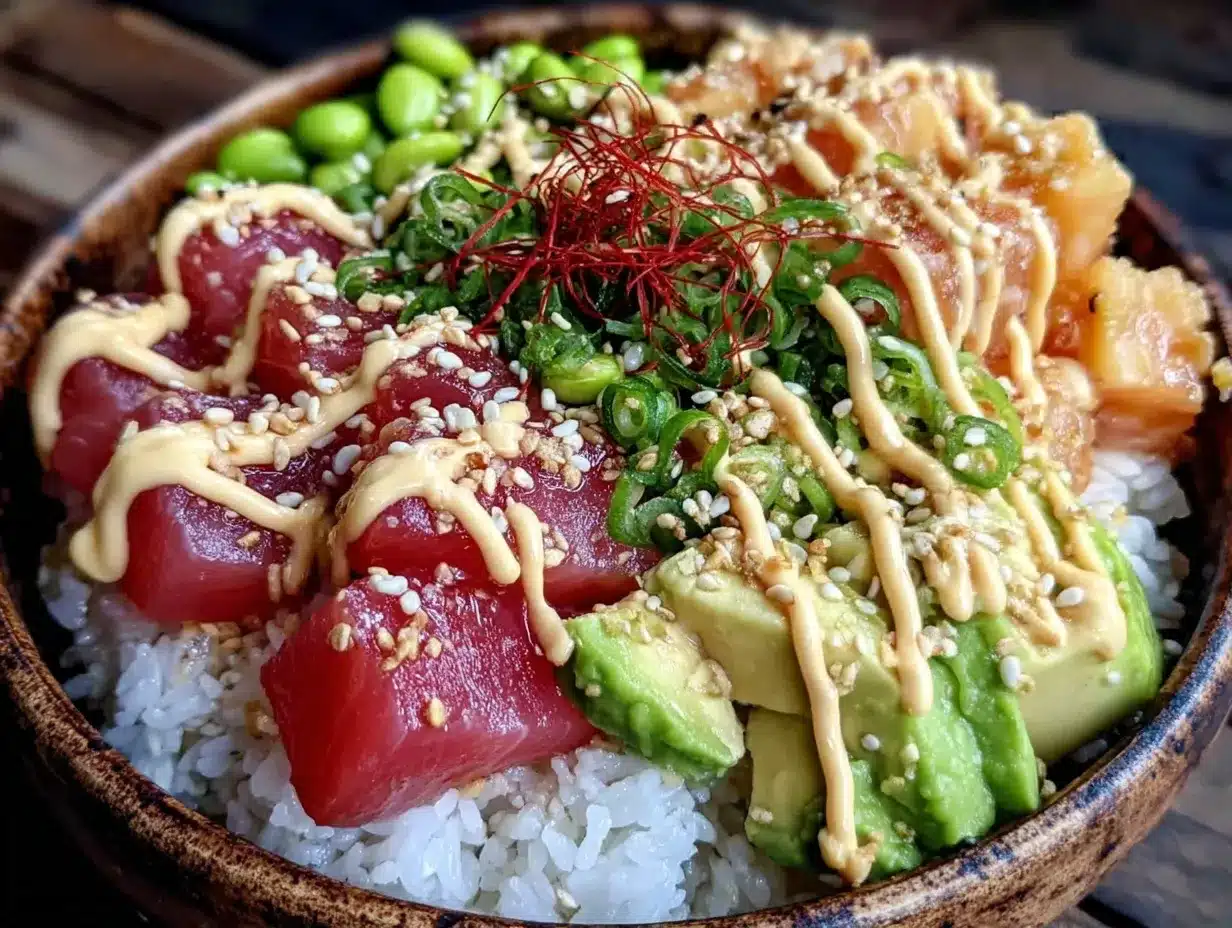
- Rinse and Cook the Rice: Start by rinsing 1 ½ cups (280g) sushi rice under cold water until the water runs clear. This removes excess starch and prevents clumping. Drain well. Cook the rice in a rice cooker or on the stove with 1 ¾ cups (420ml) water. If using a pot, bring to a boil, then reduce to low, cover, and simmer for about 18 minutes. Let it rest covered for 10 minutes afterward.
- Season the Rice: While the rice cooks, mix 3 tablespoons rice vinegar, 1 tablespoon sugar, and ½ teaspoon salt in a small bowl until dissolved. Transfer rice to a large bowl and gently fold in the vinegar mixture with a wooden spoon or rice paddle. Spread the rice out to cool to room temperature (you can fan it to speed this up). The rice should be shiny and slightly sticky but not mushy.
- Prep the Toppings: Slice 1 medium cucumber thinly, dice 1 ripe avocado, slice 2 green onions finely, and shred some carrots. If using raw salmon, slice into bite-sized cubes or strips. For cooked shrimp, peel and halve lengthwise. Toast 1 tablespoon sesame seeds in a dry skillet over medium heat until fragrant (about 2 minutes), shaking the pan often.
- Make the Spicy Mayo: In a small bowl, mix ¼ cup mayonnaise with 1 tablespoon sriracha. Adjust heat to taste. This sauce is optional but adds a creamy, spicy punch that ties the bowl together.
- Assemble the Bowls: Divide the sushi rice evenly into 4 bowls. Arrange the salmon or shrimp, avocado, cucumber, carrots, and green onions attractively on top. Drizzle with spicy mayo and soy sauce or tamari as desired. Sprinkle with toasted sesame seeds and add a few slices of pickled ginger on the side. If you like, crumble some nori sheets or sprinkle furikake over the top for that extra umami kick.
- Enjoy Immediately: These sushi bowls are best eaten right away while the rice is fresh and the veggies crisp. The textures and flavors are happiest this way.
Pro tip: When mixing the rice vinegar into the rice, be gentle—fold, don’t stir vigorously, to keep the grains intact. Also, letting the rice cool a bit before assembling prevents the avocado from browning too quickly. If you want to prep ahead, cook and season the rice earlier and store it covered at room temperature for up to 4 hours, then assemble just before eating.
Cooking Tips & Techniques
Making sushi bowls beginner-friendly means embracing a few key tips I learned the hard way. First, rinsing the rice is a game changer—skipping this step results in gummy rice, which nobody wants. Also, the rice vinegar seasoning needs to be well balanced; too much sugar and it feels off, too little and it lacks that signature tang. Taste as you go.
When slicing your fish or protein, a sharp knife is essential. I remember my first attempt with a dull blade—it was a mess, and the fish got mashed. Keep your knife wet to prevent sticking and slice cleanly in one smooth motion. If raw fish isn’t your thing, cooked shrimp or crab meat are excellent alternatives that require zero prep beyond peeling.
Timing matters too. Assemble just before eating to keep the veggies crisp and the avocado fresh. You can always prep all the components earlier in the day and combine when ready to serve. For a neat presentation, arrange toppings in colorful sections or mix them all together—both ways work.
And hey, if you love spicy mayo but want to cut calories, try mixing sriracha with Greek yogurt instead of mayo. It’s lighter but still packs flavor. I’ve also found that toasting sesame seeds right before serving makes a noticeable difference in aroma and texture.
Variations & Adaptations
This sushi bowl recipe is wonderfully flexible, so feel free to make it your own. Here are a few variations I’ve tried and loved:
- Vegetarian/Vegan: Swap out fish for marinated tofu or crispy tempeh, add edamame beans for protein, and use dairy-free mayo for the spicy sauce.
- Seasonal Freshness: In summer, swap cucumber for fresh mango chunks or radish slices for a bright, juicy twist.
- Low-Carb Version: Use cauliflower rice instead of sushi rice to keep it light and grain-free without losing texture.
- Different Proteins: Try smoked salmon, seared tuna, or even leftover crispy buttermilk fried chicken for a fun twist (yes, that juicy chicken from this recipe works surprisingly well!).
- Cooking Method Adjustments: For a warm version, lightly sauté shrimp or tofu with garlic and ginger before adding to the bowl.
One personal favorite variation is adding a drizzle of lemon-herb salmon on top instead of raw fish. The bright citrus notes complement the sushi rice beautifully and add a cozy warmth that’s perfect for cooler nights.
Serving & Storage Suggestions
These sushi bowls shine when served fresh and slightly chilled or at room temperature. Arrange the bowls so the vibrant colors pop—the contrast between creamy avocado and bright veggies is part of the appeal. Pair with a cold glass of green tea, sparkling water, or a crisp white wine to keep things light and refreshing.
If you have leftovers, store the components separately in airtight containers in the fridge. Sushi rice keeps for up to 2 days but tends to harden, so sprinkle with a bit of water and microwave covered to soften before serving again. Avocado and fish don’t store well once combined, so it’s best to add those fresh when plating.
Leftover spicy mayo and pickled ginger keep well refrigerated for up to a week, so you can always jazz up other meals or snacks. Flavors often develop and mellow slightly when stored, which can be nice, but I recommend enjoying your sushi bowls as fresh as possible for the best texture and taste.
Nutritional Information & Benefits
Each serving of this sushi bowl (about 1/4 of the recipe) provides roughly 450-500 calories, with a good balance of carbs, protein, and healthy fats. Sushi rice offers energy-boosting carbohydrates, while the salmon or shrimp delivers heart-healthy omega-3 fatty acids and lean protein.
Avocado adds creamy texture and beneficial monounsaturated fats known for supporting heart health. Cucumbers and carrots bring fiber and vitamins, making this dish light yet satisfying. Plus, the recipe can easily be adapted for gluten-free diets using tamari and naturally contains no dairy.
For those watching sodium intake, reducing soy sauce or using low-sodium versions is a simple tweak. Overall, this bowl is a nourishing, balanced meal that feels indulgent without the heaviness of traditional fried or creamy dishes like loaded potato soup or mac and cheese, making it a smart choice for everyday dinners.
Conclusion
This easy flavor-packed beginner homemade sushi bowls recipe isn’t just a quick fix—it’s a fresh, fun way to bring sushi home without the intimidation factor. What started as a casual text from a friend became one of my favorite kitchen experiments, turning sushi into something approachable and customizable.
Whether you’re new to sushi or just want a fuss-free meal that feels special, this bowl delivers every time. Don’t hesitate to put your own spin on it—switch up proteins, add your favorite veggies, or tweak the spicy mayo to your liking. I love how this recipe invites creativity without sacrificing that authentic sushi experience.
If you try it, I’d love to hear about your favorite versions or any twists you add. Sharing food stories makes cooking even better, right? Here’s to many more bowls of fresh, homemade sushi happiness!
FAQs
- Can I use regular long-grain rice instead of sushi rice?
Regular long-grain rice won’t have the sticky texture sushi rice provides, which is important for the bowl’s structure and flavor. I recommend using sushi or short-grain rice for best results. - Is it safe to eat raw salmon at home?
Use sushi-grade salmon from a trusted source to minimize risk. If unsure, cooked shrimp or marinated tofu are great alternatives. - How do I keep avocado from browning in the bowl?
Add avocado just before serving and toss it gently with a squeeze of lemon or lime juice to slow browning. - Can I make the sushi rice ahead of time?
Yes! You can cook and season the rice a few hours ahead. Keep it covered at room temperature, then fluff before assembling bowls. - What can I substitute for spicy mayo?
Mix Greek yogurt with sriracha for a lighter option, or simply use soy sauce and wasabi for traditional flavors.
Pin This Recipe!
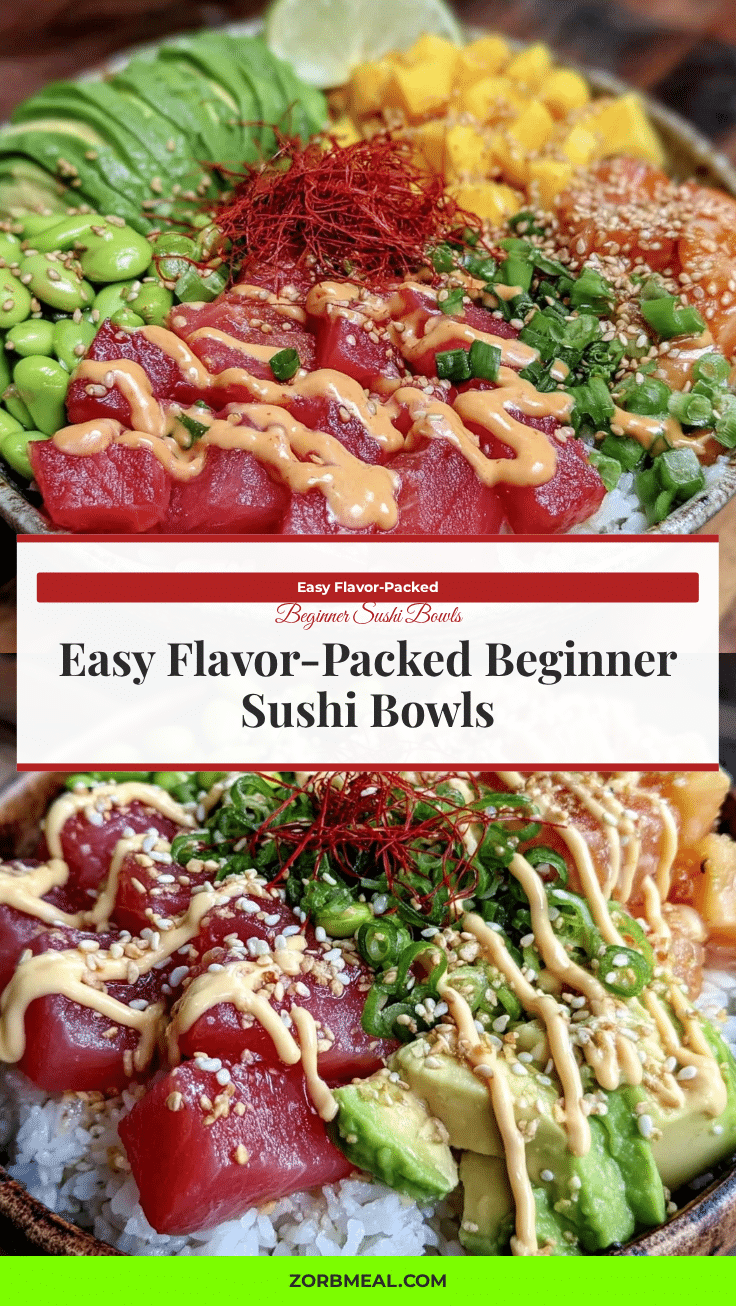
Easy Flavor-Packed Homemade Sushi Bowls Recipe for Beginners

A quick and easy sushi bowl recipe perfect for beginners, featuring seasoned sushi rice, fresh vegetables, and your choice of protein with a creamy spicy mayo drizzle.
- Prep Time: 15 minutes
- Cook Time: 18 minutes
- Total Time: 33 minutes
- Yield: 4 servings 1x
- Category: Main Course
- Cuisine: Japanese
Ingredients
- 1 ½ cups (280g) sushi or short-grain rice, rinsed well
- 3 tablespoons rice vinegar
- 1 tablespoon sugar
- ½ teaspoon salt
- 8 oz (225g) fresh sashimi-grade salmon or cooked shrimp (or cooked crab or tofu)
- 1 medium cucumber, thinly sliced
- 1 ripe avocado, diced
- 2 green onions, sliced thinly
- Shredded carrots (amount to preference)
- About 2 tablespoons pickled ginger
- ¼ cup mayonnaise
- 1 tablespoon sriracha
- 2–3 tablespoons soy sauce or tamari
- 1 tablespoon black or white sesame seeds, toasted
- Optional: nori sheets or furikake for sprinkling
Instructions
- Rinse 1 ½ cups sushi rice under cold water until water runs clear. Drain well.
- Cook rice in a rice cooker or on the stove with 1 ¾ cups (420ml) water. If using a pot, bring to boil, reduce to low, cover, and simmer for about 18 minutes. Let rest covered for 10 minutes.
- Mix 3 tablespoons rice vinegar, 1 tablespoon sugar, and ½ teaspoon salt until dissolved.
- Transfer cooked rice to a large bowl and gently fold in the vinegar mixture. Spread rice out to cool to room temperature.
- Slice cucumber thinly, dice avocado, slice green onions, and shred carrots.
- Slice raw salmon into bite-sized pieces or halve cooked shrimp lengthwise.
- Toast 1 tablespoon sesame seeds in a dry skillet over medium heat for about 2 minutes, shaking often.
- Mix ¼ cup mayonnaise with 1 tablespoon sriracha to make spicy mayo.
- Divide sushi rice evenly into 4 bowls. Arrange protein, avocado, cucumber, carrots, and green onions on top.
- Drizzle with spicy mayo and soy sauce or tamari as desired.
- Sprinkle toasted sesame seeds and add pickled ginger on the side.
- Optionally, crumble nori sheets or sprinkle furikake on top.
- Serve immediately for best texture and flavor.
Notes
Rinse rice thoroughly to avoid gummy texture. Fold vinegar into rice gently to keep grains intact. Add avocado just before serving to prevent browning. Spicy mayo can be lightened by substituting Greek yogurt for mayonnaise. Toast sesame seeds just before serving for best aroma.
Nutrition
- Serving Size: 1 bowl (1/4 of recip
- Calories: 475
- Sugar: 6
- Sodium: 600
- Fat: 22
- Saturated Fat: 3.5
- Carbohydrates: 50
- Fiber: 5
- Protein: 20
Keywords: sushi bowl, homemade sushi, easy sushi recipe, beginner sushi, sushi rice, spicy mayo, sashimi, healthy dinner