“Are you sure this will work?” I asked myself, staring down at a pot full of awkwardly chopped asparagus and a mound of arborio rice. Honestly, risotto always felt like a bit of a mystery to me—too fussy, too easy to mess up. But that spring evening, with a quiet kitchen and just a hint of lemon scent in the air, I decided to give this creamy lemon butter asparagus risotto with fresh peas a real shot. The recipe wasn’t born from some grand culinary plan; it was more like a gentle experiment to brighten up a tired weeknight dinner.
As the rice slowly absorbed the simmering broth, releasing that comforting, starchy aroma, I found myself settling into a rhythm, stirring and tasting along the way. The tender asparagus and sweet bursts of fresh peas added a playful contrast to the rich, buttery lemon base. It wasn’t perfect the first time—some bites lacked seasoning, and I overcooked the peas once—but the process felt strangely soothing. By the end, I realized this risotto had carved out a space in my regular cooking rotation, the kind of dish that feels both elegant and homey without too much fuss.
Every time I make this creamy lemon butter asparagus risotto with fresh peas now, I’m reminded of how simple ingredients and a little patience can turn into something quietly exceptional. It’s that recipe you don’t mind repeating over and over in the spring months, when asparagus is at its best and you want a comforting, bright dinner that’s just a bit different from the usual. No fanfare, just good food that sticks with you.
Why You’ll Love This Creamy Lemon Butter Asparagus Risotto Recipe
Having made this creamy lemon butter asparagus risotto with fresh peas more times than I can count, I’ve picked up a few things that make it stand out from the crowd. Whether you’re a longtime risotto fan or a kitchen skeptic, this recipe offers a satisfying blend of flavors and textures that’s hard to beat.
- Quick & Easy: From start to finish, you can have this dinner ready in about 35 minutes—ideal for busy weeknights or when you need a comforting meal without the fuss.
- Simple Ingredients: The pantry staples like arborio rice, butter, and broth combine effortlessly with fresh spring veggies like asparagus and peas. No surprise trips to specialty stores needed!
- Perfect for Spring & Light Dinners: The bright lemon and fresh peas make it a wonderful choice for springtime meals or lighter dinners that still feel indulgent.
- Crowd-Pleaser: Family and friends have often asked for seconds, and the balance of creamy richness and fresh veggies appeals to all ages.
- Unbelievably Delicious: The butter and lemon work together to create a silky texture and refreshing zing that turns this risotto into pure comfort food.
This isn’t your run-of-the-mill risotto. The secret is in the way the lemon butter melts into the rice just at the end, giving it a subtle brightness that cuts through the richness. Plus, the fresh peas add little pops of sweetness and texture, making every bite interesting. It’s a bit like the way a crisp green salad can change the whole meal, but here it’s all wrapped up in creamy, dreamy rice.
If you want a cozy meal that feels thoughtful but doesn’t take forever, this recipe is your new go-to. And because it’s so flexible, you can tweak it to fit what’s fresh or what’s in your fridge—kind of like how I sometimes swap in ingredients when I make my old-fashioned apple crisp or whip up a batch of homemade meatloaf to keep things interesting.
What Ingredients You Will Need for Creamy Lemon Butter Asparagus Risotto
This recipe uses simple, wholesome ingredients to deliver bold flavor and satisfying texture without the fuss. Most items are pantry staples or common fresh veggies, making it a breeze to pull together any time of year.
- Arborio rice (1 1/2 cups / 300 g) – The classic risotto rice that soaks up all the broth while releasing that gorgeous creamy starch.
- Fresh asparagus (1 bunch, about 12 oz / 340 g) – Trimmed and cut into 1-inch pieces; look for firm, bright green stalks.
- Fresh or frozen peas (1 cup / 150 g) – I prefer fresh when in season for that sweet pop, but frozen works well too.
- Unsalted butter (4 tablespoons / 60 g) – Adds richness and that silky finish; I like using Plugrá for its creaminess.
- Shallots (1 small, finely chopped) – Provides a mild onion flavor without overpowering the dish.
- Garlic (2 cloves, minced) – For a gentle aromatic boost.
- Vegetable or chicken broth (5 cups / 1.2 liters) – Warmed before adding; use a low-sodium brand to control salt.
- Dry white wine (1/2 cup / 120 ml) – Optional but recommended for a subtle depth; sauvignon blanc works nicely.
- Lemon zest and juice (zest and 1 tablespoon juice from 1 lemon) – The star for fresh brightness and tang.
- Parmesan cheese (1/2 cup / 50 g, finely grated) – For creamy umami richness; Parmigiano-Reggiano is my top pick.
- Salt and freshly ground black pepper – To taste, added gradually as you cook.
- Olive oil (1 tablespoon) – For sautéing shallots and garlic with a light, fruity touch.
You can swap vegetable broth for a homemade chicken broth if you want a deeper flavor. For a dairy-free version, try using vegan butter and skip the Parmesan or use a plant-based alternative. If asparagus isn’t in season, green beans or zucchini can be stand-ins, but nothing quite matches the tender snap of fresh asparagus paired with peas.
Equipment Needed
- Large heavy-bottomed skillet or wide saucepan: A good-quality pan with thick walls helps distribute heat evenly, which is key for risotto. I always reach for my 12-inch stainless steel skillet.
- Medium saucepan: To keep your broth warm while stirring the risotto.
- Wooden spoon or silicone spatula: For stirring the rice gently without scratching your pan.
- Measuring cups and spoons: Precision matters especially for liquids and rice quantity.
- Zester or fine grater: To get just the lemon zest without the bitter pith.
If you don’t have a zester, a microplane or even a vegetable peeler to carefully shave thin strips works fine. You don’t need a fancy risotto pan, but avoid nonstick if you want that classic texture and don’t mind a bit of extra stirring.
Preparation Method for Creamy Lemon Butter Asparagus Risotto with Fresh Peas
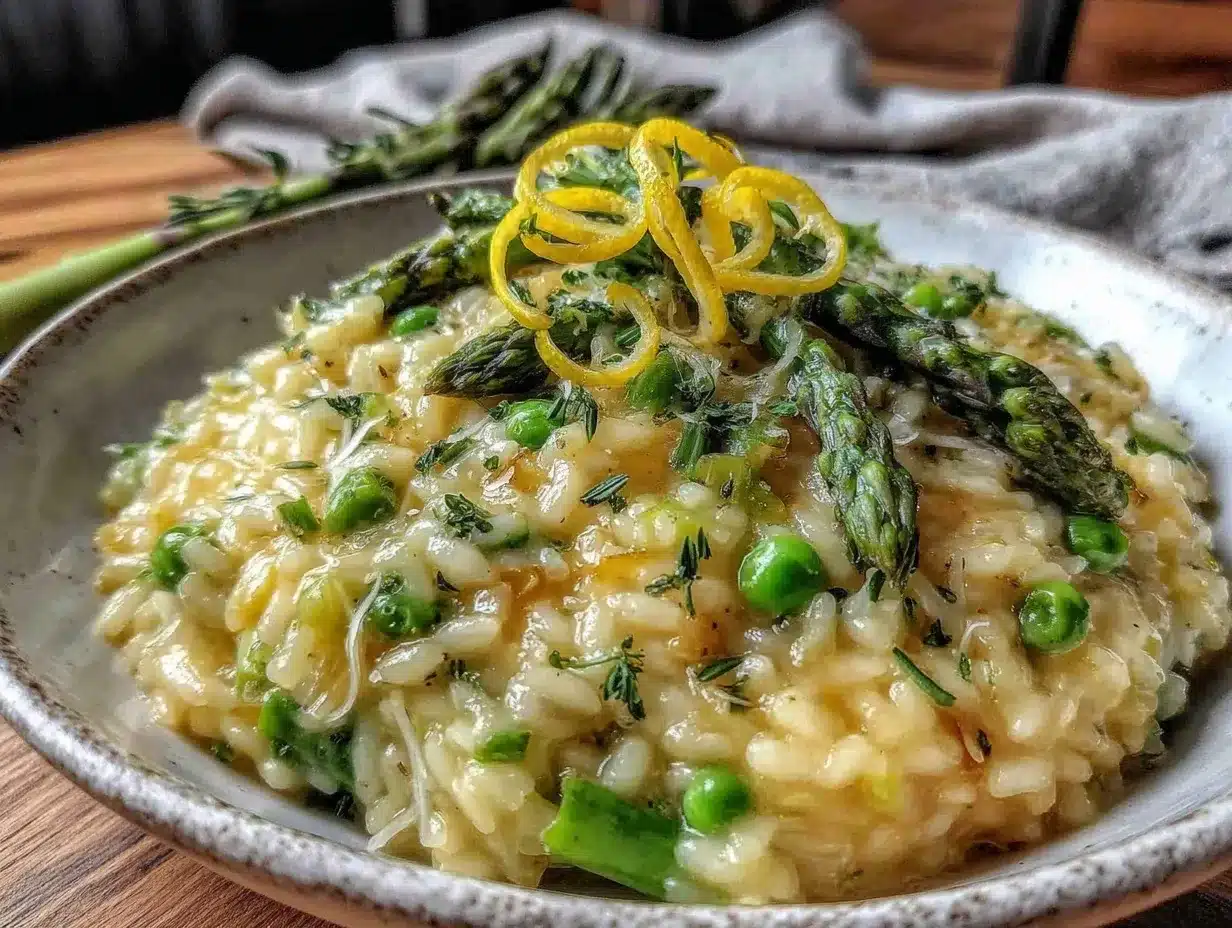
- Warm the broth: Pour the 5 cups (1.2 liters) of broth into a medium saucepan, set over low heat, and keep it at a gentle simmer throughout the cooking.
- Sauté shallots and garlic: Heat 1 tablespoon olive oil and 2 tablespoons (30 g) butter in your large skillet over medium heat. Add the finely chopped shallots and sauté until translucent, about 3 minutes. Toss in the minced garlic and cook for 30 seconds until fragrant, but don’t let it brown.
- Cook the asparagus: Add the chopped asparagus pieces and sauté for 3-4 minutes until just tender but still bright green. Remove half of the asparagus and set aside for garnish later.
- Toast the rice: Add the arborio rice to the skillet with the remaining asparagus and stir to coat the grains in butter and oil. Cook for 2 minutes, stirring often, until the rice is lightly toasted and opaque around the edges.
- Deglaze with white wine: Pour in the 1/2 cup (120 ml) of dry white wine and stir until mostly absorbed. This adds a lovely depth to the risotto base.
- Add broth gradually: Begin adding the warm broth, one ladle (about 1/2 cup or 120 ml) at a time, stirring frequently. Wait until the liquid is mostly absorbed before adding the next ladle. This step takes about 18-20 minutes. The rice should become creamy but still have a slight bite (“al dente”).
- Incorporate peas and lemon: When the rice is nearly done, stir in the fresh peas, lemon zest, and juice. Cook for another 2-3 minutes until peas are tender and bright.
- Finish with butter and cheese: Remove from heat and stir in the remaining 2 tablespoons (30 g) butter and the grated Parmesan cheese. Season with salt and pepper to taste. The risotto should be rich, glossy, and slightly loose—not dry or sticky.
- Serve immediately: Spoon onto plates and top with the reserved asparagus pieces for a fresh presentation. A little extra Parmesan on top never hurts.
Pro tip: Keep your broth simmering gently instead of boiling hard to avoid toughening the rice. And remember, risotto waits for no one—serve it as soon as it’s done to enjoy that perfect creamy texture.
Cooking Tips & Techniques for Perfect Risotto Every Time
Risotto might look intimidating, but once you get the hang of it, it’s incredibly rewarding. Here are some tips I’ve learned after a few too many under-seasoned or overcooked batches:
- Constant stirring isn’t necessary: You want to stir often enough to prevent the rice from sticking, but it’s more about patience than nonstop action. I usually stir every 30 seconds or so.
- Use warm broth: Adding cold broth slows down cooking and can shock the rice, making it less creamy. Keeping your stock warm helps maintain a steady cooking temperature.
- Don’t rush adding broth: Wait until the liquid is mostly absorbed before adding more. This gradual absorption allows the rice to release its starch, creating that signature creaminess.
- Season in layers: Add a little salt at the start with your sauté, then adjust at the end. Parmesan adds saltiness too, so taste as you go.
- Avoid overcooking peas and asparagus: They should stay vibrant and have a little bite. Overcooking mutes their fresh flavor and turns them mushy.
- Butter and cheese last: Stir them in off the heat to keep the risotto silky and prevent the cheese from clumping.
Once, I tried rushing the broth addition and ended up with rice that was gummy and sad. Lesson learned: risotto rewards a little patience and attention. If you want to multitask while making risotto, prep your ingredients ahead of time and keep your broth ready, so you’re not scrambling to add ladles in the middle of other tasks.
Variations & Adaptations for Your Creamy Lemon Butter Asparagus Risotto
This creamy lemon butter asparagus risotto with fresh peas is a fantastic base for creativity. Here are a few ways I’ve switched things up depending on mood and pantry:
- Protein boost: Add cooked shrimp, grilled chicken strips, or crispy pancetta for a heartier meal.
- Vegetarian twist: Swap chicken broth for vegetable broth and skip any meat additions to keep it fully vegetarian.
- Seasonal swap: In summer, I sometimes swap peas for fresh green beans or sugar snap peas for extra crunch.
- Gluten-free option: Though risotto is naturally gluten-free, always check your broth for any hidden gluten-containing ingredients.
- Dairy-free version: Use vegan butter and omit Parmesan or use a plant-based cheese alternative. Nutritional yeast adds a nice cheesy flavor.
One personal favorite is stirring in a handful of fresh herbs like basil or tarragon just before serving to brighten the flavors even more. I also like pairing this risotto with a crisp salad or light roasted chicken for a balanced meal.
Serving & Storage Suggestions
Creamy lemon butter asparagus risotto with fresh peas is best enjoyed right away while it’s warm, silky, and just the right texture. Serve it plated with a sprinkle of extra Parmesan and a few fresh lemon wedges on the side for those who want a little more zing.
For drinks, a chilled glass of white wine, like Pinot Grigio or Sauvignon Blanc, complements the lemony brightness beautifully.
If you have leftovers, store them in an airtight container in the refrigerator for up to 2 days. Risotto tends to thicken as it cools, so when reheating, add a splash of broth or water and gently warm it on the stove, stirring to loosen it back up. Avoid microwaving, which can dry it out unevenly.
Flavors tend to mellow overnight, so if anything, you might want to add a squeeze of fresh lemon juice before serving again to revive that fresh pop.
Nutritional Information & Benefits
This creamy lemon butter asparagus risotto with fresh peas offers a balanced mix of carbohydrates, healthy fats, and vitamins from fresh veggies. Arborio rice provides energy-sustaining carbs, while asparagus and peas bring fiber, vitamin C, and antioxidants.
Butter and Parmesan add richness and calcium but keep portions moderate if you’re watching saturated fat intake. Using fresh peas increases the protein content slightly and adds natural sweetness without extra sugars.
For those mindful of gluten, this dish is naturally gluten-free, making it suitable for many dietary needs. The lemon also lends a dose of vitamin C, which supports immune health.
I appreciate this recipe because it feels like comfort food without heavy guilt—a good balance of nourishing and indulgent that fits well into a realistic, health-conscious lifestyle.
Conclusion
Creamy lemon butter asparagus risotto with fresh peas is one of those recipes that quietly impresses without much fuss. It’s approachable for cooks of all levels, uses everyday ingredients with a springtime twist, and rewards patience with a luscious, vibrant dish that’s perfect for cozy dinners or special occasions alike.
Feel free to adjust the lemon intensity, swap in your favorite spring veggies, or add a protein to make it your own. For me, it’s become a reliable weeknight comfort and a reminder that simple moments in the kitchen can turn into lasting favorites.
Give it a try—you might find yourself making this risotto just as often as a classic Sunday pot roast or that beloved buttery apple crisp. And I’d love to hear how you customize it!
FAQs About Creamy Lemon Butter Asparagus Risotto with Fresh Peas
Can I make this risotto vegan?
Yes! Use vegan butter or olive oil, substitute the Parmesan with nutritional yeast or a plant-based cheese, and opt for vegetable broth to keep it fully vegan.
How do I know when the risotto is done?
The rice should be tender but still have a slight bite in the center (al dente). It will look creamy and slightly loose but not soupy or dry.
Can I use frozen asparagus instead of fresh?
Fresh asparagus is preferable for texture and flavor, but frozen can work if thawed and patted dry. Add it slightly later in the cooking to avoid mushiness.
What’s the best way to reheat leftover risotto?
Warm gently in a saucepan over low heat with a splash of broth or water, stirring often until creamy again. Avoid microwaving if possible to prevent dryness.
Can I prepare this risotto ahead of time for guests?
You can make it ahead but finish with butter, cheese, and lemon juice just before serving to keep that fresh, glossy texture and bright flavor.
Pin This Recipe!
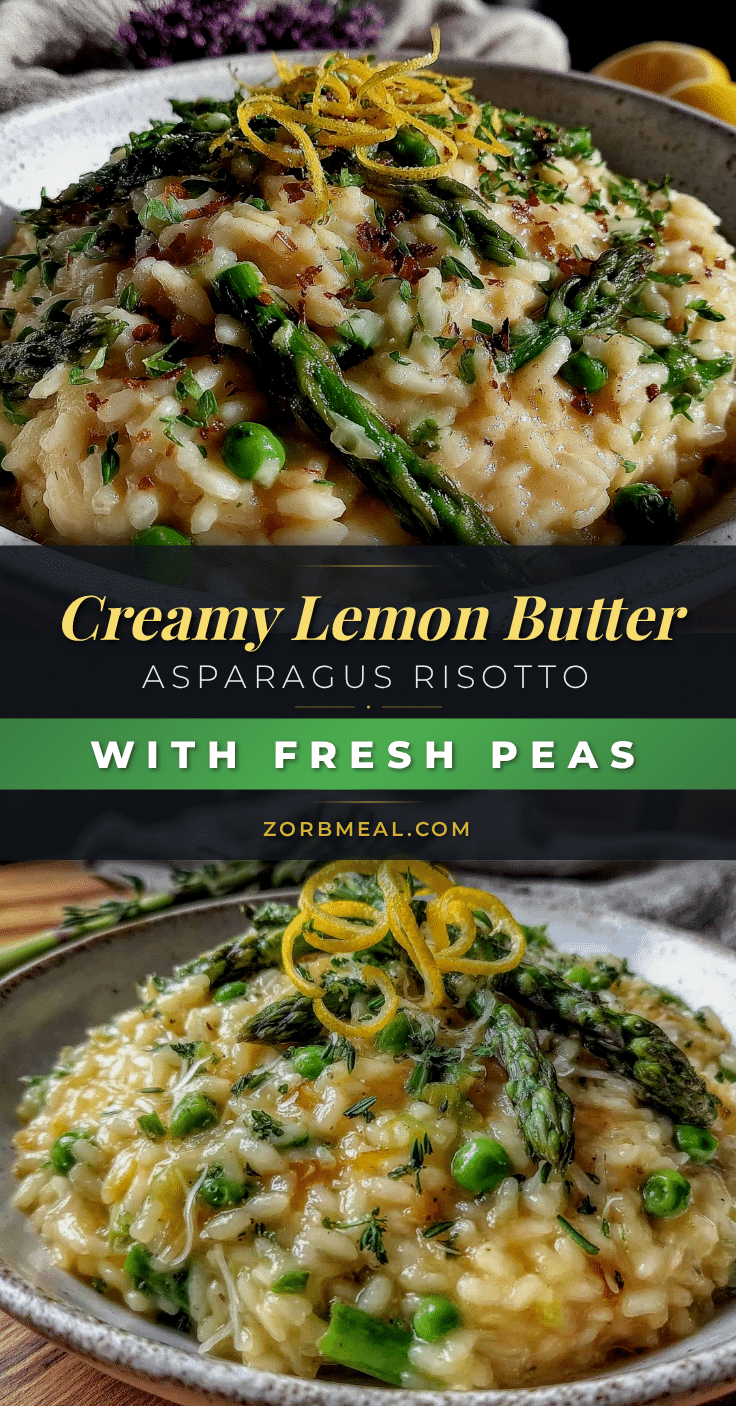
Creamy Lemon Butter Asparagus Risotto with Fresh Peas

A comforting and elegant risotto featuring creamy lemon butter, tender asparagus, and sweet fresh peas. Perfect for a quick, light spring dinner that balances richness with bright flavors.
- Prep Time: 10 minutes
- Cook Time: 25 minutes
- Total Time: 35 minutes
- Yield: 4 servings 1x
- Category: Main Course
- Cuisine: Italian
Ingredients
- 1 1/2 cups (300 g) arborio rice
- 1 bunch (about 12 oz / 340 g) fresh asparagus, trimmed and cut into 1-inch pieces
- 1 cup (150 g) fresh or frozen peas
- 4 tablespoons (60 g) unsalted butter
- 1 small shallot, finely chopped
- 2 cloves garlic, minced
- 5 cups (1.2 liters) vegetable or chicken broth, warmed
- 1/2 cup (120 ml) dry white wine (optional)
- Zest and 1 tablespoon juice from 1 lemon
- 1/2 cup (50 g) finely grated Parmesan cheese
- Salt and freshly ground black pepper, to taste
- 1 tablespoon olive oil
Instructions
- Warm the broth in a medium saucepan over low heat and keep at a gentle simmer.
- Heat olive oil and 2 tablespoons butter in a large skillet over medium heat. Add shallots and sauté until translucent, about 3 minutes. Add garlic and cook for 30 seconds without browning.
- Add asparagus pieces and sauté for 3-4 minutes until just tender and bright green. Remove half of the asparagus and set aside for garnish.
- Add arborio rice to the skillet with remaining asparagus and stir to coat in butter and oil. Cook for 2 minutes, stirring often, until rice is lightly toasted and opaque around edges.
- Pour in white wine and stir until mostly absorbed.
- Add warm broth gradually, one ladle (about 1/2 cup) at a time, stirring frequently. Wait until liquid is mostly absorbed before adding more. Continue for 18-20 minutes until rice is creamy but al dente.
- Stir in peas, lemon zest, and lemon juice. Cook for 2-3 minutes until peas are tender and bright.
- Remove from heat and stir in remaining 2 tablespoons butter and grated Parmesan cheese. Season with salt and pepper to taste.
- Serve immediately, topped with reserved asparagus pieces and extra Parmesan if desired.
Notes
Keep broth simmering gently to avoid toughening rice. Stir often but not constantly. Add broth gradually and wait for absorption to achieve creamy texture. Avoid overcooking peas and asparagus to maintain vibrant color and texture. Stir in butter and cheese off heat to keep risotto silky. For dairy-free, use vegan butter and plant-based cheese alternatives. Risotto is best served immediately but can be reheated gently with added broth.
Nutrition
- Serving Size: 1 cup risotto
- Calories: 370
- Sugar: 5
- Sodium: 480
- Fat: 15
- Saturated Fat: 9
- Carbohydrates: 45
- Fiber: 4
- Protein: 9
Keywords: risotto, lemon butter, asparagus, fresh peas, spring dinner, creamy risotto, easy risotto, vegetarian option