“You sure that’s how long it takes?” my neighbor asked as I peeked into my smoker just past midnight. Truth be told, I was second-guessing myself too. The brisket had been on the slow smoker for hours, and the air was thick with that unmistakable hickory aroma. It wasn’t a rushed affair—far from it. But that’s the beauty of this Tender Texas Style Brisket slow smoked to perfection: it’s a patient process that rewards you with melt-in-your-mouth goodness. I remember the first time I tried this recipe, thinking brisket was some mysterious, complicated beast. Turns out, with a bit of care and a reliable method, you get that signature crust and juicy interior every single time.
That night, the stars were out, the neighborhood quiet, and my smoker humming its steady tune. The smell was so inviting I almost forgot the long hours ahead. But it was worth it—friends and family kept coming back for seconds, and I realized this brisket wasn’t just a meal; it was an experience. The simple seasoning, the slow burn, the tender outcome—it all combined into something that felt like a Texas backyard gathering no matter where I was cooking. And honestly? Once you nail this brisket, your weekend cookouts won’t be the same again. The recipe stuck with me, not just because it tastes phenomenal, but because it turns smoking meat into a comforting ritual.
Why You’ll Love This Recipe
Over many weekends and a few trial runs, I’ve learned this recipe nails the classic Texas style brisket in a way that’s approachable yet authentic. The method respects tradition but skips the guesswork, making it perfect whether you’re a seasoned pitmaster or just starting out.
- Low and Slow Perfection: This brisket comes together with a patient smoking process that’s easy to follow and guarantees that tender, juicy texture.
- Simple Ingredient List: No complicated rubs or sauces here—just a straightforward blend of spices you probably have in your pantry.
- Great for Gatherings: Whether it’s a weekend family meal or a casual backyard hangout, this brisket always earns compliments.
- Authentic Texas Flavor: The slow smoke infuses the meat with that deep, smoky flavor Texans swear by, without needing fancy equipment or exotic woods.
- Hands-Off Cooking: Once the brisket is smoking, you’ve got plenty of time for other things—like prepping sides or enjoying a cold beverage.
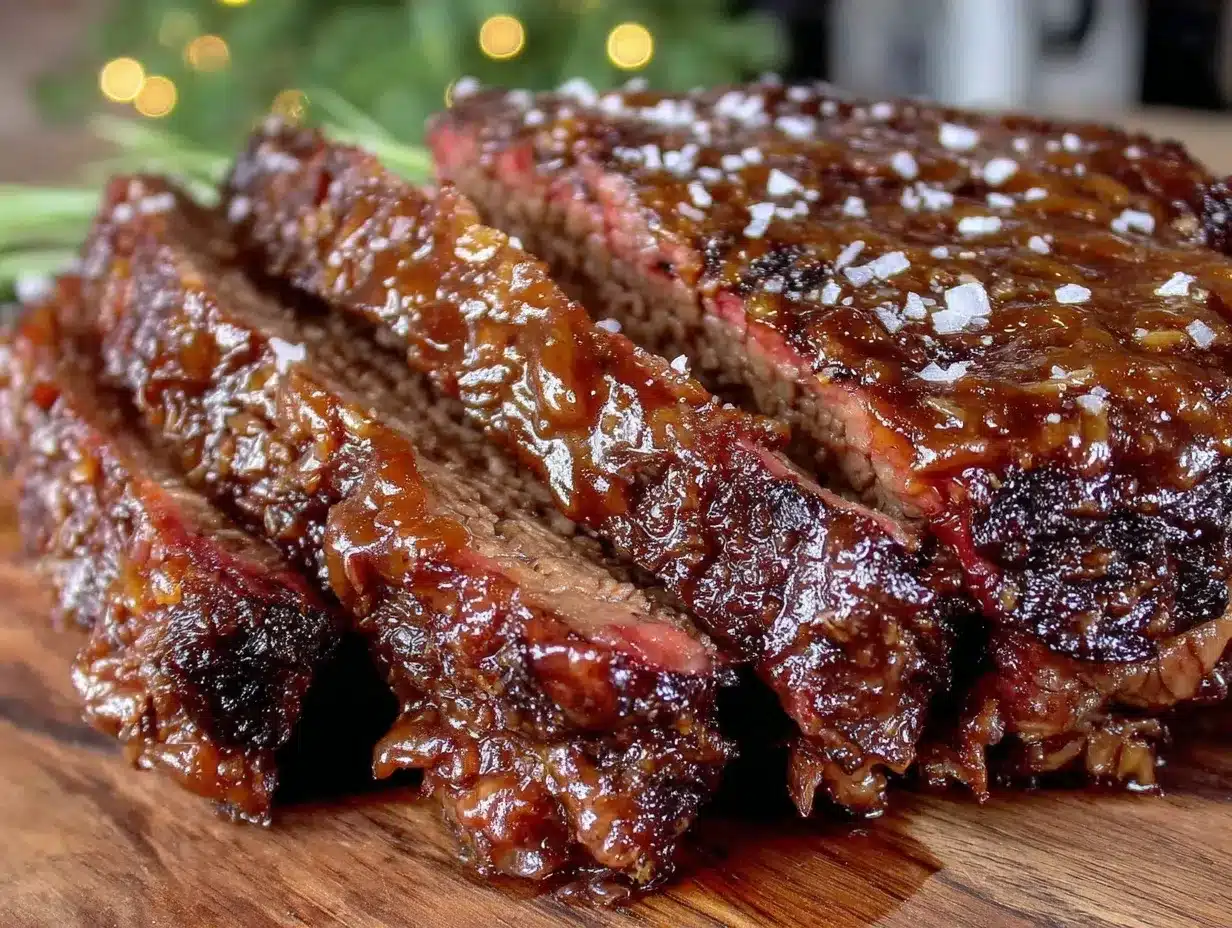
What sets this recipe apart? The balance of a simple salt-and-pepper rub with patience on the smoker creates a bark that’s not overpowering but perfectly textured. Plus, I’ve found that trimming the fat just right helps the meat soak up smoke while staying juicy inside—something I learned the hard way after a few too-fatty batches. This brisket recipe isn’t just about making food; it’s about creating a moment where the kitchen smells amazing and everyone can’t wait to dig in.
What Ingredients You Will Need
This recipe sticks to straightforward, honest ingredients that deliver bold flavor without fuss. Most of these are pantry staples, and you can swap a few if needed without losing that Texas touch.
- Beef Brisket: 5-6 pounds (2.3-2.7 kg), whole packer cut with fat cap intact but trimmed to about 1/4 inch thickness (helps with smoke penetration)
- Coarse Kosher Salt: 2 tablespoons (balances and enhances beef flavor)
- Coarse Black Pepper: 2 tablespoons (freshly cracked for best texture and bite)
- Garlic Powder: 1 tablespoon (adds subtle depth)
- Onion Powder: 1 tablespoon (rounds out the seasoning)
- Optional Paprika: 1 teaspoon (for a hint of smoky sweetness)
- Wood Chunks or Chips: Hickory or oak preferred (these woods deliver classic Texas smoke flavor)
- Mustard: 2 tablespoons, yellow or Dijon (acts as a binder for the rub and helps bark formation)
If you want to try a slight twist, substituting almond wood chips instead of hickory can give a milder smoke flavor. Also, if you’re looking for a gluten-free rub, double-check your spices to avoid additives. For the brisket, I recommend choosing a cut with even marbling; it really makes a difference in tenderness. And if fresh cracked pepper isn’t on hand, grinding your own is worth the extra step for that authentic bite.
Equipment Needed
- Offset Smoker or Pellet Smoker: Ideal for maintaining steady low heat and good smoke flow. If you don’t have one, a charcoal grill set up for indirect heat works too.
- Meat Thermometer: A must-have for tracking internal temperature—either a digital instant-read or a probe thermometer.
- Sharp Knife: For trimming the brisket before smoking and slicing after.
- Cutting Board: Preferably wooden or plastic with grooves to catch juices.
- Spray Bottle with Apple Cider Vinegar or Water: Helps keep the brisket moist during the long smoke.
- Aluminum Foil or Butcher Paper: For wrapping the brisket during the “Texas crutch” phase to speed up cooking and retain moisture.
- Heat-Resistant Gloves: Useful for handling hot equipment safely.
Personally, I started with a basic charcoal grill and made it work with some tweaks, so don’t let lack of fancy equipment discourage you. Also, keeping your smoker clean and well-maintained makes a world of difference—that’s a tip I learned after a few stubborn smoke starts. For budget-friendly options, consider a small pellet smoker like the Traeger Ranger, which offers consistent temps without breaking the bank.
Preparation Method
- Trim the Brisket: Remove excess silver skin and trim the fat cap to about 1/4 inch thickness. This balance lets smoke penetrate while keeping the meat moist. (15 minutes)
- Apply Mustard Coat: Rub the entire brisket with mustard—this isn’t for flavor so much as to help the dry rub stick evenly. (5 minutes)
- Mix the Dry Rub: Combine kosher salt, cracked black pepper, garlic powder, onion powder, and paprika in a bowl. (2 minutes)
- Season the Brisket: Generously apply the dry rub all over the meat, pressing it in gently. Don’t be shy—this forms the flavorful bark later. (10 minutes)
- Preheat Smoker: Set your smoker to 225°F (107°C), adding hickory or oak wood chunks for steady smoke. (30 minutes to stabilize temperature)
- Place Brisket on Smoker: Fat side up, close the lid, and let it smoke undisturbed for about 4 hours. Resist the urge to open the smoker too often! (4 hours)
- Spritz Every Hour: Lightly spray the brisket with apple cider vinegar or water to keep the surface moist and help the bark develop. (1-2 minutes per spritz)
- Wrap the Brisket: At an internal temperature of around 160°F (71°C), wrap the brisket tightly in butcher paper or foil. This “Texas crutch” helps push through the stall period. (5 minutes)
- Continue Smoking: Return the wrapped brisket to the smoker until it reaches an internal temp of 203°F (95°C). This can take another 3-5 hours depending on size. (3-5 hours)
- Rest the Brisket: Remove from smoker, keep wrapped, and let rest for 1 hour. This step lets juices redistribute for ultimate tenderness. (60 minutes)
- Slice and Serve: Cut against the grain in 1/4 inch thick slices. Serve with your favorite sides and sauces. (10 minutes)
Pro tip: Don’t rush the resting phase—it’s tempting, but that hour of patience makes a huge difference. Also, using a probe thermometer that stays in the meat lets you monitor temps without lifting the lid too often, which disrupts smoke flow. When slicing, look closely at the grain direction; cutting against it keeps the meat tender, not stringy.
Cooking Tips & Techniques
Smoking a brisket low and slow is part art, part science, and a little bit of luck. Over time, I’ve picked up a few nuggets that really help:
- Don’t Skip the Rest: I’ve seen brisket sliced too soon turn out dry and tough. Resting is where the magic happens—juices settle, and meat fibers relax.
- Watch the Stall: At around 150-160°F, the meat’s temperature plateaus for a bit. Wrapping at this point speeds things along and keeps moisture locked in.
- Maintain Consistent Temp: Fluctuating heat means uneven cooking. Use a good thermometer and add wood chunks sparingly to avoid flare-ups.
- Don’t Overdo the Rub: A thick crust is great, but too much salt or pepper can overwhelm. I stick with a balanced ratio and adjust to taste over time.
- Spritzing Helps But Don’t Overdo It: Too much moisture can kill your bark, so a light mist every hour or so is enough.
One time, I got impatient and bumped the temp up prematurely—the bark crisped too fast and the inside was still tough. Learned my lesson quickly! For multitasking, I like to prep sides like a smoky baked bean or a fresh salad while the brisket smokes away. If you want a great side to go with this, check out the creamy chicken and dumpling soup recipe I often serve alongside.
Variations & Adaptations
This brisket recipe is pretty traditional, but there’s room to make it your own:
- Spicy Kick: Add cayenne pepper or smoked paprika to the rub for a bold, spicy bark.
- Different Woods: Try pecan or mesquite wood chips for unique smoke flavors—pecan is milder, mesquite packs more punch.
- Oven Method: If you don’t have a smoker, you can slow cook the brisket wrapped tightly in foil at 225°F (107°C) for 6-8 hours, then finish with a quick broil for bark.
- Gluten-Free: All ingredients here are naturally gluten-free, but double-check seasoning blends to be safe.
- Personal Twist: I once swapped out the mustard binder for a thin layer of olive oil mixed with crushed fresh garlic, and it added an aromatic depth that surprised me.
For a lighter side, pairing this with the fresh avocado egg salad lettuce wraps balances the smoky richness beautifully. Also, swapping out the rub spices can let you experiment with global flavors, like adding cumin and coriander for a Tex-Mex vibe.
Serving & Storage Suggestions
This brisket shines best served warm, sliced thin against the grain, and paired with simple sides that let it take center stage. Classic accompaniments include pickles, sliced onions, and a tangy BBQ sauce (though the brisket stands proud on its own).
For storage, wrap leftovers tightly in foil or butcher paper, then place in an airtight container in the fridge for up to 4 days. To freeze, slice and portion first, then wrap well to avoid freezer burn—good for up to 3 months.
When reheating, do so gently in the oven at 250°F (120°C) wrapped in foil with a splash of beef broth or water to keep it moist. Quick microwaving can dry it out, so I avoid that if possible.
Flavors deepen after a day in the fridge, so if you can wait, the brisket often tastes even better the next day. For a fun twist, the next morning’s brisket goes great chopped up in tacos or with scrambled eggs—something I often do after a big cookout.
Nutritional Information & Benefits
A typical serving (about 4 oz or 113g) of this smoked brisket provides roughly 300-350 calories, with 25-30 grams of protein and moderate fat content, depending on the cut and trimming. It’s a great source of iron, zinc, and B vitamins, supporting energy and muscle repair.
Since this recipe uses simple seasonings and no added sugars, it fits well into low-carb and gluten-free diets. Just watch portion sizes if you’re mindful of saturated fat intake.
From a personal wellness angle, I appreciate that this brisket recipe balances indulgence with nutrition—comfort food that doesn’t feel like a cheat. Pairing it with lighter sides (like the fresh chia seed pudding parfait for dessert) rounds out the meal without tipping the scales.
Conclusion
This Tender Texas Style Brisket slow smoked to perfection recipe is a keeper for anyone wanting that authentic smoky flavor without endless guesswork. It invites you to slow down, nurture the process, and enjoy the simple joy of well-cooked meat. I love how it brings people together and how each bite tells a story of patience and care.
Feel free to tweak the rub or smoking wood to match your taste, but don’t skip the resting step—trust me, it’s the secret to tender slices that’ll keep folks coming back. I’d love to hear how your brisket turns out or any personal twists you try, so drop a comment or share your experience. Here’s to many smoky, cozy meals ahead!
Frequently Asked Questions
How long does it take to smoke a Texas style brisket?
Usually between 8 to 12 hours at 225°F (107°C), depending on the size and thickness of your brisket.
Should I wrap the brisket during smoking?
Yes, wrapping at around 160°F (71°C) helps push through the stall and keeps the meat moist. Use butcher paper for a better bark or foil for more moisture retention.
What wood is best for smoking Texas style brisket?
Hickory and oak are classic choices for that traditional Texas smoke flavor, but pecan and mesquite also work well depending on your preference.
How do I know when the brisket is done?
It’s done when it reaches an internal temperature of about 203°F (95°C) and feels tender with a slight give when poked.
Can I smoke brisket on a charcoal grill?
Absolutely! Set up your grill for indirect heat, add wood chunks for smoke, and maintain a steady low temperature around 225°F (107°C).
Pin This Recipe!
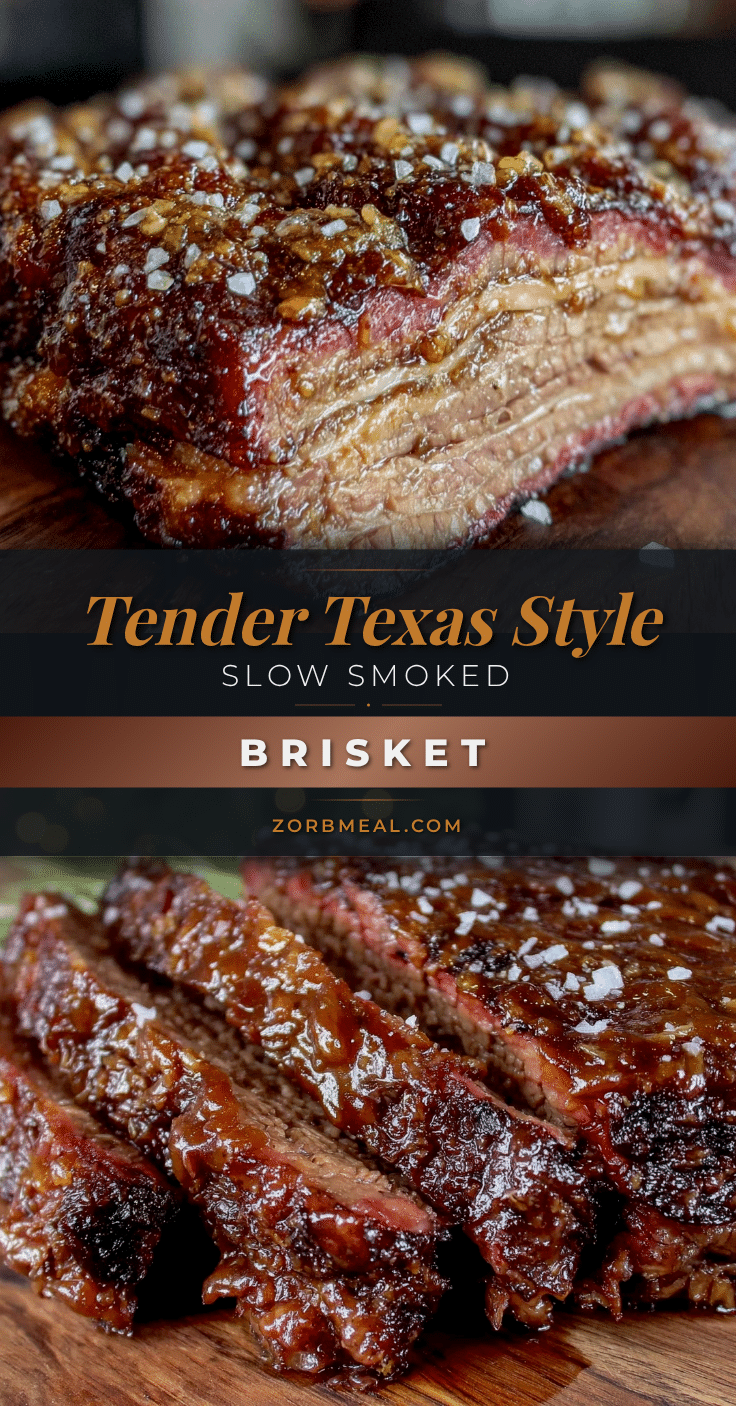
Tender Texas Style Brisket Recipe Easy Slow Smoked to Perfection
This authentic Texas style brisket is slow smoked low and slow to achieve a tender, juicy texture with a flavorful bark. Simple seasoning and patient smoking make it perfect for gatherings and backyard cookouts.
- Prep Time: 32 minutes
- Cook Time: 8 to 10 hours
- Total Time: 8 hours 32 minutes to 10 hours 32 minutes
- Yield: 8 to 10 servings 1x
- Category: Main Course
- Cuisine: Texan, American
Ingredients
- 5–6 pounds whole packer beef brisket with fat cap trimmed to about 1/4 inch thickness
- 2 tablespoons coarse kosher salt
- 2 tablespoons coarse black pepper, freshly cracked
- 1 tablespoon garlic powder
- 1 tablespoon onion powder
- 1 teaspoon paprika (optional)
- Hickory or oak wood chunks or chips for smoking
- 2 tablespoons mustard (yellow or Dijon) as a binder
Instructions
- Trim the brisket by removing excess silver skin and trimming the fat cap to about 1/4 inch thickness. (15 minutes)
- Rub the entire brisket with mustard to help the dry rub stick evenly. (5 minutes)
- Mix kosher salt, cracked black pepper, garlic powder, onion powder, and paprika in a bowl. (2 minutes)
- Generously apply the dry rub all over the brisket, pressing it in gently to form the bark. (10 minutes)
- Preheat smoker to 225°F (107°C) and add hickory or oak wood chunks for steady smoke. (30 minutes to stabilize temperature)
- Place brisket fat side up on the smoker, close the lid, and smoke undisturbed for about 4 hours. (4 hours)
- Spritz the brisket lightly every hour with apple cider vinegar or water to keep it moist and help bark development. (1-2 minutes per spritz)
- At an internal temperature of around 160°F (71°C), wrap the brisket tightly in butcher paper or foil (Texas crutch). (5 minutes)
- Return wrapped brisket to smoker and continue smoking until internal temperature reaches 203°F (95°C). (3-5 hours)
- Remove brisket from smoker, keep wrapped, and let rest for 1 hour to redistribute juices. (60 minutes)
- Slice brisket against the grain in 1/4 inch thick slices and serve with favorite sides and sauces. (10 minutes)
Notes
Do not rush the resting phase; resting for 1 hour after smoking allows juices to redistribute for ultimate tenderness. Use a probe thermometer to monitor internal temperature without opening the smoker frequently. Trim fat cap to about 1/4 inch for optimal smoke penetration and moisture retention. Spritz lightly every hour but avoid over-moistening the bark. Wrapping at 160°F helps push through the stall and keeps meat moist. Slice against the grain in 1/4 inch thick slices for best texture.
Nutrition
- Serving Size: Approximately 4 oz (
- Calories: 325
- Sodium: 700
- Fat: 20
- Saturated Fat: 8
- Carbohydrates: 1
- Protein: 28
Keywords: Texas brisket, smoked brisket, slow smoked brisket, Texas style brisket, BBQ brisket, smoked beef, backyard BBQ, low and slow smoking