The neighborhood holiday potluck was in three hours and I’d completely forgotten. Everyone else would be bringing those elaborate, multi-day projects—you know, the kind where they post the mise en place on Instagram two days before. I had a bottle of the cheapest red wine I could find at the back of my pantry, a wrinkly orange, and a vague memory of a recipe I’d seen once. Honestly, I almost just grabbed a bag of chips on the way out the door. But something made me dig through my spice cabinet. There was a half-empty jar of honey, some cinnamon sticks from who-knows-when, and a few whole cloves I’d bought for a single recipe two Christmases ago. I figured, what’s the worst that could happen? I dumped everything into a pot, let it simmer while I changed out of my sweatpants, and poured it into a thermos.
I walked into that party like a contestant on a cooking show who’d been given a mystery basket and twenty minutes. The table was groaning under the weight of homemade pies, artisanal cheese boards, and a gingerbread house that looked structurally superior to my actual apartment. I set my thermos down next to a crystal punch bowl filled with something that probably cost more than my weekly grocery budget. And then the weirdest thing happened. People started drifting away from the fancy punch bowl and toward my thermos. By the end of the night, I had three people ask for the recipe and one person offering to trade me their gingerbread house for the rest of the mulled wine. I mean, let’s be honest, I didn’t win anything official, but in my book, that was a win. This recipe has been my go-to ever since—partly because it’s genuinely delicious, and partly because it reminds me that you don’t need a lot of time or money to make something that brings people together. Maybe you’ve been there, staring at your pantry and wondering how to pull off a miracle. This one’s for you.
Why You’ll Love This Recipe
Let me tell you why this budget-friendly mulled wine has become my secret weapon for every holiday gathering, cozy night in, and last-minute hosting situation. I’ve tested this recipe more times than I can count, tweaking the spice ratios and simmering times until it was just right. It’s the kind of recipe that makes you look like you spent hours in the kitchen when you really just threw things in a pot.
- Incredibly Affordable: This recipe uses the most budget-friendly bottle of red wine you can find—and I mean the cheap stuff. The spices and fruit transform it into something that tastes like it came from a fancy ski lodge.
- Pantry-Friendly Ingredients: You probably already have most of these spices in your cabinet. No special trips to a gourmet store required.
- Comes Together in Minutes: From start to finish, this takes about 20 minutes of active time. The stove does the rest of the work while you relax.
- Makes Your House Smell Amazing: Seriously, this is the best natural air freshener you’ll ever make. Your whole home will smell like a holiday market.
- Crowd-Pleasing Warmth: It’s non-alcoholic after simmering (the alcohol cooks off), so even designated drivers and kids can enjoy a warm cup of spiced goodness.
- Perfect for Leftovers: This mulled wine actually tastes better the next day. The flavors have more time to meld together beautifully.
What makes this recipe different from all the others? It’s the technique of simmering the wine gently rather than boiling it. Most people crank up the heat and end up with a bitter, harsh drink. I learned the hard way—my first attempt tasted like cough syrup. By keeping the heat low and letting the spices steep slowly, you get a smooth, aromatic mulled wine that’s perfectly balanced. It’s comfort in a mug, made with ingredients that won’t break the bank.
What Ingredients You Will Need
This recipe uses simple, wallet-friendly ingredients that work together to create something truly special. The key is letting the spices and fruit do their magic on an inexpensive bottle of wine.
For the Mulled Wine Base
- 1 bottle (750 ml) dry red wine (look for something like a Merlot, Cabernet Sauvignon, or Zinfandel—the cheaper the better, honestly. I personally reach for a bottle under $8 and it works perfectly)
- 1 large orange, sliced into rounds (use a navel or Valencia orange for sweetness; if the orange is small, use one and a half)
- 3 cinnamon sticks (the kind you find in the baking aisle are perfect; avoid cinnamon powder as it will make the wine cloudy)
- 4 whole cloves (these are potent, so don’t go overboard—a little goes a long way)
- 2 star anise pods (optional but highly recommended for that authentic mulled wine flavor; you can find these in the spice aisle or at an Asian grocery for very cheap)
- 3 tablespoons honey or maple syrup (adjust to taste; start with less and add more if needed. I prefer honey for its floral notes, but maple syrup works beautifully too)
- 1/4 cup water (this helps dissolve the honey and prevents the wine from scorching at the beginning)
Optional Garnishes

- Fresh cranberries (a handful for visual appeal, they float beautifully in the mug)
- Extra orange slices (for floating in the serving pitcher or individual mugs)
- Fresh rosemary sprigs (adds a lovely piney aroma that complements the spices)
When it comes to choosing your wine, here’s my hard-earned advice: don’t spend more than $10. I know it sounds counterintuitive, but the spices and fruit are going to completely transform the flavor profile. A cheap wine actually works better here because it has less complexity to compete with the spices. I’ve tried this with a $15 bottle and honestly, I couldn’t tell the difference. My go-to is a boxed red wine—yes, really—because it’s economical and works perfectly. Just make sure it’s dry, not sweet. A sweet wine will end up cloying once you add the honey.
For the orange, always use the whole fruit including the peel. The oils in the orange zest are where all the aromatic magic happens. Don’t bother peeling it—just wash it well and slice it into rounds. The pith (that white part) adds a pleasant bitterness that balances the sweetness beautifully.
Equipment Needed
You don’t need any fancy equipment for this recipe, which is part of its charm. Here’s what you’ll need:
- Large pot or Dutch oven (a 4-quart pot works perfectly; enameled cast iron is ideal for even heating, but any heavy-bottomed pot will do)
- Wooden spoon (for stirring; metal spoons can scratch your pot)
- Measuring cups and spoons (or just eyeball it—this recipe is forgiving)
- Fine-mesh strainer (for straining out the spices before serving; a slotted spoon works in a pinch)
- Mugs or heatproof glasses (ceramic mugs are best for retaining heat)
- Ladle (for serving, though you can pour carefully from the pot)
If you don’t have a fine-mesh strainer, don’t worry. You can use a slotted spoon to fish out the big pieces, or just serve the mulled wine straight from the pot and warn people about the cloves. I’ve done both and nobody complained. Actually, my first time making this I forgot to strain it entirely and just told everyone to watch out for “surprise spices.” It became a running joke.
Preparation Method
This is where the magic happens. Follow these steps and you’ll have a pot of liquid gold ready in no time.
- Prep your ingredients (5 minutes). Wash the orange thoroughly and slice it into 1/4-inch rounds. Measure out your honey or maple syrup. Gather your cinnamon sticks, cloves, and star anise. Having everything ready before you start makes the process smooth and stress-free.
- Start the syrup base (3 minutes). In your large pot, combine the water and honey (or maple syrup). Heat over medium heat, stirring gently with your wooden spoon, until the honey dissolves completely. This takes about 2-3 minutes. You’ll see the mixture start to bubble slightly—that’s your cue. Don’t walk away at this stage, because honey can burn quickly if left unattended.
- Add the spices (1 minute). Drop in the cinnamon sticks, cloves, and star anise. Stir them around in the honey water for about 30 seconds. This “blooming” step wakes up the spices and releases their essential oils. Your kitchen will start smelling incredible at this point—seriously, it’s like a holiday candle come to life.
- Add the orange slices (1 minute). Lay the orange slices in the pot, nestling them among the spices. Let them heat for about a minute. This helps the orange oils start releasing into the liquid.
- Pour in the wine (30 seconds). Slowly pour the entire bottle of wine into the pot. Stir gently to combine everything. Don’t worry if the orange slices float to the top—that’s normal.
- Heat gently, never boil (15-20 minutes). Turn the heat to low. This is the most important step: do not let the wine boil. Boiling will burn off the alcohol (if you want to keep it) and, more importantly, it will make the wine taste bitter and harsh. You want the wine to get hot enough that tiny bubbles form around the edges of the pot, but the surface should remain still. Think of it like a very gentle simmer. If you see steam rising and small bubbles breaking the surface, you’re at the right temperature.
- Taste and adjust (2 minutes). After 15 minutes, taste the mulled wine. Is it sweet enough? Add more honey a teaspoon at a time. Is it not spicy enough? Let it simmer another 5 minutes. Does it taste too strong? Add a splash of water or orange juice. This is your recipe now, so adjust it to your liking.
- Strain and serve (2 minutes). Place your fine-mesh strainer over a large heatproof pitcher or directly over mugs. Carefully pour the mulled wine through the strainer to catch the spices and orange slices. Discard the solids. Ladle the warm mulled wine into mugs and garnish with a fresh orange slice or a few cranberries if you’re feeling fancy.
Troubleshooting tip: If your mulled wine tastes a bit sharp or acidic, you’ve likely simmered it too long or at too high a heat. Fix it by stirring in an extra tablespoon of honey and letting it rest off the heat for 5 minutes. The sweetness will balance out the acidity.
Sensory cue: Your mulled wine is ready when the aroma fills your kitchen with notes of cinnamon, clove, and orange. The color should be a deep, rich ruby red, and the liquid should be steaming but not bubbling. When you take a sip, the warmth should spread from your chest outward, and the flavors should be smooth and rounded, with no sharp edges.
Cooking Tips & Techniques
After making this recipe more times than I can count (and messing it up plenty along the way), I’ve gathered some tips that will save you from my early mistakes.
The biggest mistake people make is boiling the wine. I did this my first two times and ended up with a drink that tasted like burnt jam and regret. The alcohol cooks off, sure, but more importantly, the high heat breaks down the wine’s structure and creates bitter compounds. Keep it low and slow—think of it as a warm bath for your wine, not a hot tub.
Spice management is key. Whole cloves are potent little things. I once accidentally left a pot simmering with too many cloves and the result tasted like I was drinking liquid potpourri. Stick to 4 cloves max, and if you’re unsure, start with 3. You can always add more, but you can’t take them out once they’ve infused.
Timing strategy for parties: Make the mulled wine up to 2 hours before your guests arrive. Keep it on the stove on the lowest possible heat, covered. The flavors will continue to meld and deepen. If it gets too warm, just turn the heat off and let it sit—it will stay hot for a good hour in a covered pot. When guests arrive, give it a quick reheat on low for 5 minutes.
Multitasking tip: While the mulled wine is gently simmering, use that time to set out mugs, prepare garnishes, and get your serving station ready. The 15-20 minutes of simmer time is perfect for tidying up or changing into something festive.
Consistency trick: If you’re making this for a crowd and want to scale up, keep the same ratio of spices to wine. For a double batch, use 2 bottles of wine, 2 oranges, 6 cinnamon sticks, 8 cloves, and 4 star anise. The honey stays at about 3 tablespoons per bottle. I’ve made a triple batch for a holiday party and it was gone within an hour.
Variations & Adaptations
One of the best things about this recipe is how flexible it is. Here are some variations I’ve tried and loved.
Non-Alcoholic Version: Substitute the wine with a good quality alcohol-free red wine or even a strong spiced cranberry juice. The process stays exactly the same. I made this for a friend who was pregnant and she said it was the best thing she’d tasted all winter. Just reduce the honey slightly since cranberry juice is already sweet.
Apple Cider Mulled Wine: Replace half the wine with apple cider for a sweeter, more approachable version. This is perfect for picky drinkers or for serving at a family gathering where not everyone loves wine. The apple cider adds a natural sweetness and a lovely autumn flavor that pairs beautifully with the cinnamon.
Spicy Ginger Twist: Add 3-4 slices of fresh ginger along with the orange. The ginger adds a warming kick that’s especially nice on a cold evening. I discovered this variation by accident when I ran out of star anise and grabbed ginger instead. Now it’s my preferred version for really chilly nights.
Slow Cooker Method: Dump everything into a slow cooker and cook on low for 2-3 hours. This is perfect for parties because the slow cooker keeps it warm for hours without any risk of boiling. Just be careful not to leave it too long—after 4 hours, the spices can become overpowering.
Dietary Adaptations: This recipe is naturally gluten-free and dairy-free. For a vegan version, use maple syrup instead of honey. For a lower-sugar version, reduce the honey to 1 tablespoon or use a sugar-free sweetener like monk fruit. The wine itself contains natural sugars, so it will still taste sweet enough.
Serving & Storage Suggestions
This mulled wine is best served warm, straight from the pot. I like to ladle it into thick ceramic mugs that hold the heat well. For a festive touch, float a fresh orange slice and a few cranberries in each mug. If you’re feeling extra fancy, add a cinnamon stick as a stirrer—it looks beautiful and adds a hint more flavor as people drink.
What to serve alongside: This mulled wine pairs beautifully with cheese boards, roasted nuts, gingerbread cookies, or a simple apple tart. It’s also lovely alongside a cozy dinner of roasted chicken or a hearty stew. For a non-alcoholic pairing, serve it with sparkling water or a light herbal tea.
Storage instructions: Leftover mulled wine keeps beautifully in the refrigerator for up to 5 days. Store it in a sealed container or jar. The flavors will continue to develop and often taste even better the next day. Just be aware that the spices will continue to infuse, so if you find it too strong, you can dilute it with a splash of fresh wine or water when reheating.
Reheating tips: Pour the desired amount into a small pot and warm over low heat, stirring occasionally. Do not boil. Alternatively, microwave individual servings in 30-second bursts until warm. If the mulled wine has been in the fridge for a few days, you might want to add a fresh orange slice to brighten the flavor.
Freezer instructions: Yes, you can freeze mulled wine! Pour it into a freezer-safe container, leaving an inch of headspace for expansion. It will keep for up to 3 months. Thaw in the refrigerator overnight and reheat gently. I’ve done this with batches I made in December and pulled out in February—still delicious.
Nutritional Information & Benefits
While mulled wine is definitely a treat, it does offer some surprising benefits. Here’s a rough estimate per 6-ounce serving (about one mug):
- Calories: Approximately 150-180 (depending on the wine and sweetener used)
- Carbohydrates: 15-20g (mostly from the natural sugars in the wine and honey)
- Sugar: 12-15g (naturally occurring from the wine and added sweetener)
- Alcohol: Minimal after simmering (most alcohol cooks off during the heating process)
Health benefits: Red wine contains antioxidants like resveratrol, which is good for heart health. The cinnamon in this recipe has anti-inflammatory properties and can help regulate blood sugar. Cloves are packed with antioxidants and have antibacterial properties. The orange provides a dose of vitamin C. Of course, these benefits are modest in the amounts we’re using here, but it’s nice to know your cozy drink is doing a little something good for you.
Dietary considerations: This recipe is naturally gluten-free and dairy-free. For a vegan version, use maple syrup instead of honey. If you’re watching your sugar intake, reduce the honey to 1 tablespoon or use a sugar-free sweetener. The wine itself contains natural sugars, so it will still have some sweetness.
Allergen note: This recipe is free from the top 8 allergens (milk, eggs, fish, shellfish, tree nuts, peanuts, wheat, and soy). However, always check your wine label as some wines are processed using fining agents that may contain allergens.
Conclusion
This budget-friendly mulled wine has become a staple in my home for good reason. It’s proof that you don’t need expensive ingredients or hours in the kitchen to create something that feels special. The combination of warm spices, bright citrus, and inexpensive wine creates a drink that’s greater than the sum of its parts. It’s the kind of recipe that makes you feel like you’ve pulled off something magical, even when you started with a wrinkled orange and a bottle of cheap red wine.
I encourage you to make this recipe your own. Adjust the spices to your taste, experiment with different wines, and don’t be afraid to get creative with garnishes. The beauty of mulled wine is that it’s incredibly forgiving and adaptable. Whether you’re hosting a holiday party, curling up on the couch with a good book, or just trying to warm up on a cold night, this recipe has your back.
I’d love to hear how yours turns out! Drop a comment below and let me know what variations you tried, or share a photo of your mug of mulled wine. And if you’re looking for more cozy winter recipes, be sure to check out my slow cooker apple cider and soft gingerbread cookies—they’re the perfect companions to this warm drink. Happy sipping, friends!
Frequently Asked Questions
Can I use white wine instead of red for mulled wine?
Absolutely! White mulled wine is a thing, and it’s delicious. Use a dry white wine like Sauvignon Blanc or Pinot Grigio. The flavor profile will be lighter and more floral. You might want to add a bit more honey since white wine is more acidic than red. I’d also suggest adding a few slices of lemon along with the orange for brightness.
How long does mulled wine last in the fridge?
Properly stored in a sealed container, mulled wine will last 4-5 days in the refrigerator. The flavors will continue to develop and often taste even better on day two. Just be aware that the spices will become more pronounced over time. If it gets too strong, dilute it with a splash of fresh wine or water when reheating.
Can I make mulled wine in a slow cooker?
Yes! This is actually my preferred method for parties. Combine all ingredients in a slow cooker and cook on low for 2-3 hours. The slow cooker keeps it at the perfect temperature without any risk of boiling. You can leave it on warm for hours, making it ideal for holiday gatherings. Just don’t leave it longer than 4 hours or the spices can become overpowering.
Is mulled wine still alcoholic after cooking?
Most of the alcohol cooks off during the simmering process. After 15-20 minutes of gentle heating, about 80-90% of the alcohol evaporates. What remains is a very low-alcohol beverage—roughly equivalent to a non-alcoholic beer. If you want to keep the alcohol content higher, reduce the simmering time to 10 minutes and keep the heat very low.
Can I use ground spices instead of whole spices?
I wouldn’t recommend it. Ground spices will make your mulled wine cloudy and gritty, and they’re much harder to strain out. Whole spices infuse the wine gently and can be easily removed before serving. If you only have ground spices on hand, try tying them in a cheesecloth bag or a reusable tea infuser so you can remove them easily. Use about half the amount called for in the recipe, as ground spices are more potent.
Pin This Recipe!
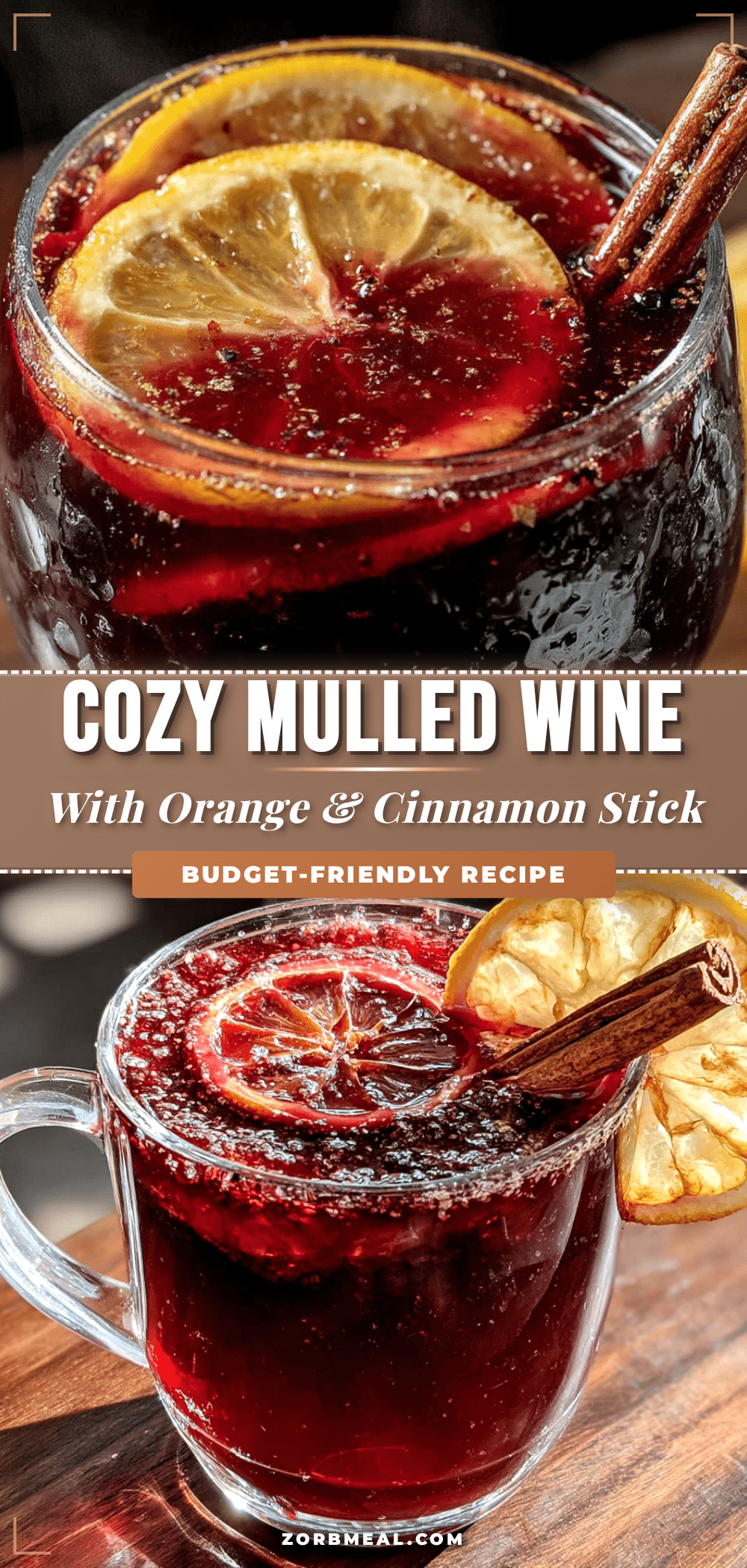
Budget-Friendly Cozy Mulled Wine with Orange and Cinnamon

A warm, aromatic mulled wine made with budget-friendly red wine, orange, and cinnamon. Perfect for holiday gatherings, cozy nights in, and last-minute hosting.
- Prep Time: 5 minutes
- Cook Time: 20 minutes
- Total Time: 25 minutes
- Yield: 4 servings 1x
- Category: Beverage
- Cuisine: European
Ingredients
- 1 bottle (750 ml) dry red wine (Merlot, Cabernet Sauvignon, or Zinfandel)
- 1 large orange, sliced into rounds
- 3 cinnamon sticks
- 4 whole cloves
- 2 star anise pods (optional)
- 3 tablespoons honey or maple syrup
- 1/4 cup water
- Fresh cranberries (optional, for garnish)
- Extra orange slices (optional, for garnish)
- Fresh rosemary sprigs (optional, for garnish)
Instructions
- Prep your ingredients: Wash the orange thoroughly and slice it into 1/4-inch rounds. Measure out honey or maple syrup. Gather cinnamon sticks, cloves, and star anise.
- Start the syrup base: In a large pot, combine water and honey (or maple syrup). Heat over medium heat, stirring gently, until honey dissolves completely (about 2-3 minutes).
- Add the spices: Drop in cinnamon sticks, cloves, and star anise. Stir for about 30 seconds to bloom the spices.
- Add the orange slices: Lay orange slices in the pot and let them heat for about 1 minute.
- Pour in the wine: Slowly pour the entire bottle of wine into the pot. Stir gently to combine.
- Heat gently, never boil: Turn heat to low. Heat until tiny bubbles form around the edges but the surface remains still (15-20 minutes). Do not let it boil.
- Taste and adjust: After 15 minutes, taste and add more honey if needed, or let simmer longer for more spice flavor.
- Strain and serve: Place a fine-mesh strainer over a heatproof pitcher or mugs. Carefully pour mulled wine through the strainer to remove spices and orange slices. Discard solids. Ladle into mugs and garnish with fresh orange slices or cranberries if desired.
Notes
Do not boil the wine; it will become bitter. For a non-alcoholic version, substitute with alcohol-free red wine or spiced cranberry juice. Leftovers keep in the refrigerator for up to 5 days and can be frozen for up to 3 months.
Nutrition
- Serving Size: 1 mug (about 6 ounce
- Calories: 165
- Sugar: 14
- Sodium: 10
- Carbohydrates: 17
Keywords: mulled wine, budget-friendly, holiday drink, red wine, cinnamon, orange, cozy, winter, easy