I was wandering down the canned soup aisle last Tuesday, looking for something quick for lunch, when a woman walked past me and the air shifted. It was the faintest trace of something warm and woodsy—sage, maybe, and something sweet and nutty underneath. And just like that, I was eight years old, standing in my neighbor Mrs. Gable’s tiny kitchen, watching her peel a butternut squash with a paring knife that looked way too big for her hands.
Mrs. Gable wasn’t my grandmother or my aunt. She was just the older lady next door who let me hang around when my mom worked late. She moved slow and talked slow, and everything she made smelled like a hug you could eat. I’d sit on a wobbly stool at her counter while she chopped and stirred, telling me stories about her own childhood in Vermont. I never asked for the recipe for her roasted butternut squash soup. I figured I’d have more time.
She moved away when I was twelve, and I honestly didn’t think about that soup for years. But that smell in the grocery store hit me like a freight train. I grabbed a squash, a bundle of sage, and a carton of broth, and I drove home determined to figure it out. Let me tell you—the first batch was a disaster. Too thin, not enough sage, and I forgot to roast the squash long enough. It tasted like sadness in a bowl.
But I kept at it. I burned a few onions, over-salted a batch, and finally, one rainy Sunday, I got it right. That first spoonful brought me right back to Mrs. Gable’s kitchen. The warmth spreading through my chest wasn’t just from the soup. It was the memory of being small and safe and fed by someone kind. Maybe you’ve been there—chasing a taste from your past that you can’t quite name. This is my attempt to hold onto that feeling, one bowl at a time.
Why You’ll Love This Recipe
This isn’t just another butternut squash soup recipe. I’ve made this version dozens of times, tweaking and testing until every spoonful felt right. It’s the kind of soup that makes you close your eyes after the first bite. Honestly, it’s comfort food at its finest—rich, creamy, and deeply satisfying without being heavy.
- Quick & Easy: Comes together in about an hour, most of which is hands-off roasting time. Perfect for a lazy Sunday or a weeknight when you need something cozy fast.
- Simple Ingredients: No fancy grocery trips needed. You likely have onions, garlic, and olive oil in your kitchen right now. The star players—butternut squash and fresh sage—are easy to find at any market.
- Perfect for Cold Days: This soup was made for rainy afternoons, snowy evenings, or any time you need a little warmth from the inside out.
- Crowd-Pleaser: I’ve served this to picky kids, vegetarian friends, and skeptical in-laws. Everyone goes back for seconds. It’s that good.
- Unbelievably Delicious: The secret is roasting the squash and sage together until they caramelize. That brings out a sweetness you just can’t get from boiling or steaming.
What makes this recipe different? It’s the balance. The sage isn’t overpowering—it’s a quiet note in the background that makes the squash taste more like itself. And the texture? Silky smooth without a drop of cream. I use a trick I learned from a chef friend: blending a small potato into the soup gives it that velvety mouthfeel without adding dairy. It’s comfort food reimagined—healthier, faster, but with the same soul-soothing satisfaction.
What Ingredients You Will Need
This recipe uses simple, wholesome ingredients to deliver bold flavor and satisfying texture without the fuss. Most of these are pantry staples or easy to find at any grocery store. Here’s what you’ll need:
For the Soup Base
- 1 medium butternut squash (about 2-3 pounds) — peeled, seeded, and cubed into 1-inch pieces (look for one that feels heavy for its size, with firm skin and no soft spots)
- 1 large yellow onion — roughly chopped (adds a savory backbone to the sweetness)
- 3 cloves garlic — smashed (roasted garlic brings a mellow, almost nutty flavor)
- 2 tablespoons olive oil — for roasting (I prefer a good quality extra virgin olive oil for better flavor)
- 4 cups vegetable broth — low-sodium preferred so you can control the salt (I like Imagine or Pacific Foods brand)
- 1 small Yukon Gold potato — peeled and cubed (this is my secret ingredient for creaminess without cream)
- Salt and black pepper — to taste
For the Sage Infusion

- 10-12 fresh sage leaves — plus extra for garnish (look for leaves that are vibrant green and not wilted)
- 1 tablespoon butter or olive oil — for sautéing the sage (butter adds richness, but olive oil works great for a vegan version)
Optional Garnishes
- Toasted pumpkin seeds — for crunch
- A drizzle of heavy cream or coconut milk — for a pretty swirl on top
- Grated Parmesan cheese — adds a salty, savory finish (leave out for vegan)
- Crusty bread — for dipping (I love a good sourdough or a warm baguette)
Substitution Notes: If you don’t have fresh sage, use 1 teaspoon of dried rubbed sage, but add it during the sautéing step, not at the end. For a gluten-free option, this recipe is naturally gluten-free as written. Swap the butter with olive oil or vegan butter for a dairy-free version. You can also use chicken broth instead of vegetable broth if you’re not worried about keeping it vegetarian.
Equipment Needed
You don’t need a fancy kitchen to pull this off. Here’s what you’ll need:
- Baking sheet — a rimmed half-sheet pan works best for roasting the squash without spilling
- Large soup pot or Dutch oven — at least 5-quart capacity (I use my trusty enameled cast iron Dutch oven; it holds heat beautifully)
- Chef’s knife and cutting board — a sharp knife makes peeling and cubing the squash much safer and easier
- Vegetable peeler — a Y-shaped peeler is my favorite for tackling butternut squash skin
- Immersion blender — this is my preferred tool for pureeing the soup right in the pot (so much less cleanup!)
- Regular blender or food processor — if you don’t have an immersion blender, a standard blender works fine (just be careful with hot liquids—blend in batches and vent the lid)
- Wooden spoon or spatula — for stirring
Budget-Friendly Tip: If you don’t own an immersion blender, a standard countertop blender works perfectly. Just let the soup cool slightly before blending, and only fill the blender halfway to avoid splattering hot soup everywhere. Trust me on this one—I learned the hard way.
Preparation Method
Let me walk you through this step by step. I’ve included all the little details I wish someone had told me the first time I made this.
Step 1: Roast the Squash and Aromatics
Preheat your oven to 400°F (200°C). Line a rimmed baking sheet with parchment paper for easy cleanup. Toss the cubed butternut squash, chopped onion, and smashed garlic cloves with 2 tablespoons of olive oil. Spread everything in a single layer—don’t overcrowd the pan or the squash will steam instead of roasting. Sprinkle with a pinch of salt and pepper. Roast for 35-40 minutes, stirring halfway through, until the squash is fork-tender and the edges are starting to caramelize. The onions should be soft and lightly browned. You want that deep golden color—that’s where the flavor lives.
Step 2: Sauté the Sage
While the squash roasts, heat 1 tablespoon of butter or olive oil in your large soup pot over medium heat. Add the fresh sage leaves and cook for 1-2 minutes, until they turn bright green and smell intensely fragrant. Don’t let them brown—just a quick sizzle to wake up the oils. Use a slotted spoon to transfer the sage leaves to a small plate and set aside. Leave the flavored oil in the pot.
Step 3: Start the Soup Base
Add the cubed potato and 4 cups of vegetable broth to the same pot with the sage-infused oil. Bring to a boil, then reduce to a simmer. Cook for about 10-12 minutes, until the potato is tender when pierced with a fork. The potato will break down and help thicken the soup naturally.
Step 4: Combine and Simmer
Once the squash mixture is done roasting, add it to the pot with the broth and potato. Stir everything together. Add the sautéed sage leaves back into the pot (reserve a few small ones for garnish if you want). Bring the soup to a gentle simmer and cook for another 5 minutes, letting all the flavors meld together. The kitchen should smell absolutely incredible at this point—sweet, savory, and woodsy all at once.
Step 5: Blend Until Silky Smooth
Remove the pot from the heat. If using an immersion blender, carefully submerge it into the soup and blend until completely smooth. This usually takes about 2-3 minutes. If using a regular blender, work in batches—fill the blender no more than halfway, hold the lid down with a kitchen towel, and blend until smooth. Pour each batch into a clean bowl or back into the pot. Taste and adjust seasoning with salt and pepper. You might need more than you think—butternut squash is sweet and can handle a generous pinch of salt to balance it.
Step 6: Serve and Garnish
Ladle the soup into warm bowls. Drizzle with a swirl of cream or coconut milk if you like. Top with a few toasted pumpkin seeds for crunch and a small fresh sage leaf for a pretty finish. Serve immediately with crusty bread on the side. This soup is also delicious with a sprinkle of grated Parmesan on top.
Cooking Tips & Techniques
I’ve made this soup at least twenty times, and I’ve messed it up in almost every way possible. Here’s what I’ve learned so you don’t have to repeat my mistakes.
Don’t skip the roasting step. I know it’s tempting to just boil the squash to save time, but roasting is where the magic happens. The high heat caramelizes the natural sugars in the squash and brings out a deep, nutty sweetness that you simply can’t get any other way. The edges should be slightly browned and sticky—that’s the good stuff.
Watch your sage. Fresh sage can go from fragrant to bitter in seconds if you burn it. When you sauté it in step 2, keep the heat at medium and only cook it for a minute or two. It should brighten in color and smell amazing, but not turn dark. Burnt sage will make your whole soup taste like a campfire.
Season in layers. Add a little salt at the roasting stage, a little more when you simmer, and then adjust at the end. This builds flavor gradually instead of dumping it all in at once. I always taste the soup before serving and almost always add another pinch of salt—squash is sweet and needs salt to wake it up.
Use a potato for creaminess. This is my favorite trick. A small Yukon Gold potato breaks down as it cooks and blends into the soup, creating a velvety texture without any cream. It also adds a subtle buttery flavor that complements the squash perfectly. If you’re watching carbs, you can skip the potato and use a can of coconut milk instead—it won’t be exactly the same, but it’ll still be delicious.
Blend carefully. Hot soup expands in a blender. If you’re using a countertop blender, always vent the lid slightly by removing the center cap and covering it with a folded kitchen towel. This lets steam escape and prevents the lid from popping off. I learned this after a very messy kitchen incident involving butternut soup on the ceiling.
Variations & Adaptations
This recipe is forgiving and easy to adapt. Here are some ways to make it your own:
Vegan Version
Use olive oil instead of butter for sautéing the sage, and skip the cream garnish. The soup is already naturally creamy from the potato and blended squash. For an extra-rich finish, swirl in a tablespoon of coconut cream before serving.
Spicy Roasted Butternut Soup
Add 1/2 teaspoon of red pepper flakes or a small diced jalapeño (seeds removed) when you sauté the sage. The heat cuts through the sweetness beautifully and adds a warming kick that’s perfect for cold nights.
Apple-Butternut Twist
Peel and cube one medium apple (Honeycrisp or Fuji work great) and toss it on the baking sheet with the squash during roasting. The apple adds a subtle fruity sweetness that pairs beautifully with the sage. This version is especially good in the fall.
Smoky Bacon Addition
Cook 4 strips of bacon until crispy, then crumble. Use the rendered bacon fat instead of butter for sautéing the sage, and sprinkle the crispy bacon on top of each bowl. This adds a salty, smoky depth that’s absolutely incredible—though it’s definitely not vegetarian anymore.
Herb Swap
If you don’t have sage, try fresh thyme or rosemary instead. Both work beautifully with butternut squash. Use about 4 sprigs of thyme or 2 sprigs of rosemary, and remove the stems before blending.
Serving & Storage Suggestions
This soup is best served hot, straight from the pot on a chilly day. But it’s also one of those recipes that gets better overnight as the flavors meld together.
Serving Temperature: Serve piping hot in warm bowls. I like to run my bowls under hot water and dry them before ladling in the soup—it keeps the soup hot longer.
What to Serve With It: A crusty sourdough bread or warm baguette is perfect for dipping. A simple green salad with a tangy vinaigrette balances the richness of the soup. For a heartier meal, serve it alongside a grilled cheese sandwich or a roasted chicken. A glass of crisp white wine like Sauvignon Blanc or a dry Riesling pairs beautifully with the sage and squash.
Storage: Let the soup cool completely, then transfer to an airtight container. It will keep in the refrigerator for up to 5 days. The flavors actually deepen and improve after a day or two.
Freezing: This soup freezes beautifully. Pour cooled soup into freezer-safe containers or zip-top bags, leaving an inch of headroom for expansion. It will keep for up to 3 months. Thaw overnight in the refrigerator before reheating.
Reheating: Reheat gently on the stovetop over medium-low heat, stirring occasionally. If the soup has thickened after refrigeration, add a splash of broth or water to thin it to your desired consistency. You can also reheat individual portions in the microwave—just cover the bowl and heat in 1-minute intervals, stirring between each.
Nutritional Information & Benefits
This soup is as nourishing as it is comforting. Here’s an approximate breakdown per serving (based on 6 servings):
| Nutrient | Amount Per Serving |
|---|---|
| Calories | 185 |
| Total Fat | 7g |
| Saturated Fat | 2g |
| Cholesterol | 5mg |
| Sodium | 480mg |
| Total Carbohydrates | 30g |
| Dietary Fiber | 6g |
| Sugars | 8g |
| Protein | 4g |
| Vitamin A | 380% DV |
| Vitamin C | 45% DV |
| Potassium | 650mg |
Health Benefits: Butternut squash is packed with vitamin A (over 350% of your daily needs per serving), which supports eye health and immune function. It’s also rich in fiber, which aids digestion and keeps you feeling full. The sage in this recipe isn’t just for flavor—it has anti-inflammatory properties and is known for its antioxidant content. This soup is naturally gluten-free and can easily be made vegan, making it a great option for a wide range of dietary needs.
Frequently Asked Questions
Can I use frozen butternut squash instead of fresh?
Yes, you can! Frozen butternut squash is already peeled and cubed, which saves a lot of prep time. However, it won’t caramelize as well as fresh squash because it releases more moisture during roasting. To get the best results, spread frozen squash on a baking sheet and roast at 425°F for about 25-30 minutes, until the excess moisture evaporates and the edges start to brown. The soup will still be delicious—just slightly less sweet than the fresh version.
How do I peel and cut a butternut squash safely?
Start by cutting off both ends of the squash with a sharp chef’s knife. Stand the squash upright on one flat end and use a Y-shaped vegetable peeler to remove the skin in long strips. Once peeled, cut the squash in half lengthwise and scoop out the seeds with a spoon. Then cut the flesh into 1-inch cubes. If the squash is very hard, you can microwave it whole for 2-3 minutes to soften the skin slightly before peeling. Always use a stable cutting board and keep your fingers curled under when chopping.
Can I make this soup in a slow cooker or Instant Pot?
Absolutely. For a slow cooker, add the cubed squash, onion, garlic, potato, and broth to the crockpot. Cook on low for 6-8 hours or high for 3-4 hours. Sauté the sage in butter on the stovetop and add it in during the last 30 minutes. Blend as directed. For an Instant Pot, sauté the sage using the sauté function, then add the remaining ingredients (except the roasted squash—you’ll want to roast it separately for best flavor). Pressure cook on high for 10 minutes, then quick release. Blend and serve.
Why is my soup watery?
Watery soup usually means one of two things: either the squash wasn’t roasted long enough to concentrate its flavors, or too much broth was added. To fix it, simmer the blended soup uncovered for 10-15 minutes to let some of the liquid evaporate. You can also stir in an extra tablespoon of butter or a spoonful of coconut cream to help thicken it. Next time, start with 3 cups of broth instead of 4, and add more only if needed after blending.
Can I leave the skin on the butternut squash?
Technically, butternut squash skin is edible once cooked, but it doesn’t blend into a smooth texture. It will leave tiny flecks in the soup that can be unpleasantly chewy. I recommend peeling it for the silkiest result. If you’re in a hurry and don’t mind a slightly rustic texture, you can leave the skin on and roast the squash in halves instead of cubes—the skin softens more this way. Just blend thoroughly.
Conclusion
This roasted butternut squash soup with sage has become my go-to recipe for so many reasons. It’s the soup I make when I’m homesick, when the weather turns cold, or when I just need something warm and grounding. Every time I make it, I think of Mrs. Gable and her tiny kitchen, and I feel grateful that a simple bowl of soup can carry so much memory.
I hope you give this recipe a try and make it your own. Maybe you’ll add a little more sage, or a pinch of cayenne, or a swirl of coconut cream. That’s the beauty of cooking—it becomes yours the moment you put your own spin on it. I’d love to hear how it turns out for you. Drop a comment below and let me know if this soup brought back any memories of your own. And if you loved it, share it with someone who needs a little comfort today.
Happy cooking, friends. Stay warm out there.
Pin This Recipe!
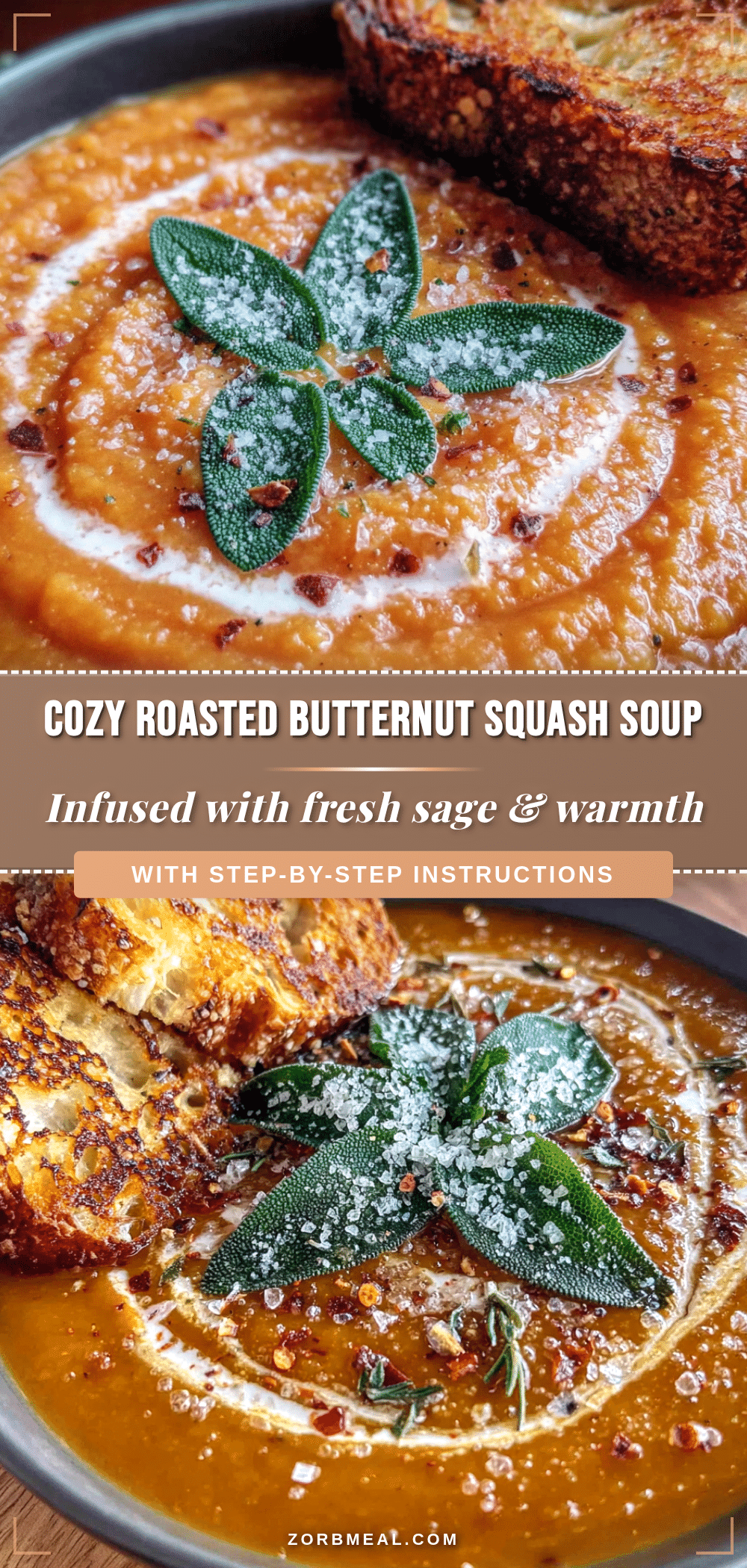
Cozy Roasted Butternut Squash Soup with Sage

A rich, creamy, and deeply satisfying butternut squash soup with caramelized roasted squash and fragrant sage. This comforting soup is naturally dairy-free, gluten-free, and perfect for cold days.
- Prep Time: 15 minutes
- Cook Time: 45 minutes
- Total Time: 1 hour
- Yield: 6 servings 1x
- Category: Soup
- Cuisine: American
Ingredients
- 1 medium butternut squash (about 2–3 pounds), peeled, seeded, and cubed into 1-inch pieces
- 1 large yellow onion, roughly chopped
- 3 cloves garlic, smashed
- 2 tablespoons olive oil
- 4 cups vegetable broth, low-sodium preferred
- 1 small Yukon Gold potato, peeled and cubed
- Salt and black pepper to taste
- 10–12 fresh sage leaves, plus extra for garnish
- 1 tablespoon butter or olive oil
- Toasted pumpkin seeds (optional, for garnish)
- Heavy cream or coconut milk (optional, for garnish)
- Grated Parmesan cheese (optional, for garnish)
- Crusty bread (optional, for serving)
Instructions
- Preheat oven to 400°F (200°C). Line a rimmed baking sheet with parchment paper.
- Toss cubed butternut squash, chopped onion, and smashed garlic cloves with 2 tablespoons olive oil. Spread in a single layer on the baking sheet. Sprinkle with salt and pepper.
- Roast for 35-40 minutes, stirring halfway through, until squash is fork-tender and edges are caramelized.
- While squash roasts, heat 1 tablespoon butter or olive oil in a large soup pot over medium heat. Add fresh sage leaves and cook for 1-2 minutes until bright green and fragrant. Use a slotted spoon to transfer sage to a plate; leave flavored oil in the pot.
- Add cubed potato and 4 cups vegetable broth to the pot. Bring to a boil, then reduce to a simmer. Cook for 10-12 minutes until potato is tender.
- Add roasted squash mixture and sautéed sage leaves to the pot. Stir and bring to a gentle simmer. Cook for 5 minutes to meld flavors.
- Remove pot from heat. Using an immersion blender, blend until smooth. Alternatively, blend in batches in a regular blender, filling no more than halfway and venting the lid.
- Taste and adjust seasoning with salt and pepper. Serve hot, garnished with pumpkin seeds, a swirl of cream, fresh sage leaves, or Parmesan cheese, with crusty bread on the side.
Notes
Don’t skip roasting the squash—it caramelizes the natural sugars for deep flavor. Sauté sage just until fragrant to avoid bitterness. Season in layers for best flavor. A small potato adds creaminess without dairy. Blend hot soup carefully to avoid splattering. Soup thickens upon refrigeration; thin with broth when reheating.
Nutrition
- Serving Size: 1 bowl (about 1.5 cu
- Calories: 185
- Sugar: 8
- Sodium: 480
- Fat: 7
- Saturated Fat: 2
- Carbohydrates: 30
- Fiber: 6
- Protein: 4
Keywords: butternut squash soup, roasted butternut squash soup, sage soup, creamy soup, fall soup, winter soup, gluten-free soup, vegetarian soup, dairy-free soup, comfort food


