My friend Jen asked why I couldn’t just throw everything on one big board instead of fussing with three separate platters for our annual pre-Thanksgiving get-together. I started to explain why that wouldn’t work—something about visual balance, flavor separation, the sacred rules of charcuterie. Then I stopped. I mean, she had a point. Who was I to gatekeep the grazing board experience? So I grabbed my biggest wooden slab, raided my pantry, and let her arrange things however she wanted. Honestly? It was the best Friendsgiving spread I’ve ever put together.
That moment of letting go of control taught me something important about hosting. Sometimes the best meals come from setting aside the rules and just going with what feels right. Jen piled grapes next to the brie, wedged apple slices between wedges of manchego, and casually dropped prosciutto rosettes wherever there was an empty spot. It looked chaotic. It looked beautiful. And everyone kept going back for more.
This Fall Fruit Friendsgiving Charcuterie Board became the star of that evening. Maybe you’ve been there—stressing over separate appetizers when all anyone really wants is to gather around something shareable and beautiful. This board solves that problem completely. It’s the kind of spread that makes people linger, talk, and reach for just one more slice of that honeycrisp apple.
Why You’ll Love This Recipe
Let me tell you why this board has become my go-to for every fall gathering. After testing this setup at three different Friendsgiving dinners (and one very enthusiastic family Thanksgiving), I can confidently say this approach works every single time.
- Quick & Easy: Comes together in under 20 minutes. No cooking required. Just wash, slice, arrange, and serve. Perfect for when guests show up earlier than expected.
- Simple Ingredients: Everything comes from a standard grocery store. No specialty shops or fancy imports needed. Your local market has everything you need right now.
- Perfect for Friendsgiving: This board screams fall celebration. It fits the casual, graze-all-night vibe of Friendsgiving better than any sit-down appetizer ever could.
- Crowd-Pleaser: I’ve watched picky eaters, cheese snobs, and fruit-only grazers all find something they love on this board. It genuinely has something for everyone.
- Unbelievably Beautiful: The colors alone—deep purple figs, golden pears, orange cheddar, green apples, red grapes—make this board a showstopper without any fancy garnishes.
What makes this board different from every other charcuterie recipe out there is the fruit-first approach. Most boards treat fruit as an afterthought, a few sad grapes tucked between mountains of meat and cheese. Here, fall fruit takes center stage. The sweetness of ripe pears and figs balances the saltiness of cured meats and the richness of creamy cheeses in a way that feels intentional, not accidental.
This isn’t just another grazing board. It’s the kind that makes people close their eyes after that first perfect bite of brie topped with fig jam and a sliver of prosciutto. It’s comfort food reimagined—simpler, faster, but with the same soul-soothing satisfaction that makes a shared meal feel special.
What Ingredients You Will Need
This recipe uses simple, seasonal ingredients to deliver maximum flavor and visual impact without the fuss. Most of these items are easy to find at any grocery store during fall, and many are likely already in your kitchen.
Fresh Fall Fruits
- Figs, fresh (8-10, halved) – Look for figs that are plump and slightly soft to the touch. Black Mission or Brown Turkey varieties work beautifully.
- Pears, ripe but firm (2-3, sliced) – Bosc or Anjou pears hold their shape well and don’t brown as quickly as other varieties.
- Apples, crisp (2-3, sliced) – Honeycrisp or Fuji apples add sweetness and crunch. Toss slices in lemon water to prevent browning.
- Red grapes (1 cup, stemmed) – Seedless red grapes add little bursts of sweetness throughout the board.
- Pomegranate seeds (½ cup) – These jewel-like seeds add color and a tart pop. Buy pre-seeded or deseed a fresh pomegranate.
- Persimmons, ripe (2, sliced) – Fuyu persimmons are perfect here; they’re sweet, firm, and slice beautifully without being mushy.
Cheeses
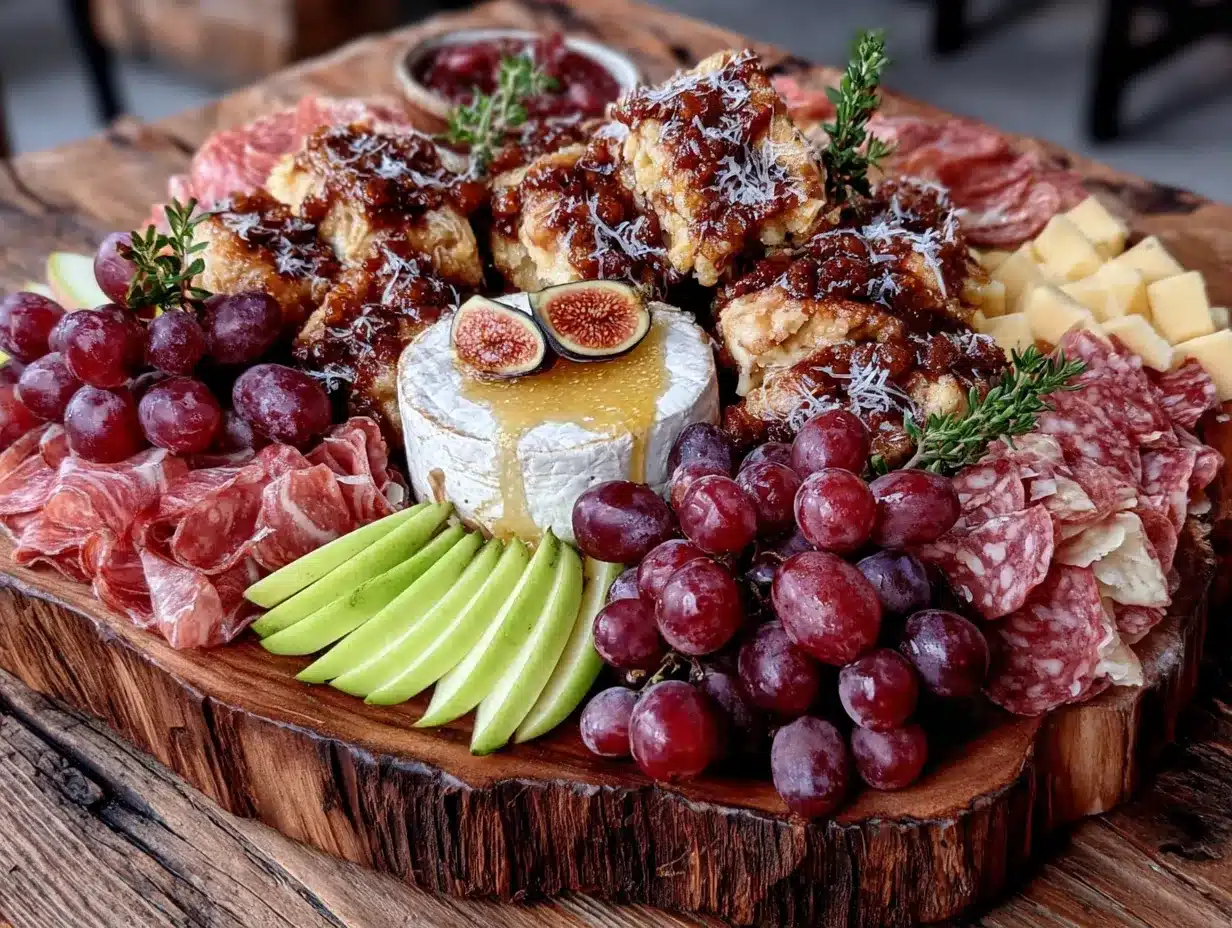
- Brie (8 oz wheel) – Choose a double or triple cream brie for maximum creaminess. Let it come to room temperature before serving.
- Aged cheddar (6 oz, sliced or cubed) – A sharp white cheddar adds a nice tangy contrast to the sweet fruit.
- Manchego (6 oz, sliced into thin triangles) – This Spanish sheep’s milk cheese has a nutty flavor that pairs perfectly with pears and figs.
- Goat cheese log (4 oz) – The tangy, creamy texture breaks up the richness of the other cheeses. I recommend Vermont Creamery brand for consistent quality.
Cured Meats
- Prosciutto (6 oz, thinly sliced) – Look for prosciutto di Parma if possible. Fold into loose rosettes or ribbons for easy grabbing.
- Salami (4 oz, sliced) – Genoa salami or soppressata works well. Fold slices in half or quarter them for bite-sized pieces.
- Capicola (4 oz, thinly sliced) – This spicy cured pork adds a nice kick. Substitute with prosciutto if unavailable.
Accompaniments
- Fig jam or honey (¼ cup) – A small bowl of fig jam adds sweetness. Local honey is a great alternative if fig jam is hard to find.
- Mixed nuts (½ cup) – Toasted almonds or candied pecans add crunch. I prefer salted Marcona almonds for their buttery texture.
- Crackers and bread (assorted, about 20 pieces) – Water crackers, rosemary flatbreads, and sliced baguette give variety. Gluten-free crackers work perfectly here too.
- Fresh herbs for garnish – Rosemary sprigs, thyme, and edible flowers add that final touch of visual appeal.
Equipment Needed
You don’t need much fancy equipment for this board. The beauty of a charcuterie spread is its simplicity.
- Large wooden board or platter (at least 16×12 inches) – A rectangular wooden board works best, but any large platter will do. I use a reclaimed acacia wood board I found at a home goods store for twenty bucks.
- Small bowls (2-3) – For fig jam, honey, and pomegranate seeds. Small ramekins or pinch bowls work great.
- Cheese knives (2-3) – One for soft cheese like brie, one for hard cheese like cheddar. If you don’t have cheese knives, small butter knives work fine.
- Cutting board and sharp knife – For slicing fruits and cheeses. A sharp chef’s knife makes clean cuts through apples and pears.
- Small serving spoons or tongs – For nuts and pomegranate seeds. Cocktail forks also work well.
Budget-friendly tip: A large baking sheet lined with parchment paper makes an excellent charcuterie board in a pinch. Just make sure it’s clean and rimmed to catch any stray juices.
Preparation Method
- Prep your fruits and cheeses (10 minutes). Wash all fruit thoroughly. Halve the figs lengthwise. Slice pears and apples into thin wedges, about ¼ inch thick. Toss apple slices in a bowl of water with a squeeze of lemon juice to keep them from browning. Stem the grapes. Slice persimmons into thin rounds. Cut the aged cheddar into ½-inch cubes or thin slices. Slice manchego into thin triangles. Leave the brie whole—guests will cut into it themselves.
- Arrange your small bowls first (2 minutes). Place your small bowls of fig jam, honey, and pomegranate seeds on the board. Position them slightly off-center rather than in the middle. This leaves room for the larger items and creates visual flow. I usually put the jam bowl near where the brie will go since they’re meant to be eaten together.
- Place the cheeses (3 minutes). Position the brie wheel in one corner of the board. Fan out the cheddar cubes in a small cluster opposite the brie. Arrange the manchego triangles in a line or small fan near the center. Place the goat cheese log on the board, slightly separated from the other cheeses. Space them out so guests can easily reach each cheese without reaching over something else.
- Add the cured meats (3 minutes). Fold prosciutto slices into loose ribbons or rosettes. To make a rosette, take a slice of prosciutto, fold it in half lengthwise, then roll it up loosely. Place these in small clusters around the board. Fold salami slices in half, then in half again, and arrange them in a small pile near one edge of the board. Layer capicola in loose waves near the prosciutto.
- Fill in with fruits (5 minutes). Scatter the fig halves in small groups around the board. Fan out the apple and pear slices in overlapping rows near the cheddar and manchego. Place small clusters of grapes in the gaps between cheeses and meats. Tuck persimmon slices in any remaining open spaces. The goal is to fill the board so there’s no bare wood showing, but don’t overcrowd—guests need room to grab items.
- Add nuts and garnishes (2 minutes). Sprinkle the mixed nuts in small piles around the board, tucking them between fruits and cheeses. Place fresh rosemary sprigs and thyme clusters in a few spots for color and fragrance. If using edible flowers, scatter them sparingly—a little goes a long way.
- Fill in the crackers and bread (3 minutes). Arrange crackers and sliced baguette in the remaining empty spaces. Fan them out in small groups rather than stacking them in one pile. This makes it easier for guests to grab one without disturbing the whole board. Place some crackers near each cheese so guests can easily pair them.
- Final check and serve (1 minute). Step back and look at your board. Fill any obvious gaps with extra grapes, nuts, or cracker pieces. Add a small cheese knife to the brie and a separate knife for the cheddar. Place small spoons in the jam and honey bowls. Serve immediately at room temperature for the best flavor.
Cooking Tips & Techniques
After building this board for multiple gatherings, I’ve learned a few things the hard way. Let me save you some trouble.
Room temperature matters more than you think. Cheeses taste dramatically better when served at room temperature. Take everything out of the fridge 30 to 45 minutes before guests arrive. I once served ice-cold brie and wondered why nobody touched it. Twenty minutes later, it was gone. Lesson learned.
Don’t slice everything at once. Apples and pears brown quickly once cut. Slice them right before serving, or at most an hour ahead. If you need to prep earlier, store sliced apples and pears in a bowl of cold water with a tablespoon of lemon juice. Drain and pat dry before arranging.
Balance the board visually. Think about color distribution. Don’t put all the red fruits in one corner and all the yellow cheeses in another. Spread colors evenly across the board. I like to place a dark element (like figs or prosciutto) next to a light element (like brie or pears) for contrast.
Make extra of everything. People eat more than you expect from a grazing board. I always make about 20% more than I think I need. Leftover charcuterie ingredients make excellent lunches the next day, so overbuying isn’t wasteful.
Label the cheeses. Not everyone can identify manchego versus aged cheddar at a glance. Small handwritten labels or cheese markers help guests know what they’re eating. It also makes the board look more intentional and professional.
Keep backups in the kitchen. Have extra sliced fruit, cheese cubes, and crackers in the fridge. When the board starts looking picked over, you can quickly refresh it without having to rebuild everything from scratch.
Variations & Adaptations
This board is endlessly customizable. Here are some variations I’ve tried and loved.
Seasonal fruit swap: In early fall, use fresh figs and concord grapes. As the season progresses, swap in fuyu persimmons, pomegranates, and late-season apples. In late fall, add sliced bosc pears and dried apricots for variety. I once made this board in December with only winter fruits—pomegranate, persimmon, and apple—and it was just as beautiful.
Dietary adaptations: For a vegetarian version, skip the cured meats and add more cheese varieties or marinated artichoke hearts. For a dairy-free board, replace all cheeses with vegan alternatives or add more fruits, nuts, and olives. Many vegan cheeses have improved dramatically in recent years—Miyoko’s brand makes an excellent dairy-free brie alternative.
Flavor profile twist: Add a spicy element like hot honey drizzled over the brie or pickled jalapeños for heat seekers. For a sweeter board, include chocolate-covered almonds, dried figs, and a small bowl of dark chocolate chunks. The sweet-savory combination works surprisingly well with the fruit-forward theme.
Mini individual boards: For a COVID-conscious gathering or smaller group, create individual boards using small wooden plates or slate tiles. Each person gets their own selection of fruits, cheeses, meats, and crackers. It’s more work upfront but makes for a fun, personal experience.
Add a warm element: A small bowl of warm spiced nuts or a baked brie with honey and thyme adds a cozy fall touch. The contrast between warm and room-temperature elements makes the board feel more substantial and special.
Serving & Storage Suggestions
This board is best served immediately at room temperature. The flavors and textures are at their peak when everything is fresh and unchilled.
Serving temperature: Serve the board at room temperature, about 68 to 72 degrees Fahrenheit. If your kitchen is warm, the cheese may soften faster than ideal, so keep the board in a cool spot or serve in batches.
Complementary dishes: This board pairs beautifully with a crisp white wine like Sauvignon Blanc or a dry rosé. For a non-alcoholic option, sparkling apple cider or a spiced apple cider punch works wonderfully. Serve with a side of marinated olives, cornichons, or a simple arugula salad with lemon vinaigrette for extra greenery.
Storage instructions: Leftover fruits and cheeses should be stored separately. Wrap cheeses tightly in wax paper or cheese paper, then place in a zip-top bag. Store sliced fruits in an airtight container in the fridge for up to 2 days. Cured meats can be wrapped in parchment paper and stored in the fridge for up to 5 days.
Reheating tips: If you have leftover baked brie or warm nuts, reheat them in a 300°F oven for 5 to 10 minutes until warmed through. Don’t microwave brie—it will turn into a rubbery mess. For room-temperature items, just let them sit out for 15 minutes before serving again.
Flavor development: Some cheeses actually taste better the next day. Aged cheddar and manchego develop deeper flavors after being exposed to air. The fruit, however, will lose its freshness quickly, so plan to eat the board within 24 hours for the best experience.
Nutritional Information & Benefits
This board is naturally nutrient-dense thanks to the fruit-forward focus. Here’s what you’re getting in a typical serving (about ¼ of the board).
Estimated nutritional values per serving: Approximately 450 calories, 28g fat, 35g carbohydrates, 8g fiber, 18g protein, 12g sugar. These values vary based on exact ingredients and portions.
Health benefits of key ingredients: Apples and pears are rich in fiber and vitamin C. Figs provide calcium, potassium, and antioxidants. Pomegranate seeds are packed with anti-inflammatory compounds. Nuts offer healthy fats and protein. Cheese provides calcium and protein in moderate amounts.
Dietary considerations: This board is naturally gluten-free if you skip the crackers and bread. For a lower-carb option, focus on cheese, meats, and nuts while limiting fruit and crackers. The board contains dairy and pork products, so it’s not suitable for vegan or kosher diets without substitutions.
Potential allergens: Dairy (cheese), tree nuts (almonds, pecans), and gluten (crackers, bread) are present. Always check labels on cured meats for potential additives or allergens.
Personal wellness perspective: I love that this board encourages mindful eating. Because everything is bite-sized and visually appealing, people naturally eat more slowly and pay attention to what they’re eating. It’s a social, intentional way to enjoy food without overdoing it.
Conclusion
This Fall Fruit Friendsgiving Charcuterie Board has become my signature dish for every autumn gathering, and I think it deserves a spot in your hosting rotation too. It’s forgiving, flexible, and somehow always looks impressive no matter how casually you arrange it.
I love that this recipe forces me to slow down and actually enjoy the process of hosting. Instead of stressing over a hot appetizer that needs last-minute attention, I can set this board out twenty minutes before guests arrive and actually sit down with a glass of wine. That’s the real gift here—not just a beautiful board, but the freedom to enjoy your own party.
Try this board with your favorite fall fruits and cheeses. Swap in whatever looks good at your local market. Make it your own. And when someone asks why you didn’t just use three separate platters, tell them Jen said it was okay.
I’d love to hear how your board turns out. Drop a comment below with your favorite fruit and cheese combination, or tag me in your Friendsgiving photos. Happy grazing, friends!
Frequently Asked Questions
How far in advance can I prepare this charcuterie board?
You can prep most components up to 24 hours ahead. Slice cheeses and store them wrapped in the fridge. Wash and stem fruits, but don’t slice apples and pears until right before serving. Arrange everything on the board about 30 minutes before guests arrive to let cheeses come to room temperature.
Can I make this board dairy-free or vegan?
Absolutely. Replace all cheeses with high-quality vegan alternatives—Miyoko’s and Violife brands work well. Skip the cured meats or replace them with marinated vegetables like artichoke hearts, roasted red peppers, and olives. Load up on extra fruits, nuts, and crackers for variety.
What’s the best way to keep apples from browning?
Toss sliced apples in a bowl of cold water with a tablespoon of lemon juice or white vinegar. Let them soak for 5 minutes, then drain and pat dry. This acidulated water treatment prevents browning for several hours. Alternatively, use Granny Smith apples, which brown more slowly than other varieties.
How much should I make per person for a Friendsgiving gathering?
Plan for about 4 to 6 ounces of cheese total per person, 2 to 3 ounces of cured meat per person, and about 1 cup of fruit per person. For a board that serves 8 to 10 people, use roughly 1.5 pounds of cheese, 1 pound of meat, and 3 to 4 cups of assorted fruits. Always err on the side of more—leftovers are easy to repurpose.
What wines pair best with this fall fruit board?
A dry Riesling or Gewürztraminer complements the sweet fruit and salty meats beautifully. For red wine drinkers, a light Pinot Noir or Beaujolais works without overpowering the delicate flavors. Sparkling wine like Prosecco or Cava is always a crowd-pleaser and cuts through the richness of the cheese.
Pin This Recipe!
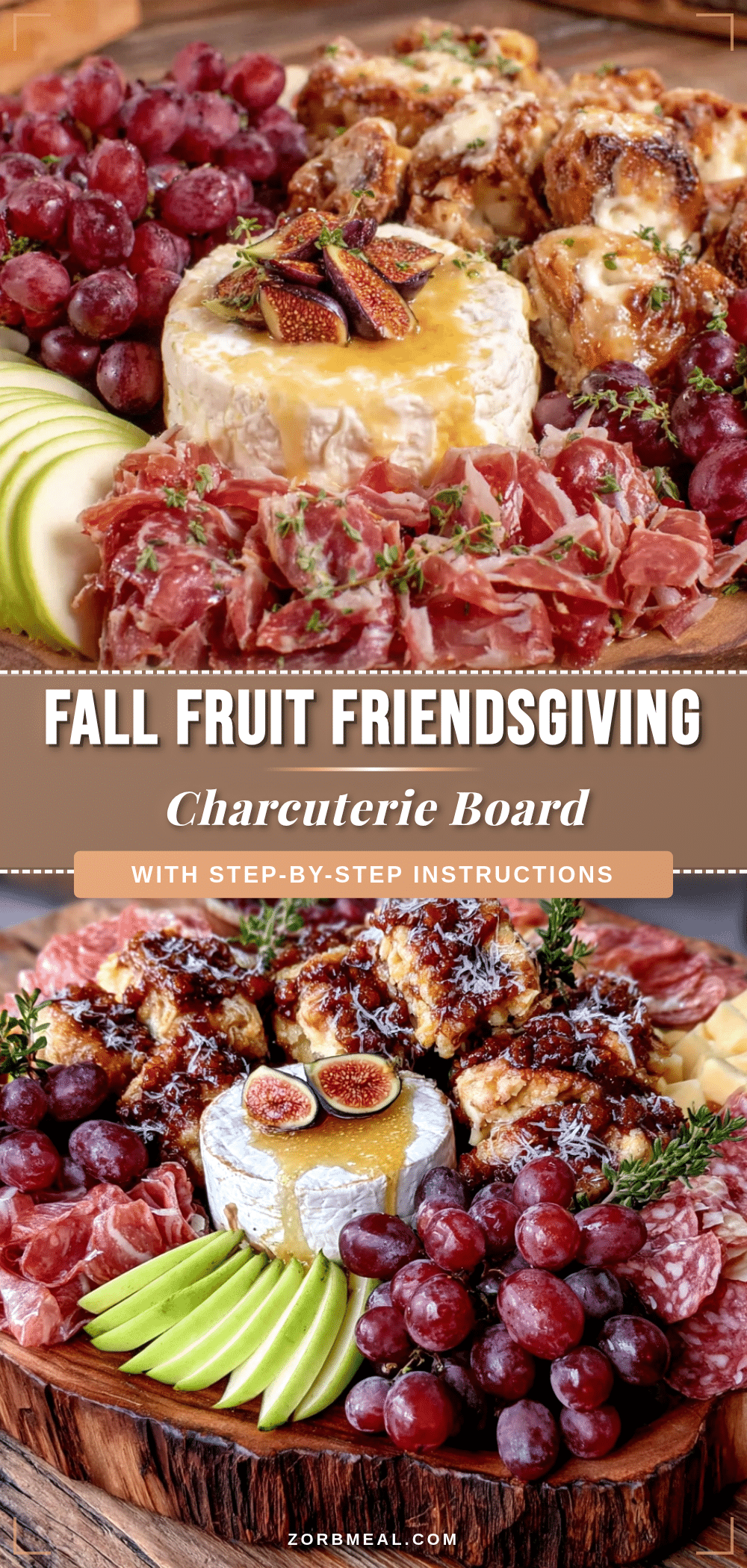
Best Fall Fruit Friendsgiving Charcuterie Board
A fruit-forward charcuterie board featuring fresh fall fruits, artisan cheeses, cured meats, and accompaniments. Perfect for Friendsgiving gatherings, this board comes together in under 20 minutes and is designed for grazing and sharing.
- Prep Time: 20 minutes
- Cook Time: 0 minutes
- Total Time: 20 minutes
- Yield: 8-10 servings 1x
- Category: Appetizer
- Cuisine: American
Ingredients
- 8–10 fresh figs, halved
- 2–3 ripe but firm pears (Bosc or Anjou), sliced
- 2–3 crisp apples (Honeycrisp or Fuji), sliced
- 1 cup seedless red grapes, stemmed
- ½ cup pomegranate seeds
- 2 ripe Fuyu persimmons, sliced
- 8 oz wheel of double or triple cream brie
- 6 oz aged white cheddar, sliced or cubed
- 6 oz Manchego cheese, sliced into thin triangles
- 4 oz goat cheese log
- 6 oz thinly sliced prosciutto
- 4 oz Genoa salami or soppressata, sliced
- 4 oz thinly sliced capicola
- ¼ cup fig jam or honey
- ½ cup mixed nuts (toasted almonds or candied pecans)
- Assorted crackers and bread (about 20 pieces, including water crackers, rosemary flatbreads, and sliced baguette)
- Fresh herbs for garnish (rosemary sprigs, thyme, edible flowers)
Instructions
- Prep your fruits and cheeses (10 minutes). Wash all fruit thoroughly. Halve the figs lengthwise. Slice pears and apples into thin wedges, about ¼ inch thick. Toss apple slices in a bowl of water with a squeeze of lemon juice to keep them from browning. Stem the grapes. Slice persimmons into thin rounds. Cut the aged cheddar into ½-inch cubes or thin slices. Slice manchego into thin triangles. Leave the brie whole.
- Arrange your small bowls first (2 minutes). Place your small bowls of fig jam, honey, and pomegranate seeds on the board. Position them slightly off-center rather than in the middle.
- Place the cheeses (3 minutes). Position the brie wheel in one corner of the board. Fan out the cheddar cubes in a small cluster opposite the brie. Arrange the manchego triangles in a line or small fan near the center. Place the goat cheese log on the board, slightly separated from the other cheeses.
- Add the cured meats (3 minutes). Fold prosciutto slices into loose ribbons or rosettes. Place these in small clusters around the board. Fold salami slices in half, then in half again, and arrange them in a small pile near one edge of the board. Layer capicola in loose waves near the prosciutto.
- Fill in with fruits (5 minutes). Scatter the fig halves in small groups around the board. Fan out the apple and pear slices in overlapping rows near the cheddar and manchego. Place small clusters of grapes in the gaps between cheeses and meats. Tuck persimmon slices in any remaining open spaces.
- Add nuts and garnishes (2 minutes). Sprinkle the mixed nuts in small piles around the board, tucking them between fruits and cheeses. Place fresh rosemary sprigs and thyme clusters in a few spots for color and fragrance.
- Fill in the crackers and bread (3 minutes). Arrange crackers and sliced baguette in the remaining empty spaces. Fan them out in small groups rather than stacking them in one pile.
- Final check and serve (1 minute). Step back and look at your board. Fill any obvious gaps with extra grapes, nuts, or cracker pieces. Add a small cheese knife to the brie and a separate knife for the cheddar. Place small spoons in the jam and honey bowls. Serve immediately at room temperature.
Notes
Let cheeses come to room temperature for 30-45 minutes before serving for best flavor. Slice apples and pears right before serving to prevent browning, or store in lemon water. Make about 20% more than you think you need. Label cheeses for guests. Keep backup ingredients in the kitchen to refresh the board.
Nutrition
- Serving Size: ¼ of the board
- Calories: 450
- Sugar: 12
- Sodium: 800
- Fat: 28
- Saturated Fat: 12
- Carbohydrates: 35
- Fiber: 8
- Protein: 18
Keywords: charcuterie board, Friendsgiving, fall fruit, grazing board, cheese board, appetizer, party food, Thanksgiving appetizer


