I was digging through my glove compartment last October, searching for a forgotten tube of lip balm, when the smell hit me. It wasn’t perfume or an air freshener—it was a faint, dusty whiff of cinnamon and nutmeg clinging to an old receipt tucked between the owner’s manual and a pack of emergency napkins. And suddenly I was seven years old, standing on a step stool in my Aunt Lena’s farmhouse kitchen, watching her sift flour into a giant ceramic bowl that had a chip on the rim she refused to throw away. The autumn light came through the window in that hazy, late-afternoon way, catching the dust motes floating above the counter. I can still hear the clink of her measuring spoons against the edge of that bowl. She’d let me lick the spatula clean, and I’d stand there, sticky-fingered and quiet, convinced that no one on earth could make a cake that smelled like heaven the way she did.
Aunt Lena passed about six years ago, and for a long time I couldn’t bring myself to make her pumpkin bundt cake. Honestly, I was afraid I’d mess it up—or worse, that it wouldn’t taste the same, and that would somehow erase the memory entirely. But last fall, I got tired of just remembering. I wanted to taste it again. So I dug out her recipe card, the one with the coffee stain in the corner and her messy cursive that always looked like she was writing in a hurry, and I gave it a shot. The first attempt was a disaster—I forgot the baking soda and ended up with a dense, sad disc that looked more like a hockey puck than a cake. I sat on my kitchen floor and laughed until I cried, because honestly, that felt like exactly the kind of thing Aunt Lena would’ve done and then shrugged off with a wave of her hand. Maybe you’ve been there—trying to recreate a dish from someone you miss, and realizing that the imperfections are part of the story.
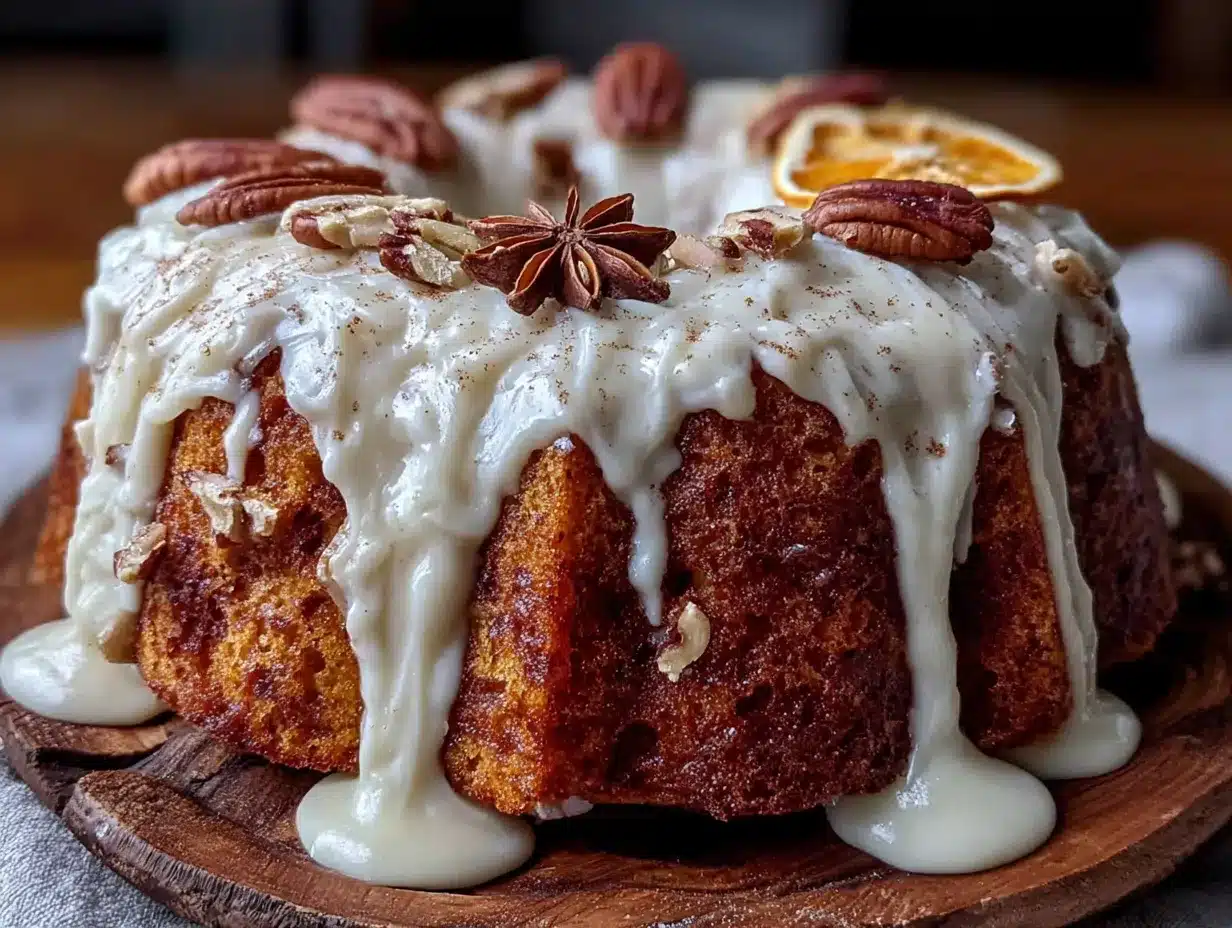
This recipe is my tribute to her, refined through a few more tries and a lot of taste-testing (someone had to do it). It’s the one-bowl wonder you need for fall gatherings, for Thanksgiving dessert tables, for those cozy Sunday afternoons when you want the house to smell like someone who loves you is in the kitchen. The spiced glaze on top is my addition—Aunt Lena always used a plain powdered sugar drizzle, but I think she’d approve of the extra warmth from cinnamon and a pinch of cloves. This cake is tender, moist, and packed with real pumpkin flavor, not just spice. It’s the kind of dessert that makes people close their eyes after the first bite, and if you’re hosting, that’s exactly the reaction you want.
Why You’ll Love This Recipe
Let me tell you why this pumpkin bundt cake is the one you’ll come back to season after season. I’ve tested this recipe at least a dozen times—for potlucks, for family dinners, for a neighbor who was having a rough week—and it’s never let me down. Here’s what makes it special:
- One Bowl, No Fuss: Everything comes together in a single bowl. No creaming butter and sugar separately, no sifting dry ingredients into a separate bowl. You’ll mix the wet ingredients, add the dry ones, stir, and pour. That’s it. Perfect for busy hosts who need to get things done without a mountain of dishes.
- Simple Pantry Ingredients: You probably already have most of what you need—flour, sugar, eggs, oil, and a can of pumpkin puree. No fancy extracts or hard-to-find spices. I use canned pumpkin because it’s consistent and available year-round, and honestly, it works beautifully.
- Perfect for Fall Gatherings: This cake was made for dinner parties, Thanksgiving, and cozy get-togethers. It serves a crowd (about 12-16 slices), looks stunning on a cake stand, and can be made a day ahead—actually, it tastes even better the next day once the flavors have had time to meld.
- Crowd-Pleaser Guaranteed: I’ve brought this to gatherings where people claimed they didn’t like pumpkin desserts, and they went back for seconds. The texture is incredibly moist—almost like a pound cake—and the spiced glaze adds just the right amount of sweetness without being overwhelming.
- Unbelievably Delicious: The combination of pumpkin, warm spices, and that silky glaze is pure comfort. It’s the kind of dessert that makes you slow down and savor each bite. Plus, the bundt pan gives it that beautiful, bakery-style presentation with zero effort.
This isn’t just another pumpkin cake recipe. The trick here is using oil instead of butter, which keeps the cake incredibly moist for days, and a touch of buttermilk (or a simple substitute) that adds tenderness without making it heavy. I’ve also balanced the spices so the pumpkin flavor shines through instead of being buried under cinnamon. It’s my best version, and I’m pretty proud of it.
What Ingredients You Will Need
This recipe uses simple, wholesome ingredients that come together to create something truly special. Most of these are pantry staples, especially if you do any fall baking. Here’s what you’ll need and why each one matters:
For the Cake
- 2 cups (250g) all-purpose flour – Spoon and level it; don’t scoop directly from the bag or you’ll end up with too much flour and a dry cake. I use King Arthur Flour for consistent results.
- 2 teaspoons baking powder – Make sure it’s fresh! Test it by dropping a bit into hot water; if it fizzes, you’re good.
- 1 teaspoon baking soda – Helps the cake rise and gives it a tender crumb.
- 1/2 teaspoon salt – Balances the sweetness and enhances the spices. I prefer fine sea salt.
- 2 teaspoons ground cinnamon – The star spice here. I like to use Vietnamese cinnamon for its intense, sweet warmth.
- 1 teaspoon ground ginger – Adds a subtle warmth without being overpowering.
- 1/2 teaspoon ground nutmeg – Freshly grated is best, but pre-ground works fine in a pinch.
- 1/4 teaspoon ground cloves – A little goes a long way; it adds depth and complexity.
- 1 1/2 cups (300g) granulated sugar – Standard white sugar works perfectly here.
- 1/2 cup (100g) packed light brown sugar – Adds moisture and a hint of molasses flavor that pairs beautifully with pumpkin.
- 1 cup (240ml) vegetable oil – Canola or any neutral oil works. The oil keeps the cake incredibly moist. Do not substitute melted butter; it changes the texture significantly.
- 4 large eggs, room temperature – Room-temperature eggs emulsify better, creating a smoother batter. If you forgot to take them out, place them in a bowl of warm water for 5 minutes.
- 1 (15-ounce) can pumpkin puree (about 425g) – Not pumpkin pie filling! Make sure you get 100% pure pumpkin. I prefer Libby’s for its consistent thickness.
- 1/4 cup (60ml) buttermilk – Adds tenderness and a slight tang. No buttermilk? Add 1 teaspoon of lemon juice or vinegar to regular milk and let it sit for 5 minutes.
- 2 teaspoons vanilla extract – Pure vanilla extract adds warmth and rounds out the flavors.
For the Spiced Glaze
- 1 1/2 cups (180g) powdered sugar, sifted – Sifting prevents lumps in the glaze.
- 2-3 tablespoons milk – Whole milk gives a creamier glaze, but any milk works. Add slowly until you reach the right consistency.
- 1/2 teaspoon ground cinnamon – For that warm, spiced flavor.
- 1/4 teaspoon vanilla extract – Optional but recommended.
- Pinch of salt – Balances the sweetness.
Substitution Tips: For a gluten-free version, use a 1:1 gluten-free baking flour blend that contains xanthan gum. For a dairy-free option, substitute the buttermilk with almond milk mixed with 1 teaspoon of lemon juice, and use a dairy-free milk in the glaze. I’ve tried both, and while the texture is slightly different, the flavor is still fantastic.
Equipment Needed
You don’t need a lot of fancy tools for this cake, which is part of what makes it so great. Here’s what you’ll need:
- 10-cup bundt pan – This is non-negotiable. A standard 10- to 12-cup bundt pan works perfectly. If your pan is smaller, the batter might overflow, so stick with the right size. I use a Nordic Ware classic bundt pan, and it releases cakes beautifully every time.
- Large mixing bowl – Since this is a one-bowl recipe, you’ll want a bowl big enough to hold everything comfortably. A 4-quart bowl works well.
- Whisk – For mixing the dry ingredients and later combining everything. A sturdy balloon whisk is ideal.
- Rubber spatula – For scraping down the sides of the bowl and making sure every bit of batter gets into the pan.
- Measuring cups and spoons – Dry measuring cups for flour and sugar, liquid measuring cup for oil and buttermilk. Yes, it matters.
- Cooling rack – A wire rack allows air to circulate around the cake so it cools evenly.
- Small bowl – For whisking the glaze.
- Parchment paper or non-stick baking spray – I use a baking spray that contains flour (like Baker’s Joy) for guaranteed release. Do not skip greasing the pan thoroughly, even if it’s non-stick.
If you don’t have a bundt pan, you can bake this in a 9×13-inch pan (adjust the baking time to about 35-40 minutes) or two 9-inch round cake pans (bake for 25-30 minutes). Just keep an eye on it and test with a toothpick. But honestly, the bundt pan is worth the investment for that gorgeous presentation—it makes any cake look like you spent hours on it.
Preparation Method
Alright, let’s get baking! This method is straightforward, but I’ve included all the little details that make the difference between a good cake and a great one. Trust me on these steps.
- Preheat and prep the pan. Preheat your oven to 350°F (175°C). Generously grease your bundt pan with non-stick baking spray that contains flour, or use butter and dust it with flour. Pay special attention to all the crevices and the center tube—this is where cakes tend to stick. Place the pan on a baking sheet just in case any batter drips over.
- Whisk the dry ingredients. In your large mixing bowl, whisk together the 2 cups all-purpose flour, 2 teaspoons baking powder, 1 teaspoon baking soda, 1/2 teaspoon salt, 2 teaspoons cinnamon, 1 teaspoon ginger, 1/2 teaspoon nutmeg, and 1/4 teaspoon cloves. Whisk until everything is evenly distributed—about 20 seconds. This aerates the flour and ensures the spices are well blended.
- Add the sugars and wet ingredients. To the same bowl, add the 1 1/2 cups granulated sugar, 1/2 cup packed brown sugar, 1 cup vegetable oil, 4 large eggs, the entire can of pumpkin puree, 1/4 cup buttermilk, and 2 teaspoons vanilla extract. Yes, right on top of the flour mixture. Don’t worry about overmixing at this point because we’re going to stir it all together.
- Mix until just combined. Using your whisk or a rubber spatula, stir everything together until no streaks of flour remain. Be careful not to overmix—stop as soon as the batter is smooth. Overmixing develops the gluten and can make the cake tough. The batter will be thick and slightly glossy. Scrape the bottom of the bowl with your spatula to make sure there are no hidden pockets of flour.
- Pour the batter into the pan. Use your rubber spatula to scrape every last bit of batter into the prepared bundt pan. Spread it evenly with the spatula, and give the pan a gentle tap on the counter to release any air bubbles. The batter should fill the pan about 2/3 to 3/4 full.
- Bake the cake. Place the pan in the preheated oven and bake for 50-60 minutes. Start checking at 50 minutes by inserting a long toothpick or skewer into the thickest part of the cake. If it comes out clean or with a few moist crumbs (not wet batter), it’s done. The cake should also spring back when lightly pressed in the center. Every oven runs differently, so trust your senses—your kitchen will smell incredible when it’s close.
- Cool in the pan. Let the cake cool in the pan on a wire rack for exactly 15 minutes. This is important—if you try to remove it too soon, it might fall apart. If you wait too long, the cake can stick to the pan as it cools. Set a timer!
- Invert the cake. After 15 minutes, place your wire rack upside down on top of the pan. Carefully flip the whole thing over, and lift the pan off. If the cake doesn’t release immediately, give the pan a gentle tap on the counter. If it’s really stuck, let it sit for another 5 minutes and try again. Don’t force it or you’ll tear the cake. Let the cake cool completely on the rack, about 1-2 hours.
- Make the spiced glaze. While the cake cools, whisk together the 1 1/2 cups sifted powdered sugar, 1/2 teaspoon cinnamon, 1/4 teaspoon vanilla, and a pinch of salt in a small bowl. Add 2 tablespoons of milk and whisk until smooth. If it’s too thick, add another tablespoon of milk, one teaspoon at a time, until it reaches a thick but pourable consistency. The glaze should slowly drip off your whisk.
- Glaze the cake. Once the cake is completely cool, place it on your serving platter or cake stand. Drizzle the glaze over the top, letting it cascade down the sides naturally. I like to use a spoon to guide it, or you can pour it from a measuring cup with a spout. Let the glaze set for about 15-20 minutes before slicing.
Cooking Tips & Techniques
After making this cake more times than I can count, I’ve collected a few tricks that make the process smoother and the results more consistent. Here’s what I’ve learned:
Room temperature ingredients matter. I know, I know—it’s tempting to use cold eggs straight from the fridge. But room-temperature eggs and buttermilk emulsify into the batter much more easily, creating a smoother, more uniform texture. If you forgot to plan ahead, place the eggs in a bowl of warm water for 5 minutes, and microwave the buttermilk for about 10 seconds (just to take the chill off, not to warm it).
Don’t overmix the batter. This is the most common mistake I see. Once you add the wet ingredients to the dry, stir just until the flour disappears. A few small lumps are totally fine—they’ll bake out. Overmixing develops gluten, which can make your cake dense and tough instead of tender and moist. I learned this the hard way when I made a rubbery cake for a potluck and had to come up with a creative excuse.
Grease that pan like your life depends on it. I cannot stress this enough. Use a baking spray with flour, or use a pastry brush to coat every nook and cranny with softened butter, then dust with flour and tap out the excess. The center tube and the fluted edges are where cakes most commonly stick. I once lost half a cake to a stubborn pan, and I still get flashbacks.
Test for doneness properly. A toothpick test is reliable, but make sure you insert it into the thickest part of the cake—usually near the center tube. If the toothpick comes out with wet batter, bake for another 5 minutes and test again. If it comes out with a few moist crumbs, you’re golden. The cake should also feel springy when you press the top gently.
Let it cool completely before glazing. This is crucial. If the cake is even slightly warm, the glaze will melt and run right off, pooling on your plate instead of coating the cake. I’ve made this mistake more times than I care to admit. Patience is your friend here—give it the full 1-2 hours on the cooling rack.
Variations & Adaptations
One of the best things about this pumpkin bundt cake is how versatile it is. Here are some variations I’ve tried and loved:
- Chocolate Chip Pumpkin Bundt: Fold 1 cup of semi-sweet chocolate chips into the batter just before pouring it into the pan. The chocolate pairs beautifully with the warm spices, and the little pockets of melted chocolate are a delightful surprise. I made this for a Halloween party and it disappeared in minutes.
- Gluten-Free Version: Substitute the all-purpose flour with a 1:1 gluten-free baking flour blend that contains xanthan gum (I like Bob’s Red Mill). The texture will be slightly more crumbly, but the flavor is still spot-on. Make sure to check the label on your pumpkin puree too—most are naturally gluten-free, but it’s worth verifying.
- Dairy-Free Adaptation: Use a dairy-free milk (like almond or oat milk) mixed with 1 teaspoon of lemon juice in place of the buttermilk. For the glaze, use a dairy-free milk and skip the butter entirely. I’ve made this for friends with dairy sensitivities and they couldn’t tell the difference.
- Nutty Crunch: Add 1/2 cup of chopped pecans or walnuts to the batter for a bit of texture. Toast them first in a dry pan for 3-4 minutes to bring out their flavor. I also like to sprinkle a few on top of the glaze for presentation.
- Maple Glaze Variation: Replace the milk in the glaze with 2 tablespoons of pure maple syrup and reduce the powdered sugar to 1 cup. The maple flavor adds a beautiful autumn twist that’s perfect for Thanksgiving. Just be aware that the glaze will be a bit thinner and more transparent.
- Spice It Up or Down: If you prefer a milder spice profile, reduce the cinnamon to 1 teaspoon and skip the cloves. If you want more warmth, add 1/4 teaspoon of allspice or cardamom. I sometimes add a pinch of black pepper for a subtle kick—it sounds weird, but it really enhances the other spices.
Serving & Storage Suggestions
This cake is a showstopper on any dessert table, and it’s surprisingly easy to serve and store. Here’s what I recommend:
Serving Temperature: This cake is best served at room temperature. The texture is at its most tender, and the glaze has a nice, firm set. If you’ve stored it in the fridge, let it sit on the counter for about 30 minutes before serving. You can also warm individual slices in the microwave for about 10-15 seconds—just enough to take the chill off without melting the glaze.
Presentation Tips: Place the cake on a beautiful cake stand or a large wooden board. I like to garnish the plate with a few fresh sage leaves or cinnamon sticks for a rustic fall look. If you’re serving it for a dinner party, dust the top with a light sprinkle of cinnamon or a few chopped pecans. It looks impressive with minimal effort.
What to Serve Alongside: A dollop of lightly sweetened whipped cream is a classic pairing. For something richer, try a scoop of vanilla bean ice cream or a drizzle of caramel sauce. I also love serving this cake with a hot cup of apple cider or a spiced chai latte—the flavors complement each other perfectly. If you’re hosting a brunch, this cake pairs beautifully with a hearty maple sausage breakfast casserole for a sweet-savory balance.
Storage Instructions: Store the cake in an airtight container at room temperature for up to 3 days. If you live in a humid climate, I’d recommend refrigerating it after the first day to prevent the glaze from getting sticky. The cake actually improves after a day—the flavors meld together and the texture becomes even more moist. I’ve had slices that were perfect on day three.
Freezing Instructions: This cake freezes beautifully. Wrap the completely cooled, unglazed cake tightly in plastic wrap, then in a layer of aluminum foil. Freeze for up to 3 months. When you’re ready to serve, thaw it overnight in the refrigerator, bring it to room temperature, and then add the glaze. I often make two cakes at once—one for now and one for later. It’s a lifesaver during the busy holiday season.
Reheating Tips: If you’re serving leftover slices, pop them in a 300°F (150°C) oven for about 5-7 minutes to warm through. This restores that fresh-from-the-oven texture without drying it out. For a quicker option, microwave individual slices for 15-20 seconds.
Nutritional Information & Benefits
While this cake is definitely a treat, it does offer some nutritional perks thanks to the pumpkin. Here’s a rough estimate per slice (based on 16 servings):
- Calories: Approximately 340-380
- Fat: 16-18g
- Carbohydrates: 48-52g
- Protein: 4-5g
- Fiber: 2-3g
- Sugar: 32-36g
Health Benefits of Pumpkin: Pumpkin is packed with vitamin A (in the form of beta-carotene), which supports eye health and immune function. It’s also a good source of fiber, which aids digestion and helps you feel full longer. Plus, it’s low in calories and fat, making it a great ingredient for adding moisture and nutrients to baked goods without relying on extra butter or oil.
Dietary Considerations: This recipe contains gluten, dairy, and eggs. For gluten-free and dairy-free adaptations, see the variations section above. The cake is nut-free as written (unless you add the optional pecans). It’s also vegetarian-friendly.
My Take: Look, this is a dessert, not a health food. But I love that it uses real pumpkin and that the oil-based recipe allows for a moist cake without an excessive amount of butter. If you’re looking to cut back on sugar, you can reduce the granulated sugar to 1 cup and the brown sugar to 1/3 cup—the cake will be less sweet but still delicious. I’ve done it before, and honestly, the pumpkin and spice flavors shine even more.
Conclusion
This one-bowl pumpkin bundt cake with spiced glaze is more than just a recipe—it’s a way to bring a little warmth and comfort into your kitchen, especially when you’re hosting friends and family. It’s the cake that makes people linger at the table, asking for the recipe and sneaking one last slice when they think no one’s looking. And honestly? That’s exactly the kind of magic I think Aunt Lena would’ve loved.
I hope you’ll make this cake your own. Add your favorite mix-ins, play with the spices, or double the glaze if you’re feeling generous (I won’t judge). The beauty of a recipe like this is that it’s forgiving—it wants you to succeed. Whether you’re baking for a crowd or just for yourself on a quiet autumn afternoon, this cake delivers every single time.
If you give this pumpkin bundt cake a try, I’d love to hear about it. Drop a comment below and let me know how it turned out, what variations you tried, or if you have any questions. And if you’re looking for more fall dessert inspiration, don’t miss my classic apple crisp with oat topping—it’s another one-bowl wonder that’s perfect for sharing. Happy baking, friends!
Frequently Asked Questions
Can I use fresh pumpkin puree instead of canned?
Yes, you can! Just make sure to strain the fresh puree through a cheesecloth or paper towels to remove excess water. Fresh pumpkin tends to be more watery than canned, which can make the cake too dense. I recommend letting it drain for at least 30 minutes before using.
Why did my cake stick to the bundt pan?
This usually happens when the pan isn’t greased thoroughly enough, especially in the crevices and around the center tube. Make sure to use a baking spray that contains flour, or use butter and a dusting of flour. Also, don’t skip the 15-minute cooling period in the pan—removing it too early or too late can cause sticking.
Can I make this cake ahead of time?
Absolutely! This cake tastes even better the next day. You can bake it up to 2 days in advance, store it tightly wrapped at room temperature, and add the glaze on the day you plan to serve it. You can also freeze the unglazed cake for up to 3 months.
How do I know when the cake is done baking?
Insert a long toothpick or skewer into the thickest part of the cake (near the center tube). If it comes out clean or with a few moist crumbs, it’s done. The cake should also spring back when lightly pressed in the center. Start checking at 50 minutes, as oven temperatures can vary.
Can I reduce the sugar in this recipe?
Yes, you can reduce the granulated sugar to 1 cup and the brown sugar to 1/3 cup without significantly affecting the texture. The cake will be less sweet, which allows the pumpkin and spice flavors to shine. Just keep in mind that the glaze adds additional sweetness, so you could also skip the glaze or use a lighter drizzle.
Pin This Recipe!
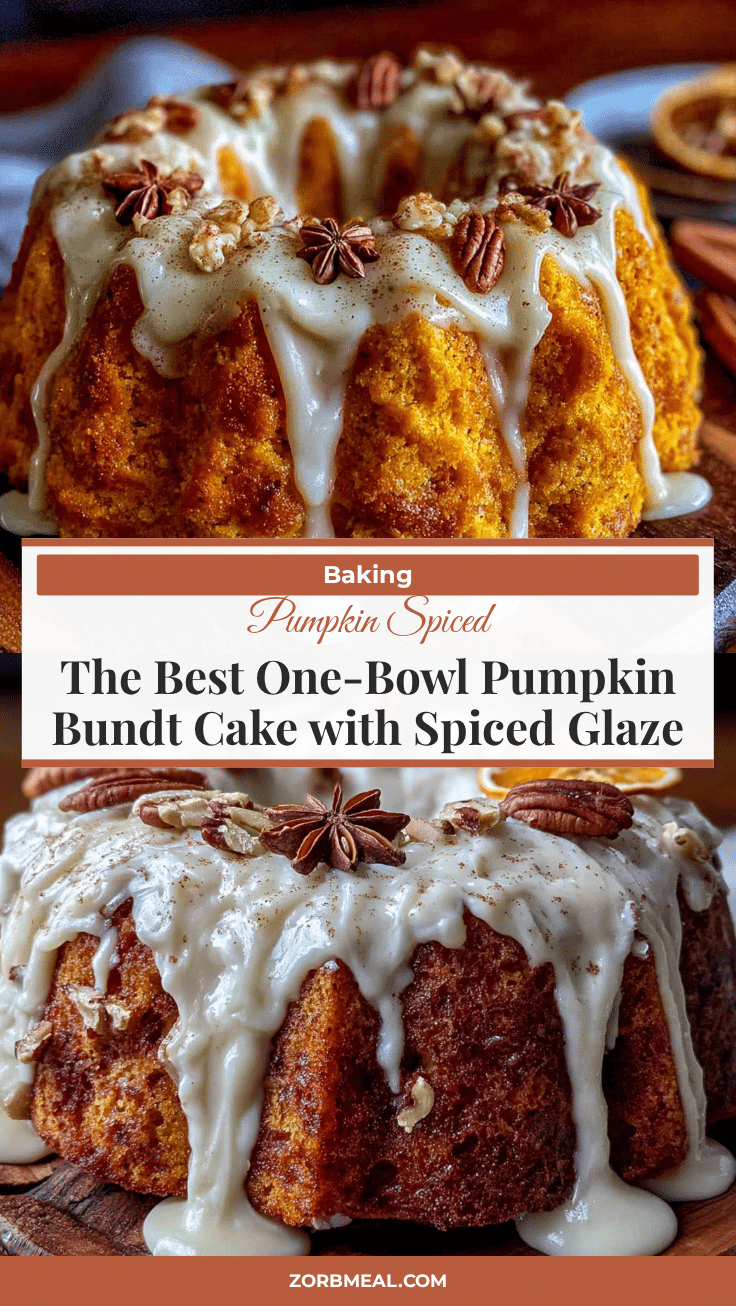
The Best One-Bowl Pumpkin Bundt Cake with Spiced Glaze
A tender, moist pumpkin bundt cake made in one bowl with a spiced glaze. Perfect for fall gatherings, Thanksgiving, or cozy Sunday afternoons.
- Prep Time: 15 minutes
- Cook Time: 55 minutes
- Total Time: 1 hour 10 minutes
- Yield: 16 servings 1x
- Category: Dessert
- Cuisine: American
Ingredients
- 2 cups (250g) all-purpose flour
- 2 teaspoons baking powder
- 1 teaspoon baking soda
- 1/2 teaspoon salt
- 2 teaspoons ground cinnamon
- 1 teaspoon ground ginger
- 1/2 teaspoon ground nutmeg
- 1/4 teaspoon ground cloves
- 1 1/2 cups (300g) granulated sugar
- 1/2 cup (100g) packed light brown sugar
- 1 cup (240ml) vegetable oil
- 4 large eggs, room temperature
- 1 (15-ounce) can pumpkin puree (about 425g)
- 1/4 cup (60ml) buttermilk
- 2 teaspoons vanilla extract
- 1 1/2 cups (180g) powdered sugar, sifted
- 2–3 tablespoons milk
- 1/2 teaspoon ground cinnamon
- 1/4 teaspoon vanilla extract
- Pinch of salt
Instructions
- Preheat oven to 350°F (175°C). Generously grease a 10-cup bundt pan with non-stick baking spray that contains flour, or use butter and dust with flour.
- In a large mixing bowl, whisk together flour, baking powder, baking soda, salt, cinnamon, ginger, nutmeg, and cloves until evenly distributed.
- Add granulated sugar, brown sugar, vegetable oil, eggs, pumpkin puree, buttermilk, and vanilla extract to the same bowl. Stir with a whisk or rubber spatula until just combined and no streaks of flour remain. Do not overmix.
- Pour batter into prepared bundt pan and spread evenly. Tap pan gently on the counter to release air bubbles.
- Bake for 50-60 minutes, until a toothpick inserted into the thickest part comes out clean or with a few moist crumbs. Cool in pan on a wire rack for exactly 15 minutes.
- Invert cake onto wire rack and cool completely, about 1-2 hours.
- For the glaze: In a small bowl, whisk together sifted powdered sugar, cinnamon, vanilla, and salt. Add 2 tablespoons milk and whisk until smooth. Add more milk if needed to reach a thick but pourable consistency.
- Once cake is completely cool, drizzle glaze over the top, letting it cascade down the sides. Let set for 15-20 minutes before slicing.
Notes
For best results, use room temperature ingredients. Do not overmix the batter. Grease the bundt pan thoroughly to prevent sticking. The cake tastes even better the next day. For a gluten-free version, use a 1:1 gluten-free baking flour blend. For dairy-free, substitute buttermilk with almond milk mixed with 1 teaspoon lemon juice and use dairy-free milk in the glaze.
Nutrition
- Serving Size: 1 slice
- Calories: 360
- Sugar: 34
- Sodium: 280
- Fat: 17
- Saturated Fat: 2.5
- Carbohydrates: 50
- Fiber: 2.5
- Protein: 4.5
Keywords: pumpkin bundt cake, one-bowl cake, fall dessert, Thanksgiving dessert, spiced glaze, pumpkin cake


