My accountant, Mr. Henderson, is a quiet man who wears cardigans and smells faintly of old books. For three years, our conversations never went beyond tax brackets and depreciation schedules. So when he slid a handwritten recipe card across his mahogany desk last November, I honestly thought I was hallucinating from staring at spreadsheets too long.
“Try this with the squash from your garden,” he said, not looking up from his calculator. “The cranberries cut through the richness.” I blinked at the card. The handwriting was surprisingly elegant—looping cursive that looked like it belonged on a wedding invitation, not a tax accountant’s desk. “Mr. Henderson,” I said, “I didn’t know you cooked.” He finally looked up, and there was this tiny, almost mischievous smile. “There’s a lot you don’t know about me,” he said. “That recipe got me through grad school. And a divorce. And that year I raised chickens.”
I laughed, thinking it was a joke. But that night, standing in my kitchen with a gorgeous acorn squash from my garden and a pound of good sausage, I pulled out that card. Let me tell you—I was skeptical. A recipe from an accountant? But the power had gone out twice that week (old house problems), and I needed something that could roast low and slow without fuss. Maybe you’ve been there—that moment when you’re tired, hungry, and just want something that feels like a hug.
This Wholesome Sausage-Stuffed Acorn Squash with Cranberries is that recipe. It’s the one that makes you forget where you found it and just remember how good it feels to eat it. I’ve made it a dozen times since that afternoon, and every single time, I think of Mr. Henderson’s quiet smile and the unexpected places good food comes from.
Why You’ll Love This Recipe
This isn’t just another stuffed squash recipe. After testing this dish for friends, neighbors, and even my skeptical brother-in-law (who “doesn’t do squash”), I can tell you this version earns its keep in your weekly rotation. Here’s why it stands out:
- Quick & Easy: From prep to table in about 45 minutes active time. The oven does the heavy lifting while you get on with your evening.
- Simple Ingredients: Everything comes from a regular grocery store. No specialty aisles, no obscure spices you’ll never use again.
- Perfect for Fall Gatherings: It’s stunning on a Thanksgiving table but easy enough for a Tuesday night dinner when you want something that feels special.
- Crowd-Pleaser: I’ve served this to kids who claimed they hated squash, to meat-lovers, and to friends who usually skip the vegetable sides. Empty plates every time.
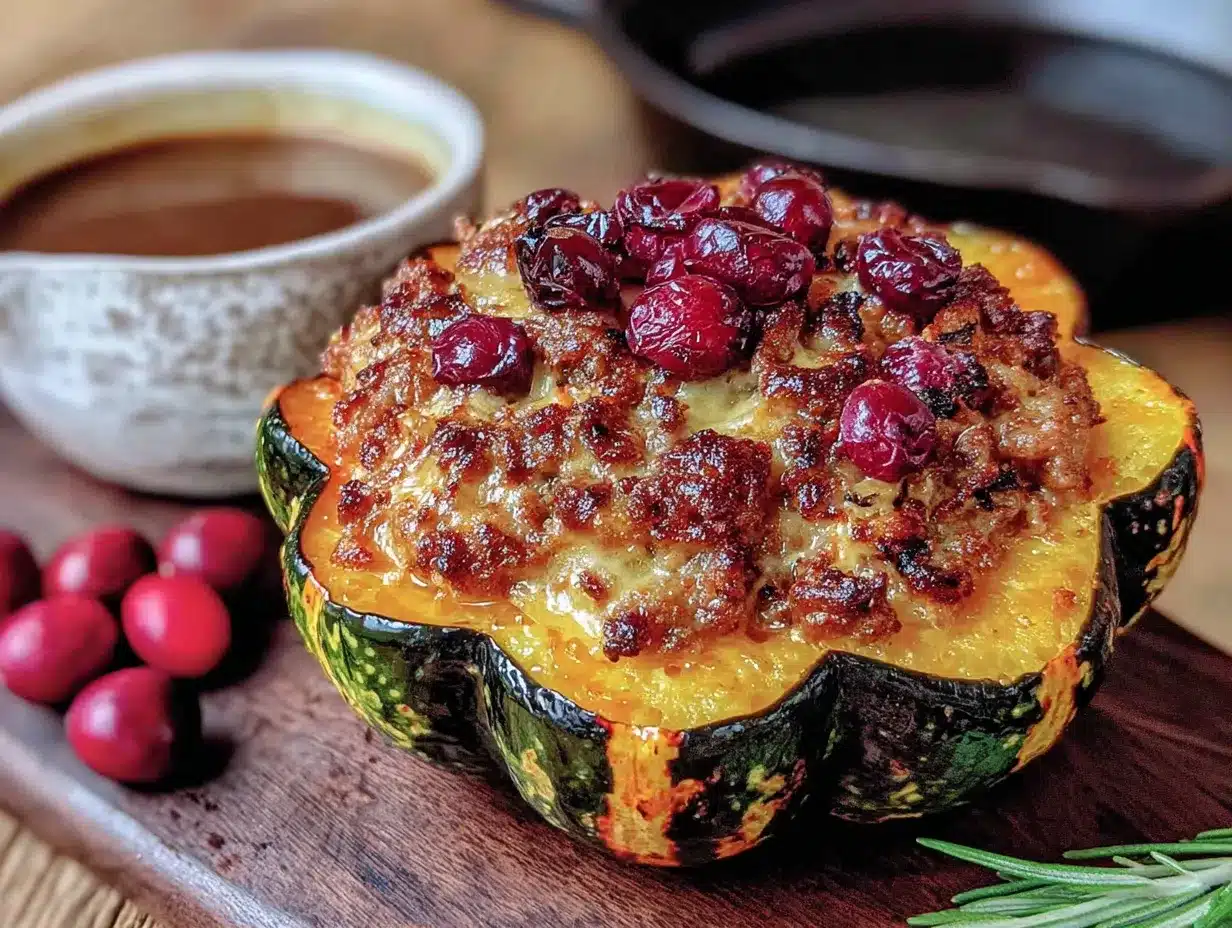
- Unbelievably Delicious: The sweet squash against the savory sausage, with those tart little cranberries popping in every bite—it’s the kind of flavor combination that makes you close your eyes after the first forkful.
What makes this recipe different from the dozens of stuffed squash recipes online? It’s the balance. Most versions go too heavy on the breadcrumbs or drown everything in cheese. This one lets each ingredient shine. The sausage brings the savory depth, the cranberries add brightness, and the acorn squash itself becomes the edible bowl that soaks up all those juices. It’s comfort food reimagined—healthier, faster, but with the same soul-soothing satisfaction that makes you want to curl up on the couch and eat straight from the squash half.
What Ingredients You Will Need
This recipe uses simple, wholesome ingredients that work together to create something genuinely special. Most of these are pantry staples or easy fall finds.
- Acorn squash (2 medium): Look for squash that feels heavy for its size and has a deep green color with some orange patches. The orange patches mean it’s riper and sweeter. I prefer medium-sized squash—about 1 to 1.5 pounds each—because they’re the perfect single-serving size.
- Ground pork sausage (1 pound): I recommend using a good-quality breakfast sausage or Italian sausage (removed from casings). My personal favorite is Applegate or Pederson’s Farms for clean ingredients. If you can find sage breakfast sausage, that’s perfect here—the sage complements the squash beautifully.
- Fresh cranberries (1 cup): Fresh or frozen both work great. If using frozen, don’t thaw them first—just toss them in. The tartness is crucial for cutting through the richness of the sausage. In a pinch, dried cranberries work, but reduce the quantity to ½ cup and add a splash of orange juice to rehydrate them.
- Yellow onion (1 medium, diced): A sweet onion like Vidalia works wonderfully, but any yellow onion will do. The onion adds a subtle sweetness that melds with the squash.
- Celery (2 stalks, diced): Don’t skip this! Celery adds that savory backbone and a tiny bit of crunch. It’s the unsung hero of this stuffing.
- Garlic (3 cloves, minced): Fresh garlic only, please. The pre-minced stuff in jars just doesn’t have the same punch.
- Fresh sage (1 tablespoon, chopped): If you can’t find fresh, use 1 teaspoon dried. But honestly, fresh sage makes a noticeable difference here—it’s earthy and slightly peppery in a way dried sage can’t quite match.
- Fresh thyme (1 teaspoon, leaves stripped): Again, fresh is best, but ½ teaspoon dried works in a pinch.
- Chicken broth (½ cup): Use low-sodium so you can control the salt. Vegetable broth works too if that’s what you have.
- Olive oil (2 tablespoons): For roasting the squash and sautéing the filling. Avocado oil is a fine substitute.
- Maple syrup (1 tablespoon): This gets brushed onto the squash before roasting. It caramelizes beautifully and plays off the savory filling. Use real maple syrup, not pancake syrup.
- Pecans (½ cup, roughly chopped): Optional but highly recommended. They add crunch and a buttery richness that ties everything together. Toast them lightly before adding for maximum flavor.
- Salt and black pepper: To taste. I use kosher salt for cooking and flaky sea salt for finishing.
Substitution note: For a dairy-free option, this recipe is naturally dairy-free as written. For a gluten-free version, just be sure your sausage is gluten-free (most are, but check the label). If you want to add cheese, a sprinkle of Parmesan or crumbled goat cheese on top before serving is lovely—but honestly, this recipe doesn’t need it.
Equipment Needed
Nothing fancy here. You probably already own everything you need.
- Large baking dish or rimmed baking sheet: I use a 9×13 baking dish because it holds the squash halves snugly, but a rimmed baking sheet works perfectly too. If using a baking sheet, line it with parchment paper for easier cleanup.
- Sharp chef’s knife: Acorn squash is tough. A dull knife is dangerous here. Use your sharpest knife and take your time.
- Large skillet: For cooking the sausage and vegetables. A 12-inch skillet gives you plenty of room to work.
- Mixing bowl: For combining the stuffing ingredients.
- Measuring cups and spoons: For accuracy, especially with the broth and maple syrup.
- Wooden spoon or spatula: For breaking up the sausage as it cooks.
- Pastry brush (optional): For brushing the maple syrup onto the squash. A paper towel works in a pinch.
- Aluminum foil: For tenting the squash if the tops brown too quickly.
I’ve made this recipe with a cheap baking sheet from the dollar store and a knife I bought at a garage sale. It still turned out great. Don’t let equipment hold you back.
Preparation Method
- Preheat your oven to 400°F (200°C). Give it a full 15-20 minutes to come to temperature. An accurate oven makes a huge difference here.
- Prepare the squash. Carefully cut each acorn squash in half from stem to tip. Scoop out the seeds and stringy pulp with a spoon. I use a metal spoon with a sharp edge—it cuts through the stringy bits more easily than a regular spoon. Place the squash halves cut-side up in your baking dish or on a lined baking sheet.
- Season and roast the squash. Brush the cut sides and the cavities with 1 tablespoon of olive oil, then brush with the maple syrup. Season generously with salt and pepper. Roast for 25 minutes. The squash should be starting to soften but still hold its shape. It will finish cooking with the filling, so don’t overdo it here.
- While the squash roasts, make the filling. Heat the remaining 1 tablespoon of olive oil in a large skillet over medium-high heat. Add the ground sausage and cook, breaking it up with your wooden spoon, until browned and cooked through—about 6-8 minutes. Don’t drain all the fat; that’s flavor! Leave about a tablespoon in the pan.
- Cook the vegetables. Add the diced onion and celery to the skillet with the sausage. Reduce heat to medium and cook until the onion is translucent and the celery is softened, about 5 minutes. Add the minced garlic and cook for another minute until fragrant. Your kitchen should smell amazing right about now.
- Add the cranberries and herbs. Stir in the fresh cranberries, chopped sage, and thyme leaves. Cook for 2-3 minutes until the cranberries start to soften and pop slightly. If they’re not popping, that’s fine—they’ll continue cooking in the oven. Add the chicken broth and let it simmer for 2 minutes, scraping up any browned bits from the bottom of the pan. This is where all the flavor lives!
- Finish the filling. Remove the skillet from heat. Stir in the chopped pecans if using. Taste and adjust seasoning with salt and pepper. Remember that the squash will add sweetness, so don’t oversalt here. The filling should be savory with bright pops of tartness from the cranberries.
- Stuff the squash. By now, your squash halves should be done with their initial roast. Carefully remove the baking dish from the oven. Spoon the sausage mixture evenly into each squash cavity, mounding it slightly. Don’t pack it too tightly—you want some air gaps for even cooking.
- Finish roasting. Return the stuffed squash to the oven and roast for another 20-25 minutes. The squash should be completely tender when pierced with a fork, and the filling should be hot and bubbly. If the tops are browning too quickly, tent loosely with aluminum foil for the last 10 minutes.
- Rest and serve. Let the stuffed squash rest for 5 minutes before serving. This allows the juices to settle and the filling to set slightly. Serve each half as a complete meal, or cut each half in half for smaller portions as a side dish.
Sensory cue: At step 9, you’re looking for squash that yields easily to a fork but isn’t mushy. The filling should be steaming, with the cranberries visibly softened and the pecans toasted at the edges. The aroma? It’s like autumn in a pan—sweet, savory, herbal, and just a little bit woodsy from the sage.
Cooking Tips & Techniques
I’ve made this recipe enough times to learn what works and what doesn’t. Here are the lessons I learned the hard way so you don’t have to.
Don’t skip the initial squash roast. I tried skipping this step once, thinking the squash would cook through during the final roast. It didn’t. The center was still crunchy while the edges were perfect. That 25-minute head start is non-negotiable for tender, creamy squash.
Watch your moisture levels. The first time I made this, I added too much broth, and the filling turned soupy. The squash released water as it cooked, and I ended up with a puddle in the baking dish. Stick to the ½ cup measurement, and if your squash seems particularly watery after the initial roast, blot the cavities with a paper towel before stuffing.
Toast your pecans separately. I know, I know—it’s an extra step. But toasting them in a dry skillet for 2-3 minutes before adding them to the filling makes a world of difference. Raw pecans get soft and almost mealy in the oven. Toasted pecans stay crunchy and taste nuttier and richer. Do it while the sausage is cooking.
Timing is everything. Here’s my multitasking strategy: Start the squash roasting first. While it’s in the oven, cook the sausage and vegetables. By the time the squash comes out for stuffing, the filling is ready to go. This keeps the whole process under an hour with no downtime.
One mistake I still make: Forgetting to check the squash for stability. Acorn squash halves can wobble on a baking sheet. If your squash is uneven, slice a tiny piece off the bottom to create a flat surface. I forgot this last Thanksgiving and spent the meal chasing a runaway squash half across the table.
Variations & Adaptations
This recipe is wonderfully flexible. Here are some ways I’ve adapted it over the years.
Vegetarian Version: Swap the sausage for 1½ cups of cooked lentils or a plant-based sausage crumble. Add an extra ¼ cup of pecans and a tablespoon of nutritional yeast for savory depth. My vegetarian friend Sarah asked for this recipe twice—she said it was the first stuffed squash that didn’t make her feel like she was missing out.
Spicy Kick: Use hot Italian sausage instead of breakfast sausage, and add a pinch of red pepper flakes with the garlic. The heat plays beautifully against the sweet squash and tart cranberries. My husband, who adds hot sauce to everything, actually ate this one without any extra heat.
Apple Addition: Dice one small apple (Honeycrisp or Granny Smith work great) and add it with the cranberries. The apple softens and sweetens as it cooks, adding another layer of fall flavor. This is my personal favorite variation for Thanksgiving.
Different Squash: No acorn squash? Use delicata squash (no need to peel—the skin is tender) or halved small sugar pumpkins. Butternut squash works too—just cut it into large chunks and scoop out a well for the filling. Adjust roasting time based on the squash you choose.
Make It a Meal Prep: Double the filling and freeze half for later. The filling freezes beautifully for up to 3 months. Just thaw overnight in the fridge, roast fresh squash, and stuff. It’s like having a shortcut to a cozy dinner anytime.
Serving & Storage Suggestions
Serving: Serve these squash halves hot from the oven, garnished with a few fresh sage leaves or a sprinkle of flaky sea salt. They’re a complete meal on their own—the squash is your vegetable, the sausage is your protein, and the pecans and cranberries add texture and brightness. If you want to round out the meal, a simple green salad with a lemon vinaigrette is perfect. The acidity cuts through the richness beautifully.
What to drink: A dry Riesling or a light Pinot Noir pairs wonderfully. For non-alcoholic options, sparkling apple cider or a hot mug of spiced tea are cozy choices.
Storage: Leftover stuffed squash keeps in an airtight container in the refrigerator for up to 4 days. The flavors actually meld and deepen overnight—I sometimes think day-two leftovers are even better. To reheat, place the squash halves in a 350°F oven for 15-20 minutes until heated through. The microwave works in a pinch, but the squash will be softer and the filling less textured.
Freezing: You can freeze the fully cooked stuffed squash for up to 2 months. Wrap each half individually in plastic wrap, then foil. Thaw overnight in the refrigerator and reheat in a 350°F oven. Note that the texture of the squash will be softer after freezing, but the flavor remains excellent.
Flavor development note: This is one of those rare recipes that tastes even better the next day. The squash absorbs the savory juices from the filling, and the cranberries continue to soften and release their tartness into everything around them. If you can resist eating it all the first night, save some for lunch tomorrow.
Nutritional Information & Benefits
Per serving (1 stuffed squash half): Approximately 420 calories, 22g protein, 35g carbohydrates, 24g fat (6g saturated), 8g fiber, 12g sugar, 680mg sodium.
Health benefits: Acorn squash is a powerhouse of nutrition. It’s loaded with vitamin A (over 100% of your daily needs in one serving), vitamin C, potassium, and fiber. The fiber helps keep you full and supports digestive health. The cranberries add antioxidants called proanthocyanidins, which are great for urinary tract health and reducing inflammation. Pecans provide healthy monounsaturated fats and magnesium, which supports muscle function and energy production.
Dietary considerations: This recipe is naturally gluten-free (check your sausage label to be sure), dairy-free, and contains no added sugar beyond the maple syrup. It’s also relatively low in carbohydrates compared to many fall comfort foods, making it suitable for moderate low-carb or diabetic-friendly meal plans. The protein from the sausage and the fiber from the squash and cranberries make this a balanced, satisfying meal that won’t spike your blood sugar.
Personal wellness note: I love that this recipe makes me feel good about eating a cozy, indulgent-tasting meal. It’s proof that eating well doesn’t mean sacrificing flavor or comfort. You get the satisfaction of a hearty dinner without the heavy feeling that comes with more traditional stuffed dishes.
Conclusion
This Wholesome Sausage-Stuffed Acorn Squash with Cranberries has become my go-to fall recipe, and I think it’s about to become yours too. It’s the kind of dish that makes you look forward to cooler weather—that first bite of sweet, tender squash against savory sausage and tart cranberries is pure comfort.
What I love most about this recipe is how adaptable it is. Make it exactly as written for a perfect weeknight dinner, or play with the variations to make it your own. Add apples, swap the sausage for lentils, or throw in some extra herbs from your garden. It’s forgiving, it’s flexible, and it always delivers.
I’d love to hear how this turns out for you. Did you add your own twist? Did your family love it as much as mine does? Drop a comment below and let me know. And if you’re looking for more cozy fall dinners, check out my creamy Tuscan chicken skillet or my maple-roasted root vegetables—they’re both perfect for this time of year.
Now go make some squash. Your kitchen is about to smell incredible.
Frequently Asked Questions
Can I use a different type of squash?
Absolutely! Delicata squash is a great substitute because the skin is tender and edible. Butternut squash also works—just cut it into large chunks and scoop out a well. Adjust roasting time based on the squash you choose, as different varieties cook at different rates.
Can I make this recipe ahead of time?
Yes! You can prepare the filling up to 2 days in advance and store it in the refrigerator. When you’re ready to serve, roast the squash, stuff it, and bake. You can also fully cook the stuffed squash and reheat it the next day—the flavors actually get better overnight.
How do I know when the squash is fully cooked?
The squash should be tender when pierced with a fork or the tip of a sharp knife. It should offer no resistance, but it shouldn’t be mushy or falling apart. If the fork slides in easily, it’s done. If there’s any resistance, give it another 5-10 minutes.
Can I use dried cranberries instead of fresh?
Yes, but with an adjustment. Dried cranberries are much sweeter and less tart than fresh. Use only ½ cup of dried cranberries, and rehydrate them in warm water or orange juice for 10 minutes before adding to the filling. Drain them well before using.
Is this recipe freezer-friendly?
Yes, but with a caveat. The fully cooked stuffed squash freezes well for up to 2 months, but the texture of the squash will be softer after thawing and reheating. For best results, freeze the filling separately and stuff freshly roasted squash when you’re ready to eat.
Pin This Recipe!
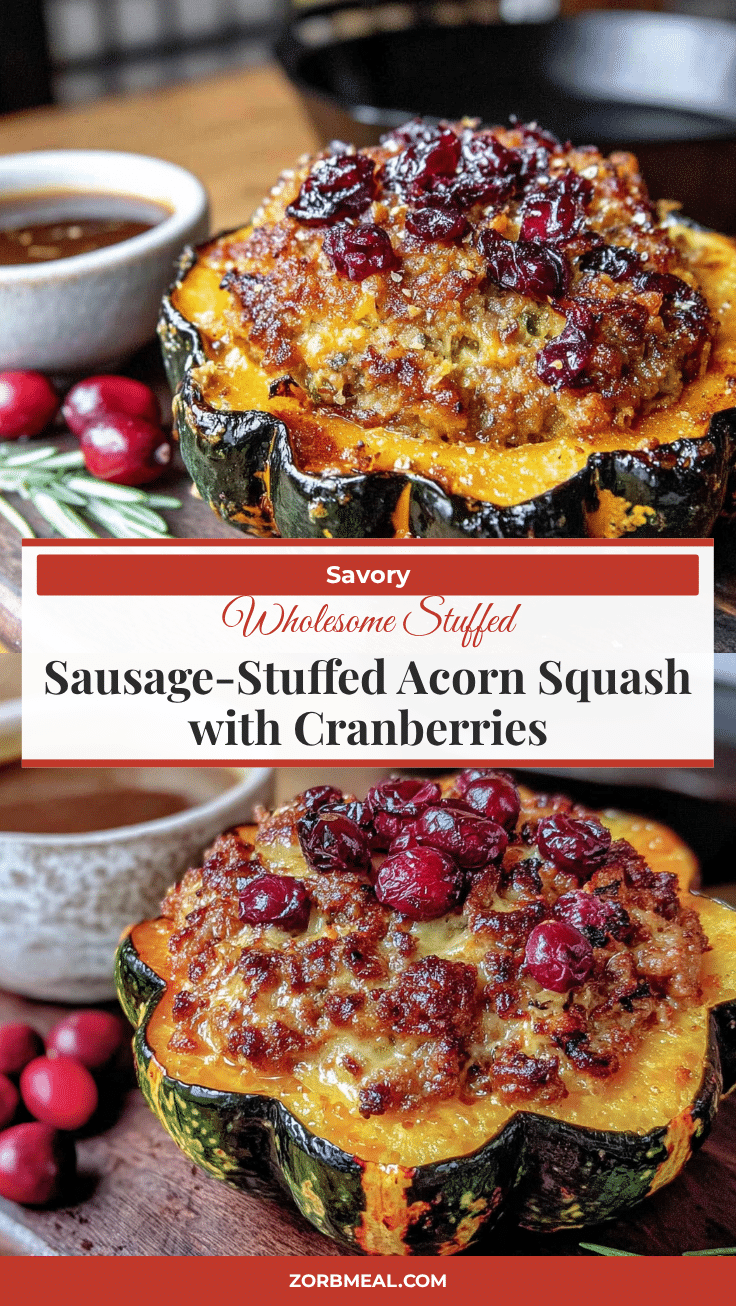
Wholesome Sausage-Stuffed Acorn Squash with Cranberries
A cozy fall dinner featuring tender acorn squash halves stuffed with savory sausage, tart cranberries, and crunchy pecans. This balanced, crowd-pleasing recipe is naturally gluten-free and dairy-free, perfect for weeknight meals or holiday gatherings.
- Prep Time: 15 minutes
- Cook Time: 45 minutes
- Total Time: 1 hour
- Yield: 4 servings 1x
- Category: Main Course
- Cuisine: American
Ingredients
- 2 medium acorn squash (about 1 to 1.5 pounds each)
- 1 pound ground pork sausage (breakfast or Italian, casings removed)
- 1 cup fresh or frozen cranberries
- 1 medium yellow onion, diced
- 2 stalks celery, diced
- 3 cloves garlic, minced
- 1 tablespoon fresh sage, chopped (or 1 teaspoon dried)
- 1 teaspoon fresh thyme leaves (or ½ teaspoon dried)
- ½ cup low-sodium chicken broth
- 2 tablespoons olive oil, divided
- 1 tablespoon maple syrup
- ½ cup pecans, roughly chopped (optional, but recommended)
- Salt and black pepper to taste
Instructions
- Preheat oven to 400°F (200°C).
- Cut each acorn squash in half from stem to tip. Scoop out seeds and stringy pulp. Place squash halves cut-side up in a baking dish or on a lined baking sheet.
- Brush cut sides and cavities with 1 tablespoon olive oil, then brush with maple syrup. Season generously with salt and pepper. Roast for 25 minutes until starting to soften but still holding shape.
- While squash roasts, heat remaining 1 tablespoon olive oil in a large skillet over medium-high heat. Add sausage and cook, breaking it up, until browned and cooked through, about 6-8 minutes. Leave about 1 tablespoon of fat in the pan.
- Add diced onion and celery to the skillet. Reduce heat to medium and cook until onion is translucent and celery softened, about 5 minutes. Add minced garlic and cook 1 minute until fragrant.
- Stir in cranberries, sage, and thyme. Cook 2-3 minutes until cranberries start to soften. Add chicken broth and simmer 2 minutes, scraping up browned bits from the pan.
- Remove skillet from heat. Stir in pecans if using. Taste and adjust seasoning with salt and pepper.
- Remove partially roasted squash from oven. Spoon sausage mixture evenly into each squash cavity, mounding slightly without packing too tightly.
- Return stuffed squash to oven and roast another 20-25 minutes until squash is tender when pierced with a fork and filling is hot and bubbly. Tent with foil if tops brown too quickly.
- Let rest 5 minutes before serving. Serve each half as a complete meal or cut in half for smaller portions as a side dish.
Notes
Don’t skip the initial squash roast—it ensures tender squash. Stick to ½ cup broth to avoid soupy filling. Toast pecans separately for best crunch. For stability, slice a tiny piece off the bottom of uneven squash halves. Leftovers keep 4 days in the fridge and taste even better the next day.
Nutrition
- Serving Size: 1 stuffed squash hal
- Calories: 420
- Sugar: 12
- Sodium: 680
- Fat: 24
- Saturated Fat: 6
- Carbohydrates: 35
- Fiber: 8
- Protein: 22
Keywords: stuffed acorn squash, sausage and cranberry, fall dinner, gluten-free, dairy-free, healthy comfort food, Thanksgiving side dish


