It was 11:47 PM on a particularly dreary Tuesday, and I was hit with a craving so specific it almost hurt. I wanted meatloaf. Not just any meatloaf, but the kind my grandmother used to make—the one with the sweet, sticky glaze that caramelized into a perfect crust. The problem? I didn’t have the ketchup-based glaze she swore by. I had a half-empty bottle of brown sugar, some Dijon mustard I’d bought on a whim, and a pound of ground beef that needed cooking. So, standing there in my pajamas, I decided to throw caution to the wind and make my own version. I mixed the brown sugar with a splash of vinegar and a dollop of that mustard, spread it over the meatloaf, and hoped for the best.
Honestly, I was a little embarrassed when it came out of the oven. The glaze was bubbling and dark, and the whole kitchen smelled incredible. I let it rest for ten minutes, cut a slice, and took a bite. Let me tell you, it was one of those moments where you just close your eyes and forget the world. The glaze wasn’t just sweet—it had this tangy, almost savory depth that cut through the richness of the meat perfectly. I stood there at the counter, eating slice after slice, wondering why I had ever doubted the process. Maybe you’ve been there—late at night, making something out of nothing, and stumbling onto a recipe that becomes your go-to.
That night, I scribbled the proportions on a napkin. The next morning, I made it again for my family, and they devoured it. My youngest, who usually picks at dinner, asked for seconds. My husband said it was the best meatloaf I’d ever made. And I knew I had something special. This isn’t just a recipe—it’s a story of a late-night impulse that turned into a family staple. It’s the kind of meal that makes a Tuesday night feel like a Sunday supper.
Why You’ll Love This Recipe
This meatloaf has become my secret weapon for busy weeknights. It’s the dish I turn to when I need something hearty, comforting, and guaranteed to please everyone at the table. Here’s why it works so well for a family on a budget:
- Affordable Ingredients: You won’t need anything fancy. Ground beef, breadcrumbs, eggs, and pantry staples—that’s it. This recipe is designed to stretch your grocery dollar without sacrificing flavor.
- Quick to Prep: The active time is only about 15 minutes. Mix, shape, glaze, and bake. It’s that simple. I often prep it during my lunch break and pop it in the oven when I get home.
- Picky Eater Approved: The brown sugar glaze is a game-changer. It adds a sweetness that even the fussiest kids love. My nephew, who claims to hate “anything with meat,” ate three slices last time we had it.
- Leftovers That Shine: This meatloaf tastes even better the next day. The flavors meld together overnight, making it perfect for lunch sandwiches or a quick dinner reheat.
- One-Bowl Wonder: Less cleanup means more time with your family. You mix everything in one bowl, shape it on a lined baking sheet, and you’re done.
What makes this version different from the rest? It’s the glaze. Most recipes use ketchup, which can be too sweet or too thin. My brown sugar glaze balances sweet, tangy, and savory in a way that feels both nostalgic and fresh. The secret is the tiny bit of Dijon mustard—it adds a subtle heat that keeps the glaze from being cloying. It’s the kind of detail that makes people ask, “What did you put in this?”
This isn’t just good—it’s the kind of meal that makes you feel like a hero after a long day. It’s comfort food that delivers on every level: easy, affordable, and absolutely delicious.
What Ingredients You Will Need
This recipe uses simple, wholesome ingredients that you likely already have in your kitchen. Each one plays a specific role in creating the perfect texture and flavor. Let’s break it down.
For the Meatloaf
- Ground Beef (2 lbs / 900 g): I recommend 80/20 ground beef. The 20% fat keeps the meatloaf moist and flavorful. Leaner blends can result in a dry loaf. If you’re watching your fat intake, you can use 85/15, but don’t go leaner than that.
- Breadcrumbs (1 cup / 120 g): Plain or Italian-style both work. I prefer plain so I can control the seasoning. Panko breadcrumbs also work well—they give a slightly lighter texture. (For a gluten-free option, use crushed pork rinds or gluten-free breadcrumbs.)
- Milk (1/2 cup / 120 ml): Whole milk adds richness, but 2% or even unsweetened almond milk works fine. The milk soaks into the breadcrumbs, creating a tender, moist loaf.
- Eggs (2 large): They bind everything together. Room temperature eggs mix in more evenly, but cold ones work in a pinch.
- Onion (1 medium, finely diced): Yellow or white onion adds sweetness and moisture. I grate mine on a box grater so it melts into the meat—no one wants a crunchy piece of onion in their meatloaf.
- Garlic (3 cloves, minced): Fresh garlic is non-negotiable here. It adds a pungent, savory note that powdered garlic just can’t replicate.
- Worcestershire Sauce (2 tablespoons): This is the secret weapon. It adds umami and depth. I personally love the Lea & Perrins brand—it’s thick and robust.
- Ketchup (1/4 cup / 60 ml): A little goes into the meat mixture for extra moisture and a hint of sweetness.
- Salt (1 teaspoon) and Black Pepper (1/2 teaspoon): Simple seasoning, but crucial. Don’t skip the salt—it brings out all the other flavors.
- Dried Thyme (1 teaspoon): It adds an earthy, slightly floral note that pairs beautifully with the beef. Fresh thyme works too—use 1 tablespoon, finely chopped.
For the Brown Sugar Glaze
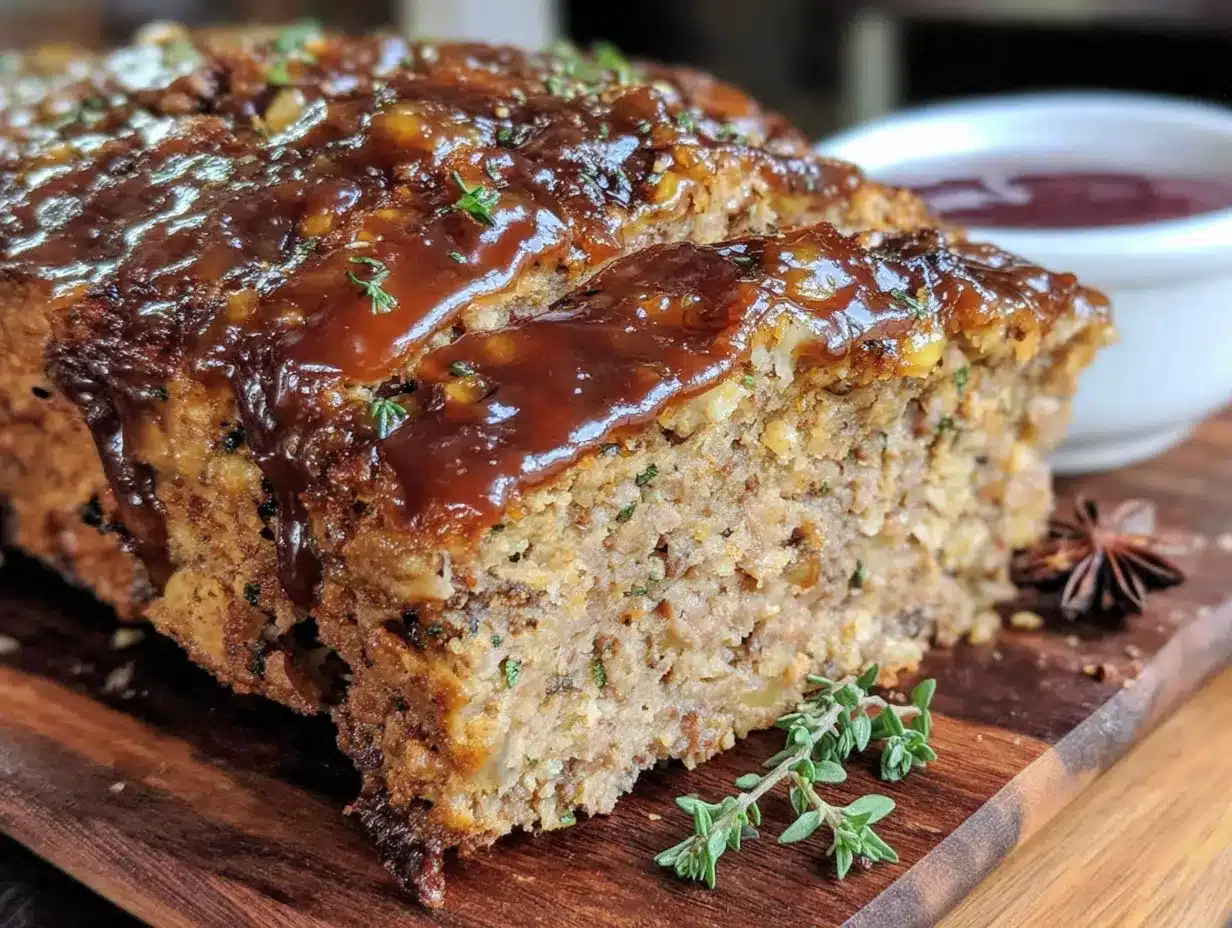
- Brown Sugar (1/2 cup / 100 g): Packed firmly. Light or dark brown sugar both work. Dark brown sugar gives a deeper, more molasses-like flavor.
- Ketchup (1/4 cup / 60 ml): This forms the base of the glaze. It adds acidity and sweetness.
- Dijon Mustard (1 tablespoon): This is my little twist. It cuts through the sweetness and adds a subtle tang. Yellow mustard works in a pinch, but Dijon is smoother.
- Apple Cider Vinegar (1 teaspoon): A splash of acidity to balance the sugar. White vinegar works too.
- Garlic Powder (1/2 teaspoon): It rounds out the flavors without being overpowering.
Ingredient Tip: For the best results, let your eggs and milk come to room temperature before mixing. It helps everything incorporate more evenly. And if you’re out of breadcrumbs, you can crush up a few slices of stale bread—it works like a charm.
Equipment Needed
You don’t need a lot of fancy equipment to make this meatloaf. Here’s what I use:
- Large Mixing Bowl: A sturdy bowl is essential for combining everything without making a mess. I use a ceramic bowl because it doesn’t slide around.
- Baking Sheet or Loaf Pan: I prefer a rimmed baking sheet lined with parchment paper. It allows the fat to drain away, resulting in a less greasy meatloaf. A standard 9×5-inch loaf pan works too, but you’ll want to drain the fat after baking.
- Box Grater: For grating the onion. It’s faster than dicing and creates a finer texture. If you don’t have one, a sharp knife and a steady hand work fine.
- Measuring Cups and Spoons: Accurate measurements matter, especially for the glaze. Invest in a good set—it makes a difference.
- Small Whisk: For mixing the glaze. A fork works in a pinch, but a whisk ensures a smooth, lump-free consistency.
- Instant-Read Thermometer: This is my most trusted tool. It takes the guesswork out of cooking. The meatloaf is done when it reaches 160°F (71°C) in the center.
Budget-Friendly Tip: If you don’t have a thermometer, you can test doneness by cutting into the center—the juices should run clear, and there should be no pink. But honestly, a thermometer is worth the $10 investment.
Preparation Method
Follow these steps, and you’ll have a perfect meatloaf every time. I’ve included time estimates and sensory cues to help you along the way.
- Preheat the Oven (10 minutes): Set your oven to 350°F (175°C). While it heats, line a rimmed baking sheet with parchment paper. This makes cleanup a breeze.
- Soak the Breadcrumbs (5 minutes): In your large mixing bowl, combine the 1 cup of breadcrumbs and 1/2 cup of milk. Stir and let it sit for 5 minutes. The breadcrumbs will absorb the milk and become a soft paste. This is the key to a moist meatloaf. You’ll know it’s ready when the mixture looks like wet sand.
- Mix the Meatloaf Base (5 minutes): Add the 2 lbs of ground beef, 2 eggs, finely diced onion, minced garlic, 2 tablespoons of Worcestershire sauce, 1/4 cup of ketchup, 1 teaspoon of salt, 1/2 teaspoon of black pepper, and 1 teaspoon of dried thyme to the bowl. Use your hands to mix everything together. Don’t overmix—stop as soon as it’s combined. Overworking the meat can make it tough. The mixture should feel soft and slightly sticky, but hold its shape when pressed.
- Shape the Meatloaf (5 minutes): Transfer the mixture to the prepared baking sheet. Shape it into a loaf about 8 inches long and 4 inches wide. Aim for an even thickness so it cooks uniformly. Don’t pack it too tightly—gently shape it like you’re forming a large meatball. The loaf should look slightly domed on top.
- Make the Glaze (3 minutes): In a small bowl, whisk together the 1/2 cup of packed brown sugar, 1/4 cup of ketchup, 1 tablespoon of Dijon mustard, 1 teaspoon of apple cider vinegar, and 1/2 teaspoon of garlic powder. Whisk until smooth. The glaze should be thick but pourable, like a thin syrup. Taste it—it should be sweet with a tangy kick.
- Glaze the Meatloaf (2 minutes): Pour about half the glaze over the top of the meatloaf. Use a spoon or pastry brush to spread it evenly, letting it drip down the sides. Reserve the remaining glaze for later. Don’t drown it—a thin, even layer is all you need for now.
- Bake (45 minutes): Place the meatloaf on the middle rack of the oven. Bake for 45 minutes. At this point, the glaze will be set and beginning to caramelize. The edges of the meatloaf should look slightly browned and crisp.
- Apply the Second Glaze (2 minutes): Remove the meatloaf from the oven and carefully spread the remaining glaze over the top. This second layer creates that beautiful, sticky crust. Return it to the oven.
- Finish Baking (15–20 minutes): Bake for another 15–20 minutes, or until the internal temperature reaches 160°F (71°C). The glaze will be bubbling and dark, almost mahogany in color. If the top starts to look too dark, tent it loosely with foil.
- Rest (10 minutes): This is the hardest part. Let the meatloaf rest on the baking sheet for 10 minutes before slicing. This allows the juices to redistribute. If you cut into it immediately, the slices will fall apart. Use a sharp knife to cut 1-inch thick slices. The inside should be moist and tender, with no pink in the center.
Pro Tip: If you’re using a loaf pan, bake for 50 minutes, then glaze and bake for another 20 minutes. You’ll need to drain the fat halfway through to prevent a greasy result.
Cooking Tips & Techniques
I’ve made this meatloaf dozens of times, and I’ve learned a few things the hard way. Here are my best tips for success:
- Don’t Skip the Soak: I once forgot to soak the breadcrumbs and ended up with a dry, crumbly loaf. The milk-soaked breadcrumbs act as a binder and moisture retainer. It’s a small step that makes a huge difference.
- Use a Thermometer: I can’t stress this enough. Meatloaf is done at 160°F (71°C). Without a thermometer, you risk overcooking it into a dry brick or undercooking it. I use a ThermoPro digital thermometer—it gives me a reading in seconds.
- Let It Rest: This is where most home cooks go wrong. I’ve ruined many meatloaves by slicing too early. The resting period allows the juices to settle. If you skip it, your slices will be soggy and fall apart.
- Line Your Pan: Parchment paper is your best friend. It prevents sticking and makes cleanup a breeze. I once used foil, and the glaze stuck to it, tearing the top of my meatloaf. Never again.
- Don’t Overmix: When you mix the ingredients, stop as soon as they’re combined. Overmixing develops the gluten in the breadcrumbs and makes the meatloaf dense and tough. Think of it like mixing a muffin batter—gentle and quick.
One of my biggest failures? I tried to make this in a slow cooker once. The texture was mushy, and the glaze never caramelized. Stick to the oven—it’s the only way to get that perfect crust.
Variations & Adaptations
This recipe is incredibly versatile. Here are a few ways to make it your own:
- Gluten-Free Version: Swap the breadcrumbs for crushed pork rinds or gluten-free panko. The texture will be slightly different, but it still works beautifully. I’ve used almond flour before, and it was surprisingly good—just a bit denser.
- Turkey Meatloaf: Substitute ground turkey for the beef. Use 93/7 lean ground turkey to avoid dryness. Add an extra tablespoon of olive oil or a grated zucchini (squeeze out the moisture) to keep it moist. The cooking time stays the same.
- Cheesy Stuffed Meatloaf: Flatten the meat mixture into a rectangle, sprinkle 1 cup of shredded cheddar or mozzarella in the center, and roll it up like a log. Bake as directed. The cheese melts into a gooey surprise in the middle. My kids go crazy for this version.
- Spicy Kick: Add 1 tablespoon of sriracha or chipotle paste to the glaze, or mix 1/2 teaspoon of cayenne pepper into the meat mixture. It adds a warm heat that pairs perfectly with the sweet glaze.
- Vegetable-Packed: Finely grate a carrot and a small zucchini, squeeze out the excess moisture, and mix them into the meat. It adds moisture and nutrients without changing the flavor. I’ve even hidden a cup of finely chopped mushrooms in there—my family never knew.
Personal Variation: I once added a tablespoon of balsamic vinegar to the glaze instead of apple cider vinegar. It gave the glaze a deeper, almost smoky sweetness. It’s now my go-to when I’m feeling fancy.
Serving & Storage Suggestions
This meatloaf is a meal in itself, but it pairs beautifully with classic sides. Here’s how I serve and store it.
Serving: Let the meatloaf rest for 10 minutes, then slice it into 1-inch thick pieces. Serve it warm with mashed potatoes and a simple green vegetable like steamed green beans or roasted broccoli. The glaze makes a natural gravy—spoon any extra from the pan over the slices. For a heartier meal, serve it with a side of buttered egg noodles or a crisp garden salad.
Storage: Leftover meatloaf keeps beautifully. Store slices in an airtight container in the refrigerator for up to 4 days. The flavors actually meld and deepen overnight. I love making a meatloaf sandwich the next day—just toast some sourdough, add a slice of cheddar, and heat the meatloaf in a skillet until crispy.
Freezing: This meatloaf freezes like a dream. Let it cool completely, then wrap it tightly in plastic wrap and foil. Freeze for up to 3 months. To reheat, thaw it in the refrigerator overnight, then warm slices in a 350°F (175°C) oven for 10–15 minutes. You can also freeze the uncooked meatloaf—shape it, wrap it, and freeze. Thaw in the fridge before baking.
Reheating: The best way to reheat is in a skillet over medium heat. Add a splash of water or beef broth to the pan, cover, and heat for 3–4 minutes per side. This keeps the meatloaf moist. The microwave works in a pinch, but it can dry it out.
Nutritional Information & Benefits
Here’s the estimated nutritional breakdown per serving (based on 8 servings):
- Calories: 420
- Protein: 28g
- Fat: 22g
- Carbohydrates: 28g
- Fiber: 1g
- Sugar: 18g
- Sodium: 680mg
Health Benefits: Ground beef is an excellent source of iron and B vitamins, which support energy levels and red blood cell production. The onions and garlic provide antioxidants and prebiotic fiber for gut health. While this is a comfort food, you can lighten it up by using leaner beef (85/15) and swapping the milk for unsweetened almond milk.
Dietary Considerations: This recipe contains gluten (breadcrumbs) and dairy (milk). For a gluten-free version, use gluten-free breadcrumbs or crushed pork rinds. For a dairy-free version, use unsweetened almond milk and dairy-free butter in the glaze. It’s not suitable for a low-carb diet unless you substitute the breadcrumbs with almond flour or crushed pork rinds.
Conclusion
This meatloaf has earned a permanent spot in my weekly dinner rotation. It’s the kind of recipe that proves you don’t need fancy ingredients or hours in the kitchen to create something truly memorable. The brown sugar glaze is the star—it’s sweet, tangy, and caramelizes into a crust that makes every bite special. Whether you’re feeding a crowd or just looking for a cozy meal on a Tuesday night, this recipe delivers every single time.
I’d love to hear how it turns out for you. Did you try one of the variations? Did your kids ask for seconds? Drop a comment below and let me know—I read every single one. And if you loved this recipe, share it with a friend who needs a new go-to dinner. Happy cooking, and remember: the best meals are the ones made with a little bit of love and a lot of brown sugar.
Frequently Asked Questions
Can I make this meatloaf ahead of time?
Absolutely. You can assemble the meatloaf (without the glaze) up to 24 hours in advance. Cover it and store it in the refrigerator. When you’re ready to bake, add the glaze and follow the baking instructions. You may need to add 5–10 minutes to the cooking time since the meat is cold.
Why did my meatloaf fall apart?
This usually happens for two reasons: not enough binder or cutting it too soon. Make sure you’re using enough breadcrumbs and eggs. And always let it rest for 10 minutes before slicing—this allows the proteins to set and hold together.
Can I use ground pork or veal instead of beef?
Yes, you can use a mix. A combination of beef, pork, and veal is classic for meatloaf. If you use all pork, the meatloaf will be richer and more tender. Just make sure the internal temperature reaches 160°F (71°C) regardless of the meat blend.
How do I prevent the glaze from burning?
If the glaze starts to look too dark before the meatloaf is fully cooked, tent the top loosely with foil. This will protect the glaze while the inside continues to cook. Also, make sure your oven temperature is accurate—an overly hot oven can burn the sugar.
Can I double this recipe?
Yes, this recipe doubles beautifully. Just shape the meat into two loaves on separate baking sheets. Make sure there’s enough space between them for hot air to circulate. The baking time may increase by 10–15 minutes, so always check the internal temperature.
Pin This Recipe!
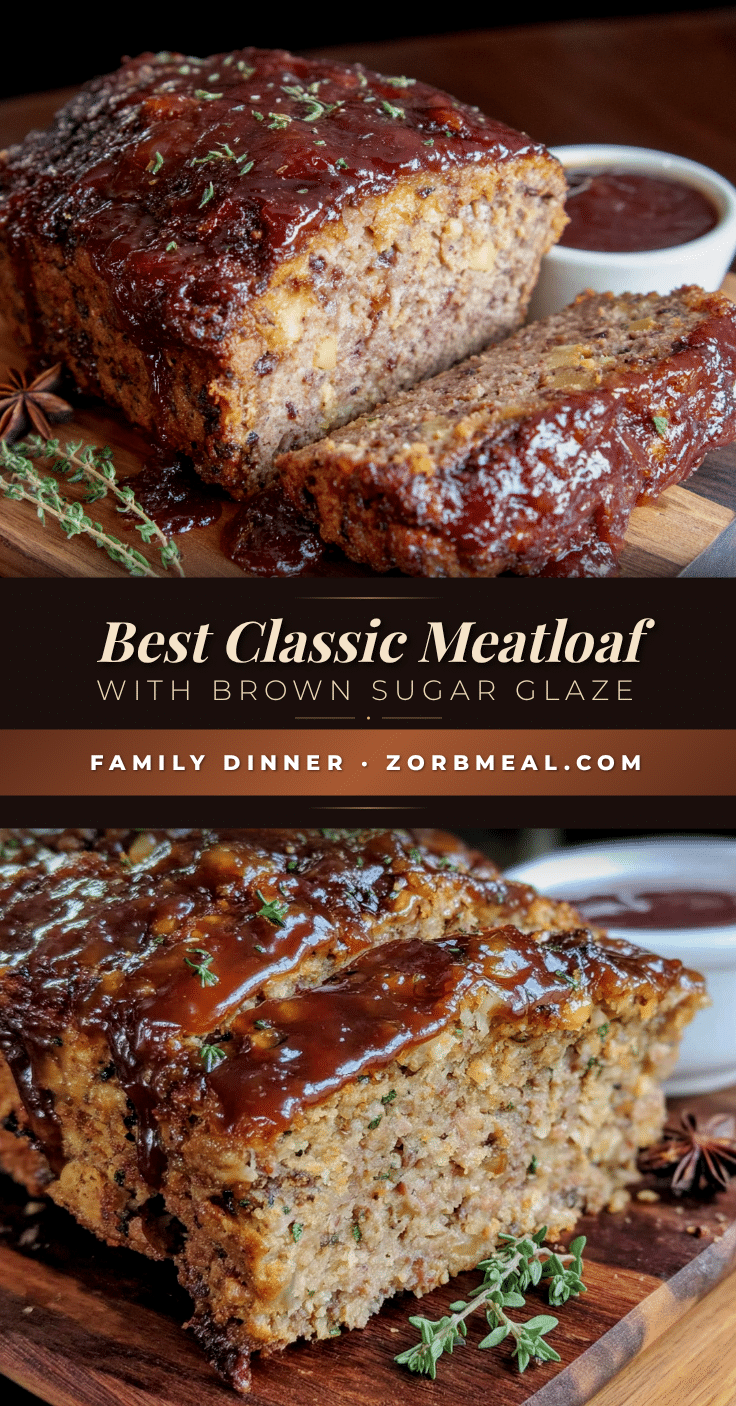
Best Classic Meatloaf with Brown Sugar Glaze Recipe
This classic meatloaf features a sweet and tangy brown sugar glaze that caramelizes into a perfect crust. It’s an easy, affordable, and comforting meal that’s perfect for busy weeknights and picky eaters.
- Prep Time: 15 minutes
- Cook Time: 60 minutes
- Total Time: 1 hour 15 minutes
- Yield: 8 servings 1x
- Category: Main Course
- Cuisine: American
Ingredients
- 2 lbs (900 g) ground beef (80/20)
- 1 cup (120 g) breadcrumbs (plain or Italian-style)
- 1/2 cup (120 ml) milk (whole or 2%)
- 2 large eggs
- 1 medium onion, finely diced
- 3 cloves garlic, minced
- 2 tablespoons Worcestershire sauce
- 1/4 cup (60 ml) ketchup
- 1 teaspoon salt
- 1/2 teaspoon black pepper
- 1 teaspoon dried thyme
- 1/2 cup (100 g) packed brown sugar (light or dark)
- 1/4 cup (60 ml) ketchup (for glaze)
- 1 tablespoon Dijon mustard
- 1 teaspoon apple cider vinegar
- 1/2 teaspoon garlic powder
Instructions
- Preheat the oven to 350°F (175°C). Line a rimmed baking sheet with parchment paper.
- In a large mixing bowl, combine the breadcrumbs and milk. Let sit for 5 minutes until the breadcrumbs are soft and the mixture looks like wet sand.
- Add the ground beef, eggs, onion, garlic, Worcestershire sauce, 1/4 cup ketchup, salt, pepper, and thyme to the bowl. Mix with your hands until just combined. Do not overmix.
- Transfer the mixture to the prepared baking sheet and shape into a loaf about 8 inches long and 4 inches wide. Aim for even thickness.
- In a small bowl, whisk together the brown sugar, 1/4 cup ketchup, Dijon mustard, apple cider vinegar, and garlic powder until smooth.
- Pour about half the glaze over the meatloaf and spread evenly. Reserve the remaining glaze.
- Bake for 45 minutes. The glaze should be set and beginning to caramelize.
- Remove from the oven and spread the remaining glaze over the top.
- Return to the oven and bake for another 15–20 minutes, or until the internal temperature reaches 160°F (71°C). If the top darkens too quickly, tent loosely with foil.
- Let the meatloaf rest on the baking sheet for 10 minutes before slicing into 1-inch thick slices.
Notes
For best results, let eggs and milk come to room temperature before mixing. If using a loaf pan, bake for 50 minutes before glazing, then bake another 20 minutes, draining fat halfway through. Leftovers keep in the refrigerator for up to 4 days and freeze well for up to 3 months.
Nutrition
- Serving Size: 1 slice (1/8 of reci
- Calories: 420
- Sugar: 18
- Sodium: 680
- Fat: 22
- Saturated Fat: 8
- Carbohydrates: 28
- Fiber: 1
- Protein: 28
Keywords: meatloaf, brown sugar glaze, classic meatloaf, comfort food, easy dinner, ground beef recipe


