My neighbor Jen asked why I couldn’t just dump the canned clams in at the same time as the potatoes. I started to explain why that wouldn’t work—something about the clams getting tough, the milk curdling, the whole thing being a disaster. Then I stopped. I honestly had no good reason. I’d just always done it that way, adding them at the very end like some sacred rule. Jen was waiting, spatula in hand, and I could see her point. It would save a step. So I shrugged and said, “Let’s try it your way.”
You know that feeling when you’re absolutely certain something is going to fail, and then it just… works? That was this chowder. The clams weren’t rubbery. The broth stayed creamy and smooth. And honestly, it tasted better than my usual version. Maybe it was the extra time the clam juice had to mingle with the potatoes. Maybe I just needed to get over myself. Either way, I’ve been making it Jen’s way ever since, and I haven’t looked back.
This is the chowder I make on a Tuesday night when I’m tired and hungry and the last thing I want to do is hover over a pot. It’s quick, it’s forgiving, and it tastes like you spent hours on it. I mean, that’s the dream, right? Maybe you’ve been there—standing in the kitchen, staring at a can of clams, wondering if you could just skip a step. Trust me. You can.
Why You’ll Love This Recipe
This isn’t just another clam chowder recipe. After testing this dozens of times, I can tell you exactly why this one works when others fall flat. It’s the method, the timing, and a few small tricks I picked up from making it for my own family on busy weeknights.
- Quick & Easy: This chowder comes together in about 30 minutes from start to finish. No soaking dried clams, no scrubbing shells, no complicated steps. Perfect for those nights when you need dinner on the table fast.
- Simple Ingredients: You likely already have onion, potatoes, butter, and milk in your kitchen. The only special item is canned clams, which are a pantry staple for me now. No fancy grocery trips required.
- Perfect for Weeknights: This is comfort food that respects your time. It’s hearty enough to be a main dish but quick enough to make after a long day at work.
- Crowd-Pleaser: Even my kids, who usually turn their noses up at soup, ask for seconds. It’s creamy without being heavy, and the clam flavor is there but not overwhelming.
- Unbelievably Delicious: The texture is velvety, the potatoes are tender, and the smoky bacon adds just the right savory note. It’s the kind of chowder that makes you close your eyes after the first spoonful.
What makes this different from the rest? It’s the simple trick of simmering the clam juice with the potatoes. That one change infuses the entire chowder with deep, briny flavor without needing to buy fresh clams. It’s not just another version—it’s my best version, tested and approved by a very skeptical neighbor.
What Ingredients You Will Need
This recipe uses simple, wholesome ingredients to deliver that classic New England flavor without the fuss. Most of these are pantry staples or easy to find at any grocery store. I’ve included a few notes on what to look for based on my own trial and error.
- Bacon (4 slices, chopped): I prefer thick-cut bacon for more smoky flavor and a better texture. It adds a savory base that makes the chowder feel rich. You can also use salt pork if you have it.
- Yellow onion (1 medium, diced): A standard yellow onion works best here. It’s sweet enough to balance the saltiness of the bacon and clams. I’ve tried red onion in a pinch, but it’s a bit too sharp.
- Celery (2 ribs, diced): Celery adds that classic aromatic backbone. Don’t skip it—it gives the chowder a fresh, slightly peppery note that cuts through the creaminess.
- Garlic (2 cloves, minced): Fresh garlic is key here. I’ve used jarred minced garlic in a hurry, and it just doesn’t have the same punch. Take the extra 30 seconds to mince a fresh clove.
- All-purpose flour (3 tablespoons): This thickens the chowder just enough. For a gluten-free version, you can use cornstarch mixed with a little cold water, but the texture will be slightly different.
- Chicken broth (2 cups): I use low-sodium broth so I can control the salt level. Homemade is great, but a good store-bought brand works fine. I recommend Swanson or Kitchen Basics for consistent flavor.
- Canned chopped clams (3 cans, 6.5 ounces each, with juice): This is the star of the show. Look for clams packed in their own juice, not water. I prefer the Snow’s or Bumble Bee brands. Don’t drain them—you need that juice!
- Russet potatoes (2 medium, peeled and diced): Russets break down slightly as they cook, which helps thicken the chowder naturally. Yukon Golds also work, but they hold their shape a bit more.
- Heavy cream (1 cup): This gives the chowder its luxurious texture. For a lighter version, you can use half-and-half, but it won’t be quite as creamy. I don’t recommend milk alone—it’s too thin.
- Whole milk (1 cup): Whole milk balances the richness of the cream. I’ve tried 2% milk, and it works, but the chowder is noticeably thinner.
- Fresh thyme (1 teaspoon, chopped): Thyme adds an earthy, slightly floral note that complements the clams beautifully. Dried thyme works in a pinch—use half the amount.
- Bay leaf (1): This adds depth during simmering. Remember to remove it before serving! I once forgot and someone found it in their bowl—not a disaster, but not ideal.
- Salt and black pepper (to taste): Go easy on the salt at first. The bacon and clam juice are already salty. I usually add a pinch at the end and adjust from there.
- Fresh parsley (2 tablespoons, chopped, for garnish): Optional, but it adds a pop of color and freshness. I like to sprinkle it on right before serving.
Equipment Needed
You don’t need a ton of fancy equipment to make this chowder. I’ve made it in cramped vacation rentals and my own well-stocked kitchen, and it always turns out the same.
- Large pot or Dutch oven (4-5 quart): This is your main vessel. I use my trusty Le Creuset Dutch oven, but any heavy-bottomed pot works. A thin pot might scorch the milk, so go for something sturdy.
- Sharp chef’s knife: For dicing the onion, celery, and potatoes. A dull knife makes this job so much harder—I learned that the hard way after nearly slicing my finger.
- Cutting board: Any board will do. I prefer a large wooden one because it doesn’t slide around.
- Wooden spoon or silicone spatula: For stirring. A metal spoon can scratch your pot if you’re using nonstick.
- Measuring cups and spoons: For accuracy. I’m usually a “glug and guess” cook, but this recipe benefits from precise measurements, especially for the flour and cream.
- Can opener: Obvious, but easy to forget. I’ve definitely had to stab a can open with a knife before—don’t be me.
- Small bowl (optional): For mixing the flour with a little cold water if you want to avoid lumps. I don’t always bother, but it’s a good trick for beginners.
Preparation Method
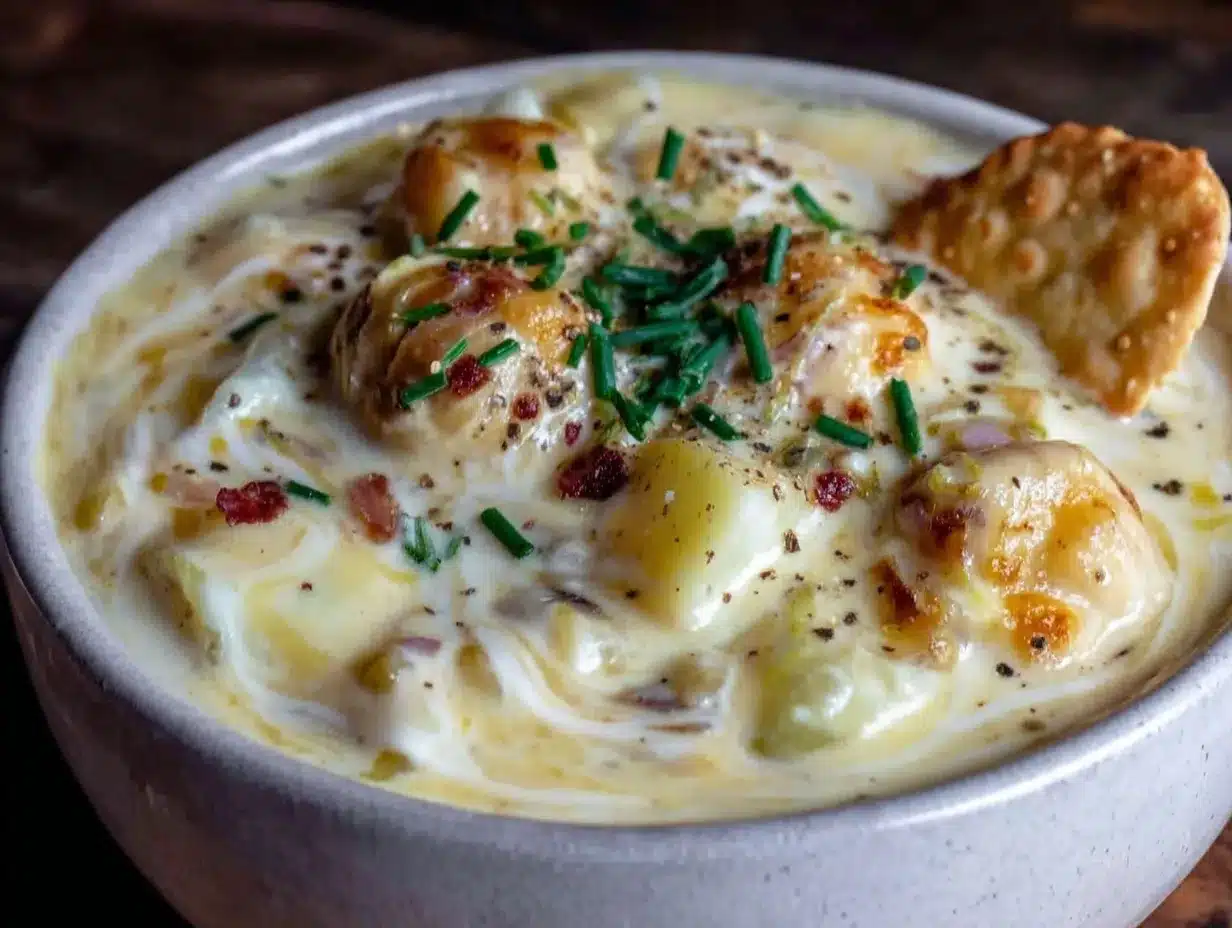
Here’s how to make this chowder step by step. I’ve included time estimates and sensory cues so you know exactly what to look for at each stage.
- Cook the bacon (5 minutes): Place your large pot over medium heat. Add the chopped bacon and cook, stirring occasionally, until it’s crispy and the fat is rendered. This usually takes about 5 minutes. You’ll know it’s ready when the kitchen smells amazing and the bacon is deep golden brown. Use a slotted spoon to transfer the bacon to a paper towel-lined plate, leaving the fat in the pot.
- Sauté the aromatics (3-4 minutes): Add the diced onion and celery to the pot with the bacon fat. Cook over medium heat, stirring often, until the onion is translucent and soft—about 3 to 4 minutes. The celery should still have a little crunch. Add the minced garlic and cook for another 30 seconds until fragrant. Don’t let the garlic burn, or it will taste bitter.
- Make the roux (2 minutes): Sprinkle the flour over the cooked vegetables. Stir constantly with your wooden spoon for about 1 to 2 minutes. The mixture will look pasty and smell slightly toasty. This step is crucial for thickening the chowder—don’t skip it. I once did, and my chowder was watery and sad.
- Add the liquids (5 minutes): Slowly pour in the chicken broth while stirring continuously to prevent lumps. Then add the clam juice from the cans (reserve the clams for later). Stir until the mixture is smooth. Add the diced potatoes, fresh thyme, and bay leaf. Bring the chowder to a gentle boil, then reduce the heat to low and let it simmer. The potatoes should be fork-tender after about 10 to 12 minutes. You’ll see the liquid start to thicken slightly.
- Add the clams and dairy (3 minutes): Once the potatoes are tender, remove the bay leaf. Stir in the heavy cream, whole milk, and the reserved chopped clams. Cook over low heat for another 2 to 3 minutes. Do not let it boil—boiling can cause the dairy to curdle and the clams to become tough. You want the chowder to be hot and steaming, not bubbling vigorously.
- Season and finish (2 minutes): Taste the chowder and add salt and pepper as needed. Remember that the bacon and clams add salt, so start with a small pinch. If the chowder is too thick, stir in a splash of milk or broth. If it’s too thin, let it simmer for a few more minutes uncovered. Stir in the crispy bacon (reserve a little for garnish if you want).
- Serve immediately: Ladle the chowder into bowls and garnish with fresh parsley and the reserved bacon bits. Serve with crusty bread or oyster crackers. The chowder will be steaming hot, creamy, and absolutely irresistible.
Cooking Tips & Techniques
Over the years, I’ve made every mistake you can imagine with clam chowder. Here’s what I’ve learned so you don’t have to repeat my failures.
- Don’t rush the roux: The flour needs to cook for at least a minute to lose its raw taste. I once rushed this step, and my chowder had a weird, pasty flavor. Take the time to stir it until it smells slightly nutty.
- Keep the heat low when adding dairy: This is the number one mistake people make. High heat will curdle the cream and milk, leaving you with a grainy, separated mess. I’ve done it more times than I care to admit. Keep the flame on low and stir gently.
- Use the clam juice: This is where all the flavor is. Don’t drain the cans! The juice adds that authentic briny taste that makes New England clam chowder what it is. If you use fresh clams, you’ll need to steam them and reserve the liquid.
- Cut potatoes evenly: Dice your potatoes into uniform 1/2-inch cubes. If some pieces are bigger, they’ll take longer to cook, and you’ll end up with a mix of mushy and crunchy potatoes. I learned this after serving a chowder with raw potato chunks—not my finest moment.
- Multitask wisely: While the potatoes are simmering, clean your cutting board and measuring cups. This saves time later and keeps your kitchen from looking like a disaster zone. I always forget this and end up with a sink full of dirty dishes.
- Taste as you go: Seasoning is a process, not a single step. Taste the chowder after adding the broth, then again after the cream, and finally adjust at the end. This ensures the flavors are balanced.
Variations & Adaptations
This recipe is flexible, and I’ve tried several variations over the years. Here are a few ways to make it your own.
- Dairy-Free Version: Swap the heavy cream and whole milk for full-fat coconut milk and unsweetened oat milk. The coconut milk adds a slight sweetness, but it’s surprisingly good. I made this for a friend with lactose intolerance, and she asked for the recipe. Use olive oil instead of bacon fat if you want to keep it vegan.
- Gluten-Free Option: Replace the all-purpose flour with a gluten-free all-purpose blend or use cornstarch. For cornstarch, mix 2 tablespoons with 2 tablespoons of cold water to make a slurry, then stir it in after adding the broth. It thickens quickly, so watch closely.
- Add Vegetables: I’ve added corn kernels, diced carrots, and even chopped kale to this chowder. Corn adds sweetness, carrots add color, and kale adds a healthy touch. Just add them with the potatoes so they cook through.
- Spicy Twist: Add a pinch of red pepper flakes or a diced jalapeño along with the garlic. The heat cuts through the richness beautifully. I tried this on a whim one cold evening, and it’s become my secret version.
- Seafood Medley: Add some cooked shrimp or scallops along with the clams. This turns your chowder into a luxurious seafood stew. Just be careful not to overcook the seafood—add it at the very end.
Serving & Storage Suggestions
This chowder is best served hot, right after it’s made. But here’s how to handle leftovers and make the most of it.
- Serving Temperature: Serve the chowder piping hot in deep bowls. I like to warm the bowls by filling them with hot water for a minute before ladling in the soup. It keeps the chowder hot longer.
- Pairings: Crusty sourdough bread is my go-to for dipping. Oyster crackers are the classic choice, and they add a nice salty crunch. A simple green salad with a tangy vinaigrette balances the richness.
- Storage: Let the chowder cool completely before storing it in an airtight container. It will keep in the refrigerator for up to 4 days. The flavors actually meld and deepen overnight, so leftovers are often better than the first batch.
- Freezing: You can freeze this chowder, but the dairy may separate slightly when thawed. If you plan to freeze it, leave out the cream and milk, then add them when reheating. Freeze for up to 3 months. Thaw in the refrigerator overnight.
- Reheating: Reheat the chowder gently over low heat on the stovetop, stirring occasionally. Do not boil it. If it seems too thick after refrigeration, stir in a splash of milk or broth to thin it out. Microwave reheating works in a pinch, but use 50% power and stir every 30 seconds.
- Flavor Development: The chowder thickens as it sits, so don’t be alarmed if it looks more like a stew the next day. That’s normal. Just add a little liquid when reheating to restore the creamy consistency.
Nutritional Information & Benefits
This chowder is comfort food, but it also has some surprising nutritional perks. Here’s a rough estimate per serving (based on 6 servings).
- Calories: Approximately 380 per serving
- Protein: 18 grams (from clams, bacon, and dairy)
- Fat: 22 grams (mostly from bacon and cream)
- Carbohydrates: 28 grams (from potatoes and flour)
- Fiber: 2 grams
- Sodium: 850 mg (varies based on broth and clam juice saltiness)
Clams are an excellent source of vitamin B12, iron, and selenium. They’re also packed with lean protein. Potatoes provide potassium and vitamin C, while the onions and celery add fiber and antioxidants. I won’t pretend this is a health food, but it’s a balanced meal with real nutritional value. I feel good serving it to my family because it’s made from whole ingredients, not processed stuff. If you’re watching your sodium, use low-sodium broth and rinse the canned clams (though you’ll lose some flavor).
Conclusion
This Best Easy New England Clam Chowder Recipe is proof that you don’t need to spend hours in the kitchen to make something truly special. It’s quick, it’s forgiving, and it tastes like a warm hug in a bowl. I love that I can make it on a busy weeknight and still feel like I’ve accomplished something amazing. The fact that I learned it from a neighbor who proved me wrong just makes it better.
I honestly hope you give this a try. Customize it however you like—add more veggies, make it spicy, or keep it classic. The beauty of this recipe is that it works with whatever you have on hand. If you make it, I’d love to hear how it turned out. Drop a comment below or tag me in your photos. And hey, if your neighbor suggests something crazy, maybe listen to them. You might just end up with your new favorite recipe.
Frequently Asked Questions
Can I use fresh clams instead of canned?
Absolutely. Steam about 2 pounds of fresh littleneck clams in a little white wine until they open, then chop the meat. Strain the steaming liquid through a coffee filter to remove any grit, and use that in place of the canned clam juice. It’s a bit more work, but the flavor is incredible.
Why is my chowder too thin?
This usually happens if the roux wasn’t cooked long enough or if you added too much liquid. To fix it, let the chowder simmer uncovered for a few extra minutes to evaporate some liquid. You can also mash a few of the potatoes against the side of the pot to release their starch, which acts as a natural thickener.
Can I make this chowder in a slow cooker?
Yes, but with some adjustments. Cook the bacon and sauté the aromatics on the stovetop first, then transfer everything except the clams and dairy to the slow cooker. Cook on low for 4 to 6 hours. Stir in the clams, cream, and milk during the last 30 minutes. Don’t let it sit on warm for too long after adding the dairy, or it might curdle.
How do I prevent the chowder from curdling?
Keep the heat low when adding the dairy, and don’t let the chowder boil after the cream and milk are in. Also, make sure your dairy is at room temperature before adding it—cold dairy is more likely to curdle when it hits hot liquid. I always set my cream and milk on the counter while I prep the other ingredients.
Can I omit the bacon to make it vegetarian?
Yes, but you’ll lose a lot of flavor. Use 2 tablespoons of butter or olive oil to sauté the aromatics instead of bacon fat. You can also add a dash of smoked paprika to mimic that smoky taste. For a fully vegetarian version, use vegetable broth and add some corn or mushrooms for extra depth.
Pin This Recipe!
Best Easy New England Clam Chowder Recipe

This quick and forgiving clam chowder comes together in about 30 minutes using simple ingredients like canned clams, bacon, and potatoes. It’s creamy, comforting, and perfect for busy weeknights.
- Prep Time: 10 minutes
- Cook Time: 25 minutes
- Total Time: 35 minutes
- Yield: 6 servings 1x
- Category: Main Course
- Cuisine: American
Ingredients
- 4 slices bacon, chopped
- 1 medium yellow onion, diced
- 2 ribs celery, diced
- 2 cloves garlic, minced
- 3 tablespoons all-purpose flour
- 2 cups low-sodium chicken broth
- 3 cans (6.5 ounces each) chopped clams, with juice
- 2 medium Russet potatoes, peeled and diced
- 1 cup heavy cream
- 1 cup whole milk
- 1 teaspoon fresh thyme, chopped
- 1 bay leaf
- Salt and black pepper to taste
- 2 tablespoons fresh parsley, chopped (for garnish)
Instructions
- Cook the bacon: Place a large pot or Dutch oven over medium heat. Add the chopped bacon and cook, stirring occasionally, until crispy and the fat is rendered, about 5 minutes. Use a slotted spoon to transfer the bacon to a paper towel-lined plate, leaving the fat in the pot.
- Sauté the aromatics: Add the diced onion and celery to the pot with the bacon fat. Cook over medium heat, stirring often, until the onion is translucent and soft, about 3 to 4 minutes. Add the minced garlic and cook for another 30 seconds until fragrant.
- Make the roux: Sprinkle the flour over the cooked vegetables. Stir constantly for 1 to 2 minutes until the mixture is pasty and smells slightly toasty.
- Add the liquids: Slowly pour in the chicken broth while stirring continuously to prevent lumps. Add the clam juice from the cans (reserve the clams for later). Stir until smooth. Add the diced potatoes, fresh thyme, and bay leaf. Bring to a gentle boil, then reduce heat to low and simmer until the potatoes are fork-tender, about 10 to 12 minutes.
- Add the clams and dairy: Once the potatoes are tender, remove the bay leaf. Stir in the heavy cream, whole milk, and the reserved chopped clams. Cook over low heat for another 2 to 3 minutes. Do not let it boil.
- Season and finish: Taste the chowder and add salt and pepper as needed. If too thick, stir in a splash of milk or broth. If too thin, let it simmer uncovered for a few more minutes. Stir in the crispy bacon (reserve a little for garnish if desired).
- Serve immediately: Ladle the chowder into bowls and garnish with fresh parsley and reserved bacon bits. Serve with crusty bread or oyster crackers.
Notes
Don’t rush the roux; cook the flour for at least a minute to avoid a raw taste. Keep the heat low when adding dairy to prevent curdling. Use the clam juice from the cans for maximum flavor. Cut potatoes into uniform 1/2-inch cubes for even cooking. Taste and adjust seasoning as you go.
Nutrition
- Serving Size: 1 bowl (about 1.5 cu
- Calories: 380
- Sugar: 4
- Sodium: 850
- Fat: 22
- Saturated Fat: 12
- Carbohydrates: 28
- Fiber: 2
- Protein: 18
Keywords: New England clam chowder, easy clam chowder, quick clam chowder, creamy clam chowder, weeknight dinner, comfort food


