My husband swore he hated eggnog for fifteen years. Fifteen years. He’d make this face—you know the one—every time a carton appeared in the grocery store aisle around November. “Too thick,” he’d say. “Tastes like liquid pumpkin spice with an identity crisis.” I stopped trying to convince him. Honestly, I figured some battles just aren’t worth fighting when you’re already negotiating bedtimes and broccoli consumption. Then last December, I got the itch to make a batch from scratch. Not for him. For me. I wanted that rich, silky texture you simply cannot get from a carton, and I was willing to go through the whole egg-separating, milk-tempering dance to get it. I made a full batch on a Tuesday afternoon, let it chill overnight, and poured myself a glass the next evening while he was putting the kids to bed.
He walked into the kitchen, saw me sipping from a small glass, and asked what it was. I told him. He made the face. But then—and I will never forget this—he said, “Let me just try a sip.” One sip turned into him finishing my glass. Then he asked if there was more. I mean, I just stood there holding the empty glass, watching him wipe his mouth with the back of his hand like he’d just discovered a secret the rest of us had been keeping from him. “That’s not eggnog,” he said. “That’s… actually good.” Maybe you’ve been there with a picky spouse or a skeptical kid. That moment when you catch them in the act of proving themselves wrong is pure gold. This is the recipe that did it, and it’s the one I’ve been making every holiday season since.
Why You’ll Love This Recipe
This isn’t just another eggnog recipe you find online and forget about by January. This is the one that turns skeptics into believers and makes your holiday gatherings feel a little more special without breaking the bank. I’ve tested this version more times than I can count, tweaking the ratios until it hit that sweet spot between rich and drinkable.
- Made with Simple Pantry Ingredients: You probably already have eggs, milk, sugar, and vanilla in your kitchen. No fancy extracts or hard-to-find spices required.
- Perfect for Family Gatherings: Whether it’s Christmas morning, a cozy movie night, or a holiday brunch, this eggnog fits right in. It pleases the grown-ups and the kids (just leave out the optional bourbon for the little ones).
- Budget-Friendly and Crowd-Pleasing: A batch costs a fraction of what you’d pay for store-bought, and it tastes ten times better. Your wallet and your guests will thank you.
- Unbelievably Smooth and Silky: The texture is what gets people. It’s thick but not gloppy, rich but not heavy. That first sip is honestly a little magical.
- Make-Ahead Friendly: This eggnog actually gets better after a day or two in the fridge. The flavors meld together beautifully, so you can prep it ahead and cross one thing off your holiday to-do list.
What makes this recipe different from the rest? It’s the tempering technique. I know that sounds fancy, but it’s really just a simple trick that prevents your eggs from scrambling and gives you that velvety texture every time. No shortcuts, no weird ingredients—just a little patience and a whisk. This is comfort food reimagined: homemade, honest, and absolutely worth the twenty minutes it takes to pull together.
What Ingredients You Will Need
This recipe uses simple, wholesome ingredients to deliver that classic eggnog flavor without any fuss. Most of these are pantry staples you likely already have on hand, which makes this a last-minute holiday win.
- 6 large egg yolks (room temperature works best for smooth tempering)
- ¾ cup granulated sugar (adds sweetness and helps create that silky texture)
- 2 cups whole milk (don’t skimp on the fat here—it makes a difference)
- 1 cup heavy cream (for richness and body)
- 1 teaspoon vanilla extract (pure vanilla, not imitation, if you can swing it)
- ½ teaspoon freshly grated nutmeg (plus more for garnish—this is non-negotiable in my kitchen)
- ¼ teaspoon ground cinnamon (adds warmth without overpowering)
- Pinch of salt (balances the sweetness and brightens the flavors)
- Optional: ½ cup bourbon, rum, or brandy (for the adults—leave it out for a family-friendly version)
I recommend using organic eggs if you can find them at a decent price. The yolks are richer and give the eggnog a beautiful golden color. For the milk and cream, whole milk and heavy cream are your best friends here. Low-fat versions will work in a pinch, but the texture won’t be as luscious. I’ve tried it with 2% milk and honestly, it just wasn’t the same. Save the skim milk for your morning cereal.
If you’re out of heavy cream, you can substitute half-and-half, but the final result will be thinner. And if nutmeg isn’t your thing—though I can’t imagine why—you can reduce it slightly or swap in a pinch of cardamom for a different twist. Just don’t skip the salt. It sounds weird, but it makes everything taste more like itself.
Equipment Needed
You don’t need a fancy kitchen to make this eggnog. A few basic tools will get the job done beautifully.
- Medium saucepan (for heating the milk and cream)
- Large mixing bowl (for whisking the egg yolks and sugar)
- Whisk (a sturdy one—you’ll be putting it to work)
- Fine-mesh strainer (this catches any accidental bits of cooked egg and ensures a silky finish)
- Measuring cups and spoons
- Glass pitcher or jar with lid (for storing the finished eggnog)
- Microplane or fine grater (for fresh nutmeg—trust me on this one)
If you don’t have a fine-mesh strainer, you can use a clean kitchen towel or cheesecloth lined over a colander. I’ve done it in a pinch, and it works fine. As for the microplane, a standard box grater will do the job for the nutmeg, but a microplane gives you that fine, fluffy texture that disperses more evenly. I picked mine up at a discount store for five bucks, and it’s still going strong years later.
Preparation Method
This method looks longer than it actually is. Once you get the rhythm down, you’ll have this eggnog ready in about twenty minutes flat. The key is patience during the tempering step—don’t rush it.
- Separate the eggs. Place the 6 egg yolks in a large mixing bowl. Save the whites for another use (they freeze beautifully, by the way). Whisk the yolks lightly just to break them up.
- Add the sugar. Pour the ¾ cup granulated sugar into the bowl with the yolks. Whisk vigorously until the mixture turns pale yellow and thickens slightly. This should take about 2 minutes. You’re looking for a ribbon-like consistency—when you lift the whisk, the mixture should fall back into the bowl in a slow, smooth ribbon.
- Heat the milk and cream. In your medium saucepan, combine the 2 cups whole milk and 1 cup heavy cream. Place over medium heat. Stir occasionally with a spatula or wooden spoon. You want the mixture to get hot but not boiling—look for small bubbles forming around the edges of the pan. This usually takes about 4 to 5 minutes. Do not let it come to a full boil, or you’ll risk curdling.
- Temper the eggs. Here’s the step that scares people, but I promise it’s simple. Slowly drizzle about ½ cup of the hot milk mixture into the egg yolk mixture while whisking constantly. This gently warms the eggs so they don’t scramble when you add them to the pot. Keep whisking as you pour—don’t stop, or you’ll end up with sweet scrambled eggs.
- Combine everything. Pour the tempered egg mixture back into the saucepan with the remaining milk and cream. Whisk constantly over medium-low heat. Continue whisking until the mixture thickens enough to coat the back of a spoon. This usually takes 3 to 5 minutes. You’ll know it’s ready when it leaves a clean trail when you run your finger across the back of the spoon.
- Strain the mixture. Immediately pour the eggnog through your fine-mesh strainer into a clean bowl or pitcher. This catches any tiny bits of cooked egg that might have formed. I’ve skipped this step before when I was in a hurry, and honestly, I regretted it. The texture just wasn’t as smooth.
- Add the flavorings. Stir in the 1 teaspoon vanilla extract, ½ teaspoon freshly grated nutmeg, ¼ teaspoon ground cinnamon, and a pinch of salt. If you’re adding alcohol, stir it in now. The alcohol also helps preserve the eggnog, which is a nice bonus.
- Chill thoroughly. Cover the pitcher or jar and refrigerate for at least 4 hours, but overnight is better. The eggnog thickens and the flavors deepen as it sits. I’ve made the mistake of serving it too early, and it’s just not the same. Patience pays off here.
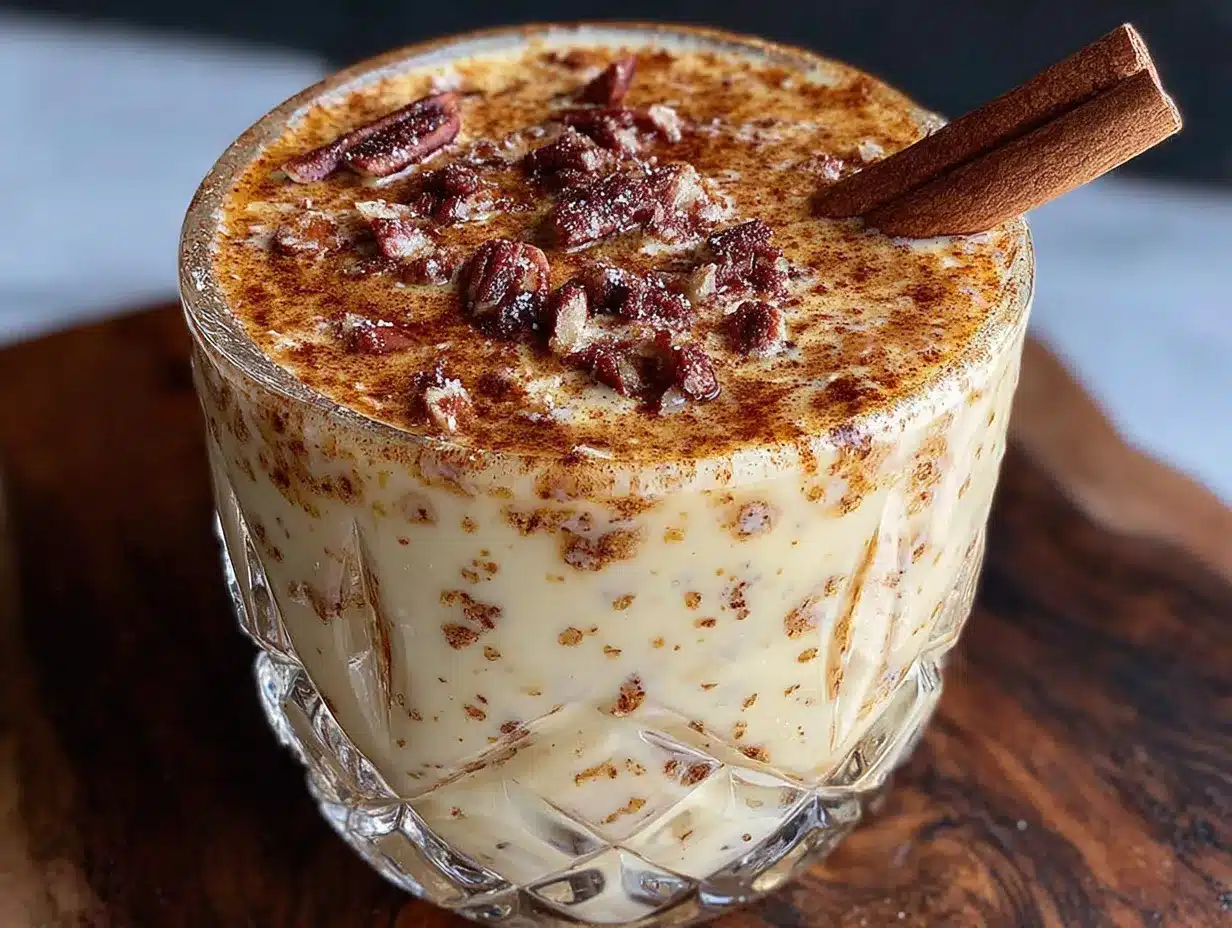
- Serve and garnish. Pour the chilled eggnog into small glasses. Grate a little fresh nutmeg over the top of each serving. If you’re feeling fancy, add a cinnamon stick or a small dollop of whipped cream.
A quick note: if your mixture looks a little thin after chilling, don’t panic. It will thicken more as it sits. If it’s still too thin after 24 hours, you can whisk in a little heavy cream before serving. And if you accidentally let the milk get too hot and see tiny curds forming, strain it immediately through a fine-mesh strainer and proceed. I’ve saved more than one batch this way.
Cooking Tips & Techniques
I’ve made this eggnog probably two dozen times now, and I’ve learned a few things the hard way. Let me save you some trouble.
Don’t rush the tempering. I know it’s tempting to dump the hot milk in all at once, but that’s how you end up with lumps. Go slow, whisk constantly, and give the eggs time to adjust. I once tried to multitask during this step—answered a text from my sister while whisking—and ended up with a grainy mess. Learn from my mistakes.
Use a thermometer if you have one. The ideal temperature for the milk mixture is around 160°F to 170°F. If you go over 180°F, you’re in scramble territory. If you don’t have a thermometer, watch for those small bubbles around the edges and trust the spoon-coating test.
Fresh nutmeg makes a world of difference. I know it’s an extra step, but the pre-ground stuff loses its punch over time. A whole nutmeg keeps for months in a spice drawer, and grating it fresh takes about ten seconds. The aroma alone is worth it.
Plan ahead for serving. This eggnog needs at least 4 hours to chill, but 24 hours is ideal. I usually make it two days before I plan to serve it. That way, I’m not scrambling on the day of the party, and the flavors have time to get friendly with each other.
If you’re serving a crowd, double the recipe. This batch makes about 4 cups, which serves 4 to 6 people in small glasses. If you’re hosting a gathering, double everything and use a larger saucepan. Just be patient with the tempering—it takes a little longer with a bigger volume.
Variations & Adaptations
One of the best things about this recipe is how easily it adapts to different tastes and dietary needs. Here are a few variations I’ve tried and loved.
Dairy-Free Eggnog: Substitute the whole milk and heavy cream with full-fat oat milk and canned coconut cream. The coconut cream gives it that rich texture you’re after. I made this version for a friend who’s lactose intolerant, and she said it was the best eggnog she’d had in years. Just be aware that it will have a slight coconut undertone, which pairs surprisingly well with the nutmeg.
Spiced Chai Eggnog: Steep two chai tea bags in the milk mixture while it heats. Remove the bags before tempering the eggs. This adds a lovely warming spice note that feels extra cozy on cold winter nights. I stumbled onto this variation when I was out of cinnamon and had chai bags staring at me from the pantry.
Kid-Friendly Eggnog Shake: Skip the alcohol entirely and blend the chilled eggnog with a scoop of vanilla ice cream. It turns into a thick, dreamy milkshake that my kids absolutely lose their minds over. I call it “Christmas morning shake” and it’s become a tradition in our house.
Eggnog French Toast: Use leftover eggnog as the base for French toast the next morning. Just dip thick slices of bread in the eggnog, cook on a buttered griddle, and top with a dusting of cinnamon. It’s indulgent, but hey—it’s the holidays.
Serving & Storage Suggestions
This eggnog is best served ice cold in small glasses. I use little 4-ounce juice glasses or even small mason jars. The portions feel festive without being overwhelming, because let’s be honest—a little goes a long way with something this rich.
For garnishes, a generous grating of fresh nutmeg on top is all you really need. If you want to dress it up, add a cinnamon stick for stirring or a dollop of lightly sweetened whipped cream. I’ve also topped it with a tiny pinch of flaky sea salt, which sounds weird but honestly works beautifully with the sweetness.
This eggnog pairs wonderfully with gingerbread cookies, shortbread, or a slice of pound cake. For a full holiday spread, serve it alongside a cheese board with sharp cheddar and dried figs. The creamy, spiced notes of the eggnog balance the saltiness of the cheese perfectly.
Storage: Keep the eggnog in a sealed container in the refrigerator for up to 5 days. The flavors actually improve after a day or two. If you added alcohol, it will keep a bit longer—up to a week. Give it a good stir before serving, as some settling is normal.
Reheating: This recipe is meant to be served cold, but if you prefer warm eggnog, gently reheat it in a saucepan over low heat. Do not boil it, or it may curdle. Stir frequently and serve immediately. Warm eggnog is especially nice on a really cold evening, with an extra splash of bourbon stirred in.
Freezing: You can freeze eggnog for up to 3 months. Pour it into a freezer-safe container, leaving some headroom for expansion. Thaw in the refrigerator overnight and whisk well before serving. The texture may be slightly thinner after freezing, but the flavor remains excellent.
Nutritional Information & Benefits
Let’s be real—this is a treat, not a health food. But knowing what’s in it can help you enjoy it mindfully. Per serving (about ¾ cup, without alcohol), you’re looking at approximately:
| Nutrient | Amount |
|---|---|
| Calories | 320 |
| Total Fat | 22g |
| Saturated Fat | 13g |
| Cholesterol | 210mg |
| Sodium | 85mg |
| Carbohydrates | 28g |
| Sugar | 26g |
| Protein | 6g |
On the positive side, eggnog does provide some nutritional value. The eggs contribute high-quality protein and essential vitamins like B12 and riboflavin. The milk and cream offer calcium and vitamin D. And the spices—nutmeg and cinnamon—contain antioxidants and anti-inflammatory compounds. Of course, this is all in the context of a rich, sweetened beverage, so moderation is key.
This recipe contains dairy and eggs, which are common allergens. For a dairy-free version, see the variations section above. If you’re avoiding alcohol, simply omit it—the eggnog is still delicious and completely family-friendly.
My personal take? I don’t worry about the numbers during the holidays. I pour a small glass, savor every sip, and move on with my day. Life is about balance, and a little homemade eggnog in December is part of what makes the season special.
Conclusion
This classic homemade eggnog has earned a permanent spot in my holiday rotation. It’s the recipe that turned my eggnog-hating husband into someone who now asks in November if I’m planning to make it this year. It’s simple enough for a Tuesday night, special enough for Christmas Eve, and budget-friendly enough that you don’t feel guilty making a second batch when the first one disappears too fast.
I hope you give this recipe a try, whether you’re a lifelong eggnog lover or you’re secretly hoping to convert someone in your own household. Play around with the spices, adjust the sweetness to your taste, and make it your own. That’s the beauty of homemade—you’re in control.
I’d love to hear how it turns out for you. Did you add bourbon or keep it booze-free? Did your kids ask for seconds? Drop a comment below and let me know. And if you have a favorite holiday tradition that goes with this eggnog, share that too. Happy holidays, and cheers to good food and good company!
Frequently Asked Questions
Can I make this eggnog without a thermometer?
Absolutely. The spoon-coating test works perfectly. Dip a metal spoon into the mixture and run your finger across the back. If the line holds cleanly, it’s ready. You’re looking for a temperature around 160°F to 170°F, which feels hot but not boiling.
Why did my eggnog turn out thin?
This usually happens if the mixture wasn’t heated long enough to thicken, or if it was diluted by not straining properly. Next time, cook it a minute or two longer during the tempering step. If it’s already made and thin, let it chill overnight—it will thicken as it sits.
Can I use pasteurized eggs for this recipe?
Yes, and I recommend it if you’re serving anyone with a compromised immune system, pregnant women, or young children. Pasteurized eggs are heated to kill bacteria without cooking the egg. They work exactly the same way in this recipe.
How long does homemade eggnog last in the fridge?
Without alcohol, it keeps for about 5 days in a sealed container. With alcohol, it can last up to a week. Always give it a sniff test before serving—if it smells off, don’t risk it. Fresh eggnog has a sweet, creamy aroma.
Can I make this eggnog vegan?
Yes, with some adjustments. Use full-fat oat milk and canned coconut cream instead of dairy. For the eggs, you can try a commercial egg substitute designed for custards, or use 2 tablespoons of cornstarch whisked with the sugar to help thicken the mixture. The texture won’t be identical, but it’s still delicious in its own right.
PrintClassic Homemade Eggnog Recipe Your Family Will Love
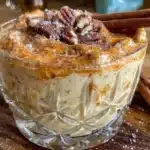
This rich, silky homemade eggnog turns skeptics into believers. Made with simple pantry ingredients and a foolproof tempering technique, it’s perfect for holiday gatherings and can be made ahead.
- Prep Time: 15 minutes
- Cook Time: 10 minutes
- Total Time: 25 minutes (plus at least 4 hours chilling)
- Yield: 4 to 6 servings 1x
- Category: Beverage
- Cuisine: American
Ingredients
- 6 large egg yolks (room temperature)
- ¾ cup granulated sugar
- 2 cups whole milk
- 1 cup heavy cream
- 1 teaspoon vanilla extract (pure vanilla preferred)
- ½ teaspoon freshly grated nutmeg (plus more for garnish)
- ¼ teaspoon ground cinnamon
- Pinch of salt
- Optional: ½ cup bourbon, rum, or brandy (for adults)
Instructions
- Separate the eggs. Place the 6 egg yolks in a large mixing bowl. Whisk the yolks lightly just to break them up.
- Add the sugar. Pour the ¾ cup granulated sugar into the bowl with the yolks. Whisk vigorously until the mixture turns pale yellow and thickens slightly, about 2 minutes. Look for a ribbon-like consistency.
- Heat the milk and cream. In a medium saucepan, combine the 2 cups whole milk and 1 cup heavy cream. Place over medium heat. Stir occasionally until hot but not boiling—small bubbles forming around the edges, about 4 to 5 minutes. Do not let it come to a full boil.
- Temper the eggs. Slowly drizzle about ½ cup of the hot milk mixture into the egg yolk mixture while whisking constantly. This gently warms the eggs so they don’t scramble.
- Combine everything. Pour the tempered egg mixture back into the saucepan with the remaining milk and cream. Whisk constantly over medium-low heat until the mixture thickens enough to coat the back of a spoon, about 3 to 5 minutes.
- Strain the mixture. Immediately pour the eggnog through a fine-mesh strainer into a clean bowl or pitcher to catch any cooked egg bits.
- Add the flavorings. Stir in the 1 teaspoon vanilla extract, ½ teaspoon freshly grated nutmeg, ¼ teaspoon ground cinnamon, and a pinch of salt. If adding alcohol, stir it in now.
- Chill thoroughly. Cover the pitcher or jar and refrigerate for at least 4 hours, but overnight is better. The eggnog thickens and the flavors deepen as it sits.
- Serve and garnish. Pour the chilled eggnog into small glasses. Grate a little fresh nutmeg over the top of each serving. Optionally, add a cinnamon stick or a small dollop of whipped cream.
Notes
Don’t rush the tempering—go slow and whisk constantly to avoid scrambled eggs. Use a thermometer if possible; the ideal milk mixture temperature is 160°F to 170°F. Fresh nutmeg makes a world of difference. This eggnog needs at least 4 hours to chill, but 24 hours is ideal. If serving a crowd, double the recipe. For a dairy-free version, substitute whole milk and heavy cream with full-fat oat milk and canned coconut cream. For a spiced chai variation, steep two chai tea bags in the milk mixture while heating. Leftover eggnog can be used for French toast.
Nutrition
- Serving Size: ¾ cup
- Calories: 320
- Sugar: 26
- Sodium: 85
- Fat: 22
- Saturated Fat: 13
- Carbohydrates: 28
- Protein: 6
Keywords: homemade eggnog, classic eggnog, holiday drink, Christmas eggnog, eggnog recipe, easy eggnog, traditional eggnog