My husband claimed to hate butternut squash for thirteen years. Thirteen years. He’d make a face at the farmer’s market, push it around his plate at Thanksgiving, and politely decline any soup that dared to be orange. I stopped trying to convince him after the fifth failed attempt at roasted squash. Then one Tuesday night, with a fridge full of leftover squash from a neighbor’s garden and a desperate need for dinner, I made this creamy pasta “just for myself.” I found him standing at the stove ten minutes later, fork in hand, scraping the last bit of sauce from the pan. He didn’t say a word. He just looked at me with this embarrassed grin, and honestly, that was better than any “you were right” I could have asked for. That’s the thing about this dish—it doesn’t announce itself as a vegetable-centric meal. It just shows up as the creamiest, most satisfying pasta you’ve had all week, and before anyone knows what hit them, they’ve eaten a whole serving of squash without a single complaint. Maybe you’ve been there, trying to sneak some extra nutrients onto the dinner table without starting a mutiny. This recipe is your secret weapon.
Why You’ll Love This Recipe
This creamy butternut squash pasta isn’t just another weeknight dinner—it’s the one that makes everyone at the table go quiet. I’ve tested this recipe more times than I can count, tweaking the ratio of squash to pasta water until the sauce hit that perfect silky consistency that clings to every noodle without feeling heavy. Here’s why it earns a permanent spot in your rotation:
- Quick & Easy: From start to finish, this comes together in about 30 minutes. The sauce simmers while your pasta cooks, so you’re not standing over the stove forever.
- Simple Ingredients: You probably already have most of this in your kitchen. No trips to specialty stores or hunting down obscure ingredients.
- Perfect for Family Meals: It’s affordable, filling, and somehow pleases both the picky eaters and the adventurous ones at your table.
- Crowd-Pleaser: I’ve served this to kids, in-laws, and neighbors, and every single person has asked for the recipe. It’s that good.
- Unbelievably Delicious: The brown butter takes this from good to unforgettable. That nutty, toasty flavor mixed with the sweet, creamy squash is pure comfort.
What makes this version different from the rest? It’s the brown butter. Most recipes skip this step or just drizzle it on top, but I’ve found that browning the butter right in the pan before building the sauce adds a depth of flavor that makes the squash taste almost caramelized. Plus, I use a trick of blending a bit of the pasta cooking water into the sauce—it emulsifies everything perfectly and gives you that restaurant-quality silky texture without any heavy cream. This isn’t just another butternut squash pasta recipe. It’s the one that converted a thirteen-year hater, and I bet it’ll win over your family too.
What Ingredients You Will Need
This recipe uses simple, everyday ingredients to create something truly special. The magic is in how they come together, not in anything fancy or hard to find. Here’s what you’ll need:
For the Pasta and Sauce
- 1 lb pasta (I prefer pappardelle or fettuccine, but any shape works—penne and rigatoni are great for trapping the sauce)
- 3 cups butternut squash, peeled and cubed (about 1 medium squash or a 20-ounce bag of pre-cut cubes from the store—look for firm, bright orange pieces)
- 4 tablespoons unsalted butter (use a good-quality brand like Kerrygold for the richest brown butter flavor)
- 3 cloves garlic, minced (fresh is best here, but jarred minced garlic works in a pinch)
- 1 cup vegetable or chicken broth (low-sodium so you can control the salt)
- 1/2 cup heavy cream or full-fat coconut milk (for richness—half-and-half works too, but the sauce won’t be as luscious)
- 1/2 cup grated Parmesan cheese (plus more for serving—skip the pre-shredded stuff if you can, it doesn’t melt as smoothly)
- 1 teaspoon salt (plus more for pasta water)
- 1/2 teaspoon black pepper
- 1/4 teaspoon nutmeg (freshly grated if you have it—it makes a difference)
- Pinch of red pepper flakes (optional, for a little warmth)
For Garnish (Optional but Recommended)
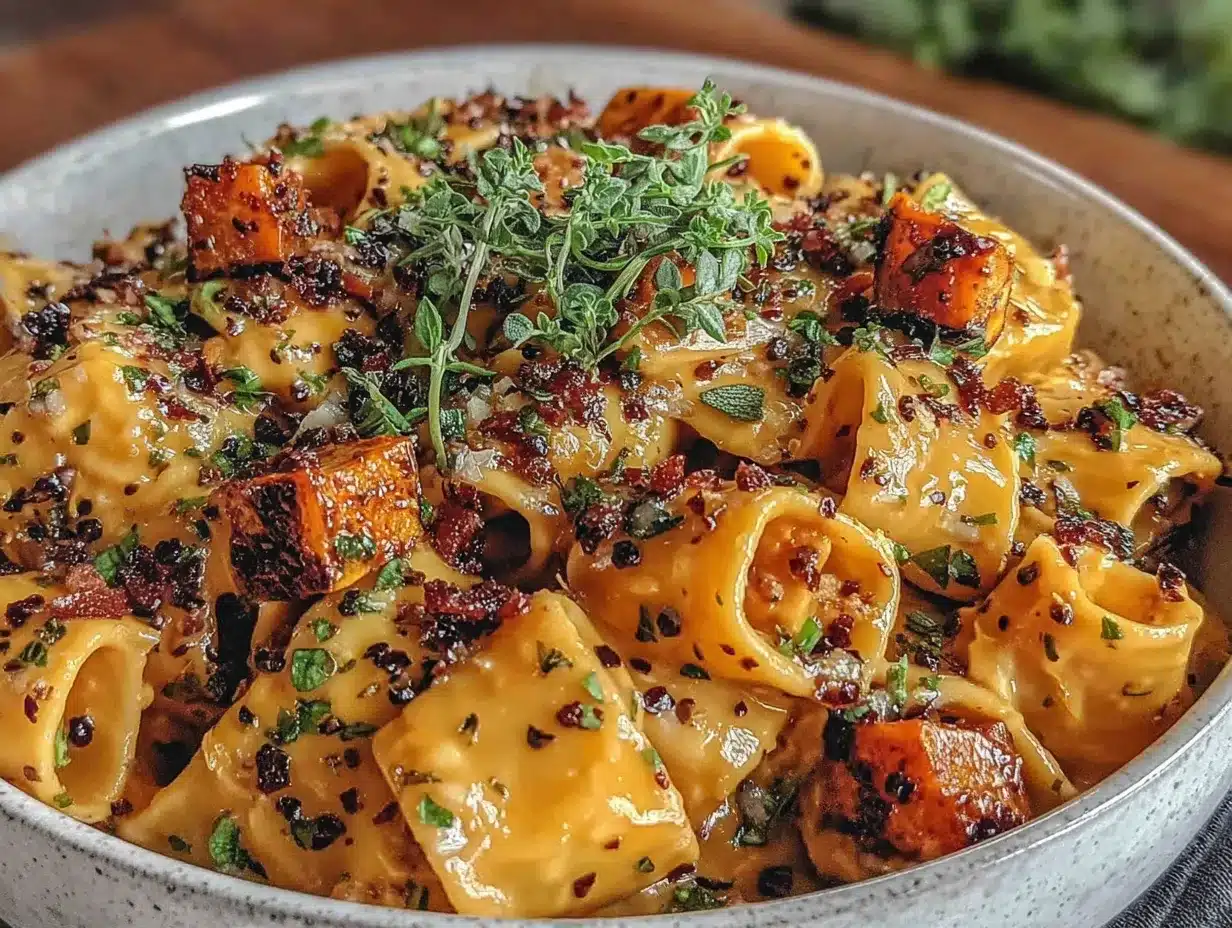
- Fresh sage leaves (about 6-8, fried in butter until crispy—trust me on this)
- Extra Parmesan
- Toasted pine nuts or walnuts (adds a lovely crunch)
Substitution Notes: If you’re dairy-free, use a good vegan butter for browning and full-fat coconut milk instead of cream. The coconut flavor is subtle and actually pairs beautifully with the squash. For a gluten-free version, any quality gluten-free pasta works—just be careful not to overcook it. And if you don’t have butternut squash, try this with sweet potato or even pumpkin puree (though you’ll need to adjust the liquid since puree is thinner than cooked squash).
Equipment Needed
You don’t need a fancy kitchen to pull this off. Here’s what you’ll actually use:
- Large pot for boiling pasta (at least 4 quarts—pasta needs room to move)
- Large skillet or Dutch oven (a wide pan is best for browning the butter evenly and simmering the sauce)
- Immersion blender or regular blender (I prefer an immersion blender because it’s less cleanup, but a regular blender works fine—just let the squash cool slightly before blending)
- Sharp knife and cutting board (for cubing the squash—a dull knife makes this job miserable)
- Wooden spoon or spatula
- Measuring cups and spoons
- Microplane or grater (for fresh Parmesan and nutmeg)
If you don’t have an immersion blender, no worries. You can mash the cooked squash with a potato masher or fork—it won’t be as silky smooth, but it’ll still taste amazing. I’ve done it both ways, and honestly, the rustic version has its own charm.
Preparation Method
Let’s get cooking. This comes together faster than you think, so I like to have everything prepped and ready before I turn on the heat.
- Bring a large pot of salted water to a boil. Add your pasta and cook according to package directions until al dente. Before you drain it, reserve about 1 cup of the starchy pasta water—this is liquid gold for your sauce. Drain the pasta and set it aside.
- While the pasta cooks, start the squash. In a large skillet or Dutch oven over medium heat, melt 2 tablespoons of the butter. Add the cubed butternut squash and cook for 5-7 minutes, stirring occasionally, until it starts to soften and get a little color on the edges. Don’t rush this step—those browned bits add flavor.
- Add the garlic and broth. Toss in the minced garlic and cook for 30 seconds until fragrant, then pour in the broth. Bring it to a simmer, cover the pan, and let the squash cook for 10-12 minutes, until it’s tender enough to mash with a fork. The liquid should mostly be absorbed by now.
- Blend the sauce. Remove the pan from heat. If you’re using an immersion blender, blend the squash right in the pan until smooth. If using a regular blender, carefully transfer the squash mixture (let it cool for a minute first) and blend until silky, then return it to the pan. The sauce should be thick and creamy at this point.
- Make the brown butter. In a separate small pan (or wipe out your pasta pot), melt the remaining 2 tablespoons of butter over medium heat. Swirl the pan constantly as the butter melts. It’ll foam up, then start to turn golden, then amber, then brown. You’ll smell a nutty aroma—that’s your cue. As soon as it turns brown and smells toasty, about 3-4 minutes, remove it from the heat immediately so it doesn’t burn. Pour it into a heatproof bowl to stop the cooking.
- Finish the sauce. Stir the brown butter into the blended squash sauce. Add the heavy cream, Parmesan cheese, salt, pepper, nutmeg, and red pepper flakes if using. Stir until everything is melted and smooth. If the sauce seems too thick, add a splash of that reserved pasta water—it’ll loosen it up and make it extra silky.
- Combine and serve. Add the cooked pasta to the sauce and toss well to coat every strand. If the sauce seems too thick, add more pasta water a tablespoon at a time until it’s the consistency you like. Taste and adjust seasoning—sometimes it needs a pinch more salt to wake up the flavors.
- Garnish and enjoy. Serve immediately with extra Parmesan, crispy sage leaves if you made them, and a sprinkle of toasted nuts. The sauce will thicken as it cools, so eat it while it’s hot.
Cooking Tips & Techniques
I’ve made this recipe about a dozen times, and I’ve learned a few things the hard way. Here’s what I wish someone had told me:
Don’t skip browning the butter. I know it’s an extra step, but it’s what makes this dish unforgettable. The first time I made this, I was in a hurry and just melted the butter without browning it. The sauce was good, but it was missing that deep, nutty magic. Browning takes less than 5 minutes—just watch it carefully because it goes from perfect to burnt in seconds.
Salt your pasta water like the sea. This is the only chance you have to season the pasta itself. I use about a tablespoon of salt per gallon of water. It should taste salty, not just lightly seasoned. Don’t worry—most of that salt gets poured down the drain, and only a little sticks to the pasta.
Reserve more pasta water than you think you need. I learned this lesson when I only saved a half cup and ended up with a sauce that was too thick. The starchy water is the secret to a smooth, emulsified sauce that clings to the pasta without being gluey. Save a full cup, and add it gradually until the sauce looks glossy and coats the back of a spoon.
Let the squash get some color. When you’re cooking the cubed squash in butter, don’t stir it too often. Let it sit for a minute or two so the edges get golden brown. Those browned bits add a caramelized sweetness that makes the sauce taste more complex. I once rushed this step and ended up with pale, bland squash—still edible, but not nearly as good.
Use freshly grated Parmesan. I know it’s tempting to grab the pre-shredded bag, but it has anti-caking agents that prevent it from melting smoothly. Grate your own from a block—it takes two minutes and makes a huge difference in the sauce’s texture.
Variations & Adaptations
This recipe is forgiving, so feel free to make it your own. Here are some ways I’ve adapted it over the years:
Add Protein: Toss in some cooked Italian sausage (I like spicy for contrast), shredded rotisserie chicken, or crispy bacon bits. The salty, savory flavors play beautifully with the sweet squash sauce. I once added leftover pulled pork, and it was surprisingly amazing.
Make It Vegan: Use vegan butter (I like Miyoko’s for browning), full-fat coconut milk instead of cream, and nutritional yeast or a vegan Parmesan alternative. The sauce still comes out rich and creamy—I’ve served this to non-vegans who didn’t notice the difference.
Go Gluten-Free: Any good gluten-free pasta works here. I’ve had the best luck with brown rice pasta or chickpea pasta, which holds up well to the sauce. Just be careful not to overcook it—gluten-free pasta goes from al dente to mush fast.
Add Greens: Stir in a handful of fresh spinach or kale at the very end, just until it wilts. The bright green against the orange sauce is gorgeous, and it adds another layer of nutrition without changing the flavor much.
Try Different Squash: Butternut is my favorite for its sweetness and smooth texture, but this works beautifully with kabocha, acorn squash, or even pumpkin. If using pumpkin, you might need to cook it a few minutes longer since it’s denser.
Spice It Up: Add a pinch of cayenne or smoked paprika along with the nutmeg. I once made this with a teaspoon of harissa paste stirred into the sauce, and it was incredible—warm, spicy, and complex.
Serving & Storage Suggestions
This pasta is best served hot, right after you toss it with the sauce. The sauce is at its silkiest straight from the pan, and the pasta hasn’t had time to absorb too much liquid yet. I like to serve it in big shallow bowls with a generous shower of Parmesan on top, a few crispy sage leaves, and maybe some toasted walnuts for crunch.
For a complete meal, pair it with a simple green salad dressed with lemon vinaigrette—the acidity cuts through the richness of the sauce beautifully. A side of roasted broccoli or garlic bread works too. If you’re serving this for a special dinner, a crisp white wine like Sauvignon Blanc or a light Pinot Grigio is a lovely match.
Storage: Leftovers keep well in an airtight container in the fridge for up to 3 days. The sauce will thicken as it sits, so don’t worry if it looks a little stiff when you take it out. To reheat, add a splash of milk, cream, or pasta water and warm it gently on the stove or in the microwave, stirring occasionally. I actually think this pasta tastes even better the next day—the flavors meld together overnight.
Freezing: The sauce freezes beautifully for up to 3 months. Let it cool completely, then transfer to a freezer-safe bag or container. Thaw overnight in the fridge and reheat gently, adding a splash of liquid to loosen it up. I like to freeze the sauce in small portions so I can pull out just enough for a quick weeknight dinner.
Nutritional Information & Benefits
This creamy pasta is surprisingly balanced for something so indulgent. Here’s a rough estimate per serving (based on 6 servings):
- Calories: ~480
- Protein: 14g
- Fat: 18g
- Carbohydrates: 65g
- Fiber: 6g
- Sugar: 8g
- Sodium: 520mg
Butternut squash is packed with vitamin A (over 400% of your daily needs per cup), vitamin C, potassium, and fiber. It’s also rich in antioxidants like beta-carotene, which supports eye health and immune function. The brown butter adds healthy fats that help your body absorb those fat-soluble vitamins, and the Parmesan provides a good dose of calcium and protein.
For a lighter version, you can reduce the butter to 2 tablespoons (skip the brown butter step and just use it to cook the squash), use half-and-half instead of cream, and cut the Parmesan in half. The sauce won’t be as luxurious, but it’ll still be delicious and much lower in calories.
Dietary Considerations: This recipe contains dairy and gluten. For dairy-free, use the substitutions listed above. For gluten-free, use your favorite gluten-free pasta. It’s naturally nut-free if you skip the garnish, and vegetarian as written.
Conclusion
This creamy butternut squash pasta with brown butter has become a staple in my kitchen for good reason. It’s the kind of recipe that feels special enough for a dinner party but simple enough for a random Tuesday when you need something comforting. The brown butter adds a nutty richness that elevates the sweet squash into something truly memorable, and the whole thing comes together in about half an hour.
I love that this recipe proves you don’t need complicated techniques or hard-to-find ingredients to make something extraordinary. It’s honest cooking—the kind that starts with a humble squash and ends with everyone at the table asking for seconds. My husband still won’t admit he likes butternut squash, but I catch him checking the fridge for leftovers every time I make this. That’s all the validation I need.
I’d love to hear how this turns out for you. Did you add any twists? Did your picky eaters surprise you? Drop a comment below and let me know—I read every single one. And if you’re looking for more family-friendly comfort food, don’t miss my creamy Tuscan chicken pasta or this one-pot garlic Parmesan pasta for another quick weeknight win. Happy cooking!
Frequently Asked Questions
Can I use frozen butternut squash for this recipe?
Absolutely. Frozen cubed squash works perfectly—just skip the initial browning step since it’ll release too much water. Cook it directly in the broth until tender, then blend as directed. The texture will be slightly less caramelized, but it still tastes great and saves you the prep time.
Why did my brown butter burn?
Brown butter goes from perfect to burnt very quickly. The key is to keep the heat at medium and swirl the pan constantly. Once you see amber-colored specks forming at the bottom and smell a nutty aroma, take it off the heat immediately. Pour it into a cool bowl to stop the cooking process.
Can I make this ahead of time?
You can make the sauce up to 3 days ahead and store it in the fridge. When you’re ready to serve, reheat it gently on the stove with a splash of pasta water or milk, then toss with freshly cooked pasta. I don’t recommend combining the pasta and sauce ahead of time—the pasta will absorb too much liquid and get mushy.
How do I get a super smooth sauce without a blender?
If you don’t have an immersion or regular blender, let the cooked squash cool slightly, then mash it with a potato masher or press it through a fine-mesh sieve with the back of a spoon. It won’t be as silky smooth, but it’ll still be delicious. For an even easier method, just mash it well with a fork—the rustic texture is actually quite charming.
Can I use pre-cut butternut squash from the store?
Yes, and it’s a huge time-saver. Look for packages with bright orange, firm cubes—avoid any that look wet, mushy, or have brown spots. Pre-cut squash is usually peeled and ready to go, so you can skip the most tedious part of the prep. Just make sure the cubes are roughly the same size so they cook evenly.
PrintFamily-Favorite Creamy Butternut Squash Pasta with Brown Butter

This creamy butternut squash pasta with brown butter is a quick and easy weeknight dinner that converts even the biggest squash skeptics. The nutty brown butter and silky squash sauce create a restaurant-quality dish that’s ready in about 30 minutes.
- Prep Time: 10 minutes
- Cook Time: 20 minutes
- Total Time: 30 minutes
- Yield: 6 servings 1x
- Category: Main Course
- Cuisine: American
Ingredients
- 1 lb pasta (pappardelle, fettuccine, penne, or rigatoni)
- 3 cups butternut squash, peeled and cubed (about 1 medium squash or 20 oz pre-cut)
- 4 tablespoons unsalted butter (preferably high-quality like Kerrygold)
- 3 cloves garlic, minced
- 1 cup low-sodium vegetable or chicken broth
- 1/2 cup heavy cream or full-fat coconut milk
- 1/2 cup grated Parmesan cheese (plus more for serving)
- 1 teaspoon salt (plus more for pasta water)
- 1/2 teaspoon black pepper
- 1/4 teaspoon nutmeg (freshly grated if possible)
- Pinch of red pepper flakes (optional)
- For garnish (optional): fresh sage leaves (6-8), extra Parmesan, toasted pine nuts or walnuts
Instructions
- Bring a large pot of salted water to a boil. Cook pasta according to package directions until al dente. Reserve about 1 cup of pasta water before draining. Drain and set aside.
- While pasta cooks, in a large skillet or Dutch oven over medium heat, melt 2 tablespoons of butter. Add cubed butternut squash and cook for 5-7 minutes, stirring occasionally, until softened and lightly browned on edges.
- Add minced garlic and cook for 30 seconds until fragrant. Pour in broth, bring to a simmer, cover, and cook for 10-12 minutes until squash is tender and liquid is mostly absorbed.
- Remove from heat. Using an immersion blender, blend squash directly in the pan until smooth. (Alternatively, let cool slightly and blend in a regular blender, then return to pan.)
- In a separate small pan, melt remaining 2 tablespoons butter over medium heat. Swirl constantly until butter foams, turns golden, then amber, then brown with a nutty aroma (about 3-4 minutes). Immediately remove from heat and pour into a heatproof bowl.
- Stir brown butter into blended squash sauce. Add heavy cream, Parmesan, salt, pepper, nutmeg, and red pepper flakes (if using). Stir until smooth. If too thick, add reserved pasta water a splash at a time.
- Add cooked pasta to sauce and toss well to coat. Add more pasta water as needed for desired consistency. Taste and adjust seasoning.
- Serve immediately with extra Parmesan, crispy sage leaves, and toasted nuts if desired.
Notes
Don’t skip browning the butter—it adds deep, nutty flavor. Salt pasta water generously (about 1 tablespoon per gallon). Reserve more pasta water than you think you need (at least 1 cup). Let squash get some color for caramelized sweetness. Use freshly grated Parmesan for best melting. Sauce thickens as it cools; reheat with a splash of liquid.
Nutrition
- Serving Size: 1 serving (about 1/6
- Calories: 480
- Sugar: 8
- Sodium: 520
- Fat: 18
- Saturated Fat: 10
- Carbohydrates: 65
- Fiber: 6
- Protein: 14
Keywords: butternut squash pasta, creamy pasta, brown butter, fall recipe, weeknight dinner, family-friendly, vegetarian