I was standing in the freezer aisle at the grocery store last Tuesday, staring at a bag of frozen peas like it held the secrets to the universe, when the smell hit me. It wasn’t a real smell, not really. It was a memory-smell—that sharp, clean scent of celery hitting a hot pan with butter, the way it fills a kitchen and promises something good. And suddenly I was seven years old, standing on a step stool at my neighbor Mrs. Kowalski’s counter, watching her pull apart a rotisserie chicken with her bare hands. She wasn’t related to me, not by blood, but she taught me more about cooking than anyone. I remember the way her gold bracelets clinked against the side of the pot. I remember her saying, “Soup doesn’t need to take all day to taste like it did.” I didn’t know what that meant then. I do now.
That night, I bought the chicken. I bought the carrots. I came home and made this soup—not Mrs. Kowalski’s exact recipe, because I never actually wrote it down, but the version I’ve been chasing for years. The one that tastes like it simmered for hours but actually comes together in about forty-five minutes. Honestly, it took me a few tries to get it right. The first time I rushed it and the broth was watery. The second time I overcooked the noodles and ended up with chicken-flavored mush. But this version? This is the one. It’s the soup I make when I’m tired, when I’m busy, when I just need something warm and real without spending my whole evening at the stove. Maybe you’ve been there, standing in your own kitchen at six-thirty, wondering how dinner is going to happen. This soup is how. It’s why I keep making it, week after week.
Why You’ll Love This Recipe
Let me tell you why this particular chicken noodle soup recipe is different from the dozens of others floating around the internet. I’ve tested this one about seven times over the past two months, tweaking the herb ratios and the noodle timing until it felt right. I’m not a professional chef—I’m just someone who got tired of bland, watered-down soup and decided to fix it. This recipe has been through real weeknight trials: the night I was rushing to get dinner before soccer practice, the night I was cooking with a toddler hanging off my leg, the night I forgot to buy fresh herbs and had to use dried. It passed every single test.
- Quick & Easy: From start to finish, this soup is on the table in about 45 minutes. No long simmering required, and I’ll show you exactly how to build deep flavor fast.
- Simple Ingredients: You don’t need anything fancy here. A rotisserie chicken, basic vegetables, pantry spices, and egg noodles. That’s it.
- Perfect for Busy Weeknights: This is the dinner you make when you have thirty minutes of active time and zero patience for complicated steps.
- Crowd-Pleaser: My kids fight over the carrots. My husband goes back for thirds. It’s the kind of soup that makes everyone at the table go quiet while they eat.
- Unbelievably Delicious: The secret is in the butter-sautéed vegetables and the fresh dill at the end. It makes the broth taste like it’s been bubbling all afternoon when it really hasn’t.
What makes this different from every other quick chicken noodle soup recipe? It’s the little things: browning the vegetables in butter before adding the broth, using a whole rotisserie chicken (meat and bones), and adding the noodles directly to the pot so they soak up all that flavor. It’s not just another version—it’s the version I’d serve to company without apologizing. And honestly? It’s the kind of soup that makes you close your eyes after the first spoonful, because it tastes exactly like what you were hoping for.
What Ingredients You Will Need
This recipe uses simple, wholesome ingredients to deliver bold flavor and satisfying texture without the fuss. Most of these are pantry staples or easy to find at any grocery store. I’ve included a few notes on brands and substitutions based on what I’ve learned through trial and error.
- Unsalted butter, 2 tablespoons (I prefer Kerrygold for the richness, but any unsalted butter works—salted butter will make the broth too salty)
- Yellow onion, 1 large, diced (about 1 ½ cups—use sweet onion if you want a milder flavor)
- Celery ribs, 3, diced (look for crisp, firm stalks without blemishes; the celery adds the backbone of flavor)
- Carrots, 3 medium, peeled and sliced into rounds (about 1 ½ cups—I like using rainbow carrots when I can find them for color, but regular orange carrots are perfect)
- Garlic cloves, 4, minced (fresh garlic is non-negotiable here; pre-minced jarred garlic has a different flavor and won’t give you the same depth)
- Low-sodium chicken broth, 8 cups (I use Swanson or Kitchen Basics—avoid broth with added sugar or weird ingredients; if you use regular broth, adjust the salt at the end)
- Rotisserie chicken, 1 whole (about 3-4 cups shredded meat—buy a warm one from the store for the best flavor; I like Costco’s or the ones from Whole Foods)
- Dried thyme, 1 teaspoon (I’ve tried fresh thyme here, and honestly, dried works better because it releases flavor slowly into the broth)
- Dried rosemary, ½ teaspoon, crushed (rub it between your palms before adding to release the oils)
- Bay leaves, 2 (don’t skip these—they add a subtle earthiness that makes the broth taste complex)
- Salt, 1 teaspoon, plus more to taste (I use fine sea salt; start with less and adjust at the end)
- Black pepper, ½ teaspoon, freshly ground (freshly ground makes a difference here)
- Wide egg noodles, 8 ounces (about 4 cups uncooked—I prefer Reames or No Yolks for texture; don’t use the really thin egg noodles because they turn to mush)
- Fresh dill, ¼ cup chopped (this is the secret ingredient—it brightens everything; dried dill won’t give you the same effect, so please use fresh)
- Fresh parsley, ¼ cup chopped, for garnish (optional but pretty)
- Lemon juice, 1 tablespoon, freshly squeezed (add this at the very end—it wakes up all the other flavors)
Equipment Needed
You don’t need a ton of fancy equipment for this soup, which is part of what makes it so great for a weeknight. Here’s what you’ll need:
- Large Dutch oven or heavy-bottomed pot (6-8 quart): This is my go-to for soups. I use my Le Creuset, but a good stainless steel pot works fine too. The heavy bottom prevents the vegetables from burning before they soften.
- Cutting board and sharp chef’s knife: A dull knife makes dicing vegetables frustrating and dangerous. Take thirty seconds to sharpen yours before you start.
- Measuring cups and spoons: I know some people eyeball everything, but for this recipe, the herb measurements matter for the broth flavor.
- Wooden spoon or silicone spatula: For stirring and scraping up any browned bits from the bottom of the pot.
- Two forks: For shredding the chicken. You can also use your hands if the chicken is cool enough, but forks are less messy.
- Ladle: For serving. A good ladle makes a difference when you’re trying not to splash hot soup everywhere.
- Fine-mesh strainer (optional): If you want to strain the broth for a clearer soup, but I never bother because I like the rustic texture.
If you don’t have a Dutch oven, any large pot with a lid will work. Just keep an eye on the heat so nothing burns on the bottom. And honestly? I’ve made this in a stockpot on a camping stove before, and it still turned out great.
Preparation Method
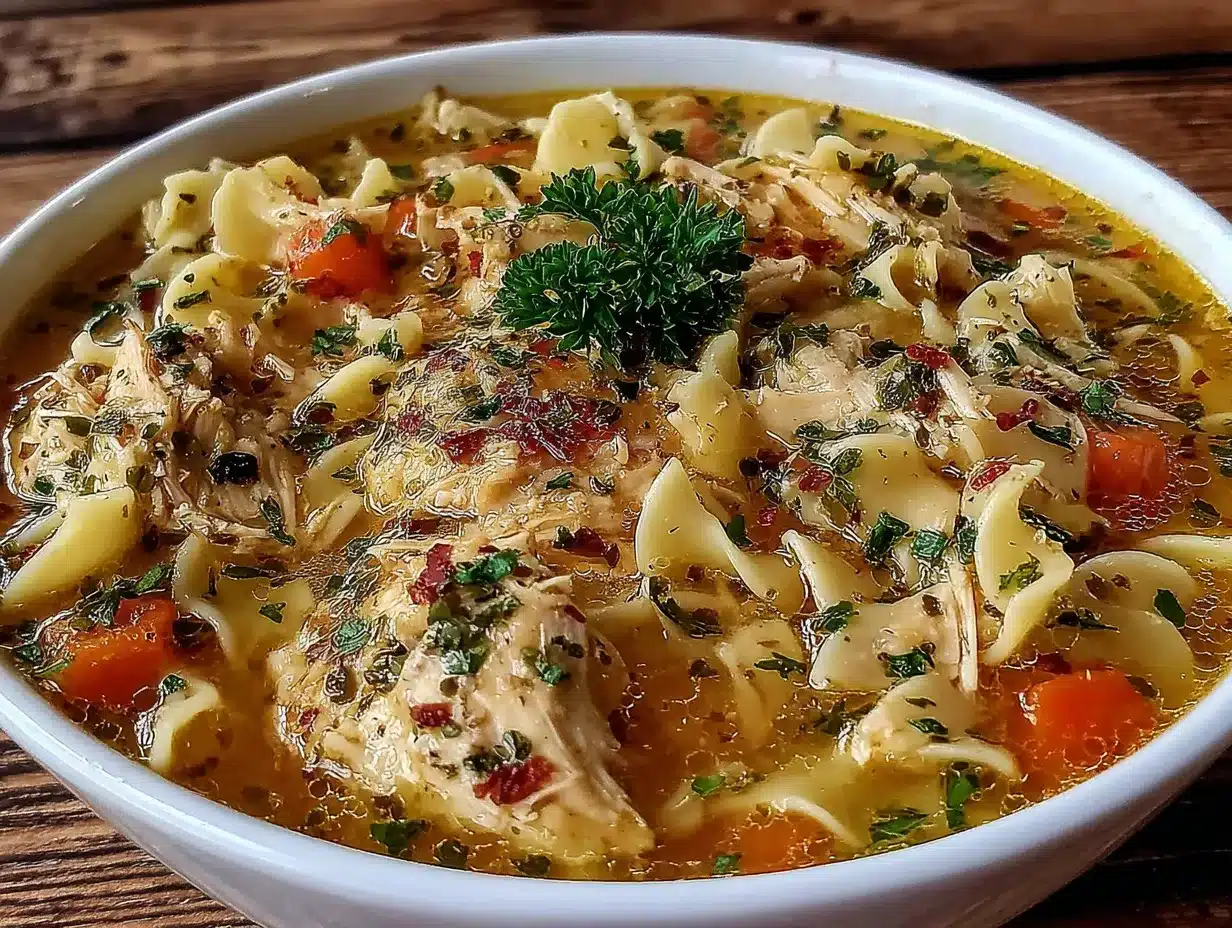
Alright, let’s make some soup. I’ve broken this down into clear steps with time estimates and sensory cues so you know exactly what you’re looking for at each stage.
-
Prep your vegetables and chicken (5 minutes): Dice your onion, celery, and carrots into roughly the same size—about ½-inch pieces. Mince your garlic. Shred the rotisserie chicken into bite-sized pieces, discarding the skin and bones. Set the chicken aside. Pro tip: Save the bones and skin in a zip-top bag in the freezer for making stock later if that’s your thing.
-
Sauté the aromatics (8 minutes): Place your Dutch oven over medium heat and add the butter. Let it melt until it’s foamy but not browning—about 30 seconds. Add the diced onion, celery, and carrots. Stir to coat them in the butter. Cook for 6-7 minutes, stirring occasionally, until the vegetables are softened and the onion is translucent. You should smell that classic soup aroma—clean, savory, and slightly sweet. The carrots should be starting to soften but still have a little bite. Add the minced garlic and cook for 1 more minute until fragrant. Don’t let the garlic burn, or it’ll turn bitter.
-
Build the broth (15 minutes): Pour in the chicken broth, scraping the bottom of the pot with your wooden spoon to release any browned bits—that’s flavor right there. Add the dried thyme, crushed rosemary, bay leaves, salt, and pepper. Bring the broth to a boil over high heat, then reduce the heat to medium-low and let it simmer for 10 minutes. Taste the broth at this point. It should taste savory and herbal, but not overly salty. If it tastes flat, add another pinch of salt. If it tastes too salty, add a splash of water.
-
Add the noodles (10 minutes): Stir in the egg noodles and increase the heat to bring the broth back to a gentle boil. Cook the noodles according to the package directions, usually about 8-10 minutes, stirring occasionally to prevent sticking. The soup will look very noodle-heavy at this point—that’s normal. The noodles absorb a lot of liquid, so don’t panic. You can add more broth or water if needed.
-
Add the chicken and finish (5 minutes): Once the noodles are tender but still have a slight chew (al dente), stir in the shredded chicken. Let it cook for 2-3 minutes just to warm the chicken through. Remove the pot from the heat. Fish out the bay leaves and discard them—nobody wants to bite into a bay leaf. Stir in the fresh dill, fresh parsley, and lemon juice. Taste and adjust salt and pepper one more time. The lemon juice is crucial here—it brightens the whole soup and makes the flavors pop.
-
Rest and serve (2 minutes): Let the soup sit off the heat for about 2 minutes before serving. This allows the flavors to meld and the soup to cool slightly so you don’t burn your mouth. Ladle into bowls and garnish with extra fresh dill or parsley if you want it to look pretty.
One thing I learned the hard way: don’t add the noodles too early, and don’t let them sit in the hot broth for too long before serving. They’ll keep absorbing liquid and turn mushy. If you’re meal-prepping, cook the noodles separately and add them to individual bowls before pouring the hot broth over them. Trust me on this.
Cooking Tips & Techniques
I’ve made this soup probably thirty times by now, and I’ve made every mistake in the book so you don’t have to. Here are the tips that actually matter:
Brown the vegetables properly. This is the single most important step for flavor. Don’t rush it. Those 6-7 minutes of sautéing are what build the foundation of your soup. If you just dump everything in and start boiling, you’ll end up with watery, bland broth. The butter and heat caramelize the natural sugars in the vegetables, creating depth that no amount of seasoning can fake.
Use a whole rotisserie chicken, not just breast meat. I know it’s tempting to buy pre-shredded chicken or just use chicken breasts, but the dark meat from the thighs and legs adds richness to the broth. Plus, the bones and skin that you remove? They’ve already contributed flavor during the rotisserie cooking process. It’s a shortcut that actually makes the soup better, not worse.
Season in layers. Add salt at the beginning when you sauté the vegetables, again when you add the broth, and again at the end after you taste it. This builds complexity. If you only salt at the end, the soup will taste salty but not flavorful. There’s a difference.
Don’t boil the noodles too hard. A gentle boil is all you need. A rolling boil will break the noodles apart and make the broth cloudy. I learned this when I got distracted by a phone call and came back to a pot of noodle mush. Not my finest moment.
Add the lemon juice at the very end. If you add it too early, the heat will cook out the brightness and you’ll lose that fresh pop. It’s the last thing that goes in, right before you turn off the heat.
Multitask like a pro. While the vegetables are sautéing, shred your chicken. While the broth simmers, chop your fresh herbs. This soup comes together fast, and having everything prepped and ready makes the process feel effortless.
Variations & Adaptations
This soup is endlessly adaptable, which is one of the reasons I make it so often. Here are some variations I’ve tried and loved:
Gluten-Free Version: Swap the egg noodles for gluten-free pasta or rice noodles. My favorite is brown rice ramen noodles—they hold up well and have a nice chew. Cook them separately and add to individual bowls to avoid mushiness. You can also use cooked white rice or quinoa for a different texture.
Low-Carb/Keto Version: Skip the noodles entirely and add extra vegetables like zucchini noodles, cauliflower florets, or shredded cabbage. I’ve made this with spiralized zucchini, and it’s surprisingly satisfying. The zucchini soaks up the broth flavor beautifully. Just add it in the last 3 minutes of cooking so it doesn’t turn to mush.
Extra-Vegetable Version: When I have leftover vegetables in the fridge, I throw them in. Diced zucchini, bell peppers, green beans, or even spinach all work well. Add heartier vegetables like green beans with the noodles, and delicate ones like spinach at the very end. One time I added leftover roasted sweet potatoes, and it was incredible.
Spicy Version: Add ½ teaspoon of red pepper flakes with the garlic, or stir in a tablespoon of sriracha at the end. My husband loves this version. It cuts through the richness of the broth and adds a nice warmth.
Herb-Forward Version: If you love fresh herbs like I do, double the dill and add a handful of fresh basil or tarragon at the end. Tarragon and chicken are a classic pairing that doesn’t get enough attention. It adds a subtle anise flavor that’s surprisingly good.
Dairy-Free Version: Use olive oil or avocado oil instead of butter. The flavor will be slightly different—less rich, more fruity—but still delicious. I’ve made it this way for friends with dairy allergies, and nobody complained.
Serving & Storage Suggestions
This soup is best served hot, straight from the pot, with a generous ladleful in each bowl. I like to serve it with crusty bread or buttery crackers on the side for dipping. A simple side salad with a lemony vinaigrette balances out the richness nicely. If I’m feeling fancy, I’ll sprinkle extra fresh dill and a squeeze of lemon on top of each bowl before serving.
For storing leftovers, let the soup cool completely to room temperature before transferring to airtight containers. It will keep in the refrigerator for up to 4 days. The noodles will continue to absorb liquid, so the soup will thicken over time. When reheating, add a splash of water or broth to thin it back to your desired consistency.
To freeze this soup, I recommend freezing it without the noodles. Cook the noodles fresh when you’re ready to eat. The soup base (broth, vegetables, chicken) freezes beautifully for up to 3 months. Thaw overnight in the refrigerator, reheat on the stovetop, and add freshly cooked noodles. I’ve done this for busy weeks when I know I’ll need a quick dinner—I just pull a container from the freezer in the morning and dinner is practically ready when I get home.
One thing I’ve noticed: this soup actually tastes better the next day. The flavors have time to meld and deepen overnight. So if you can make it a day ahead, do it. Just cook the noodles separately and add them when you reheat.
Nutritional Information & Benefits
Here’s the approximate nutritional breakdown for one serving (about 1 ½ cups) of this chicken noodle soup, based on the recipe as written:
Calories: 320 | Protein: 28g | Fat: 12g | Carbohydrates: 28g | Fiber: 3g | Sugar: 5g | Sodium: 780mg
This soup is packed with protein from the chicken, which helps keep you full and satisfied. The carrots provide a good dose of vitamin A for eye health and immune function. Celery is mostly water, but it’s also a source of vitamin K and antioxidants. The fresh dill and parsley add a surprising amount of vitamin C and iron, plus they make the soup taste fresh and vibrant.
If you’re watching your sodium, use low-sodium broth and go easy on the added salt. You can also rinse the rotisserie chicken to remove some of the surface salt before shredding. For a lower-carb option, skip the noodles or use a vegetable alternative as I mentioned in the variations section.
This soup is naturally dairy-free if you swap the butter for oil, and it’s easy to make gluten-free with the right noodle substitution. It’s a flexible, nourishing meal that works for a wide range of dietary needs.
Conclusion
This quick homemade chicken noodle soup is proof that you don’t need hours of simmering to get deep, satisfying flavor. It’s the recipe I turn to when I need dinner on the table fast, when I’m feeling under the weather, or when I just want something that tastes like comfort without the effort. The butter-sautéed vegetables, the fresh dill, the squeeze of lemon at the end—they all come together to create a soup that tastes like it’s been cooking all day, even though it really hasn’t.
I love this recipe because it’s forgiving. You can add more vegetables, swap the herbs, use different noodles, and it still works. It’s the kind of recipe that becomes yours after you make it a few times, because you start to learn what you like and what works in your kitchen. That’s the best kind of recipe, if you ask me.
So go ahead and make this soup. Maybe tonight, when you’re tired and hungry and wondering what’s for dinner. Maybe this weekend, when you have a little more time and want to double the batch for the freezer. However you make it, I hope it brings you the same warmth and comfort it brings me. And if you try it, come back and let me know how it turned out—I’d love to hear about your version.
Frequently Asked Questions
Can I use chicken breasts instead of a rotisserie chicken?
Yes, but you’ll need to cook them first. Poach two boneless, skinless chicken breasts in the broth for about 15-20 minutes until cooked through, then remove, shred, and return to the pot. The flavor won’t be as rich as with a rotisserie chicken, but it still works in a pinch.
How do I keep the noodles from getting mushy in leftovers?
The best trick is to cook the noodles separately and add them to individual bowls when serving. Store the soup base and noodles separately in the fridge, then combine when reheating. If you’ve already combined them, add a splash of broth or water when reheating to loosen things up.
Can I make this soup in a slow cooker or Instant Pot?
For a slow cooker, sauté the vegetables on the stovetop first, then transfer to the slow cooker with the broth, herbs, and raw chicken breasts. Cook on low for 6-8 hours, shred the chicken, and add cooked noodles at the end. For an Instant Pot, use the sauté function for the vegetables, add everything except the noodles and fresh herbs, pressure cook on high for 10 minutes, then stir in the noodles and cook on sauté for 5-7 minutes.
What’s the best way to reheat this soup?
Reheat on the stovetop over medium-low heat, stirring occasionally, until hot. Add a splash of water or broth if it’s too thick. You can also microwave individual portions in 30-second intervals, stirring between each. Avoid boiling the soup when reheating, as it can make the chicken tough and the noodles mushy.
Can I add other vegetables to this soup?
Absolutely. This soup is very flexible. Try adding diced zucchini, bell peppers, green beans, corn, peas, or spinach. Add heartier vegetables early in the cooking process and delicate ones at the end. Just keep in mind that adding more vegetables will change the liquid-to-solid ratio, so you might need to add extra broth.
PrintPerfect Quick Homemade Chicken Noodle Soup from Scratch

This quick homemade chicken noodle soup delivers deep, satisfying flavor in about 45 minutes. With butter-sautéed vegetables, tender rotisserie chicken, and a bright finish of fresh dill and lemon, it tastes like it simmered all day.
- Prep Time: 15 minutes
- Cook Time: 30 minutes
- Total Time: 45 minutes
- Yield: 6 servings 1x
- Category: Main Course
- Cuisine: American
Ingredients
- 2 tablespoons unsalted butter
- 1 large yellow onion, diced (about 1 ½ cups)
- 3 celery ribs, diced
- 3 medium carrots, peeled and sliced into rounds (about 1 ½ cups)
- 4 garlic cloves, minced
- 8 cups low-sodium chicken broth
- 1 whole rotisserie chicken (about 3–4 cups shredded meat)
- 1 teaspoon dried thyme
- ½ teaspoon dried rosemary, crushed
- 2 bay leaves
- 1 teaspoon salt, plus more to taste
- ½ teaspoon freshly ground black pepper
- 8 ounces wide egg noodles (about 4 cups uncooked)
- ¼ cup chopped fresh dill
- ¼ cup chopped fresh parsley (for garnish)
- 1 tablespoon freshly squeezed lemon juice
Instructions
- Prep your vegetables and chicken (5 minutes): Dice onion, celery, and carrots into ½-inch pieces. Mince garlic. Shred rotisserie chicken into bite-sized pieces, discarding skin and bones. Set chicken aside.
- Sauté the aromatics (8 minutes): Place Dutch oven over medium heat and add butter. Let melt until foamy but not browning (about 30 seconds). Add onion, celery, and carrots. Cook 6-7 minutes, stirring occasionally, until softened and onion is translucent. Add garlic and cook 1 minute until fragrant.
- Build the broth (15 minutes): Pour in chicken broth, scraping bottom of pot to release browned bits. Add thyme, rosemary, bay leaves, salt, and pepper. Bring to a boil, then reduce heat to medium-low and simmer 10 minutes. Taste and adjust salt if needed.
- Add the noodles (10 minutes): Stir in egg noodles and increase heat to bring broth back to a gentle boil. Cook according to package directions (about 8-10 minutes), stirring occasionally.
- Add the chicken and finish (5 minutes): Once noodles are tender but still al dente, stir in shredded chicken. Cook 2-3 minutes to warm through. Remove from heat. Discard bay leaves. Stir in fresh dill, parsley, and lemon juice. Taste and adjust salt and pepper.
- Rest and serve (2 minutes): Let soup sit off heat for 2 minutes before serving. Ladle into bowls and garnish with extra fresh dill or parsley if desired.
Notes
For meal prep, cook noodles separately and add to individual bowls before pouring hot broth over them to prevent mushiness. The soup tastes even better the next day. To freeze, freeze the soup base without noodles and cook fresh noodles when reheating.
Nutrition
- Serving Size: 1 ½ cups
- Calories: 320
- Sugar: 5
- Sodium: 780
- Fat: 12
- Saturated Fat: 5
- Carbohydrates: 28
- Fiber: 3
- Protein: 28
Keywords: chicken noodle soup, quick soup, homemade soup, rotisserie chicken soup, weeknight dinner, comfort food