I figured a creamy garlic parmesan chicken pasta would need at least two pots, a separate pan for the chicken, and about forty-five minutes of my full attention. It took about one Tuesday night, a single Dutch oven, and a hungry family staring at me from the kitchen table for that assumption to fall apart completely.
Honestly, I was skeptical the first time I tried making it all in one pot. The idea of cooking pasta directly in a creamy sauce felt like a physics problem I didn’t want to solve. Would the pasta soak up all the liquid and leave me with a gummy mess? Would the cream sauce break into a greasy puddle? I had visions of scraping a burnt, sticky disaster into the trash while ordering pizza in defeat.
But that first bite—the tender chicken, the silky sauce clinging to every twist of the pasta, the sharp bite of garlic mellowed into something sweet and rich—changed everything. The single pot wasn’t just a convenience; it was the secret. The starch released from the pasta as it cooked thickened the sauce naturally, creating this velvety texture that felt like it had been simmering for hours. It was a quiet realization that the best weeknight dinners don’t need a lot of fuss. They just need the right method and a little bit of trust. This creamy garlic parmesan chicken pasta is proof that you can have a restaurant-quality meal on the table with just one pot and a whole lot of flavor.
Why You’ll Love This Recipe
Let me tell you why this particular one-pot creamy garlic parmesan chicken pasta has earned a permanent spot in my weekly rotation. It’s not just another pasta recipe—it’s the one that makes my family actually pause their conversations to take another bite.
- Truly One-Pot Magic: No boiling pasta separately. No draining. No extra colander to wash. Everything cooks together in one pot, which means less cleanup and more time actually enjoying dinner.
- Simple Ingredients, Big Flavor: You probably have most of these ingredients in your kitchen right now. Chicken, pasta, garlic, parmesan, cream, and some basic seasonings. No fancy grocery trips required.
- Ready in Under 40 Minutes: From the moment you start chopping garlic to the moment you’re twirling pasta around your fork, it’s about 35 minutes. Perfect for those busy weeknights when you need comfort food fast.
- Crowd-Pleaser Guaranteed: I’ve served this to picky kids, foodie friends, and my father-in-law who “doesn’t really like pasta.” Every single person asked for seconds. It’s that good.
- Unbelievably Creamy Without Heavy Cream: Here’s the trick—the pasta releases starch as it cooks, which naturally thickens the sauce. You get a luxuriously creamy texture without needing a pint of heavy cream. It’s comfort food that feels a little lighter, but tastes just as indulgent.
What makes this recipe different from every other creamy chicken pasta out there is the technique. Cooking the pasta directly in the broth and cream mixture means the sauce becomes one with the pasta—not just a separate component poured on top. It’s a small shift in method that delivers a massive payoff in flavor and texture. This isn’t just another version; it’s the best version I’ve ever made.
What Ingredients You Will Need
This recipe uses simple, wholesome ingredients that work together to create something truly special. Most of these are pantry staples, which makes this dish perfect for those nights when you need dinner to happen without a lot of planning.
- Boneless, Skinless Chicken Breasts (1.5 lbs or about 2 large breasts): Look for chicken breasts that are similar in size so they cook evenly. I prefer to slice them in half horizontally to create thinner cutlets—they cook faster and stay juicier. If you have chicken thighs on hand, they work beautifully here too, and they’re even more forgiving.
- Olive Oil (2 tablespoons): Use a good quality extra virgin olive oil for searing the chicken. It adds a subtle fruity note that complements the creamy sauce perfectly.
- Unsalted Butter (3 tablespoons): We’ll use butter for sautéing the garlic and building the base of the sauce. Unsalted butter gives you control over the overall saltiness of the dish.
- Garlic (6-8 cloves, minced): This is non-negotiable. Fresh garlic is the heart of this dish. Don’t use the pre-minced stuff from a jar—it won’t give you the same pungent, aromatic flavor. I usually add a little extra because I can’t help myself.
- Chicken Broth (3 cups): Use low-sodium chicken broth so you can control the salt level. The broth is the liquid base that cooks the pasta and creates the sauce. A good quality broth makes a noticeable difference here.
- Heavy Cream (1 cup): This adds richness and helps create that velvety texture. You can substitute with half-and-half for a lighter version, but the sauce won’t be quite as thick and luxurious.
- Short Pasta (12 oz, like penne, rigatoni, or fusilli): I prefer short, sturdy pasta shapes that hold onto the creamy sauce well. Penne is my go-to, but rigatoni with its ridges catches every bit of that garlic parmesan goodness.
- Freshly Grated Parmesan Cheese (1 cup, packed): Please, for the love of all things delicious, grate your own parmesan. The pre-shredded stuff has anti-caking agents that prevent it from melting smoothly into the sauce. A microplane or the small holes of a box grater work perfectly.
- Dried Italian Seasoning (1 teaspoon): This is a blend of herbs like oregano, basil, and rosemary. It adds a lovely aromatic depth without overwhelming the other flavors.
- Red Pepper Flakes (½ teaspoon, optional): I add a pinch of these for a gentle warmth that balances the richness of the cream and cheese. It’s not spicy—just a subtle background note that makes the dish more interesting.
- Salt and Black Pepper (to taste): Season the chicken generously before searing, and adjust the sauce at the end. Freshly cracked black pepper is worth the extra effort here.
- Fresh Parsley (for garnish): A sprinkle of fresh parsley adds a pop of color and a fresh, herbaceous finish that cuts through the richness of the sauce.
I personally recommend using Barilla pasta for its consistent texture and quality. For the parmesan, I buy a block of Parmigiano-Reggiano—it’s pricier, but the nutty, complex flavor is unmatched. If you need a dairy-free option, you can use full-fat coconut milk instead of heavy cream and a dairy-free parmesan alternative, though the flavor profile will shift slightly.
Equipment Needed
The beauty of a one-pot meal is that you don’t need a lot of fancy equipment. Here’s what you’ll need:
- A Large Dutch Oven or Heavy-Bottomed Pot (5-6 quart): This is your workhorse. A Dutch oven distributes heat evenly and has high sides to prevent splattering. If you don’t have one, a large, deep skillet with a lid will work—just make sure it’s at least 12 inches wide.
- A Sharp Chef’s Knife: For slicing the chicken and mincing the garlic. A dull knife makes everything harder and more dangerous.
- A Cutting Board: Preferably a large wooden or plastic board for prepping your ingredients.
- A Wooden Spoon or Silicone Spatula: For stirring the pasta as it cooks. You want something sturdy that won’t scratch your pot.
- A Microplane or Box Grater: For grating the parmesan cheese. This is a small investment that makes a huge difference in the final texture of your sauce.
- Tongs: For flipping the chicken and serving the finished pasta.
- A Liquid Measuring Cup: For measuring your broth and cream accurately.
I’ve made this recipe in a regular stainless steel pot when my Dutch oven was otherwise occupied, and it worked fine—just keep a closer eye on the heat to prevent sticking. If you’re looking for a budget-friendly option, a Lodge enameled Dutch oven is fantastic and won’t break the bank.
Preparation Method
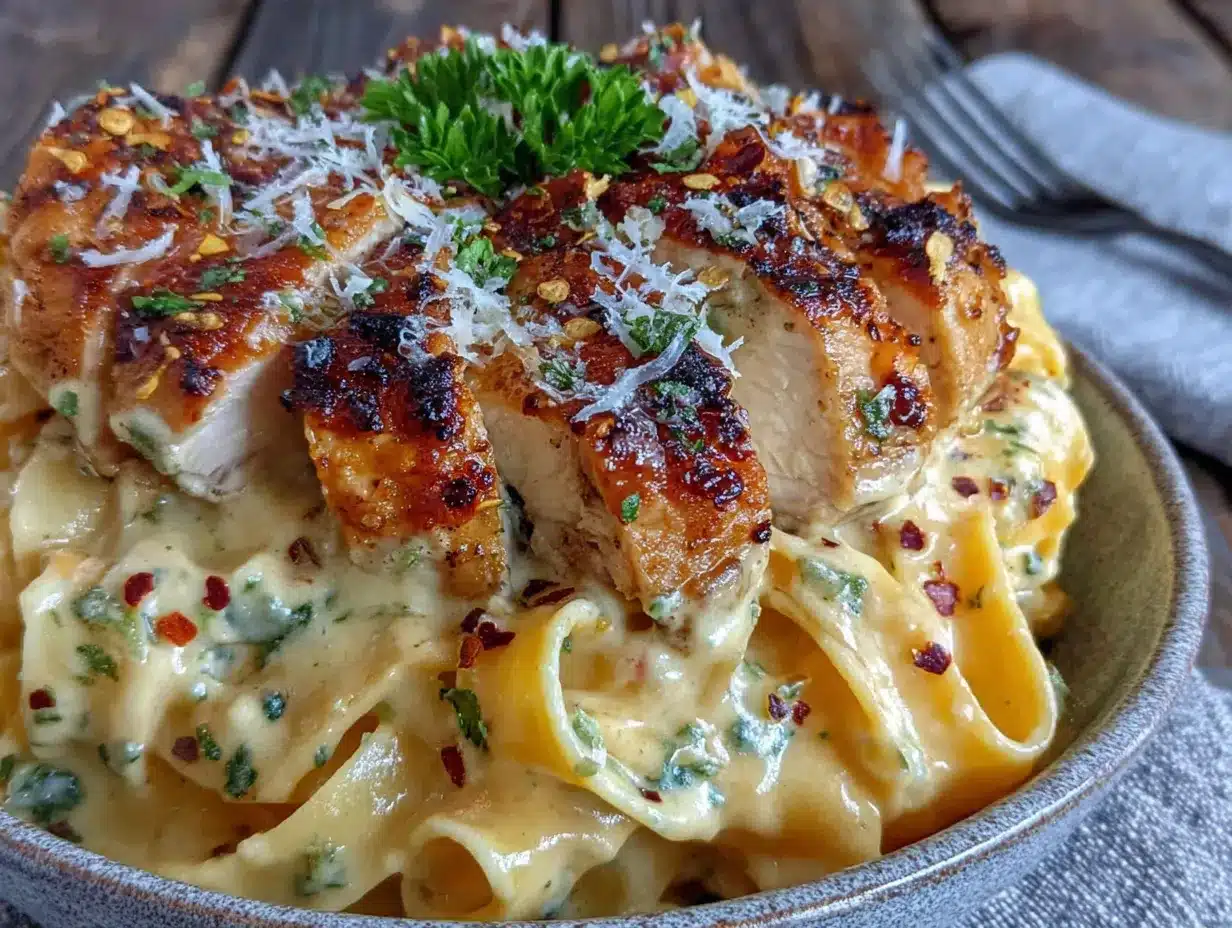
Let’s get cooking. This method is straightforward, but I’ll walk you through every step with the little details that make a big difference.
- Prep the Chicken (5 minutes): Place your chicken breasts on a cutting board. If they’re thick, slice them in half horizontally to create two thinner cutlets. Pat them dry with paper towels—this is crucial for a good sear. Season both sides generously with salt, pepper, and a pinch of the Italian seasoning. Let them sit at room temperature for about 10 minutes while you prep the other ingredients.
- Sear the Chicken (8-10 minutes): Heat the olive oil in your Dutch oven over medium-high heat. When the oil shimmers (test it by flicking a drop of water—it should sizzle immediately), carefully place the chicken cutlets in the pot. Don’t overcrowd—cook in batches if needed. Let them cook undisturbed for 4-5 minutes until the bottom is golden brown and releases easily from the pan. Flip and cook another 3-4 minutes. The chicken should be cooked through (165°F internal temperature) and beautifully browned. Transfer to a plate and tent loosely with foil.
- Sauté the Garlic (1 minute): Reduce the heat to medium. Add the butter to the same pot. Once it melts and starts to foam, add the minced garlic and the red pepper flakes (if using). Stir constantly for about 30-60 seconds until the garlic is fragrant but not brown. Burnt garlic will make the whole dish bitter, so watch it carefully.
- Deglaze the Pot (30 seconds): Pour about ½ cup of the chicken broth into the pot. Use your wooden spoon to scrape up all those browned bits from the bottom—that’s pure flavor. Let it bubble for about 30 seconds, then add the remaining 2½ cups of broth and the heavy cream. Stir to combine.
- Cook the Pasta (12-15 minutes): Bring the liquid to a gentle boil. Add the pasta, the remaining Italian seasoning, and a generous pinch of salt. Stir well, then reduce the heat to a steady simmer. Cover the pot and cook according to the pasta package directions, but check it a minute or two early. You want it al dente—firm to the bite. Stir every few minutes to prevent the pasta from sticking to the bottom. The liquid will reduce and thicken as the pasta cooks.
- Add the Parmesan (2 minutes): Once the pasta is cooked, remove the pot from the heat. Sprinkle the grated parmesan over the top and stir vigorously until it’s fully melted and incorporated. The sauce should be thick, creamy, and clinging to every piece of pasta. If it seems too thick, add a splash of warm broth or milk to loosen it.
- Slice and Combine (2 minutes): While the pasta rests, slice the seared chicken into thick strips or bite-sized pieces. Add the chicken back to the pot, along with any juices that accumulated on the plate. Stir gently to combine. Taste and adjust seasoning with salt and pepper.
- Serve Immediately: Spoon the creamy garlic parmesan chicken pasta into bowls. Garnish with a sprinkle of fresh parsley and an extra dusting of parmesan if you’re feeling fancy. Serve hot.
A Note on Timing: The whole process from start to finish takes about 30-35 minutes. The key is to have everything prepped and measured before you start cooking. Once you begin, it moves quickly, and you don’t want to be scrambling to mince garlic while your chicken is burning.
Sensory Cues: When you’re searing the chicken, listen for a steady sizzle—not a frantic popping sound, which means the heat is too high. The garlic should smell fragrant and sweet, not sharp or acrid. The pasta, as it cooks, will release a starchy aroma that tells you the sauce is coming together. The final dish should look glossy and inviting, with the sauce coating the pasta like a warm blanket.
Cooking Tips & Techniques
I’ve made this creamy garlic parmesan chicken pasta more times than I can count, and I’ve learned a few things the hard way. Let me save you some trouble.
Don’t Skip the Searing Step. I know it’s tempting to just throw everything in the pot and let it cook together, but that golden-brown crust on the chicken is pure flavor. It adds a depth that you simply can’t get from just boiling the chicken. Plus, those browned bits left in the pot after searing are the foundation of your sauce.
Watch Your Heat. One of the biggest mistakes I made early on was cooking the pasta at too high a boil. The liquid evaporates too quickly, and you end up with undercooked pasta in a thick, pasty sauce. Keep it at a gentle simmer—you should see small bubbles breaking the surface, not a rolling boil.
Stir, Stir, Stir. Pasta loves to stick to the bottom of the pot, especially as it absorbs liquid. Set a timer and stir every 2-3 minutes. I use a silicone spatula to scrape the bottom and corners of the pot. This one habit will save you from a burnt, ruined dinner.
Grate Your Own Cheese. I cannot stress this enough. Pre-shredded parmesan is coated in cellulose and other anti-caking agents that prevent it from melting smoothly. You’ll end up with a grainy, clumpy sauce instead of the silky, velvety dream you’re after. A block of good parmesan and a microplane are worth the extra 30 seconds of effort.
Reserve Some Pasta Water. Even though this is a one-pot recipe, I still recommend scooping out about ½ cup of the cooking liquid before you add the cheese. If your sauce gets too thick after adding the parmesan, this starchy water is the perfect solution—it thins the sauce while adding even more flavor and body.
Let It Rest. After you add the cheese and chicken, let the pot sit off the heat for about 2 minutes before serving. This allows the sauce to settle and thicken slightly, and the flavors to meld together. It’s a small pause that makes a big difference.
Variations & Adaptations
This recipe is wonderfully adaptable. Here are some of my favorite ways to change it up:
- Add Vegetables: Toss in a handful of fresh spinach or baby kale during the last 2 minutes of cooking—it wilts beautifully into the sauce. Sun-dried tomatoes (rehydrated and chopped) add a tangy-sweet pop that complements the creamy sauce. I once added a cup of frozen peas and some chopped asparagus, and it turned into a gorgeous spring dinner.
- Make It Spicier: If you like heat, double the red pepper flakes or add a minced jalapeño along with the garlic. A drizzle of sriracha or chili oil at the end is also fantastic.
- Try a Different Protein: Cubed boneless chicken thighs work perfectly—they’re even juicier and more flavorful. You can also use Italian sausage (casings removed and crumbled) for a heartier, more rustic version. For a vegetarian option, sear some sliced mushrooms and add a can of drained chickpeas.
- Go Gluten-Free: Use your favorite gluten-free pasta. Just be aware that gluten-free pasta can be more delicate and may release less starch, so the sauce might be a bit thinner. You can compensate by adding an extra ¼ cup of cream or a cornstarch slurry at the end.
- Make It Dairy-Free: Substitute the butter with olive oil or a plant-based butter, use full-fat canned coconut milk instead of heavy cream, and use a dairy-free parmesan alternative. The flavor will be slightly different, but it’s still delicious.
- Baked Version: If you have a little more time, you can turn this into a baked pasta. Cook the pasta in the sauce for 8 minutes (it will be slightly undercooked), transfer everything to a baking dish, top with extra cheese and some panko breadcrumbs, and bake at 375°F for 15-20 minutes until bubbly and golden.
My personal favorite variation is adding a handful of fresh spinach and some sun-dried tomatoes. The sweetness of the tomatoes and the earthy spinach balance the richness of the sauce perfectly. It’s become my go-to version when I want to feel like I’m eating something a little more virtuous.
Serving & Storage Suggestions
This creamy garlic parmesan chicken pasta is best served immediately, while the sauce is still warm and luscious. Spoon it into shallow bowls and top with a generous sprinkle of fresh parsley and a final grating of parmesan. A side of crusty bread is practically mandatory—you’ll want something to soak up every last drop of that sauce.
What to Serve With It: A simple green salad with a bright lemon vinaigrette is the perfect counterpoint to the rich pasta. I also love serving it alongside some roasted broccoli or asparagus—the slight char from the oven adds a nice contrast. If you’re feeding a crowd, you could even start with a batch of fresh caprese skewers for a complete Italian-inspired meal.
Storage: Leftovers will keep in an airtight container in the refrigerator for up to 3 days. The pasta will absorb more of the sauce as it sits, so don’t be alarmed if it looks a little dry the next day. To reheat, add a splash of milk or broth and warm it gently on the stovetop over low heat, stirring frequently. You can also microwave individual portions in 30-second bursts, stirring in between.
Freezing: This dish freezes surprisingly well. Let it cool completely, then transfer to a freezer-safe container. It will keep for up to 2 months. Thaw overnight in the refrigerator and reheat as directed above. The sauce may separate slightly upon thawing, but a good stir will bring it back together. I like to freeze individual portions for easy lunches.
Flavor Development: Honestly, this pasta is even better the next day. The flavors have time to meld and deepen, and the sauce thickens into something almost casserole-like. It’s a different experience—still delicious, just different. If you’re planning ahead, you might even want to make it a day in advance on purpose.
Nutritional Information & Benefits
While this is definitely a comfort food dish, it does offer some nutritional benefits worth noting. A typical serving (about 1.5 cups) provides approximately:
- Calories: 580-650
- Protein: 42-48g (from the chicken and parmesan)
- Fat: 28-32g
- Carbohydrates: 45-50g
- Fiber: 3-4g
- Calcium: 25-30% of the Daily Value (from the parmesan and cream)
Chicken is an excellent source of lean protein, which helps keep you full and supports muscle health. Garlic is packed with antioxidants and has anti-inflammatory properties. And while parmesan is high in fat, it’s also rich in calcium and protein. This is a balanced meal that provides sustained energy—perfect for a busy evening.
Dietary Considerations: This recipe contains gluten and dairy. For a gluten-free version, use gluten-free pasta. For a dairy-free version, use the substitutions mentioned in the variations section. It is naturally low in sugar and can be part of a balanced diet when enjoyed in moderation.
I personally love that this dish feels indulgent but is made with real, whole ingredients. It’s not a “health food,” but it’s a real food meal that nourishes both body and soul. And sometimes, that’s exactly what you need.
Conclusion
This one-pot creamy garlic parmesan chicken pasta is the kind of recipe that makes you wonder why you ever bothered with multiple pots in the first place. It’s rich, comforting, and surprisingly simple to pull off on a busy weeknight. The sauce is velvety, the chicken is tender, and the whole thing comes together in about 35 minutes with minimal cleanup.
I hope you give this a try and make it your own. Maybe you’ll add a handful of spinach, or swap in some spicy Italian sausage, or just follow the recipe exactly as written. However you make it, I promise it will become a regular in your dinner rotation.
I’d love to hear how it turns out for you. Did you make any substitutions? Did your family love it as much as mine does? Drop a comment below and let me know—I read every single one. And if you’re looking for another quick and satisfying weeknight dinner, you might also enjoy this easy one-pan honey garlic chicken and vegetables.
Until next time, happy cooking—and remember, the best meals are the ones shared with the people you love.
Frequently Asked Questions
Can I use a different type of pasta?
Absolutely. Any short pasta shape works well—penne, rigatoni, fusilli, farfalle, or even shells. Just adjust the cooking time according to the package instructions. I don’t recommend long pasta like spaghetti or fettuccine for this one-pot method, as it tends to clump together and cook unevenly.
Can I make this ahead of time?
Yes, you can make this up to a day in advance. The pasta will absorb some of the sauce as it sits, so when you reheat it, add a splash of milk or broth to loosen it up. The flavors actually deepen overnight, making it even more delicious the next day.
How do I prevent the sauce from becoming too thick?
The key is to monitor the liquid level as the pasta cooks. If the sauce looks too thick before the pasta is fully cooked, add more broth or water, about ¼ cup at a time. Remember, the pasta will continue to absorb liquid even after you remove the pot from the heat.
Can I use pre-cooked chicken?
You can, but you’ll lose some flavor. The searing step creates those browned bits that are essential for a rich sauce. If you’re short on time, you can skip the searing and simply cook shredded rotisserie chicken in the sauce during the last 5 minutes of cooking. It won’t be quite as flavorful, but it will still be good.
Is this recipe freezer-friendly?
Yes, it freezes beautifully for up to 2 months. Let it cool completely, then transfer to a freezer-safe container. Thaw overnight in the refrigerator and reheat gently on the stovetop with a splash of milk or broth. The texture will be slightly different after freezing, but it’s still a comforting and delicious meal.
Pin This Recipe!
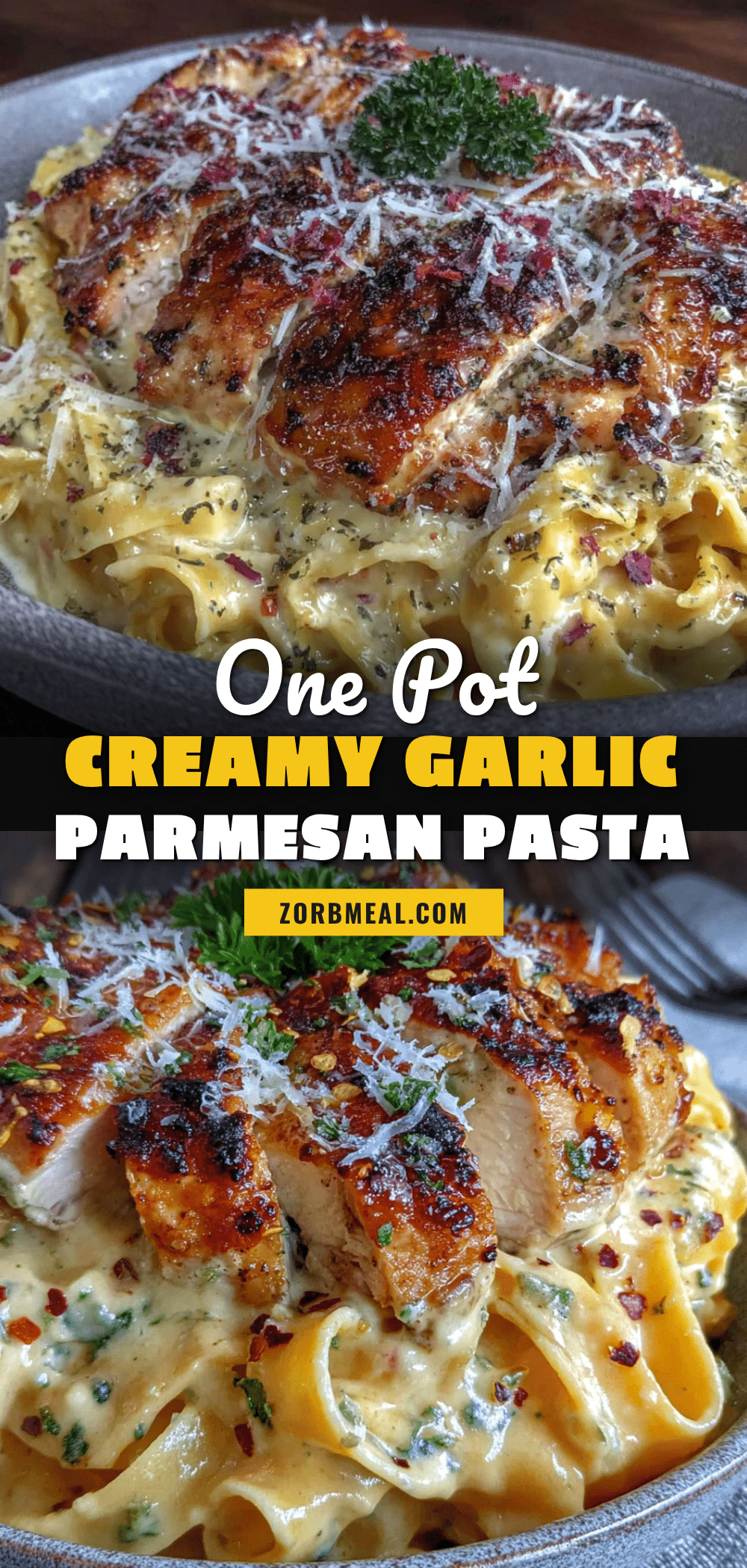
One-Pot Creamy Garlic Parmesan Chicken Pasta Recipe
This one-pot creamy garlic parmesan chicken pasta is a rich, comforting weeknight dinner that comes together in about 35 minutes with minimal cleanup. The pasta cooks directly in the sauce, creating a velvety texture without needing heavy cream.
- Prep Time: 10 minutes
- Cook Time: 25 minutes
- Total Time: 35 minutes
- Yield: 4 servings 1x
- Category: Main Course
- Cuisine: Italian-American
Ingredients
- 1.5 lbs boneless, skinless chicken breasts (about 2 large)
- 2 tablespoons olive oil
- 3 tablespoons unsalted butter
- 6–8 cloves garlic, minced
- 3 cups low-sodium chicken broth
- 1 cup heavy cream
- 12 oz short pasta (penne, rigatoni, or fusilli)
- 1 cup freshly grated Parmesan cheese, packed
- 1 teaspoon dried Italian seasoning
- ½ teaspoon red pepper flakes (optional)
- Salt and black pepper to taste
- Fresh parsley for garnish
Instructions
- Prep the chicken: Slice chicken breasts horizontally into thin cutlets. Pat dry with paper towels. Season both sides generously with salt, pepper, and a pinch of Italian seasoning. Let sit at room temperature for 10 minutes.
- Sear the chicken: Heat olive oil in a large Dutch oven over medium-high heat. When oil shimmers, add chicken cutlets in a single layer (cook in batches if needed). Cook undisturbed for 4-5 minutes until golden brown, then flip and cook another 3-4 minutes until internal temperature reaches 165°F. Transfer to a plate and tent with foil.
- Sauté the garlic: Reduce heat to medium. Add butter to the same pot. Once melted and foamy, add minced garlic and red pepper flakes (if using). Stir constantly for 30-60 seconds until fragrant but not browned.
- Deglaze the pot: Pour in ½ cup chicken broth and scrape up browned bits from the bottom with a wooden spoon. Let bubble for 30 seconds, then add remaining 2½ cups broth and heavy cream. Stir to combine.
- Cook the pasta: Bring liquid to a gentle boil. Add pasta, remaining Italian seasoning, and a generous pinch of salt. Stir well, reduce heat to a steady simmer, and cover. Cook according to package directions until al dente, stirring every 2-3 minutes to prevent sticking.
- Add the Parmesan: Remove pot from heat. Sprinkle grated Parmesan over the top and stir vigorously until fully melted and incorporated. If sauce is too thick, add a splash of warm broth or milk.
- Slice and combine: Slice seared chicken into thick strips or bite-sized pieces. Add chicken and any accumulated juices back to the pot. Stir gently to combine. Taste and adjust seasoning with salt and pepper.
- Serve immediately: Spoon into bowls, garnish with fresh parsley and extra Parmesan if desired. Serve hot.
Notes
For best results, grate your own Parmesan cheese—pre-shredded contains anti-caking agents that prevent smooth melting. Reserve about ½ cup of pasta cooking water before adding cheese to adjust sauce consistency if needed. Let the dish rest off heat for 2 minutes before serving to allow flavors to meld.
Nutrition
- Serving Size: 1.5 cups
- Calories: 615
- Sugar: 4
- Sodium: 800
- Fat: 30
- Saturated Fat: 15
- Carbohydrates: 48
- Fiber: 3
- Protein: 45
Keywords: one-pot pasta, creamy chicken pasta, garlic parmesan pasta, weeknight dinner, easy pasta recipe


