Third time in eight days and I finally stopped burning the maple syrup. That first batch—blackened, acrid, a cloud of smoke that clung to my kitchen curtains for two days straight. The second one was better, but the tahini seized into weird little clumps, like curdled hummus. I stood there staring at the sheet pan, spatula in hand, wondering why something so simple was kicking my butt. A squash. Some oil. A drizzle. It shouldn’t feel like a science experiment.
But delicata is different, you know? It’s not trying to be pumpkin or butternut. It’s got this thin, edible skin that crisps up like a potato chip, and the flesh turns into something almost custard-like when you get the heat right. I kept pulling the pan out too early, or leaving it too long, or drizzling the maple at the wrong moment. It’s a Goldilocks situation, honestly, and I’m not usually that patient with vegetables.
Then the third time, something clicked. The caramelization happened in that last five minutes, the edges went dark and sticky, and the tahini sauce—which I’d finally learned to thin out with warm water—draped over everything like a silky blanket. I ate the entire sheet pan standing at the counter. No plate. No fork. Just me, a hot pan, and that weird quiet satisfaction of finally getting it right.
So this isn’t a recipe I made up on a whim. It’s one I had to earn.
Why You’ll Love This Recipe
Let me tell you why this one’s different from every other roasted squash recipe you’ve scrolled past.
- No Peeling Required — Delicata squash has tender, edible skin that roasts up crispy and delicious. You just slice and go. No wrestling with a vegetable peeler.
- Ready in 30 Minutes — From cutting board to table in about half an hour. That’s faster than most pasta dishes and way more impressive.
- Sweet-Savory Balance — The maple caramelizes into these sticky, almost-burnt bits while the tahini adds a nutty, slightly bitter counterpoint. It’s a flavor combination that makes you keep going back for “just one more piece.”
- Simple Ingredients — You probably have olive oil, salt, and maple syrup right now. Tahini might be the only “special” ingredient, and it’s worth keeping around.
- Works for Any Occasion — I’ve served this alongside a simple roasted chicken for a Tuesday dinner, and I’ve also put it out at a holiday gathering where it disappeared faster than the mashed potatoes.
- Naturally Good for You — It’s packed with fiber, vitamins, and healthy fats. You feel satisfied, not sluggish.
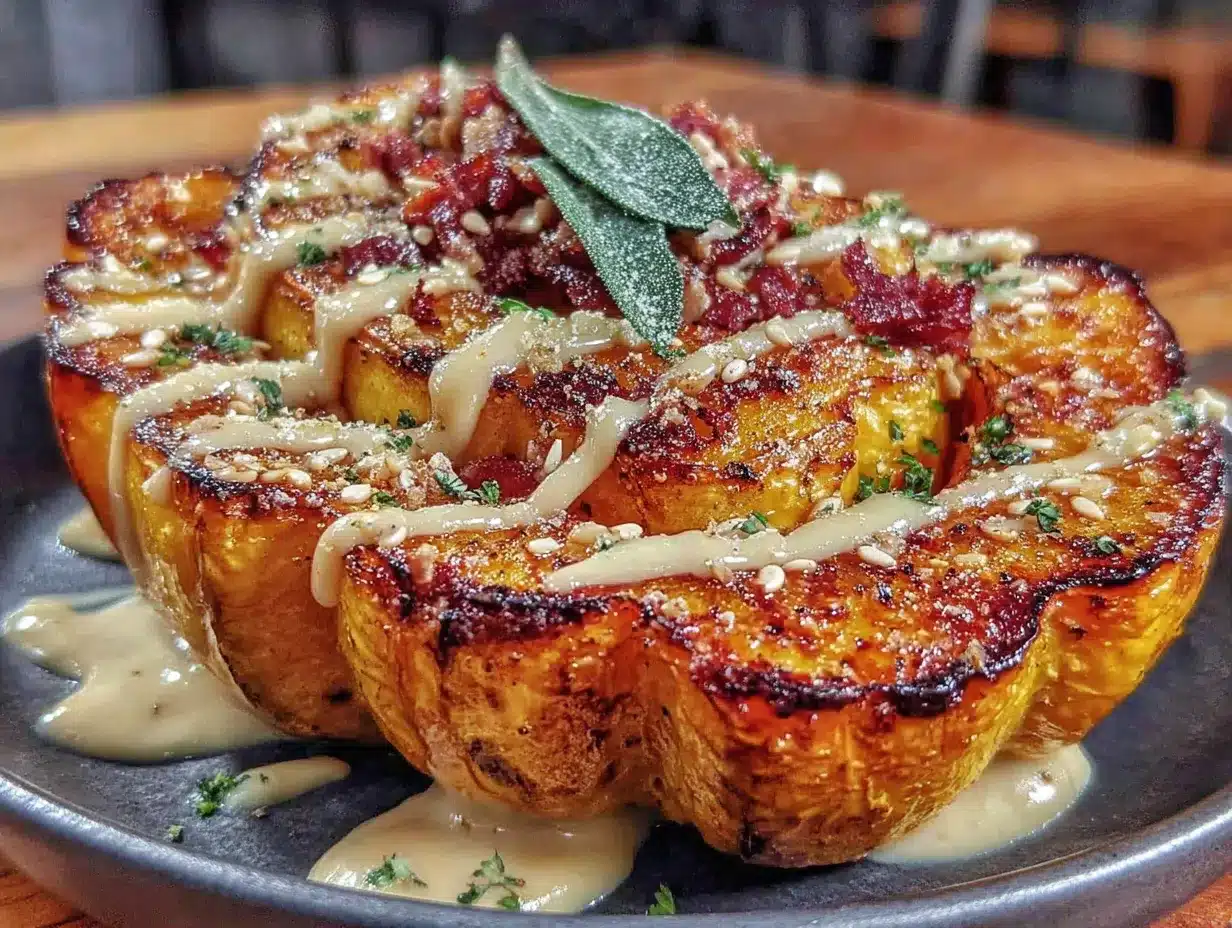
What makes this version different from the rest? It’s the technique. Most recipes just toss everything together and hope for the best. I figured out that spacing the squash pieces out—giving them room to breathe on the pan—makes all the difference between steamed, soggy squash and deeply caramelized, restaurant-quality bites. Plus, that maple tahini drizzle? It’s thinned to the perfect consistency so it coats every ridge and crevice without pooling at the bottom.
What Ingredients You Will Need
This recipe uses simple, wholesome ingredients that come together to create something genuinely special. No weird specialty items, no trips to three different stores. Here’s what you’ll need:
For the Roasted Squash
- 2 medium delicata squash (about 2 pounds total) — Look for squash that feels heavy for its size with firm, unblemished skin. The yellow-orange color should be vibrant, not pale. I’ve found that smaller squash tend to be sweeter and less watery.
- 2 tablespoons olive oil — Use a good-quality extra virgin here. It adds flavor, not just fat. I like California Olive Ranch for its balanced, not-too-peppery taste.
- 1 tablespoon pure maple syrup — Real maple syrup, not pancake syrup. The grade doesn’t matter much here since we’re caramelizing it, but I usually use Grade A Dark Amber for a bolder flavor.
- 1/2 teaspoon sea salt — Flaky sea salt like Maldon works beautifully here, but fine sea salt is fine too. Just adjust the amount if you’re using table salt (use slightly less).
- 1/4 teaspoon black pepper — Freshly ground, please. The pre-ground stuff just doesn’t have the same pop.
- Pinch of cayenne pepper — Optional, but I love the tiny bit of heat that sneaks up on you. It’s not spicy—just enough to make things interesting.
For the Maple Tahini Drizzle
- 1/4 cup tahini — Stir your tahini well before measuring. The oil separates, and you want a smooth, creamy consistency. I prefer Soom or Seed + Mill brands—they’re consistently smooth and not bitter.
- 2 tablespoons pure maple syrup — Same maple syrup as above. Keep it consistent.
- 2 tablespoons warm water — This is the secret to a silky, pourable sauce. Cold water makes tahini seize up.
- 1 tablespoon fresh lemon juice — About half a lemon. Fresh is non-negotiable here; bottled lemon juice tastes flat and metallic.
- 1/4 teaspoon sea salt — To balance the sweetness and bring out the nuttiness of the tahini.
For Garnish (Optional but Recommended)
- 2 tablespoons toasted pepitas — Pumpkin seeds add crunch and a beautiful green pop against the orange squash.
- Fresh parsley or cilantro — A handful, roughly chopped. Adds freshness and color.
- Flaky sea salt — For that final finishing touch right before serving.
Substitution Notes: If you don’t have tahini, you can make a simple maple-mustard vinaigrette instead (whisk together 2 tablespoons maple syrup, 1 tablespoon Dijon mustard, 2 tablespoons olive oil, and a splash of vinegar). For a nut-free version, skip the pepitas or use sunflower seeds. And if you can’t find delicata squash, you can use acorn squash (peel it first) or even sweet potatoes—just adjust the cooking time since they’re denser.
Equipment Needed
You don’t need a fancy kitchen to make this recipe. Here’s what you’ll actually use:
- Sharp chef’s knife — A good 8-inch knife makes cutting through squash so much easier. Dull knives are dangerous—they slip. I use a Wüsthof, but any sharp knife works.
- Cutting board — Preferably one with a groove to catch juices. Delicata isn’t super juicy, but better safe than sorry.
- Large rimmed baking sheet — Half-sheet size (18×13 inches) is perfect. You want enough room to spread the squash out in a single layer. If your pan is too small, the squash steams instead of caramelizing. I’ve learned this the hard way, multiple times.
- Parchment paper or silicone baking mat — Not strictly necessary, but it makes cleanup infinitely easier. The caramelized maple can get sticky.
- Small bowl and whisk — For the tahini drizzle. A fork works in a pinch, but a whisk gives you a smoother result.
- Measuring spoons — For accuracy, especially with the maple syrup and tahini.
- Spatula or tongs — For flipping the squash halfway through roasting.
If you have an air fryer, you can use it for this recipe (I’ll cover that in the variations section). But honestly, the oven method gives you better caramelization because you can spread the squash out more.
Preparation Method
Alright, let’s get cooking. I’ll walk you through every step, including the little tricks I learned from my three-attempt saga.
Step 1: Preheat and Prep
Preheat your oven to 425°F (220°C). Yes, it needs to be this hot. Lower temperatures will cook the squash through but won’t give you that deep, caramelized color. While the oven heats, line your baking sheet with parchment paper.
Step 2: Cut the Squash
Wash the delicata squash well—remember, you’re eating the skin. Trim off the very ends (about 1/4 inch from each tip). Cut the squash in half lengthwise, right through the stem end. Use a spoon to scoop out the seeds and stringy bits. Don’t throw those seeds away! You can roast them just like pumpkin seeds—rinse, toss with oil and salt, and bake at 350°F for about 10 minutes.
Now slice each half into half-moon shapes, about 1/2-inch thick. Not too thin (they’ll burn) and not too thick (they won’t cook through). Aim for uniform slices so they cook evenly. I usually get about 20-24 pieces per squash.
Step 3: Season the Squash
In a large bowl, toss the squash slices with olive oil, maple syrup, salt, pepper, and cayenne (if using). Use your hands—it’s the best way to ensure every piece is coated. The maple syrup will seem like it’s not mixing well with the oil, but just keep tossing. It’ll distribute.
Important note: Don’t skip the bowl step and try to do this directly on the baking sheet. I’ve done that, and you end up with unevenly coated pieces and a sticky mess. Use a bowl.
Step 4: Arrange on the Baking Sheet
Spread the squash pieces in a single layer on your prepared baking sheet. This is crucial. If pieces overlap, they’ll steam instead of roast. Give them space—about 1/2 inch between each piece. If your pan is too crowded, use two pans or roast in batches.
Step 5: Roast
Roast for 15 minutes. Then remove the pan from the oven and flip each piece using tongs or a spatula. The bottoms should be golden brown and starting to caramelize. Return to the oven and roast for another 10-15 minutes.
Here’s where you need to watch closely. In the last 5 minutes, the maple syrup can go from perfectly caramelized to burnt very quickly. The squash is done when it’s tender (a fork should slide in easily) and the edges are dark brown and sticky. Some spots might look almost black—that’s good. That’s the caramelization.
Step 6: Make the Tahini Drizzle
While the squash roasts, make the drizzle. In a small bowl, whisk together the tahini, maple syrup, warm water, lemon juice, and salt. Start with 2 tablespoons of water and add more, one teaspoon at a time, until you get a smooth, pourable consistency. It should be thick enough to coat a spoon but thin enough to drizzle. Taste and adjust—more lemon for brightness, more salt if it tastes flat, more maple if you want it sweeter.
Step 7: Assemble and Serve
Transfer the hot roasted squash to a serving platter. Drizzle the tahini sauce generously over the top—don’t drown it, but make sure every piece gets some love. Sprinkle with toasted pepitas, fresh herbs, and a pinch of flaky sea salt. Serve immediately while the squash is still warm and the edges are crispy.
Cooking Tips & Techniques
I’ve made every mistake in the book with this recipe, so let me save you the trouble.
The Pan Spacing Thing — I cannot stress this enough. Crowded pans are the enemy of caramelization. If you cram too much squash onto one sheet, the moisture released during cooking has nowhere to go. Your squash will steam, turning soft and pale instead of crispy and golden. Use two pans if you need to, or roast in batches. Your patience will be rewarded.
The Maple Timing Trick — Here’s something I figured out after my burnt-syrup disaster: you can toss the squash with oil first, roast for 10 minutes, then brush on the maple syrup halfway through. This gives the squash a head start on cooking and reduces the risk of the sugar burning. I usually do the full toss method now because I’m lazy, but when I’m feeling fancy, I do the two-step approach.
Don’t Skip the Flip — Flipping the squash halfway through ensures even cooking and caramelization on both sides. I know it’s tempting to just let it go, but that 30 seconds of flipping makes a noticeable difference.
The Tahini Temperature Trick — Cold tahini straight from the fridge will seize up when you add liquid. Let it come to room temperature first, or warm the jar slightly in a bowl of hot water. And always, always add warm (not cold) water when making the sauce. It’s the difference between a smooth, silky drizzle and a clumpy mess.
Multitasking Strategy — While the squash roasts, make the tahini sauce, toast the pepitas (dry pan, medium heat, about 2-3 minutes until fragrant), and chop your herbs. Everything comes together in the last 5 minutes, so having your garnishes ready means you can serve the squash at its peak crispiness.
Variations & Adaptations
One of the best things about this recipe is how easily it adapts to different tastes and dietary needs.
Savory Herb Version
Skip the maple syrup in the roasting stage and toss the squash with olive oil, salt, pepper, and a teaspoon of dried rosemary or thyme. Make a savory tahini sauce by omitting the maple syrup and adding an extra clove of minced garlic and a pinch of cumin. This version is incredible alongside roasted chicken or tucked into grain bowls.
Spicy Maple Version
Double the cayenne and add a teaspoon of smoked paprika to the squash before roasting. For the drizzle, stir in a teaspoon of sriracha or chili crisp. The heat cuts through the sweetness beautifully. I made this version for a Super Bowl party and it was gone in minutes.
Air Fryer Method
If you’re short on time or don’t want to heat up the whole oven, the air fryer works great. Toss the squash with oil, salt, and pepper (hold the maple syrup until the end). Air fry at 400°F for 12-15 minutes, shaking the basket halfway through. In the last 2 minutes, drizzle with maple syrup and let it caramelize. The air fryer gives you incredibly crispy edges, though you’ll need to work in batches since the basket is smaller.
Vegan and Gluten-Free
This recipe is naturally both vegan and gluten-free. Just double-check your tahini brand (most are, but some flavored varieties might not be) and use certified gluten-free ingredients if you’re sensitive.
Protein Addition
For a complete meal, serve the squash over a bed of cooked quinoa or farro, add some crumbled feta or goat cheese (if you’re not vegan), and top with the tahini drizzle. I’ve also added chickpeas to the roasting pan in the last 10 minutes—they get crispy and nutty and are perfect for soaking up the extra sauce.
Serving & Storage Suggestions
This dish is best served warm, straight from the oven, when the edges are still crispy and the tahini sauce is cool and creamy against the hot squash. I like to serve it on a large white platter—the contrast of the orange squash, green herbs, and white sauce is gorgeous.
What to Serve With It: This squash pairs beautifully with so many things. Try it alongside garlic butter chicken for a weeknight dinner that feels special. Or serve it as a side dish at a holiday meal—it’s a great alternative to sweet potato casserole. I’ve also piled it on top of a bed of arugula with some watermelon feta salad for a light but satisfying lunch.
Storage: Leftover squash (if you have any) can be stored in an airtight container in the refrigerator for up to 4 days. Keep the tahini sauce separate—if you drizzle it on before storing, the squash will get soggy. Reheat the squash in a 350°F oven or air fryer for 5-7 minutes to crisp it back up. The microwave will make it soft and limp, so avoid it if you can.
Make-Ahead Tips: You can cut the squash up to 2 days in advance and store the pieces in a sealed bag in the fridge. The tahini sauce can be made up to 5 days ahead—just whisk in a teaspoon of warm water before serving to loosen it up. The flavors actually meld and deepen over time, so making the sauce ahead is a great idea.
Freezing: I don’t recommend freezing the roasted squash—the texture changes too much when thawed. But you can freeze the tahini sauce in a small container for up to 3 months. Thaw overnight in the fridge and whisk well before using.
Nutritional Information & Benefits
This recipe isn’t just delicious—it’s genuinely good for you. Here’s the estimated nutritional breakdown per serving (about 1/4 of the recipe):
- Calories: 245
- Fat: 14g
- Carbohydrates: 28g
- Fiber: 5g
- Sugar: 14g
- Protein: 5g
- Vitamin A: 180% DV
- Vitamin C: 25% DV
- Iron: 10% DV
- Calcium: 8% DV
Delicata squash is a powerhouse of nutrition. It’s loaded with beta-carotene (which your body converts to vitamin A), fiber for digestive health, and potassium for muscle function. The tahini adds healthy fats, calcium, and protein from sesame seeds. Maple syrup provides antioxidants and minerals like zinc and manganese. Together, this dish is a balanced, nutrient-dense meal that satisfies both your taste buds and your body.
Dietary Considerations: This recipe is naturally vegan, gluten-free, dairy-free, and nut-free (if you skip the pepitas). It’s also relatively low in calories for the volume of food you get. Perfect for anyone watching their intake without feeling deprived.
Conclusion
I won’t pretend this is the most complicated recipe I’ve ever shared. It’s not. It’s a simple roasted squash with a drizzle of sauce. But sometimes the simplest things are the ones that surprise you the most. The first time I got it right, I stood there eating piece after piece, thinking about how something so humble could taste so completely, perfectly satisfying.
This is the kind of recipe that makes you look forward to fall, that turns a random Tuesday dinner into something worth remembering. It’s forgiving enough for beginners and rewarding enough for experienced cooks. And honestly, it’s the kind of dish that makes people ask for the recipe without even finishing their first bite.
I’d love to hear how yours turns out. Did you add extra cayenne? Serve it with something unexpected? Make a mess of your kitchen like I did? Drop a comment below or tag me in your photos—I genuinely want to see your caramelized squash creations. And if you try one of the variations, tell me about it. That’s how recipes evolve, you know. One cook at a time, one tweak at a time.
Now go roast some squash. You’ve got this.
Frequently Asked Questions
Can I use butternut squash instead of delicata?
You can, but you’ll need to peel it first since butternut skin is tough and inedible. Cut it into similar-sized cubes or half-moons and roast at the same temperature. The cooking time might be slightly longer—start checking at 25 minutes. The texture won’t be exactly the same (delicata is creamier), but it’ll still be delicious.
My tahini sauce turned out clumpy. What went wrong?
This usually happens for one of two reasons: your tahini was too cold, or you added cold water. Make sure your tahini is at room temperature and use warm water. If your sauce still seizes up, try whisking in another tablespoon of warm water, one teaspoon at a time. You can also add a tiny splash of olive oil to help smooth it out.
Can I make this recipe ahead of time for a party?
Yes, with a few adjustments. Roast the squash up to 4 hours ahead and keep it at room temperature. Make the tahini sauce up to 5 days ahead. When you’re ready to serve, reheat the squash in a 400°F oven for 5-7 minutes to crisp it back up, then drizzle with the sauce and garnishes. Don’t assemble too far in advance or the squash will get soggy.
Is delicata squash supposed to be eaten with the skin on?
Absolutely! That’s one of the best things about delicata squash. The skin is thin, tender, and completely edible. It crisps up beautifully when roasted and adds a nice texture contrast to the soft flesh. Just make sure to wash the squash well before cutting. No need to peel.
What can I substitute for tahini in the drizzle?
If you don’t have tahini or have a sesame allergy, you have options. Sunflower seed butter makes a great substitute with a similar consistency. You can also use almond butter for a richer flavor. For a completely different but still delicious sauce, whisk together 2 tablespoons maple syrup, 1 tablespoon Dijon mustard, 2 tablespoons olive oil, and a splash of apple cider vinegar. It’s not the same, but it’s really good in its own way.
Pin This Recipe!
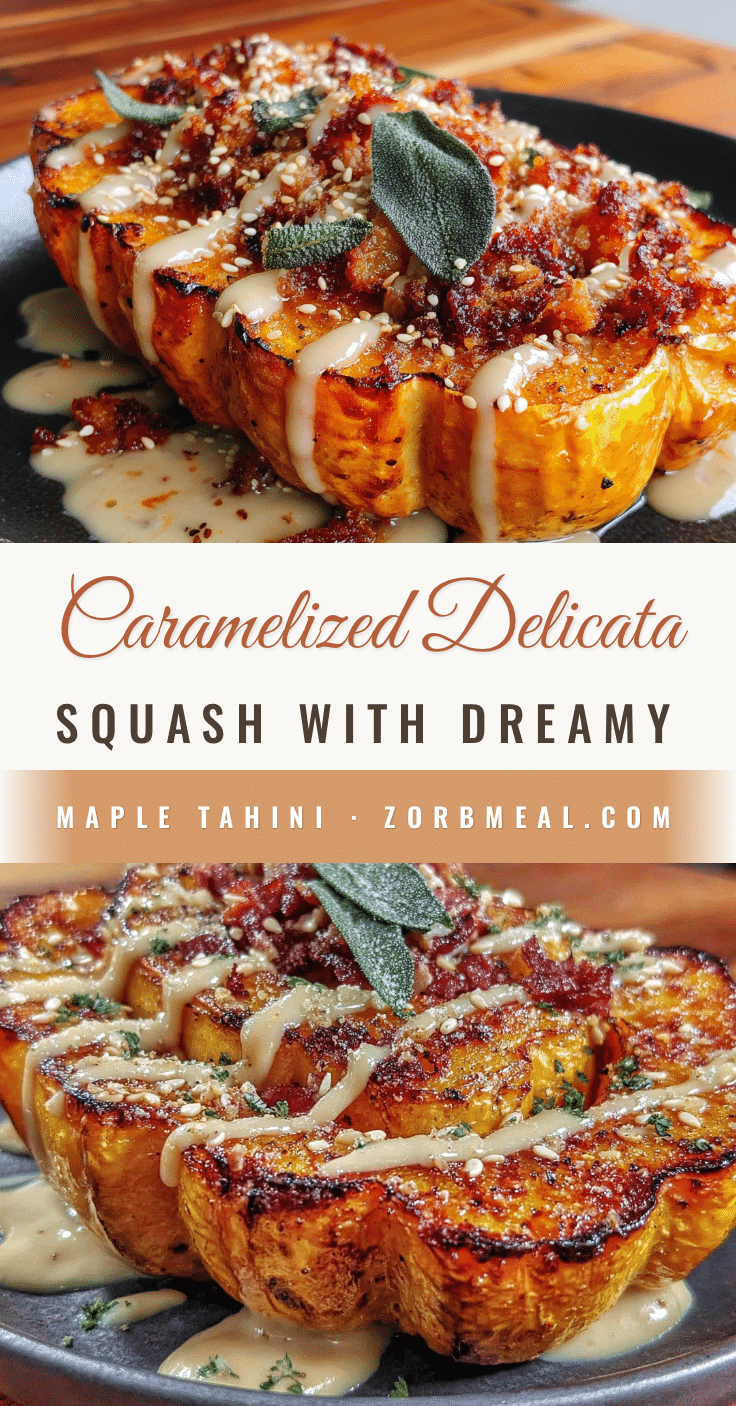
Caramelized Delicata Squash with Maple Tahini Drizzle

Roasted delicata squash with caramelized edges and a silky maple tahini drizzle. A simple, naturally vegan and gluten-free side dish that’s ready in 30 minutes.
- Prep Time: 10 minutes
- Cook Time: 25 minutes
- Total Time: 35 minutes
- Yield: 4 servings 1x
- Category: Side Dish
- Cuisine: American
Ingredients
- 2 medium delicata squash (about 2 pounds total)
- 2 tablespoons olive oil
- 1 tablespoon pure maple syrup
- 1/2 teaspoon sea salt
- 1/4 teaspoon black pepper
- Pinch of cayenne pepper (optional)
- 1/4 cup tahini
- 2 tablespoons pure maple syrup
- 2 tablespoons warm water
- 1 tablespoon fresh lemon juice
- 1/4 teaspoon sea salt
- 2 tablespoons toasted pepitas (optional)
- Fresh parsley or cilantro (optional)
- Flaky sea salt (optional)
Instructions
- Preheat oven to 425°F (220°C). Line a large rimmed baking sheet with parchment paper.
- Wash the delicata squash, trim off the ends, cut in half lengthwise, and scoop out seeds. Slice into half-moons about 1/2-inch thick.
- In a large bowl, toss the squash slices with olive oil, 1 tablespoon maple syrup, 1/2 teaspoon sea salt, black pepper, and cayenne (if using) until evenly coated.
- Arrange the squash in a single layer on the prepared baking sheet, spacing pieces about 1/2 inch apart.
- Roast for 15 minutes. Flip each piece, then roast for another 10-15 minutes until tender and edges are dark brown and caramelized.
- While the squash roasts, make the drizzle: In a small bowl, whisk together tahini, 2 tablespoons maple syrup, warm water, lemon juice, and 1/4 teaspoon sea salt until smooth and pourable. Add more warm water if needed.
- Transfer hot roasted squash to a serving platter. Drizzle with tahini sauce, then sprinkle with toasted pepitas, fresh herbs, and flaky sea salt. Serve immediately.
Notes
For best caramelization, don’t crowd the pan. If your tahini sauce seizes, whisk in more warm water a teaspoon at a time. Leftover squash can be stored in an airtight container in the refrigerator for up to 4 days; reheat in a 350°F oven or air fryer for 5-7 minutes.
Nutrition
- Serving Size: 1/4 of recipe
- Calories: 245
- Sugar: 14
- Sodium: 450
- Fat: 14
- Saturated Fat: 2
- Carbohydrates: 28
- Fiber: 5
- Protein: 5
Keywords: delicata squash, roasted squash, maple tahini, vegan, gluten-free, fall recipe, side dish