I burned the ground beef at least three times before I figured out what was going wrong with this Korean ground beef rice bowl recipe. Honestly, I didn’t even really set out to make it right at first. I was craving something quick and saucy, and I had no clue how to balance the heat of gochujang with the savory meat. The first attempts tasted like a smoky mess, and the sesame cucumber side was soggy from rushing it. But after a few tries, I started to understand how the flavors click—the sweet, spicy, and nutty notes playing off each other, with that crunch of fresh cucumber cutting through the richness. What stuck with me was how simple the ingredients were, yet how much personality this dish packs in every bite. It’s not fancy, and it’s not perfect, but it’s honest food that feels like a hug after a long day.
Now, whenever I make this Korean ground beef rice bowl with gochujang and sesame cucumber, it reminds me that sometimes you have to mess up a few times before a recipe becomes a quiet favorite. It’s easy enough for weeknights but interesting enough to make you pause and savor. And the sesame cucumber? That little sidekick really lifts the whole bowl, giving it a fresh snap that keeps you coming back. So yeah, maybe this isn’t some flawless gourmet dish, but it’s the kind of home-cooked meal that makes the kitchen smell like dinner—and that, to me, is everything.
Why You’ll Love This Recipe
This Korean ground beef rice bowl recipe with gochujang is the kind of meal that sticks with you, not because it’s complicated, but because it hits all the right notes every time. I’ve tested this recipe countless times—tweaking the sauce, adjusting the seasoning, and perfecting the cucumber side—and it always delivers a satisfying dinner without a ton of fuss.
- Quick & Easy: You can have this on your table in under 30 minutes, making it a lifesaver for busy nights or unexpected guests.
- Simple Ingredients: No need for exotic shopping trips—just pantry staples and fresh produce you can find anywhere.
- Perfect for Weeknight Dinners: It’s comforting and filling, yet light enough to keep you from feeling weighed down.
- Crowd-Pleaser: The mix of sweet, savory, and spicy is a hit with kids and adults alike, even those new to Korean flavors.
- Unbelievably Delicious: The sauce, rich with umami and a gentle heat from gochujang, pairs perfectly with fluffy rice and the crisp sesame cucumber for texture contrast.
What really sets this recipe apart is the balance of flavors and textures. The ground beef is cooked just right—juicy, not dry—with a sauce that’s bold but not overwhelming. The sesame cucumber salad is quick to whip up and cuts through the richness with a fresh crunch and nutty aroma. This isn’t just another bowl of seasoned beef over rice; it’s a dish that feels thoughtfully crafted, but won’t have you stuck in the kitchen for hours.
After making this a dozen times, I can say it’s the kind of dish that makes you close your eyes after the first bite—a moment of pure, unpretentious joy. If you want a dinner that’s both comforting and a little adventurous, this Korean ground beef rice bowl recipe is your best bet. Plus, if you enjoy dishes that mix sweet, heat, and fresh elements, you might also love the garlic butter chicken with asparagus, which shares that balance of flavors and simplicity.
What Ingredients You Will Need
This recipe uses simple, wholesome ingredients that come together to create bold, layered flavors and satisfying textures without any fuss. Most of these are pantry staples, and the fresh produce is easy to find year-round. I like to keep a jar of good-quality gochujang in my fridge because it’s so versatile for dishes like this.
- Ground Beef (80/20 blend) – The fat content helps keep the beef juicy and flavorful.
- Gochujang (Korean chili paste) – Adds spicy depth and a hint of sweetness; I recommend Chung Jung One brand for authentic flavor.
- Soy Sauce – For that salty, umami base.
- Brown Sugar – Balances the heat with a subtle sweetness.
- Garlic – Freshly minced for aromatic punch.
- Ginger – Grated, to add warmth and brightness.
- Green Onions – Thinly sliced, some for cooking and some for garnish.
- Cooked Rice – Jasmine or short-grain rice works best for that sticky, fluffy texture.
- Cucumber – Thinly sliced or julienned for the sesame cucumber salad.
- Rice Vinegar – To give the cucumber salad a tangy lift.
- Sesame Oil – Toasted sesame oil is a must for that nutty aroma and flavor.
- Sesame Seeds – Toasted, sprinkled on top for crunch and visual appeal.
- Red Pepper Flakes (optional) – For extra heat if you dare.
- Salt and Pepper – To taste, naturally.
If you want to keep this dish gluten-free, just swap the regular soy sauce for tamari or coconut aminos. And if you’re aiming for a lighter or vegetarian take, ground turkey or crumbled tofu can step in for the beef. For the cucumber salad, feel free to use English cucumbers if you want fewer seeds and a crisper bite.
I usually pick up cucumbers fresh from the market, and when summer hits, I love swapping in fresh herbs like mint or cilantro to brighten the sesame cucumber even more. This little salad is forgiving—you can tweak the vinegar and sugar balance to your taste, which is how I’ve learned to make it just right over time.
Equipment Needed
- Large Skillet or Non-stick Pan: For browning the ground beef evenly without sticking. A heavy-bottomed skillet works best to distribute heat.
- Mixing Bowls: One for the cucumber salad and one for mixing the sauce.
- Sharp Knife and Cutting Board: For prepping garlic, ginger, green onions, and cucumbers.
- Measuring Spoons and Cups: Accuracy makes a difference with the gochujang and soy sauce balance.
- Wooden Spoon or Spatula: To stir the beef gently without breaking it down too much.
- Rice Cooker or Pot: For perfectly cooked fluffy rice. If you don’t have a rice cooker, a heavy pot with a tight lid works fine.
If you don’t own a non-stick skillet, a well-seasoned cast iron pan is a solid alternative, just be mindful of the heat to avoid burning the sauce. I’ve learned to keep a small splatter screen handy when cooking this dish, which saves a lot of cleanup later. Also, a mandoline slicer can make those cucumber slices super thin and even, but a sharp knife works just as well if you’re careful.
Preparation Method
- Prepare the Rice: Start by cooking 2 cups (370g) of jasmine or short-grain rice according to package instructions. This usually takes about 15-20 minutes. If you have a rice cooker, just set it and forget it.
- Make the Sesame Cucumber Salad: While the rice cooks, thinly slice one large cucumber (about 8 ounces or 225g). Toss the slices with 1 tablespoon rice vinegar, 1 teaspoon toasted sesame oil, a pinch of salt, and 1 teaspoon toasted sesame seeds. Let it sit for at least 10 minutes so the flavors meld and the cucumber softens slightly but still stays crunchy.
- Prepare the Sauce: In a small bowl, whisk together 2 tablespoons gochujang, 2 tablespoons soy sauce, 1 tablespoon brown sugar, 1 teaspoon toasted sesame oil, and 1 teaspoon water. This sauce should be smooth and balanced—adjust the sugar or gochujang to taste if you want it sweeter or spicier.
- Cook the Beef: Heat 1 tablespoon vegetable oil in a large skillet over medium-high heat. Add 1 pound (450g) of ground beef and cook, breaking it up gently with a wooden spoon, until it starts to brown and no longer pink, about 6-8 minutes. Drain excess fat if needed.
- Add Aromatics: Stir in 3 cloves minced garlic and 1 tablespoon grated fresh ginger. Cook for another 1-2 minutes until fragrant but not burnt.
- Combine Beef and Sauce: Pour the prepared sauce over the beef in the skillet. Stir well to coat all the meat. Let it simmer for 2-3 minutes so the sauce thickens and clings to the beef. Taste and adjust seasoning with salt, pepper, or extra gochujang if you want more heat.
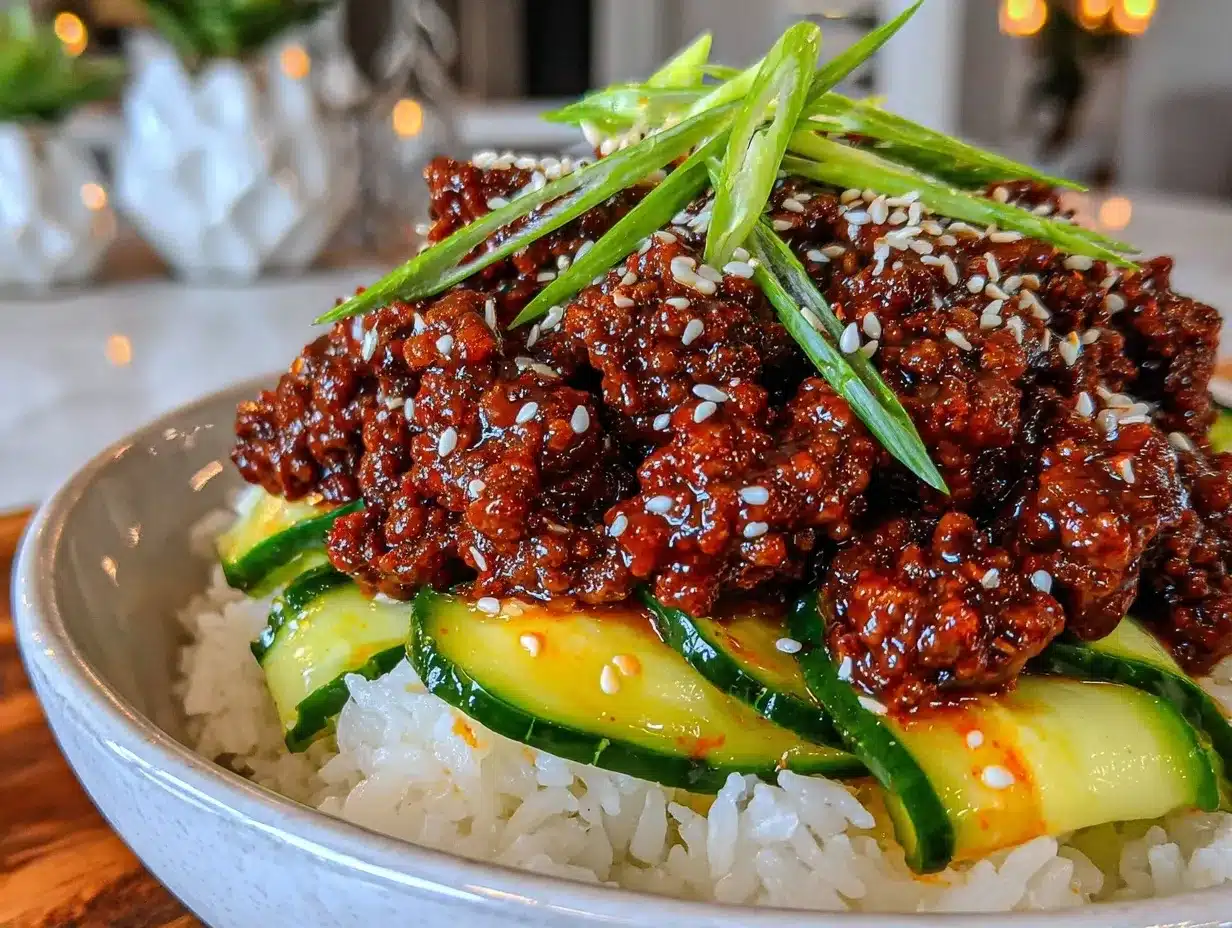
- Finish and Garnish: Remove from heat and stir in half of the sliced green onions. Serve the beef over the cooked rice, top with the sesame cucumber salad, remaining green onions, and a sprinkle of toasted sesame seeds. Optionally, add a fried egg on top for richness.
One trick I’ve learned: don’t rush the beef cooking step. Let it brown properly so you get that caramelized flavor, which really lifts the dish. Also, if your sauce gets too thick, adding a splash of water or broth helps loosen it back up without losing flavor. The cucumber salad is best fresh but can sit while you cook the beef to save time.
Cooking Tips & Techniques
Cooking this Korean ground beef rice bowl is straightforward, but I’ve picked up a few tricks over time to make it foolproof and flavorful every time. First, when browning the ground beef, resist the urge to stir nonstop. Let it sit a little to develop a nice crust, which adds depth to the dish.
One common mistake is overcrowding the pan, which causes the meat to steam rather than brown. Cook in batches if necessary or use a larger skillet. Another tip is to toast the sesame seeds yourself in a dry pan for a couple of minutes until golden and fragrant—store-bought toasted seeds can be bland.
For the gochujang sauce, mixing it well before adding it to the pan is key. It prevents clumps and ensures the sauce coats every bit of beef evenly. If you find the sauce too spicy or thick, a teaspoon of honey or a splash of water can mellow it out without losing the signature flavor.
Timing is another factor. While the rice cooks, prepping the cucumber salad keeps things moving. I usually chop the aromatics and make the sauce while the beef cooks. Multitasking like this saves time but keeps each element tasting fresh and vibrant.
Finally, don’t skip the green onions and sesame seeds at the end—they add that fresh bite and crunch that make this bowl stand out from any plain beef and rice combo.
Variations & Adaptations
This Korean ground beef rice bowl is flexible and adapts well to different tastes and dietary needs. Here are some variations I’ve tried or recommend:
- Protein Swap: Use ground turkey or chicken for a leaner option, or crumbled firm tofu for a vegetarian twist. Adjust cooking times accordingly.
- Spice Level: For more heat, add extra gochujang or sprinkle in red pepper flakes. For a milder version, reduce the gochujang and add a little extra brown sugar.
- Rice Alternatives: Try brown rice for more fiber or cauliflower rice for a low-carb meal. Just note that cauliflower rice cooks much faster and has a different texture.
- Seasonal Vegetables: Swap the sesame cucumber salad with quick-pickled radishes or a simple kimchi side for more authentic Korean flair.
- Cooking Method: I’ve even made this in the Instant Pot by browning the beef on sauté mode, then adding the sauce to simmer briefly. It cuts down on cleanup and is great for busy days.
One personal favorite variation is stirring in a handful of chopped spinach or kale at the end for some greens without complicating the flavors. If you’re looking for a complete meal idea, pairing it with easy appetizers like fresh caprese skewers really rounds out the dinner.
Serving & Storage Suggestions
This Korean ground beef rice bowl is best served warm, straight from the skillet to the plate. The rice should be fluffy, the beef hot and saucy, and the sesame cucumber cool and crisp on the side. I love to serve it in deep bowls so the sauce doesn’t spill over and every bite stays juicy.
For a simple presentation, garnish with extra green onions and a sprinkle of sesame seeds. If you want to get fancy, a fried or poached egg on top adds an indulgent richness that’s hard to resist.
You can store leftovers in an airtight container in the refrigerator for up to 3 days. Keep the cucumber salad separate if possible to maintain its crunch. Reheat the beef and rice gently in a skillet or microwave until warm—adding a splash of water helps loosen the sauce.
Flavors meld nicely after a day, so sometimes I find the bowl tastes even better the next day. Just give it a quick stir before serving. If freezing, I recommend portioning the beef and rice separately from the cucumber salad; the latter doesn’t freeze well.
Nutritional Information & Benefits
This Korean ground beef rice bowl recipe offers a balanced meal with protein, carbs, and fresh veggies. The ground beef provides iron and vitamin B12, essential for energy, while the cucumbers add hydration and antioxidants with minimal calories.
Gochujang, made from fermented chili peppers, contributes capsaicin, which may support metabolism and circulation. The sesame oil and seeds add healthy fats and a dose of calcium and magnesium.
Depending on the rice choice, the dish can be tailored to gluten-free or low-fat diets. For example, swapping white rice for brown rice boosts fiber, aiding digestion and keeping you fuller longer.
Keep in mind the sodium content from soy sauce; using low-sodium versions can help reduce this. Overall, this dish fits well into a balanced diet and offers a flavorful way to enjoy wholesome ingredients.
Conclusion
This Korean ground beef rice bowl with gochujang and sesame cucumber is a recipe I keep coming back to, not because it’s perfect but because it’s honest—full of flavor, texture, and comfort without fuss or fancy ingredients. It’s adaptable to whatever you have on hand or your taste preferences, making it truly your own each time you make it.
I love how this dish manages to feel special on a busy night, proving you don’t need hours or complex skills to enjoy Korean-inspired flavors at home. If you’ve been hesitant to try gochujang or Korean cooking, this recipe is a friendly introduction that’s hard to mess up once you know the steps.
Feel free to tweak the spice, switch up the sides, or add your favorite toppings—cooking is personal, after all. And if you do try it, I’d love to hear how your bowl turns out or any twists you made! Sharing your kitchen wins makes this whole cooking adventure worth it.
FAQs
What can I substitute for gochujang if I can’t find it?
You can mix miso paste with a bit of chili powder and a touch of honey or brown sugar to mimic the sweet-spicy flavor of gochujang. It won’t be exact but will work in a pinch.
Can I make this recipe ahead of time?
Yes, you can prepare the beef and rice in advance and keep the cucumber salad separate until serving to maintain freshness and crunch.
Is this recipe gluten-free?
It can be, if you use gluten-free soy sauce or tamari. The other ingredients are naturally gluten-free.
How spicy is this dish?
The heat level depends on how much gochujang you add. It generally has a mild to medium spice, but you can adjust it to your liking.
Can I add veggies to the beef?
Absolutely! Diced bell peppers, shredded carrots, or spinach work well and add color and nutrition to the bowl.
Pin This Recipe!
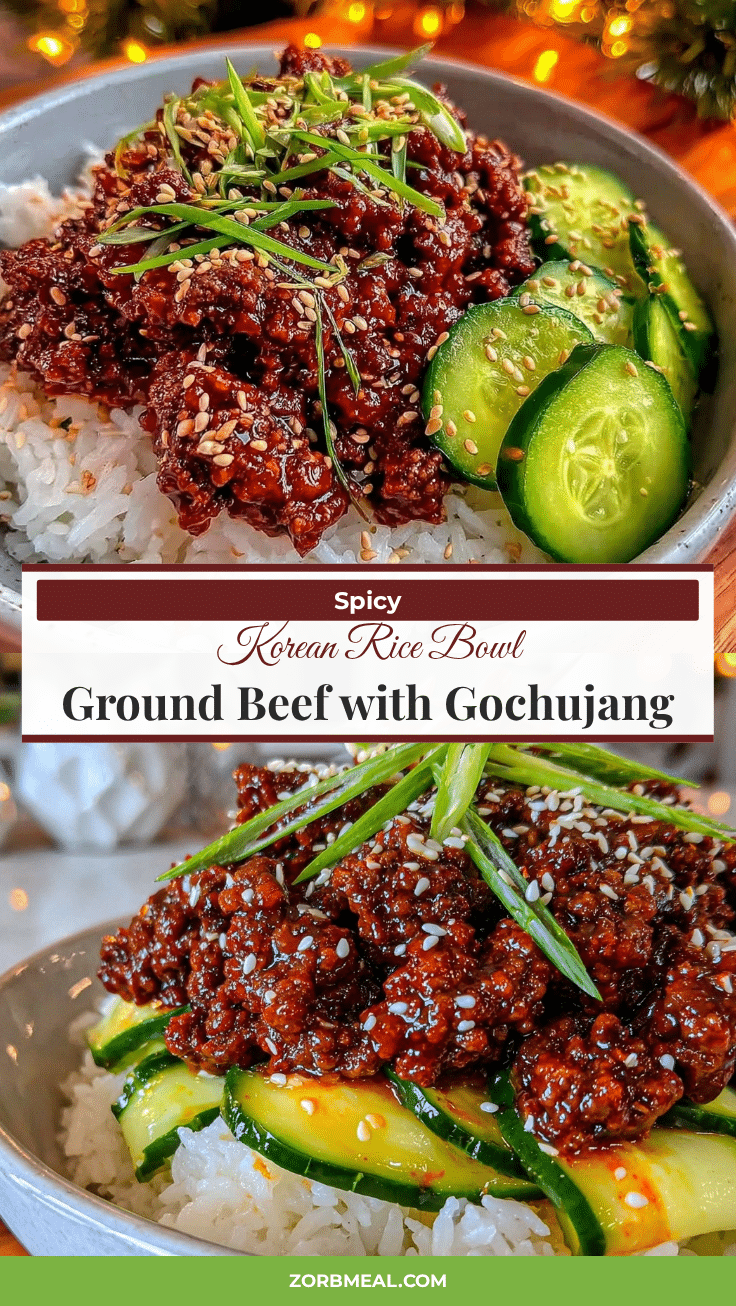
Korean Ground Beef Rice Bowl Recipe with Gochujang
A quick and easy Korean-inspired ground beef rice bowl with a flavorful gochujang sauce and refreshing sesame cucumber salad. Perfect for weeknight dinners, this dish balances sweet, spicy, and savory flavors with a satisfying texture contrast.
- Prep Time: 10 minutes
- Cook Time: 20 minutes
- Total Time: 30 minutes
- Yield: 4 servings 1x
- Category: Main Course
- Cuisine: Korean
Ingredients
- 1 pound (450g) ground beef (80/20 blend)
- 2 tablespoons gochujang (Korean chili paste)
- 2 tablespoons soy sauce (or tamari for gluten-free)
- 1 tablespoon brown sugar
- 3 cloves garlic, minced
- 1 tablespoon fresh ginger, grated
- 3 green onions, thinly sliced (half for cooking, half for garnish)
- 2 cups cooked jasmine or short-grain rice
- 1 large cucumber (about 8 ounces or 225g), thinly sliced or julienned
- 1 tablespoon rice vinegar
- 1 teaspoon toasted sesame oil (plus 1 teaspoon for sauce)
- 1 teaspoon toasted sesame seeds
- 1 tablespoon vegetable oil
- Salt and pepper to taste
- Red pepper flakes (optional, for extra heat)
- Water (1 teaspoon for sauce, plus splash if needed)
Instructions
- Cook 2 cups (370g) of jasmine or short-grain rice according to package instructions (about 15-20 minutes).
- While the rice cooks, thinly slice one large cucumber. Toss with 1 tablespoon rice vinegar, 1 teaspoon toasted sesame oil, a pinch of salt, and 1 teaspoon toasted sesame seeds. Let sit at least 10 minutes.
- In a small bowl, whisk together 2 tablespoons gochujang, 2 tablespoons soy sauce, 1 tablespoon brown sugar, 1 teaspoon toasted sesame oil, and 1 teaspoon water. Adjust sweetness or spiciness to taste.
- Heat 1 tablespoon vegetable oil in a large skillet over medium-high heat. Add ground beef and cook, breaking it up gently, until browned and no longer pink, about 6-8 minutes. Drain excess fat if needed.
- Stir in minced garlic and grated ginger. Cook 1-2 minutes until fragrant.
- Pour sauce over beef and stir to coat. Simmer 2-3 minutes until sauce thickens. Adjust seasoning with salt, pepper, or extra gochujang if desired.
- Remove from heat and stir in half the sliced green onions.
- Serve beef over cooked rice, topped with sesame cucumber salad, remaining green onions, and a sprinkle of toasted sesame seeds. Optionally add a fried egg on top.
Notes
Do not overcrowd the pan when browning beef to ensure proper caramelization. Toast sesame seeds yourself for best flavor. Adjust gochujang and brown sugar to balance heat and sweetness. The cucumber salad is best fresh but can sit while cooking beef. Adding a splash of water or broth can loosen thick sauce. Optionally add a fried egg for richness.
Nutrition
- Serving Size: 1 bowl (about 1/4 of
- Calories: 480
- Sugar: 8
- Sodium: 850
- Fat: 28
- Saturated Fat: 10
- Carbohydrates: 32
- Fiber: 2
- Protein: 28
Keywords: Korean ground beef, gochujang, rice bowl, sesame cucumber salad, quick dinner, easy weeknight meal, spicy beef bowl